19th Century, Agriculture, farming, Food, History, Intercession, Minnesota, Natural Disaster, omnipresent history, Science

Rust Plagues Crops 1878

unknown

1878

“Rust, a parasite growing on barberry bushes brought west by settlers, severely damages wheat crops. Later epidemics of wheat rust lead to the outlawing of barberry bushes in 1918.

Epidemics occur again in 1904 and 1916 before the state outlaws the culprit carriers. The problem is eradicated over the next decades through the efforts of “Barberry Bees,” organized to dig up bushes, “Rust Busters Clubs” in schools, and bounties paid for reporting barberry in the 1940s.” *

Some days it is burdensome to read chapters of history like the Rust Plague. It feels like human perception of reality, myself included of course, is a one-trick pony. We fail over and over to see cause and effect relationships though surrounded with personal and practical examples.
When confronted with the tragic, we react with externalizing our pain. “It must be someone else’s fault that I have this problem”, we say to ourselves. Moreover, You are a convenient target for our misuse or overuse of natural resources.
Creator of All Nature, this is the ray of light I see in this Rust Plague; eventually the curious among us found a relationship. We found that transporting plants, namely berberis vulgaris, from their origins resulted in creating an undesired effect when they reached our desired destinations.** We loved progress, but lacked the knowledge and wisdom to enact it in this case.

Lord, was there something to this parasite outbreak other than nature? I believe that You are far more merciful to us than our sins deserve, but simultaneously maintain justice and enact wise judgments. You remain in perfect balance; neither favoring grace or truth. Our separation from You and our fellow man has its consequences. I can think of several events that happened in this time frame that caused massive unrest:
the creation of the Federal Reserve -1913
the negation of the Nicaragua Canal
the first foray into US nation-building that created the nation of Panama
the opening of the Panama Canal – 1914
sinking of the Lusitania – May 7, 1915
Poncho Villa raids US – 1916
President Wilson commits our troops to WWI, in spite of his campaign promise; “He kept us out of the war.” – 1917
Wilson “14 Point of Peace” – 1918
and extensive upheavals between labor and the industrialists.
Lord Jesus, will You enter into this chapter of our history again? Will You, by Your kind Holy Spirit, point out offenses that we may have made towards You? Did we curse the ground, or more specifically the wheat crops of Minnesota? Were You just maturing us to trust You in difficult times? Was a disease necessary to place nature in proper balance?

Jesus, please forgive us any root judgments that contributed to the rust epidemic. Will You heal our land and our hearts, to receive You where our ancestors may have missed You? Will You make us capable of self-examination, observant of our surroundings, and shield us from the temptation to only look for external targets of our wrath and blame rather than responsibility, reason, and relationship?

*P.T.H. cites timeline formerly at this URL: mnhs.org/about/dipity_timeline.htm
The Minnesota Historical Society Web site, http://www.mnhs.org , is fantastic! Check it out! Images are from https://images.google.com/?gws_rd=ssl; again, an amazing resource!

**https://www.ars.usda.gov/midwest-area/st-paul-mn/cereal-disease-lab/docs/barberry/barberry-situation-past-present-future/


Standard
19th Century, Agriculture, farming, Governors, History, Intercession, Jesus, Leadership, Minnesota, Natural Disaster, Politics, State Government

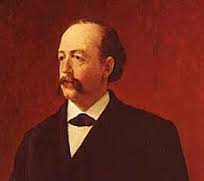
Cushman Becomes Governor

unknown

January 7, 1874 to January 7, 1876

“Cushman K. Davis takes office as the state’s seventh governor. During his single term as Minnesota’s seventh governor, Cushman K. Davis confronted a menace that threatened to ruin the state’s farm economy. A five-year-long grasshopper plague began in 1873, and Davis’s offer of aid to farmers whose crops had been devoured by invading locusts represented an early form of state-sponsored disaster relief.” * 

“The state, governed by three different men during the grasshopper plague years, also failed to provide adequate relief to affected farmers. Under governors Horace Austin and Cushman K. Davis, the state provided small sums of direct, state-funded relief, but the governors focused their efforts on encouraging charitable giving to the cause. Unlike his predecessors, Governor John S. Pillsbury did not call for any direct, state-funded relief for farmers. Elected in 1876, Pillsbury believed that poverty was a fact of life on the frontier and that providing relief would make farmers dependent on the state. Instead, Pillsbury focused on efforts to eradicate the grasshoppers. This included a controversial bounty measure that required every able-bodied man in affected counties to destroy grasshopper eggs for one day a week, for five straight weeks.

In the summer of 1877, the grasshoppers left just as quickly as they had arrived. An April snowstorm damaged many of their eggs, which encouraged farmers to redouble their efforts to destroy the grasshoppers. The surviving grasshopper eggs hatched, but by August, the grasshoppers had flown away. Many attributed the end of the grasshopper plague to divine intervention, since Governor Pillsbury had proclaimed April 26 a day of prayer, after receiving many requests to do so.” **

I’m first thunderstruck by two facts jumping off the page at me: that Cushman spearheaded state charity, and that a day of prayer is recorded as an action point. Will You guide me to ponder these notions? Will You give some insights as to how to intercede?

To the first point, it seems quite unusual for a Republican of this era to use state-funded relief. Cushman appears to be a man of principals, but not so rigid that he fails his constituents during such dire times of need. Will You bless him, and his commitment to the survival of his fellow man? Will You keep balance in this constant teeter-totter of public versus private charity within the souls of our leaders? If taxes were gifts, we would give them for Christmas. If charity is coerced, the heart disengages, and it no longer is charity but, perhaps, extortion. Have mercy on our “mercy”! 

It’s curious to me that politicians sometimes endorse prayer as an action point. Many leaders currently would see the endorsement of prayer as a failure to adequately separate “Church and State”. (Help me probe this a little longer!) Yet we condition our minds and spirits through repetitive thoughts daily; we listen to songs over and over, view movies again and again, and repeat instructions internally to project us past sales objections. (I know these are quite random, but perhaps they are also a form of prayer?)

I’m grateful to You, the masterful inventor of every grasshopper, for Your beautiful destruction of our security. Will You forgive our barriers to seeing the heart and mind conditioning, (aka “prayer”), as a legitimate response to the plagues of our lives? Will You make us flexibly rigid in our principals enough to love our neighbor as they experience heartache and misfortune?

** https://www.minnpost.com/mnopedia/2013/06/winged-menace-minnesota-grasshopper-plagues-1873-1877


Standard