
1918
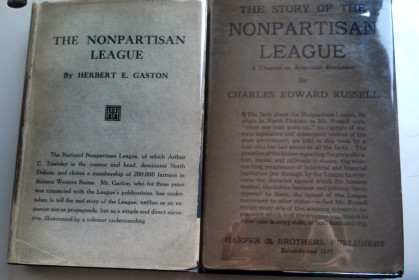
“The farmers’ Nonpartisan League, a reform group that advocates state control of the grain industry, runs candidates in the Republican primary. The NPL loses in the primary, but joins Minnesota’s branch of the Minnesota American Federation of Labor in forming the Farmer-Labor party.” *
“In the 1910s, farmers began to decry poor market conditions and violations of their economic rights. Middlemen in the grain elevator, stockyard, cold storage, banking, and rail industries regularly gouged farmers. To fight corporate interests, the NPL was formed in North Dakota in 1915.
The NPL was founded by former Socialist Party member Arthur Townley, who was also a failed flax farmer. The NPL advocated state-run mills, grain elevators, stockyards, and warehouses. In order to protect farmers further, the NPL fought for state insurance programs, pensions, and employment bureaus. After success in North Dakota’s 1916 election, the NPL began to expand. Minnesota became the center of its activities.” **
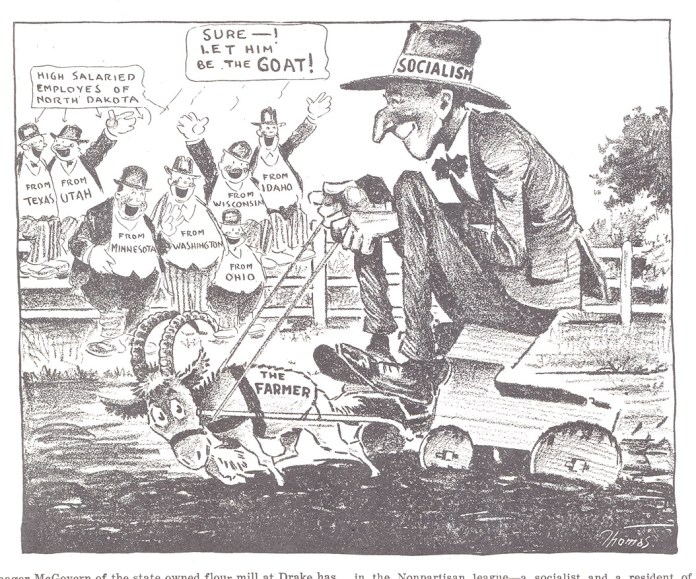
Lord, we say we love fairness, justice, and equal rights under the law, but our practice of these traits are very imperfect and human! Have mercy! Farmers of this era wanted to address the folly and failures of the Democrats and Republicans to represent their views and grievances. They wanted a way out of the “us versus them” paradigm in Saint Paul, and Washington! Lord, hear their prayers!
Will You forgive their root judgments based on politics? Will You forgive the Wall Street Republicans their willingness to commoditize a Democratic farming way of life, and to see all Progressives as revolutionary radicals instead of neighbors desperate for change? Will You forgive the Socialist and Progressives their judgments of the passivity of the Democrats, and characterizing all Republicans as greedy “Wall Streeters”? Will You forgive Democrats their judgments and fears of Socialist extremism, Progressive utopianism, and Republican heartlessness?
We have failed You as traders and transporters of commodities. Those who weighed the grain and set the prices for the train have dishonored You, and the farmers of Minnesota. Through Solomon, perhaps the greatest economic mind the earth has ever known, You have said: “The Lord abhors dishonest scales, but accurate weights are his delight.” Proverbs 11:1 NIV Will You have mercy on all forms of dishonest trading and transport of agricultural commodities? Will You restore our broken trust, and teach us better ways to raise, assess value, and distribute food?
Our Socialism, Progressivism, Democratism, and Republicanism has tested You as the owner of all the yields of the Land of 10,000 Lakes. We have ignored Your voice because we listen through the filter of all our ‘isms’. We have discounted each other in opinion and fact. Have mercy!
We listen and ponder this parable of Jesus:
“A man planted a vineyard, rented it to some farmers and went away for a long time. At harvest time he sent a servant to the tenants so they would give him some of the fruit of the vineyard. But the tenants beat him and sent him away empty-handed. He sent another servant, but that one they beat and treated shamefully and sent him away empty-handed. He sent a third, and they wounded him and threw him out.
Then the owner of the vineyard said, ‘What shall I do? I will send my son, whom I love; perhaps they will respect him.’ But when the tenants saw him, they talked the matter over. ‘this is the heir,’ they said. ‘Let’s kill him, and the inheritance will be ours.’ So they threw him out of the vineyard and killed him. What then will the owner of the vineyard do to them? He will come and kill those tenants and give the vineyard to others.” Luke 20:9-16 NIV
In its original context, this story was a rebuke of the misuse of authority of the chief priests, elders, and teachers of the law known as the Sanhedrin. The farmers of the vineyard symbolize the people of Israel. The servants represent the prophets of G-d whom the people rejected, the heir represented the Messiah, and the landowner is G-d the Father.
Yet, I see another interpretation of this text relevant to the NPL, the “isms”, and the economic forces of Wall Street. Perhaps each of these forces stumble over their self-importance: the farmer-laborer, the politicians, the bankers, and the traders? Is it possible that each sees themselves as the owner, therefore, possessing the final say over their property? Each has refused the reasonable messages of the servants and heirs sent to them?
Eternal Father, will You forgive us for attempting to own Your possessions? Will You forgive us the rejection of our opponent’s message and messengers? Will You forgive the misbelief in the revolutionary spirit of our heart that drives us to overthrow and possess? Will You forgive the independence of the NPL, the co-dependence of the Democratic and Republican parties and Wall Street?
We give You the false heart motives of this era, and ask that take them up, out, and onto the Cross of Christ. We ask that Your blood cleanses and frees us from every attachment of the Enemy that hinders the agriculture of Minnesota. We ask that You establish proper boundaries for all these groups both present and future. Will You be the Judge of Minnesota, so we can practice the blessing of being truly Non-Partisan?
- http://www.mnhs.org/about/dipity_timeline.htm
- **Excellent source of information on NPL and all history Minnesota! http://www.mnopedia.org/group/nonpartisan-league

 praythroughhistory