20th Century, Conservation, Environment, Exploration, History, Intercession, Judgment & Counter-Judgment Cycle, Logging, Minnesota, Natural Science, omnipresent history

Minnesota Forest Reserve 1902

living-legacy

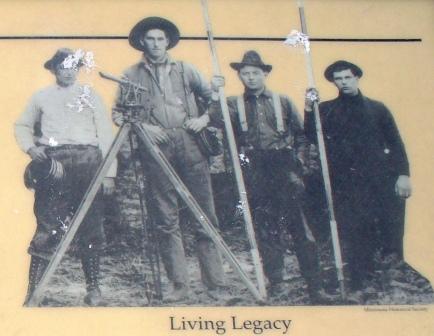
Surveyor Josiah A. King and crew.****

1902

“Conservationists win a long fight to establish a 225,000-acre forest reserve where logging will be supervised by the U.S. Bureau of Forestry. In 1928 the reserve’s name is changed to the Chippewa National Forest. 

One of the treasures of Northern Minnesota is an area of Chippewa National forest known as “the Lost Forty’. Actually, it is an area of 144 acres that were somehow missed by surveyor Josiah A. King in 1882. His three man crew faced chilling weather, slogged through swamps, and it is not unlikely they were missed in exhaustion.” *

“In 1882, a land surveyor by the name of Josiah A. King, and his three-man crew, traveled 40 miles from the nearest white settlement called “the Grand Rapids of the Mississippi.” For a month, canvas tents were their homes, and flour, pork, beans, and dried apples their rations. Josiah and his crew were finishing the last of three contracted townships in one of the first land surveys of Minnesota’s north woods.

As the November winds blew around the crew, they surveyed a six square mile area between Moose and Coddington Lakes. Perhaps it was the chilling weather, or all of the desolate swamps around them, but the crew became confused, and they ended up plotting Coddington Lake about a half mile further northwest than it was actually located. Josiah’s crew’s error is Minnesota’s great fortune.

As a result, these towering pines were mapped as a body of water, and the virgin pine in this area was overlooked by the hungry logging companies. Afterall, what logging company would want to pay for swamp land. This parcel of land became known as “The Lost Forty” and went untouched by loggers. It is now managed by the Minnesota Department of Natural Resources under their Scientific & Natural Areas Program.”**

Father, You have encouraged us to have places of rest, and even have commanded that the land should be given rest. Parts of the Pentateuch that are despised as being outdated, finicky, and overly legalistic by some are the same verses that declare a Sabbath for the land and animals. Scientists in the 20th century were able to confirm the wisdom of these books of “myth”. Elements and minerals in the soil are depleted by overuse; giving the land a rest actually increases yields in the long run. Again, You already made us this promise in antiquity, and science finally has caught up. 

Lord, I see the Chippewa Forest as a reflection of this heart of rest. Within this forest, the Lost Forty, are like a time capsule giving testimony to what existed in Your natural balance. Thank You for holy, set-aside places like these! Thank You that the error of the surveyors may well have been Your providence and plan to show off Your handiwork to their progeny.

We see what the forest could continue to yield if harvested within Your boundaries. Will You forgive the impatience demonstrated in the harvesting of these northern forests of Minnesota? Will You give wisdom and balance to those who have an interest in these forests, whether political, environmental, economical, or spiritual? Will You give us this day a reserve of energy, of time, of thought to relax with our Creator? Will You forgive us where we are resistant to solitude, to quietness, to contemplation of our lives in the state of Minnesota? Will You help us hear Your voice calling from antiquity, ‘Your harvest’s aftergrowth you shall not reap, and your grapes of untrimmed vines you shall not gather; the land shall have a sabbatical year.” NASB Leviticus 25:5 ***

* http://www.mnhs.org/about/dipity_timeline.htm

**http://www.minnesotafunfacts.com/minnesota-geography/the-lost-40-a-minnesota-forest-legacy/

***http://biblehub.com/leviticus/25-5.htm


Standard
20th Century, Crime, government, History, Intercession, Judgment & Counter-Judgment Cycle, Mayors, Minnesota, omnipresent history, Politics

“Shame of Minneapolis” 1901

por 12709 r2

January 1901 to February 1903

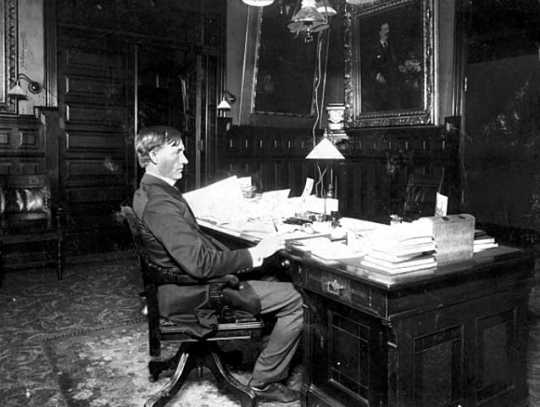
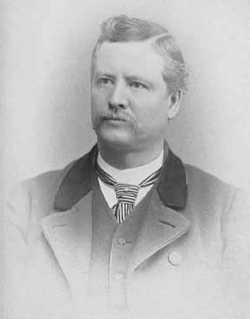
“Dr. Albert Alonzo “Doc” Ames served four terms as mayor of Minneapolis. His fourth term began in January 1901 and ended with his resignation in August 1902 after a grand jury exposed the corruption in his administration.

In January 1903 McClure’s magazine published an article by nationally-known muckraking journalist Lincoln Steffens**** on the fight against corruption in Minneapolis. The story focused on Mayor Ames’ regime and how the work of the courageous grand jury led to his fall. He was convicted of bribery in February 1903.” * 

 “Also, seek the peace and prosperity of the city to which I have carried you into exile. Pray to the LORD for it, because if it prospers, you too will prosper.” 

Jeremiah 29:7 NIV **

Minneapolitans in 1901-1903 may not have been “carried into exile” like the children of Abraham, but they likely felt that Justice abandoned them. What does one do, when their hometown becomes corrupt? Even more accurate, what response should the public have when their leadership targets them for abuse, and opens the doors of the city welcoming crime?

“Mayor Ames’ actions lead to the conclusion that he was single-minded in his pursuit of control, and hungry for bribery. He made his brother Fred chief of police. He fired law-abiding police and replaced them with unqualified and criminally-minded officers. He released criminals from jail. He accepted and encouraged organized crime of all kinds in return for payment.” ***

Lord, hear our prayer! Our forbearers failed to see the character of Mayor Ames, or those he appointed. Some of our citizens participated in activities that enabled corruption. Will You forgive these offenses? 

Will You forgive the lust that welcomed and expanded prostitution in the city of Minneapolis? Will You forgive us our willingness to objectify women? Will You forgive us our impatience to find sexual oneness and satisfaction apart from a real relationship? 

The “johns” have given themselves over to misogyny, and the prostitutes have given themselves to misandry in response. We have accepted money for the denigration of our bodies. We have divided our spirits with strangers. We have divided our minds by making judgements that it is fine to pay women for sexual abuse, and conversely, to accept sexual abuse in exchange for cash. Forgive us these misbeliefs that do not honor ourselves, others, or You. As Your child shown mercy for his own lust, I disinvite the misogyny and misandry welcomed into Minneapolis during Mayor Ames era, and invite Your Spirit to free us to accept ourselves as men and women, and so become able to love the other gender in the present and future.

Lord, we are also party to another form of misplaced affection; the love of money.       

Gambling is the expectation of reward apart from work. In it, we participate in the self-injurious behaviors of excitement addiction and greed. Work informs our character with persistence, delayed gratification, and the reward that we produce or are part of a team that gives something of worth to society. We stunt our own growth by believing we should get something for nothing.

Mayor Ames opened our city to this form of greed. Will You forgive those who have loved reward apart from work both past and present? As Your son who has been shown mercy for his own hatred of work, I disinvite gambling from the city of Minneapolis. I invite Your Spirit into our labor. Let us receive the gifts of character in store for us! Let us be glad in how our work gives and serves and benefits others! Let the innovations of our work in Minnesota bring a better life to all humanity, and be a reflection of Your Mind and Muscle! Will You be our unfailing Justice?

* http://www.mnhs.org/about/dipity_timeline.htm

**http://biblehub.net/search.php?q=jeremiah+29%3A7

*** http://en.wikipedia.org/wiki/A._A._Ames 

****An excellent article by Iric Nathanson about the man who brought Ames down; Mr. Lincoln Steffens. https://www.minnpost.com/politics-policy/2013/12/goodwin-s-bully-pulpit-spotlights-shame-minneapolis

***** How does gambling affects the brain? https://www.ncbi.nlm.nih.gov/pmc/articles/PMC2933850/


Standard
20th Century, government, Governors, History, Intercession, Judgment & Counter-Judgment Cycle, law, Minnesota, monopoly, omnipresent history, Politics, railroad, State Government

Van Sant Becomes Governor 1901

Unknown-1

January 7, 1901 to January 4, 1905

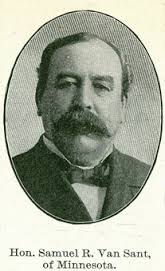
“Samuel R. Van Sant takes office as the state’s 15th governor on January 7, 1901. He began his career as a riverboat builder on the Upper Mississippi. As Minnesota’s fifteenth governor, he led the fight to brake the runaway powers of the railroads.” * 

Read an excerpt of what it meant to be a “trustbuster” in his era?

“The second was the establishment of the State Board of Control to take on the railroad monopolies. The old riverboat captain didn’t have much love for his main competition on the iron rails. He particularly detested the Northern Securities Company run by James J. Hill and J.P. Morgan. The jovial riverboat captain turned out to be a very determined trustbuster. Van Sant’s battle soon turned into one of the biggest court dramas to ever come out of Minnesota in this suit to dissolve the Hill-Morgan railroad monopoly. He soon won the backing of President Teddy Roosevelt under the newly passed Sherman Antitrust Act. In 1904 the Supreme Court, by a vote of 5 to 4, upheld the determination that the Northern Securities Company was an illegal restraint of trade and the trust was broken up.” **

Father, thank you that Van Sant fought the monopolist powers of Minnesota in his term. His experience with the Northern Securities Company underscores an achilles heel of free markets; highly successful companies may eventually eliminate the competition in their fields and form monopolies or oligarchies. The most sought after form of land transportation of the North Star state was controlled by just two men; James J. Hill and J. P. Morgan. 

You have given us clues in the Bible regarding property rights and ownership. Tribal allotment of specific geographic territories are described in the book of Joshua. All  descendants of the sons of Jacob had land based on birthright. Land could be bought and sold, more like leased, but only for a fixed number of years until the Jubilee.

The Year of Jubilee described in Leviticus 25:8-13 is a year of pardon, for personal sins, debts, release of slaves, and a return of tribal property. So, we currently practice ownership of property, but do not have a system for forgiveness whether personal, labor, or property-based. Some may argue that bankruptcy fulfills this role, but is incomplete when compared to the model of the Pentateuch.

Although the Supreme Court upheld the position of the people regarding the railroad monopolies, we have no universal reset button for society like You describe! How do we enact Your standards in modern society? We hold property, but are not tied to specific geography on the basis of our tribes unless we are Native Minnesotans. We are disconnected from the land, and from each other! Is it because there is so little forgiveness in our modern system based not on wealth, but debt? 

That said, Merciful One, do not let us be vain towards the successful, or return shrewdness with the counter-judgment of punishment! Will You forgive Minnesota its bitterness towards Morgan and Hill, and their company? Will You forgive them their “drive to power”? Most cannot relate to the unchecked influence of men like Morgan and Hill, but perhaps they can relate in a smaller way. If we have the power to change everyday situations in our favor, will we use it? Or misuse it? 

Father, will You forgive us when we look expectantly and only to our system for justice? We are vapors that dissipate in a day! You are the only unchangeable personality in the universe. You are self-content and not subject to bribery. Your integrity allows us to enter into justice if we are open to self-examination as well as other-examination! 

* http://www.mnhs.org/about/dipity_timeline.htm

**Tuma, John. “Let’s Not Go Backward.” Conservation Minnesota March 2012 Web. 22 Jun. 2013. http://www.conservationminnesota.org/news/headlines/lets-not-go-backward/

*** More flavor on Governor Van Sant? https://www.nga.org/cms/home/governors/past-governors-bios/page_minnesota/col2-content/main-content-list/title_van-sant_samuel.default.html


Standard
19th Century, 20th Century, History, Intercession, Judgment & Counter-Judgment Cycle, Logging, Men, Minnesota, omnipresent history

Lumbering Maximum 1900

Unknown

1900

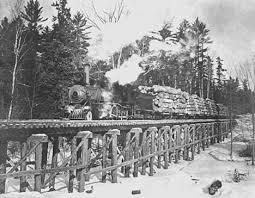
“At the height of the lumbering era, 40,000 lumberjacks are cutting timber in the north woods. Minneapolis is the sawmill capital of the world, cutting enough lumber to fill 65,000 freight cars. But Minnesota is running out of pine; within twenty years the lumber industry will be dead in Minneapolis.” *

This interesting oral history by Jim and Bernard Pearson describes the day-to-day lives of the men logging in Northern Minnesota during this era. 

“The Pearsons showed their audience old tools of the logging camps.  There was the pickaroon the camp blacksmith made from a worn-out ax which was used to pull logs by hand.  There was also a grub hoe for removing brush by hand, a broad as to square up logs for building log structures, a cant hook for turning logs, and a come-a-long for lifting logs by hand.

The cutting of the logs was done in the winter when sleds could be used to pull the logs from the woods to a river to float them downstream to a sawmill in the spring when the water ran fast.

Loggers didn’t rely just on the frozen ground to sled out the logs, according to the Pearsons, but constructed troughs of ice for the runners.  The troughs were made by hooking a plow to the side of a sled to make troughs in the snow in which water was poured to form ice.  These troughs had to be continuously built up throughout the winter, the Pearsons said.

The Pearsons also talked about the care of horses, which were vital to the logging.  Jim told how some of the loggers would carry a ballpeen hammer to tap snow out of horseshoes.

“My uncle especially loved animals, and his horses were very big,” Jim recalled.  “If any teamster (driver) mistreated his horses, they went down the road (were fired) so fast they didn’t now what happened.”

(Jim) described the lumberjacks as hard working and very honest individuals, who had always given their best. But Bernard, during the interview last week, also portrayed some of the lumberjacks and logging camp operators as not so honest.

Bernard said, for example, that in the worst camps, the operator would hire someone to gather up workers for the winter season that included dropping a knock-out pill into a man’s drink in a saloon.  “The next thing the man would know he was in a logging camp way up north,” said Bernard.  “There were rascals on both sides.” “ **

Father, a lot of time and thought has gone into recording the history of the wealthy and powerful “lumber barons”, but it seems not much is known about the men who actually did the work. Will You guide the author into the stream of Your thoughts on the subject? Will You give us a new frame of reference for these Minnesota loggers, and the effect of this massive harvest of trees?

As for the workers, the physicality of their respective jobs inspires awe: cutting huge trees down by saw or axe, squaring logs by hand, loading them on sleds, and moving them to the river. Once at the river, prepped logs were managed on their journey south by the “river pigs”. These were crews of men men who were responsible to float the logs to their proper destination at a plethora of sawmills. 

As with many things, logging seems simple in principle, but requires incredible endurance, skill, and risk in practice. Eternal Father, will You honor those who poured their soul into this labor? Will You remember their broken blisters, and aching backs? Will You remember those who took joy in working outside, all day, in the numbing cold? 

Will You bless them and their inheritance from this era, to the present, and on to the future? 

Another thought, men often feel validated in their masculinity by performing an epic task together. They sail into the unknown, each man privately harboring reservations, but going beyond those self-imposed limitations by the strength that comes when men are part of a team. Lord, thank You for past loggers’ example of this teamwork. Will You strengthen the bonds of men, and forgive us for emasculating our brothers?

In the present, we may sit in judgement of these people for their contribution to exhausting magnificent forests through clear-cutting. “What were they thinking? Didn’t they know they were acting like shock troops executing millions of innocents? Why would you kill mother earth over a job?” However, we have the historical vantage point of witnessing that natural resources can be used up, and that human interaction with the environment may yield unseen and unintended consequences.

As a witness to such present attitudes, the author wishes to address with You our use of the term “exploitation” as it applies to past Minnesota logging. Will You forgive us the casual use of this label? Will You forgive us if we unfairly apply present environmental and economic standards on our forbearers? Will You forgive our common humanity in Minnesota of viewing Your forests, that You graciously allow us rights of temporary stewardship, as “our forests” or “our property”? We do not often think of property rights as a continuum of which we are a temporary subset. 

Truly, we all are parties in “exploiting” Your forests! We breathe air daily! We live in houses of wood. We write with pencils of wood on paper of cellulose. We use toilet paper, and simultaneously write graffiti on the walls criticizing the “exploiters” of the environment! We apply standards to others that we do not apply to ourselves! We fail to see the log in our own eye, and browbeat others about the speck of sawdust in theirs! 

Furthermore, contemporary history does not often enter the mindset of these predecessors. Perhaps in their age, in the late 19th and early 20th centuries, people exercised a different logic than ours. They had a much stronger sense of agriculture than those who buy 2×4’s at the lumberyard, or food from a grocery store. If they wanted food, they had to plant it, tend it, and harvest it. 

When their corn reached fruition, they harvested it, and took everything. When they saw forests full of mature trees, they brought in the harvest. Is it possible that they trusted that such a generous yield would surely supply their generation? 

In the life experience of most of these workmen, most commodities gathered locally were used locally. Is it possible that such workmen did not conceive of the national or international cravings for the White Pine of Minnesota? Were the men working in these logging camps aware that they tree they just felled was to become a floor joist in an English factory? If they were aware, did that make their labor’s reclassify from “sustainable” to “exploitive”? Hear my questions, Lord, and forgive us all our attempted harvests without Sabbaths of Your forests!

* http://www.mnhs.org/about/dipity_timeline.htm

**  Stottrup, Joel. “Logging White Pine.” Princeton Union-Eagle, May 1993. Web. 20 June 2013. http://www.baldwintownship.govoffice.com/index.asp?


Standard
19th Century, Agriculture, dairy farming, farming, Food, History, Intercession, Judgment & Counter-Judgment Cycle, livestock, Minnesota, omnipresent history

Butter Capital of the World 1899

butter-welcome-sign.jpg

1899

“Steele County proclaims itself the “butter capital” of the world, a title it advertises into the 1920s. With 24 cooperative creameries among its 17,000 residents, it’s the leading dairy county in the state.” 

Thank You for this southern Minnesota county, Lord! Thank You that they had a sense of purpose in making butter. Throughout history, You have exhorted believers to identify with their work. ‘Avodah’ is the transliteration of the Hebrew word for worship and work. The root word means to work or to serve. ** The word “worship” in English could accurately be described as “worth-ship”, and the people of Steele County seemed to understand this sacrament.

Father, will You bless Steele County, its land, people, animals, and all who make butter in this state? Will You honor their heritage of taking joy and pride in doing this task, and working to refine their craft? Thank You for creating such perfect pastures, weather, and seasons for raising healthy bovines!

Forgive us who do not comprehend the labor involved, or excellence of our dairy industry. We simply spread butter on our toast, put cream in our coffee, and do not acknowledge the myriad of right choices that were made to ensure a quality end product. Thank You for the dairy farms! Thank You this day for the dairy farmer who is there for every milking, rarely takes a vacation, and is extremely committed ’round the clock to his (or hers) cows’ health and the milking schedule! Will You give honor to these men and women, boys and girls, who choose this of life of dedication? Will You continue to give them Your creativity and imagination for all aspects of dairy farming, and butter production in Minnesota? 

** http://ag.org/top/church_workers/wrshp_gen_avodah.cfm

***Learn more about the dairy farmers of Minnesota? http://www.mnmilk.org


Standard
19th Century, Governors, History, Indian, Intercession, Judgment & Counter-Judgment Cycle, Minnesota, Native Americans, omnipresent history, Politics, State Government, Treaties

Lind Becomes Governor

pf098016

January 2, 1899 to January 7, 1901

“John Lind takes office as the state’s 14th governor on January 2, 1899. Lind, an outspoken political maverick, campaigned zealously for adoption of a more equitable tax burden, enlightened concern for the sick and poor, and direct elections of state officials. Although most of his efforts to change society failed, Lind paved the way for subsequent reform and Minnesota’s transition from an agrarian to an industrial society.” * 

Thank You for the struggles of John Lind. Thank You for all Minnesotans’ who have bucked at the limitations of the two-party system. Thanks that his heart was tender to others that wrestled with the industrial giants of their time, and usually lost.

Why this struggle? The people knew Minnesota had riches: excellent dairy pastures, productive farmland, timber, iron ore and minerals, thousands of lakes, and a waterway that crossed half a continent. What was there to complain about? Commodities are valuable if they can reach the markets that have need for such resources. What if the “middlemen” ate them alive with storage fees, transportation costs, and sales commissions? Or what if the laws of one’s business were written by giants for giants?

Lord, I don’t know many details of these Lind years, but I see this conflict as a worthy subject to acknowledge to You. Will you forgive our judgements of the land hunger of the giants of timber, iron, farmland speculators, and railroads that began on January 2, 1899 and still prevail? Will You also forgive the land hunger of Minnesotans’ that displaced the Anishinaabe (Chippewa, Objibwe)? Below is an excellent local source on these First Nations.

“Anishinaabe Reservations

The seven Anishinaabe reservations include: Grand Portage located in the northeast corner of the state; Bois Forte located in extreme northern Minnesota; Red Lake located in extreme northern Minnesota west of Bois Forte; White Earth located in northwestern Minnesota; Leech Lake located in the north central portion of the state; Fond du Lac located in northeast Minnesota west of the city of Duluth; and Mille Lacs located in the central part of the state, south and east of Brainerd.

All seven Anishinaabe reservations in Minnesota were originally established by treaty and are considered separate and distinct nations by the United States government. In some cases, the tribe retained additional lands through an Executive Order of the President. Six of the seven reservations were allotted at the time of the passage of the General Allotment Act. The Red Lake Reservation is the only closed reservation in Minnesota, which means that the reservation was never allotted and the land continues to be held in common by all tribal members. Each Indian tribe began its relationship with the U.S. government as a sovereign power recognized as such in treaty and legislation. The Treaty of 1863 officially recognized Red Lake as separate and distinct with the signing of the Old Crossing Treaty of 1863. In this treaty, the Red Lake Nation ceded more than 11 million acres of the richest agricultural land in Minnesota in exchange for monetary compensation and a stipulation that the “President of the United States direct a certain sum of money to be applied to agricultural education and to such other beneficial purposes calculated to promote the prosperity and happiness of the Red Lake Indian.” The agreements of 1889 and the Agreement of 1904, Red Lake ceded another 2,256,152 acres and the Band was guaranteed that all benefits under existing treaties would not change.”

Will You forgive the Anishinaabe their land hunger for tribes that they may have displaced? We seek Your judgement and restitution for our losses. You are the Master of Apportionment! We all are but temporary occupants of Your lands! Will You give us Your sense of mercy and justice towards our neighbors whether past, present, or future?

Will You forgive our claim to Your land also known as Minnesota? Will You forgive our claim to Your intellectual property: air, water, plants, minerals, animals, weather, day, night, and people? You have given enough for all! You let us play with Your building blocks! Let us be worthy builders! 

Father, help us deal with our pain that drives our anger. You have said in Ecclesiastes that there is:

3A time to kill, and a time to heal; a time to break down, and a time to build up; “

We often see anger as only negative, or as the expression of an emotion that separates us. Yet, it is the expression of anger that often lets others know that our boundaries have been crossed. There is an anger that is mad at separation.

Will You bless Governor Lind for expressing this kind of anger; the anger at injustice? Lind was known for having a temper. According to an article on the front page of the Moose Lake (Minnesota) Star on January 17, 1901: “Ex-governor John Lind after having freed himself from the duties of governor last Thursday walked down to the Dispatch office in St. Paul and administered to Editor Black a well-deserved licking. For a one armed man John Lind can make some telling blows once in a while.” *** 

* http://www.mnhs.org/about/dipity_timeline.htm

** http://www.indianaffairs.state.mn.us/tribes.html

*** http://en.wikipedia.org/wiki/John_Lind_(politician)


Standard
19th Century, Architecture, History, Intercession, Judgment & Counter-Judgment Cycle, Minnesota, omnipresent history, State Government

Capitol Construction 1898

mn-capitol4

1898

“Alexander Ramsey, the 83-year-old first territorial governor of Minnesota, lays the cornerstone of the new state capitol. The building is completed after eight years of construction and a cost of $4.5 million. It is occupied in 1905. The building has been designed by local-architect-made-good Cass Gilbert, who also laid out the U of M campus and will draw up tall buildings in New York city.” *

Capitol buildings are symbols. They are designed for utility, but also to exude the authority and permanence of the state, the government, and the people they represent. Gilbert saw us as inheritor’s of Greek and Roman forms of representational government, and designed a capitol that reflected those influences.

It is easy to imagine that the farmers and loggers looked up and wondered, “What does all that marble have to do with lumber? The rotunda looks like a grain silo, but nothing is in it!?!” ‘Permanence’ to Gilbert may have looked like ‘opulence’ to citizens of the North Star state. Most were still recovering from the Panic of 1893.

“The Panic of 1893 was a serious economic depression in the United States that began in 1893.[1] Similar to the Panic of 1873, it was marked by the collapse of railroad overbuilding and shaky railroad financing, resulting in a series of bank failures. Compounding market overbuilding and the railroad bubble was a run on the gold supply. The Panic of ’93 was the worst economic depression the United States had ever experienced at the time.” **

In any regard, Lord, will You honor the heart of the architect Gilbert? Will You bless those Minnesotans’ who follow in his passion for designing our buildings and structures? Will You bless the workmen, both here and around the world, who provided their excellent labor and skill to create such a building?

Lord, will You forgive any judgments of the cost of the building during a time of economic  struggle? Will You forgive the politicians’ their excesses and pride in their workplace? Like the silo analogy, will You fill the rotunda with Your substance and vision, and not just a grandiose view?

** http://en.wikipedia.org/wiki/Panic_of_1893

*** Delve into the life of Cass Gilbert. http://www.cassgilbertsociety.org


Standard
19th Century, Archaeology, Exploration, History, Humor, Intercession, Judgment & Counter-Judgment Cycle, Minnesota, omnipresent history, Science, Uncategorized

Ohman Discovers Runestone 1898

Unknown-1

1898

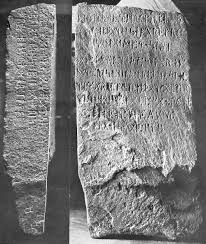
“Olaf Ohman turns up a stone on his farm near Alexandria and sparks a controversy. What appears to be ancient Norse writing on the stone indicates that Viking explorers reached Minnesota in 1362–130 years before Columbus’ voyage. Many scholars dismiss the Kensington Rune Stone as a hoax, but the debate continues into the present.” *

Father, what to make of this Rune Stone controversy? Some analysts have stated that it is an expertly contrived joke or hoax, but others still maintain authenticity. I believe that You are sovereign. It is not beyond You to save a tablet from view in a glacier, and deliver it to Ohman’s field at the right time. It is not beyond You to introduce us to new discoveries that remake the rules of science and history. 

Forgive us! We do not know too much, but far too little! Yet our pride blocks our receptivity to a view that challenges our formed perceptions! Lord, You know Ohman’s heart! If he erred on the side of regional or ethnic pride, will You forgive and expose that motivation? If he was an honest man who made an amazing discovery that was distasteful to scholarship and rejected, will You also bring this to light? If he was a master practical joker who went to his grave snickering, will You forgive anyone who was hurt by his hoax? However, will You bless and honor the man’s sense of humor? We need more funny people in this state!

* http://www.mnhs.org/about/dipity_timeline.htm

**Visit the museum in Alexandria, MN? https://www.runestonemuseum.org/runestone/

***Evidence that the Rune Stone is a forgery? 

http://scienceblogs.com/aardvarchaeology/2011/11/16/kensington-runestone-fakers-si/

****Evidence pointing to the stone’s authenticity?

 http://www.econ.ohio-state.edu/jhm/arch/kens/kens.htm


Standard
19th Century, Agriculture, History, Intercession, Judgment & Counter-Judgment Cycle, mail, Minnesota, State Government

Rural Free Delivery 1896

Unknown

1896

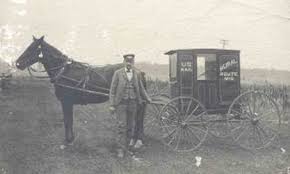
“Rural Free Delivery brings the mail directly to Minnesota farms. Service develops slowly, but within five years, 134 routes are serving 67,000 people. A 1900 U.S. postmaster general report shows that RFD increases correspondence, postal receipts, and the circulation of newspapers and periodical literature; it also stimulates road improvement. 

There is a downside, however. Rural Free Delivery threatens some merchants and several small towns who are used to having farmers come in occasionally just to get their mail (making local post offices centers of social and political life). In the coming years RFD contributes to the closing of many fourth-class post offices and the disappearance of some small villages.” *

The introduction of Rural Free Delivery in Minnesota is such a perfect example of    how change, even well-intentioned, can wreak havoc on human relationships. We are capable of adjusting to change, but the period of adjustment is often messy. Here we see how the reasonable and good desire to receive mail directly becomes a point of contention perhaps because it breaks the flow of relationships. 

Lord, will You forgive us for offenses taken during this period of change? Will You bless all those past, present, future who live on those 134 mail routes? Will You temper our perceived need for more information, served more securely, making us even more independent? Will You bless the mailmen, past, present, and future, and continue to make them a connecting point in Minnesota?

P.S. Will You also protect them from dogs, and protect the dogs from them?

* http://www.mnhs.org/about/dipity_timeline.htm

**Check out “Behind the Badge” of Smithsonian National Postal Museum on RFD?

https://postalmuseum.si.edu/behindthebadge/rural-free-delivery.html


Standard
19th Century, Governors, History, Intercession, Judgment & Counter-Judgment Cycle, law, Minnesota, omnipresent history, Politics, Prayer, Social Studies, State Government

Clough Becomes Governor 1895

images

January 31, 1895 to January 2, 1899

“Lieutenant Governor D. M. (David Marston) Clough becomes the state’s 13th governor on Jan 31, 1895, when Governor Knute Nelson resigns to take a seat in the U.S. Senate. Clough’s first administration was notable for the ratification of significant amendments to the state constitution, including those establishing a Board of Pardons, withdrawing the right of aliens to vote, and authorizing municipalities to frame “home rule” charters. During his second term, narrowly won in 1896, the legislature raises taxes on several private industries and enacts child-labor laws.”* 

Governor Clough seems to be a reformer,** and it is no wonder given the times he lived in. The Panic of 1893, started in European markets, and spread to the United States until 1897. It rocked everything, but Minnesotans probably felt it most in commodities: lumber, ore mining, farming, and the rails that delivered it all.

Changing the rules during the game is a delicate business, let alone the constitution of a State. The volume of changes Clough enacted suggests his reforms were supported by the people. But what is the spiritual weight of even one of these reforms?

Establishing a Board of Pardons may suggest a few motives. Minnesotans experienced the ‘power plays’ of economic interests; the farmers vs. the railroads, the individual landowner vs. the lumber barons, etc. Perhaps the Board of Pardons appealed to their sense of mercy to neighbors who experienced this type of injustice. Where there is favoritism under the law, hopelessness and bitterness are not far behind.

Here is where we appeal to You! As a Minnesotan, will You forgive us the anger and bitterness stemming from this era in the fields of lumber, mining, farming, and transportation? Will You release the justly offended parties from the weight of being right? Will You free the powerful from their offense of misusing their power to strip the rights, property, and humanity from those they opposed? 

Eternal Father, one can still perceive the sadness of the Range, of Duluth Harbor, of small towns, farms, and Indian reservations where these conflicts arose. Will You change this atmosphere of the heart? Will You restore lost hope, property, and inheritances? Will You give favor to these specific peoples and geographic locations?

Will You bless the inheritance of Governor Clough, whether directly to his family of origin, or those who share his vision? Will You keep us from swinging to extremes? Will You help us stop the cycle of offense/counter offense, judgment/counter judgment?

***An Inventory of His Gubernatorial Records at the Minnesota Historical Society 


Standard