19th Century, Black History, Culture, History, Intercession, Minnesota, women

Rebuffing Slavery  

Eliza Winston

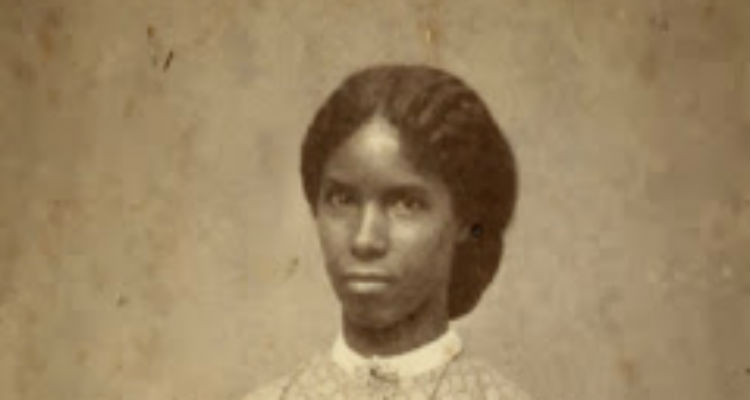
Eliza Winston, nanny,  circa 1860


1860

“Slave Eliza Winston accompanies a Mississippi family to Minneapolis. When free blacks and white abolitionists learn that Eliza wants her freedom, they complain to a judge who orders her freed. Some pro-slavery people become angry at the court’s decision; Eliza is sent to Canada for her safety.” *

Thank You for Eliza Winston, and for that You had a purpose in her trip to Minneapolis long before she knew about it. Thank You for Your awareness of every pain, and every tragedy. Thank You that spoke through Paul for the freeing of the slave Onesimus, and therefore, it can be assured that freeing any slave is dear to Your heart.

Jesus, I know so little of this case, and I appeal to You to fill the blanks. Will You forgive the hostility Eliza received from here detractors here, and perhaps from the state court? Will You forgive those who harbored hostility towards her despite our state court’s decision?

G-d, I see the exposed roots of ethnocentrism and racism. Will You dry up these bad roots in Minnesota, and bless the heritage of Eliza Winston? Will You free her heritage from counter-judgments of our legal system, or any who would diminish a person’s value based on skin color? Will You shield us from making bad decisions because we are the object of wrath and anger?

http://www.mnhs.org/about/dipity_timeline.htm

Standard
19th Century, abolition, African American, History, Indian, Men, Minnesota, Native Americans, News, women

Abolitionist Newspaper 1857

Unknown-6

1857
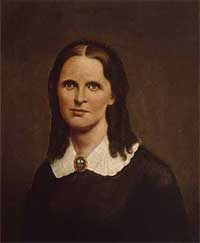
“Jane Grey Swisshelm, an outspoken critic of slavery and unequal treatment of women, moves to Minnesota in 1857 and publishes the St. Cloud Visiter newspaper. Mobs twice destroy her printing office, but she continues her courageous crusade for equal rights with the “St. Cloud Visiter” later renamed the “St. Cloud Democrat.” *

Jane G. Swisshelm was a pioneer in all senses of the word: in travel, in her passionate writings, and inwardly. She saw observed the cruelty of slavery when she lived in Kentucky. She lost her mother in Pennsylvania, and shortly afterwards, her husband lost his business. She moved to the Midwest to start over, joining her sister nearby. **

Already a established as a strong voice for abolition during her decade in Pittsburgh, she became the editor of a newspaper named the “St.Cloud Visiter”. Though owned by a Democrat, (who in those days were not usually abolitionists), she insisted on representing the paper as such. In effect, she offended local Democratic sensibilities resulting in the destruction of the “Visiter’s” offices and printing presses. ***

In the following decade, she aimed her pen at the Dakota Nation of Minnesota. Originally a supporter of Native Americans, the Dakota War of 1862 and their atrocities of unprovoked attacks on their neighbors changed her mind. Incensed by Native attacks, she even lobbied the Federal Government that more strident measures be taken against them. ***

Today, we thank You for voice of Jane Swisshelm, and her commitment to vigorously and forthrightly speak her mind. Her story is a cautionary tale that no individual, tribe, or nation gets it right all the time. Irregardless of passion, we all have an incomplete picture of the truth.

American politics of her day may shock modern ears; Republicans led the charge in the abolition of slavery, and the vast majority of slave states held to Democratic politics. Will You forgive us our over-identification with partisan politics in this era, and our failure to unite to oppose the evils of slavery? Will You forgive us our sins of partisan rhetoric, and more specifically to Swisshelm where her words unnecessarily broke relationship with our Southern brothers and sisters?

Next, we fail to understand much of the context of her era, and may draw some wrong conclusions from the women’s rights movement. Certainly, some 19th Century women suffered harsh abuses at the hands of men, often without hopes for a legal redress of their grievances. (We praise You that most of these legal issues are corrected, and that American women have known exceptionally high-status and equality when viewed through the lens of human history.)

Yet, our preset-day perspective may cause us to miss the ways that 19th Century male-female relationships were strong. Children trusted that their fathers’ were committed to provide for them. Wives trusted that their husbands’ love meant shelter and protection. Families busy with survival did not have lots of time to deal with legal or political issues, and often for them, it made sense to trust dad with that role.

Jesus, thanks that You have made us to be free. Will You forgive the city of St. Cloud and Minnesota any infringement of the freedom of Jane Swisshelm? Will You free us from her sinful judgment’s against those she opposed; broadbrushing all men, those who disagreed with her method of abolition, and promoting punishment against the Dakota? Thank You that Minnesota has raised awareness of the status of women and those in bondage through her voice! Thank You that even her words of judgment against the actions of a few hundred Dakota, as harsh as they may be, record the specifics of broken relationships. Will You enter into these rifts, bring humility, and restore to us a place in Your Land-Clear-Blue-Waters? Amen.

http://www.mnhs.org/about/dipity_timeline.htm
** Swisshelm, Jane Grey. Half a Century. Chicago: Jansen, McClurg, and Company, 1880.
*** Webster, Eric W. “Swisshelm, Jane Grey (1815–1884)”. Internet. https://www.mnopedia.org/person/swisshelm-jane-grey-1815-1884

Standard
19th Century, education, History, law, Minnesota, Native Americans, women

Saint Paul’s 1st Public School 1847

bishoporig

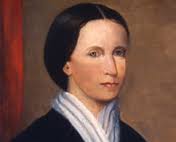
New Englander Harriet Bishop arrives in St. Paul and opens the town’s first public school. In a log cabin that had once been a blacksmith’s shop, students sit on wooden benches while chickens wander in and out.*

Thanks for Harriet Bishop and her desire to make education ‘public’. There were few opportunities for female teachers in New England, and she relished the adventure of moving west into unfamiliar territory.  She credits Harriet Newell and Ann Bishop, missionaries to Burma, as her inspiration.

The first school house, which she opened in a former blacksmith shop on July 19, 1847, was a “mud walled log hovel… covered with bark and chinked with mud” at what is now St. Peter Street and Kellogg Boulevard in the relatively isolated fur trading post of Saint Paul. Of the seven students in her first class, only two were caucasian. She had to rely on a student who was fluent in French, Dakota, and English to translate for her classes (which she taught in English). http://en.wikipedia.org/wiki/Harriet_Bishop

It’s astounding to think that most schools in our nation were private or parochial at the time. Public schools were often for the benefit of Protestants and the poor, whose communities did not have the resources or organizational structure to support them. How far we have come from this log cabin filled with students and wandering chickens!

However, presently we fail future generations because learning is disconnected from the Omniscient One. We have generations leading lives filled with facts, technology, and the benefits of science, but detached from meaning or a reason for being. This state was made by our Loving God, but even Your presence in school is an affront to the humanistic underpinnings of our current system of education! Will you forgive us this offense? Will You forgive our education system, legal system, and hearts where we have blocked You, and therefore any real sense of Divine Purpose, from our lives!

Today I remember the risk of Harriet Bishop, and her heart to see all children learn! Perhaps her home culture did not value her, but we thank You for incredible contributions to our state! Will You bless her, and all like her, who bravely risk the frontiers of our educational system?

Will You forgive any arrogance and academic pride of our forbearers, as You forgive us those same separations in the present? Will You bless future schools of Minnesota with wonder and awe of knowledge beyond our reach? May we remember the Infinite One who perceives the oceans of information beyond our drop in the bucket! May we receive Your forbearing spirit for each other, and a willingness to honor each other in Minnesota’s classrooms regardless of our faith in God or man?

Standard