18th Century, Catholic, Culture, Exploration, History, Intercession, Jesus, Minnesota, Native Americans, Transportation

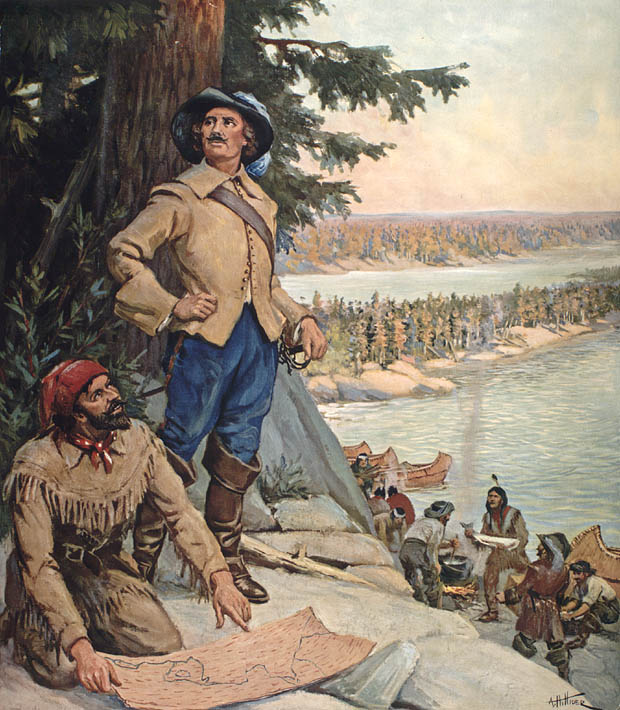
La Vérendrye & Grand Portage Trail 1731

Google Images

Google Images


“Using a map made on birch bark by Assiniboin guide Ochagach, Pierre La Vérendrye follows the Grand Portage trail from Lake Superior to Lake of the Woods. It is not a way to the western sea, as he has hoped, but fur traders will follow this trail for the next 100 years.” *

Sometimes the easy way is the hard way. A portage is an overland pathway that avoids dangerous rapids or falls for those traveling by river. Ochagach likely thought that the “western sea” that La Verendrye sought was Lake Winnipeg. Regardless of his disappointment, La Verendrye and the voyageurs respected and appreciated the wisdom in taking this 8.5mile trail past the dangers of the Pigeon River.

We often balk at the delays of modern life, even though we have such incredible technologies that serve our whims and convenience. Will You make us like Ochagach, so that we can see the dangers of convenience in our lives? Will You make us like La Verendrye, that we may heed the warnings of our friends to not try to foolishly “shoot the rapids?”

Father, thanks that You lead us on our way. Thanks that You delight in sharing your mysteries with us. Bless the Assiniboin people, Ochagach, and P. La Verendrye for the gift of this trail. Thank you that these two men showed trust to each other! Thanks for the lessons of the portage!

**Note – PrayThroughHistory uses the timeline located for several years at the Minnesota Historical Society Web site, at this URL: mnhs.org/about/dipity_timeline.htm .  Currently the timeline seems to be unavailable.
Standard
17th Century, Catholic, Culture, Exploration, History, Intercession, Jesus, Minnesota

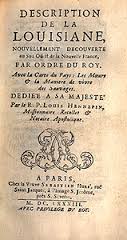
Hennepin publishes book about his travels 1683 

UnknownHennepin exaggerates his exploring feats in a book he writes after returning to France. In one colorful chapter he romanticizes St. Anthony Falls, turning it into a dream destination for adventure travelers. Hennepin becomes famous as his book is translated and read throughout Europe.

Hennepin writes that the falling water “of itself is terrible, and has something in it very astonishing.” Printed in multiple languages and editions, the book’s original title translates to Description of Louisiana: newly discovered to the southwest of New France, by order of the King. With a map of the land: the customs and the way of life of the natives. Dedicated to His Majesty by the R.P. Louis Hennepin, Franciscan missionary and apostolic notary.*

Thank you for choosing Father Hennepin to relay this story to France and the Continent! Often, You choose a spokesman who is imperfectly perfect for the job. In this way, we the recipients automatically relate to the humanity of the message.

Where Hennepin may have exaggerated his adventures; will You forgive him? Will You also forgive those of us like him who may embellish the truth because we lack the trust that the straight story is enough? Will You credit him with the fortitude to put pen to paper, and at least attempt to record what he experienced?

Lord, we are trapped at times by the limitations of words, and especially we historians who wrestle with tone and style. If we insert our voice into historical writing, we may be taken as “too passionate”, or “not impartial.” If we attempt to remain a transparent, neutral reporter, our personality still can betray us through our unspoken biases, our framing of events, and even the limitations or vastness of our vocabulary!

Will You bless those, like Hennepin, who may record our history for those a continent away? Will You give humility to reader and writer to appreciate the limitations of one human’s perceptions? Will You give present and future generations of explorers the bravery to simply write: whether ornamented or truncated?

Lord Jesus, thanks for Your book! Thanks for the power of story to connect head and heart! Will You give power to the stories of Minnesota, and help us to know each other better?

*Note – PrayThroughHistory uses the timeline located for several years at the Minnesota Historical Society Web site, at this URL: mnhs.org/about/dipity_timeline.htm .  Currently the timeline seems to be unavailable.
Standard
17th Century, Catholic, Culture, Exploration, France, History, Intercession, Minnesota, Native Americans

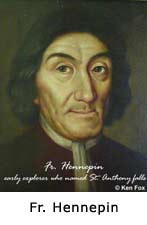
Hennepin at Falls of St. Anthony 1680  


Source:Google Images

“Early explorer who named St. Anthony Falls” copyright Ken Fox


“Louis Hennepin, a missionary with the La Salle expedition in Illinois, is sent up the Mississippi to explore the country. The Dakota stop him and his two companions and take them to a village near Lake Mille Lacs. While Hennepin is with the Dakota, he sees a great waterfall on the Mississippi and names it after his favorite saint–Saint Anthony.” *

Lord, thanks that You position us to encounter Your mystery! I don’t know if Hennepin was stopped by force or friendliness, but thank You that You moved him to see the Falls, and the Dakotas to lead him! What a gift these Dakotas’ shared with a total stranger?! What a generosity of spirit! Will You remember their willingness to share the findings of their exploration? Release us from any false judgments or assumptions, Hennepin to Dakota, or vice versa, that stem from this event. Release Your blessings on both groups; the explorers and first residents of Minneapolis, Minnesota. Amen.

*Note – PrayThroughHistory uses the timeline located for several years at the Minnesota Historical Society Web site, at this URL:mnhs.org/about/dipity_timeline.htm .  Currently the timeline seems to be unavailable. I am hopeful that it will be back up in the future, as it was a valuable, user-friendly tool for anyone wishing to explore Minnesota history.

Standard