19th Century, Agriculture, Architecture, Business, Civics, Energy, History, Industry, Intercession, Labor, Minnesota, Mississippi River

Industry at St. Anthony Falls 1872

640px-Stanthonyrecession.jpg

1872

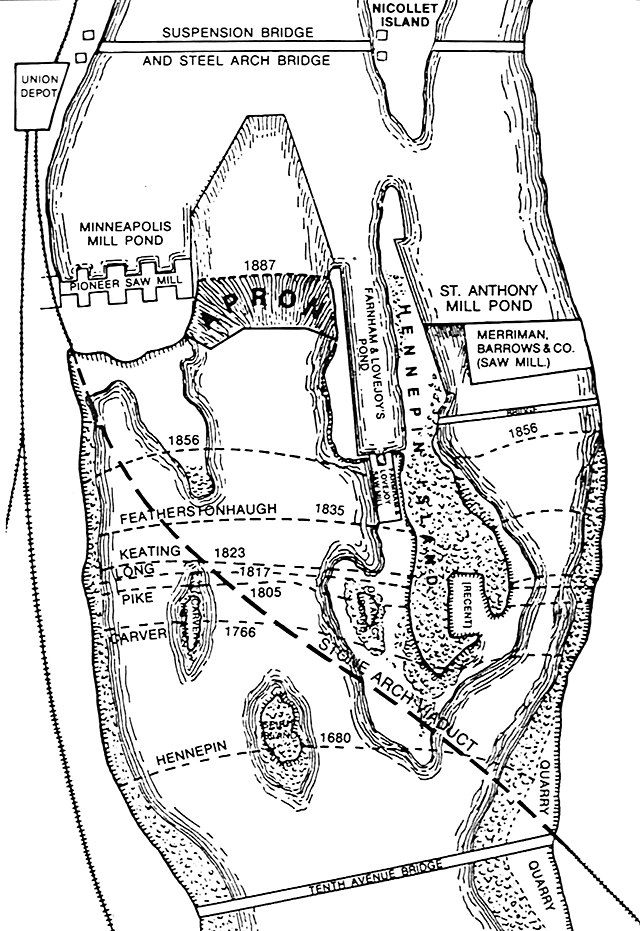
Minneapolis industries cluster around the power of St. Anthony Falls. The Minneapolis Board of Trade estimates that the 95 waterwheels at the falls produce 6,000 horsepower.*

Lord, thank You for the gift of the Mississippi and those who harnessed its power. Thank You for the individuals and groups that contributed to its’ planning and investment? You work through those who skillfully manage money! Will You bless the entrepreneur? You work through those who take major risks to create business?

Too often we are guilty of failing to properly acknowledge the reflection of Your glory through the wonderful skills of tradesmen and women! Do You enjoy watching your people build? Will You bless these and their generations’: the cement worker, the engineer, the steel worker, the electrician, the riggers, the teamsters, and any other who labored on these projects?

Lord forgive us the sin of loving ‘science’ while simultaneously negating your creation. You had a plan for this city far before we began to envision what was possible. You created many electrical systems as well as the principals of hydraulics and physics in nature long before we were alerted to their existence.

How many more mysteries do You have to reveal to us? Forgive this root of ‘scientific pride’ in Minnesota. Will You replace it with humility and eternal curiosity that makes us better stewards of Your creation, technological advancement, and more receptivity to Your ideas?

*P.T.H. cites timeline formerly at this URL: mnhs.org/about/dipity_timeline.htm
The Minnesota Historical Society Web site, http://www.mnhs.org , is fantastic! Check it out! Images are from https://images.google.com/?gws_rd=ssl; again, an amazing resource!
Standard
19th Century, Business, Geology, History, Industry, Intercession, Minnesota, omnipresent history, State Government

Falling Falls

Unknown

1866 to 1880
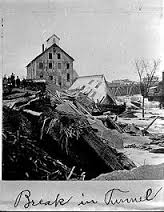
“Construction begins on a wooden apron to protect St. Anthony Falls. Mills depend on the falls for industrial power, and their owners hope the apron will stop its erosion and collapse. Floodwaters destroy this first attempt the following year. Collapses follow. It’s 1880 before a useful apron is completed.” *

The Eastman Tunnel once ran below the St. Anthony Falls, connecting Nicollet island with Hennepin Island. It’s collapse almost destroyed the utility of the falls for the milling industry. Congress gave the Army Corps of Engineers $50,000 to fix the falls by basically filling in the tunnel with concrete, and making a wooden apron. This attempt failed also, and it wouldn’t be until 1874 when a lasting apron would be built.**

Jesus, our life is a series of attempts, successes, and failures. Help us view failures as You do; teachable moments. Thanks that this failure to build an apron eventually led to a successful preservation of the utility of St. Anthony Falls and the milling industry, but at the cost of destroying its’ natural beauty.

Will You bless us again through the Falls and the Mississippi? Will You gift us to persevere today when our work is totally destroyed by forces beyond our control? Will You help us work in harmony with beauty and nature?
http://www.mnhs.org/about/dipity_timeline.htm
** https://www.esci.umn.edu/courses/1001/1001_kirkby/SAFL/WEBSITEPAGES/5.html

Standard
19th Century, Business, Economics, History, Industry, Minnesota, Native Americans, Politics, trade

1st Lumber Mills in MN 1848

history_franklinSteele

Pioneer businessman Franklin Steele builds a sawmill at the falls of Saint Anthony. By 1856, there are eight mills at the falls.*

May I sit with You and observe this chapter of life in my state? Mr. Steele came here through the invitation of the man who would become his brother-in-law; Henry Hastings Sibley, a prominent Minnesotan. He staked an advantageous claim on the east bank of the St. Anthony Falls. Soon, he established a partial dam, sawmills, and a crew upriver to supply him logs, and commence a successful business. **

Digging further, this is what I found:
“But Steele surreptitiously staked the first claim on the choicest land before sunrise on the first day of legal settlement.” *** Is there nothing new under the sun? Once again, a man becomes successful through an inside scoop, and bending the rules to his advantage. We, indeed, are people of mixed motives, bearing both good and bad fruit!

Will You forgive his offense to You in making an illegal claim? Will You forgive his offense to all parties affected in his day whether Native, immigrant, loggers, and sawyers? Will You restore the losses of Steele’s contemporaries?

Yet, we too sometimes exhibit the same heart as Steele; we try to grow beautiful things from ugly roots! We often esteem the shrewd, and shun those led by conscience. We are so in love with success stories that we brush past those whom our heroes stepped on and over in the process. Will You forgive us our “illegal claims” today?

Precisely because I am a man with a mixed up heart like Franklin, I am drawn to Your mercy! Through Your kindness, I can offer honest thanks for the accomplishments of others with on-again/off-again hearts. Thanks for providing ample waterpower in Minnesota! Thanks for the resources of wood! Thanks for Franklin Steele who put together an enterprise to use both for the betterment of Minnesota!

http://www.mnhs.org/about/dipity_timeline.htm
** http://en.wikipedia.org/wiki/Franklin_Steele
*** http://www.nps.gov/miss/learn/historyculture/upload/River_Ch_6.pdf

Standard
19th Century, Business, Economics, History, Industry, Intercession, Jesus, Minnesota

Timber industry begins in Minnesota 1839

6-11_0

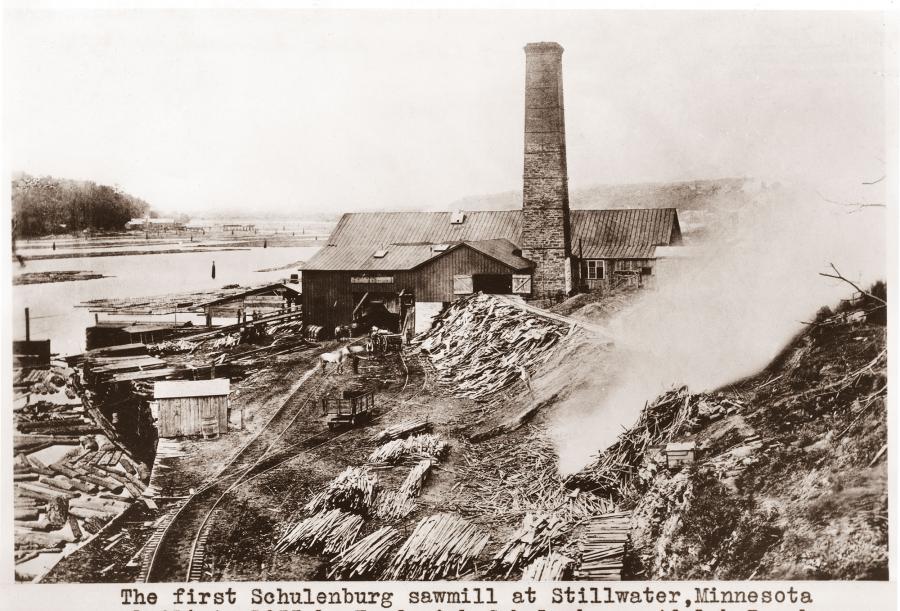
More than two-thirds of Minnesota is covered with trees when Minnesota’s first commercial sawmill is constructed at Marine on St. Croix–the beginning of Minnesota’s first industry.

On the east side of the Mississippi, a vast forest of pine and other evergreens stretches to the Canadian border. Many white pine along the St. Croix River are 200 feet tall and five feet in diameter.*

Jesus, thanks for our timber resources in Minnesota. Thank you for all who have, who are at present, or who will work in our forests in the future! Will You send your blessing into every place where Your Minnesota forests have gone: furniture, homes, barns, fences, etc.? Will You bless every recipient of Minnesota wood as You chop the roots of blame, and judgment, grudge and jealousy, envy and anger?

As you said in Romans 11:16b “…if the root is holy; so are the branches.” At present, will You forgive any worship of nature itself, and the lack of acknowledgement of to the Creator of the Woods? I’m guilty Lord too: we love stuff and use people instead of loving people and using stuff! Have mercy!

*Note – PrayThroughHistory uses the timeline located for several years at the Minnesota Historical Society Web site, at this URL: mnhs.org/about/dipity_timeline.htm .  The current URL is www.dipity.com/Minnesota/History/Minnesota-History/ and only works if typed, not pasted, in browser. It is worth the effort!

Standard