19th Century, education, Exploration, France, government, History, maps, Minnesota, Native Americans, Science, State Government

Nicollet Maps of Upper Mississippi River 1843

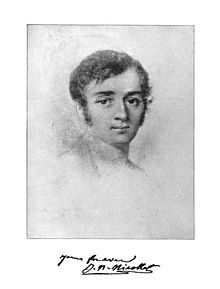
220px-Joseph_Nicollet_001

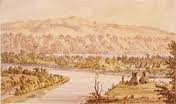
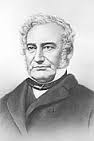
French astronomer Joseph Nicollet’s accurate maps of the upper Mississippi region, made over the course of several visits to Fort Snelling, are published by the U.S. Senate in 1843.*

Thanks for the blessing of accurate maps. Thanks that You give us a real assessment of the situations of our lives. Thank you that good maps help define land uses and indirectly, land disputes!

As I ponder Messr. Nicollet’s involvement in the life of this state, I quickly come to the question, “Why is an astronomer mapping terra firma so far from home?” Although I know so little about astronomy, I can easily imagine that he was trained to map the vastness of space. Perhaps working on such a small scale was a new challenge to him, or no challenge at all. His motives in this work are unknown to me, but would be an interesting campfire story.

However, I am practicing thinking about history as the Eternal Now. This is where Your Spirit leads me. I thank You that You led this man outside his discipline. I thank You that he was taken far beyond his home into the wilderness of North America. I thank You that he shared his gift, even if it was second place to astronomy! Will You bless us as his progeny to embrace the moments in life we are taken out of our expertise, and into the woods?

*www.dipity.com/Minnesota/History/Minnesota-History/

Standard
19th Century, Culture, government, History, Intercession, Jesus, law, Minnesota, Native Americans, State Government, Treaties

Doty Treaty July 31, 1841

Unknown-2


images

James Doty, the governor of Wisconsin Territory, fashions a treaty intended to provide a permanent home west of the Mississippi River for the Dakota, the Ho Chunk, and other tribes. Tracts of land are to be set aside for each band on the left bank of the Mississippi; each tribe is to have a school, agent, blacksmith, gristmill, and sawmill. The initial treaty is negotiated with the Sisseton, Wahpeton, and Wahpekute bands; negotiations with the Mdewakanton collapse. The United States does not ratify the treaty.*

Another treaty I know too little about. Help me, Jesus! Help me, wikipedia! Help me, Library of Congress! Help me tribal websites!

Lord, may I sit and watch this treaty in the making with You? Where do you wish to go? What can You teach about Governor Doty, and the Sisseton, Wahpeton, Wahpekute, and Mdewakaton nations? You are unlimited by time; what does this day of July 31, 1841 look like from the Eternal Now?

It was difficult to find a succinct summary of the Doty Treaty, but these are the pieces I see so far. Governor Doty was a Democrat who befriended Whigs. He seems less interested in party than principle. His intention for these permanent homelands may have come from within or from external motives to assuage land speculators. This is not clear to me yet.

In any case, Good Father, I bring these petitions to You who know each heart. Will You remember the benevolent intentions of Doty’s treaty to supply each nation with permanent claims to land, schools, agents, and the practical industries of his day? Will You bless his efforts to ratify this treaty at the Federal level, in spite of its failure?

I know even less about the responses of the Sisseton, Wahpeton, Wahpekute, and Mdwakaton towards Governor Doty, or how much information they were privy to. As a fellow human, empathetic to these people at this time, may I bring my heart for them to You?

I begin with a general idea; trust. Will You remember the effect on these specific tribes, who have known great fluctuations in spirit from the United States? Will you remember those who negotiated with them in good faith? Will You recall those who broke their trust in the name of our states and nation?

I especially pray for their reactions to times of broken trust much like I would pray for an individual who has undergone a great trauma, neglect, or abuse. We cannot escape some horrors of life, but we can choose our response. Will You break any response of fear, bad faith, or hatred for those that may have chosen such?

Honest One, our innermost lives are in Your plain view. We have offended Your diplomacy when we betray our brother in false negotiations. We have offended You when we break another’s faith. We, too often, think of ourselves as able to make good judgments although we have such an incomplete handle on the truth, or the pain another has lived through. Will you forgive, then and today, these offenses?

Slow us down! May we embrace the pain of choosing to love; to show mercy on our enemies! Will You write “Mercy Over Judgment” over the left bank of the Mississippi, and “Love Your Enemy” over the right bank?

Was this part of Your response, Lord?

“Treaty of October 13, 1846 — A treaty of cessions, and intended acquisition of lands west of the Mississippi River for a new homeland, concluded in the City of Washington. [Proclamation, February 4, 1847; 9 Stat., 878]. James K. Polk, President.”http://www.ho-chunknation.com/available-services/heritage-preservation/cultural-resources/history-of-ho-chunk-nation/treaties-of-the-ho-chunk-nation.aspx

Standard
19th Century, Culture, Economics, History, Minnesota, riverboat, Technology, trade, Transportation

Steamboats 1840 to 1870  

mississippi-riverboat

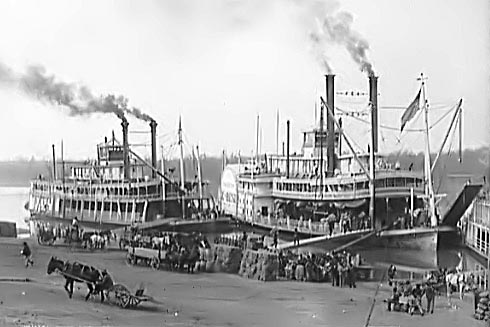
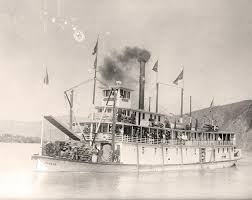
Steamboat trips up the scenic Mississippi are the fashion for Eastern tourists in the 1840s. By the mid-1850s steamboats, carrying supplies and immigrants as well as tourists, arrive in St. Paul at the rate of four or five a day during the summer months.*

Holy Spirit, will You journey with me through the steamboat era of the Mississippi? Will You allow me to bounce ideas off You, and alert me to any related subjects? Thanks that You are in, around and through all times and places! I love You for that!
Thanks for the gift of the steamboat! The idea of going effortlessly upstream must have been revolutionary in 1840. What would be an appropriate analogy to present Minnesotans’; skiing uphill at Afton or Wild Mountain? Maybe waterskiing without a rope or a boat?
I thank You for the relational benefits of this mode of transportation to our midwestern forefathers and foremothers. Technology is often viewed in terms of its innate capabilities, but not in terms of the relationships those capabilities may unlock. Transportation advancements seem to inherently effect relationships by changing how we view our geography.
For example, before the steamboat one imagines that it would be much easier for Northerners to travel south, downstream, on the Mississippi than Southerners to travel north. Is it a stretch to imagine that this creates a one-way relational path? If one can only passively receive visitors, products, news, from the north how would that impact one’s world-view.
Conversely, imagine what it would be like to only be a giver on this unidirectional path. A farmer works all season, loads up his crop, brings it to a river town, and sends it away. He feels the immediate reward of the sale of his harvest, but is largely isolated from any connections to those downstream.
Will You forgive any judgments between north and south based out of this one-way relational paradigm? Will You forgive any resentments based on an identity of being primarily a “giver” or a “receiver”? Will You forgive past judgments based on geographic isolation instead of real relationship?
Lord of Hesed, will You create in our generation a desire for real relationship, while aided by technology, not based on technology? Will You show us ways to reverse any symbolic or real curses resulting from one-way relationships? Will You make our mighty rivers flow upstream, and give us a future of blessed two-way, real relationships with our world and fellow man?

*Note – PrayThroughHistory uses the timeline located for several years at the Minnesota Historical Society Web site, at this URL: mnhs.org/about/dipity_timeline.htm .  The current URL is http://www.dipity.com/Minnesota/History/Minnesota-History/ and only works if typed, not pasted, in browser. It is worth the effort!


Standard
19th Century, Culture, Faith, History, Intercession, Jesus, Minnesota, Native Americans

Ezekiel Gear Arrives at Fort Snelling Apr 28, 1839

Unknown-10

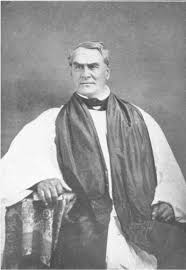
Episcopal priest arrives at Fort Snelling. He is chaplain at Fort Snelling from 1839-1858. He remains in Minnesota until his death in 1875.*

Thank you for Gear, and his commitment to Minnesota. Thank you for the blessing his presence had on early Minnesota and especially Fort Snelling. Thank you for his example to future generations here: we are free to reach across cultural boundaries when motivated by Your love!

It is my belief that we have a limited view of our history. We know in part, and we often project our vantage point onto the characters of the past. Perhaps we need a new lens to view the history of Native Minnesotans and its European settlers? May we equally remembers those that built relational bridges in this meeting of peoples as those who tore them down.

The following excerpt demonstrates where the heart of Priest Gear:

“Ezekiel Gilbert Gear was horn in Middletown, Connecticut, September 13th, 1793. He was ordained deacon by Bishop Griswold in the same church in which he was baptized, and his diaconate was passed in that diocese. He was ordained priest by Bishop Hobart, and was appointed missionary in the western part of New York state. There he labored at Onondaga Hill, Avon, Manlius, Ithaca, Syracuse, Binghamton and Brownsville. He also worked among the Oneida and Onondaga Indians, baptizing, marrying, and admitting many to the communion of the Church. He was present at the confirmation by Bishop Hobart of ninety-seven Indians, presented by Eleazar Williams. We can well imagine that this previous connection with Indian work led him to take an especial interest in advocating, as he did, the beginning of work among the Sioux and Ojibways of Minnesota.”

http://anglicanhistory.org/usa/mn/edsall_gear.html

*Note – PrayThroughHistory uses the timeline located for several years at the Minnesota Historical Society Web site, at this URL: mnhs.org/about/dipity_timeline.htm .  The current URL is www.dipity.com/Minnesota/History/Minnesota-History/ and only works if typed, not pasted, in browser. It is worth the effort!

Standard
19th Century, History, Intercession, Jesus, Minnesota

1st Post Office Established Aug 25, 1827


Minnesota’s first post office is established at Fort Snelling.*

Lord, thank you for establishing a post office here! Communication is a gift and blessing on us and our state! May You provide more inspiration to improve and enhance our technology of communication in the future. May You give us hearts of reconciliation that strengthen the communication of our state by Jesus’ authority!

*Note – PrayThroughHistory uses the timeline located for several years at the Minnesota Historical Society Web site, at this URL: mnhs.org/about/dipity_timeline.htm .  The current URL is www.dipity.com/Minnesota/History/Minnesota-History/ and only works if typed, not pasted, in browser. It is worth the effort!

images-4

Standard
19th Century, Exploration, government, History, Minnesota

Fort Snelling Completed

ft_snelling_sm

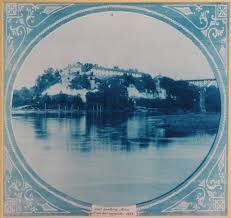
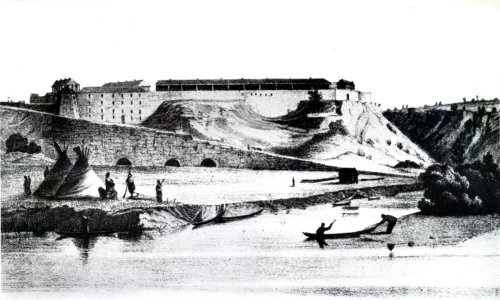
In 1819, the 5th Regiment of Infantry arrived at the junction of the Mississippi and Minnesota Rivers to build the northwest link in this chain of forts and agencies. Here, where traffic could be controlled on two major rivers, Fort Snelling was completed in 1825.*

Lord, thank You for the establishment of order. Ft. Snelling was established to maintain order of our government. Thank You for the Fort’s benefits of regulating trade on the rivers, but forgive any offenses of overstepping its Constitutional bounds. May any injustices starting with the Fort be ended now by Jesus authority. Amen.

*Note – PrayThroughHistory uses the timeline located for several years at the Minnesota Historical Society Web site, at this URL: mnhs.org/about/dipity_timeline.htm .  The current URL is www.dipity.com/Minnesota/History/Minnesota-History/ and only works if typed, not pasted, in browser. It is worth the effort!

Standard
19th Century, Business, Economics, Exploration, Health, History, Minnesota, riverboat, Technology, Transportation

First Steamboat at Ft. Snelling 1823

images-3

The “Virginia” is the first steamboat to reach Fort Snelling. Needed supplies are missing from the cargo, though the boat does carry the umbrella-wielding Italian count Giacomo Beltrami.*

Today’s meditation is on the relevance of the arrival of steamboats in the state of Minnesota. For the author, the practical is spiritual, and often the super-normal is the basis of the super-natural. Therefore, if I want to hear what my Good Father is saying to me today, I may have to slow my thoughts to the speed of a paddle-wheeler headed upstream. That said, below is a succinct general history to amplify this event:

“As early as the 17th Century a handful of explorers, hardy French voyageurs, and missionaries had ventured into the environs of the Upper Mississippi River Valley. Through a variety of relationships that included cooperation, intermingling, and competition with the native inhabitants of the region, several temporary encampments and forts had been established to support the lucrative fur trade. But most historians agree that nothing changed the frontier as quickly as steam transportation.

In April, 1823 the small steam packet Virginia backed out into the channel of the Mississippi from the St. Louis levee to become the first boat to ascend the Father of Waters into what would later become the Minnesota Territory. This remarkable journey was chronicled by Giacomo Constantine Beltrami, the Italian explorer who went on to play an important role in Minnesota history.  A Kentucky family en route to the lead mines of southern Wisconsin on board the 118-foot vessel represented the first trickle of what would soon become a deluge of immigration. Also on board the Virginia for this historic trip was Captain William Clark of the famed Lewis and Clark Expedition of 1805.

Imagine the contrast of traveling in the relative ease and comfort of this sturdy little boat given his experience of just a few years earlier.” **

There is much here to ponder: the new technology of the steamboat, how this technology changed history, and what timeless truths can we grasp from it? Lord of Mighty Rivers hear my simple thoughts and prayers.

Strong Creator, thank You for the scientific properties of water. It’s truly amazing! It’s like Your character, it can appear as ice, liquid, or steam, yet it is always the same substance. You put it into Your creative children to harness this transitional power for the betterment of humankind. Which of their ancestors would imagine that one day their boiling tea kettle would power massive loads upstream against the might of the Mississippi?

Here is my first confession and petition. Lord forgive our lack of imagination, both for ourselves, and for the dreams of others. May we practice to spur this generation to dream, and to the enjoyable discipline necessary to their fulfillment. May we be a voice of encouragement that pushes others to defy the current! Thank You for the symbolic value of the lonely Virginia moving slowly to its destination!

Next, new technology often makes the impossible possible, and the impractical practical. Again, who in the 18th century would think that their steaming iron maple syrup pot could actually become a boiler? And that that boiler would have the power to move unthinkable payloads up and downstream? And that those payloads would enable trade and previously unimaginable lifestyle for the average American?

We, in the 21st century, have the luxury to throw away old socks and t-shirts. Cotton products have become so accessible they are practically disposable. We do not know or remember that our ancestors may have experienced the incredible comfort of cotton articles from the South for the first time because of this steamboat’s success. Conversely, those in the South were likely amazed at the beautiful white flour Minnesota could send them so affordably.

Lord, we don’t often pause to remember what it’s like to do without. We do not see the masterful design of a plain white cotton t-shirt, or ponder that in past generations, it was a garment fit for a king. Or that the greatest chefs of Paris were astounded at the silky wheat flour from some unknown place called Minnesota. It was “Incroyable”!

Incredible Dreamer, thanks that You are not offended by our inventions! Thanks that this steamboat enabled Beltrami to better share his discoveries with a much wider audience. Ultimately, thanks that You take pleasure in our discoveries! May this river valley yield new discoveries and discoverers who make the impossible possible! (Just like You!)

*Note – PrayThroughHistory uses the timeline located for several years at the Minnesota Historical Society Web site, at this URL: mnhs.org/about/dipity_timeline.htm .  The current URL is www.dipity.com/Minnesota/History/Minnesota-History/ and only works if typed, not pasted, in browser. It is worth the effort!

** http://www.winonahistory.org/sesqui/steam/


Standard
19th Century, government, History, Intercession, Jesus, justice, Minnesota, Native Americans, Politics

Taliaferro Becomes Indian Agent 1820  

pinterest

Lawrence Taliaferro

Virginian Lawrence Taliaferro (pronounced “Tolliver”) becomes the Indian agent at Fort Snelling. Respected by the Indians for never making promises he could not keep, he works hard for 20 years to rid the fur trade of whisky and cheating. At last, in poor health and tired of the government’s broken promises, he resigns.*

Lord, thank you for honest people! What pleasure it is to have someone return our phone, admit a mistake in our favor at the cash register, or actually put a lost item into the “lost and found” so we can reclaim it. As King Solomon wrote so many years ago, “An honest answer is like a kiss on the lips.” I simply wish to honor and remember the “honest people” of the world to You today, and commend to You their example.

Father of Honesty, Mother of Truth, today I wish to honor  and remember Lawrence Taliaferro, who crystallizes this type of character. Thank you that he wanted a square deal for Indians of Minnesota who came to him at Fort Snelling. There is such power in a person who is willing to let their yes mean “Yes”, and their no mean “No”.

We are no different than Lawrence. There are many times that we tire of doing good and quit. Often, there is more punishment and criticism for doing the right thing than sweeping the wrong thing under the rug!? Will You forgive our hearts to quit doing right and forgive Mr. Taliaferro!? Will you forgive any assessments he made, probably quite logically, of the Federal government’s failure to honor its promises? Will You bless these specific tribes of Indians in the specific areas that they have been wronged? Will You forgive any tribal counter-judgments or resentments of State or Federal government? Will You begin to heal these centuries-old heartaches today?

*Note – PrayThroughHistory uses the timeline located for several years at the Minnesota Historical Society Web site, at this URL: mnhs.org/about/dipity_timeline.htm .  The current URL is www.dipity.com/Minnesota/History/Minnesota-History/ and only works if typed, not pasted, in browser. It is worth the effort!

Standard
19th Century, government, History, Intercession, Jesus, Minnesota, Native Americans

Leavenworth Arrives in Mendota Aug 24, 1819  

Colonel Henry Leavenworth

Colonel Henry Leavenworth

Colonel Henry Leavenworth and the Fifth Infantry arrive in Mendota to build what will become Fort Snelling at the confluence of the Mississippi and Minnesota rivers.*

Spirit, thank you that You have chosen to live in us! “But you are a shield around me, O Lord; you bestow glory on me and lift up my head.” Psalm 3:3 You are our true fortress. Forgive my attempts at self-protection, or building monuments to my own honor!

Father, we make so many choices as Your people, Your Minnesotans, to act out of a heart of fear and self-protection. We’re just like Leavenworth in that we want to see what’s coming around the bend in the river…first! (Except now we have surveillance that reaches around the corner, far above us, and around the world?!)

Granted, some self-protection is just: houses to protect us from the weather, fences to mark our property, the establishment borders for our counties, states, nations, we don’t talk to strangers, etc. You know the heart of Leavenworth, the 5th Infantry,  the government, or any unspoken parties in this. Will You have mercy on any unjust fears and self-protection resulting from this event? Will You show us how to preserve both security and privacy in Minnesota?

*Note – PrayThroughHistory uses the timeline located for several years at the Minnesota Historical Society Web site, at this URL: mnhs.org/about/dipity_timeline.htm .  The current URL is www.dipity.com/Minnesota/History/Minnesota-History/ and only works if typed, not pasted, in browser. It is worth the effort!

Standard
19th Century, Culture, government, History, Intercession, Jesus, Minnesota, Native Americans, Treaties

Pike’s Treaty Nov 23, 1804 12:00 pm

treatiesmatter.org

Zebulon Pike, a lieutenant in the U.S. Army, meets with a party of about 150 Dakota people at the confluence of the St. Peter’s (Minnesota) and Mississippi Rivers. Pike’s commanding officer, Gen. James Wilkinson, wants to obtain sites for future military posts in case of war with Great Britain. Pike makes a deal with two Dakota leaders for roughly 100,000 acres of land; enough for the U.S. government to build a trading post and fort. Though the boundaries are poorly defined, the agreement becomes the basis for U.S. claims on the land at the confluence. The “treaty” was ratified by Congress in 1808, but since Pike didn’t have the authority of the U.S. Senate or the President, it was not an official government act. According to an 1856 Senate committee report, “There is no evidence that this agreement, to which there was not even a witness . . . was ever considered binding upon the Indians, or that they ever yielded up the possession of their lands under it.”*

Lord, I praise Your omnipotence, omniscience, and omnipresence! I’m grateful that You are “Faithful and True”! Lord, because You are omnipresent, may I observe this event with You? It appears that Pike’s Treaty of Nov. 23, 1804 @12:00pm is lacking: “poorly defined boundaries”, “not even a witness”, “Pike didn’t have the authority of the U.S. Senate or the President.” This is a legal issue for us as inheritors of the actions between the Dakota peoples present, Pike, Wilkinson, the U.S. Army, and indirectly to Great Britain, and anyone else present and unrecorded.

Jesus, thank you that You love clear boundaries. Your word says:

“Do not move an ancient boundary stone or encroach on the fields of the fatherless, for their Defender is strong; he will take up their case against you.” Proverbs 23:10,11

“Judah’s leaders are like those who move boundary stones. I will pour out my wrath on them like a flood of water.” Hosea 5:10

Lord, will You have mercy on the confusion, injustices, and bitter responses to this event? Will You bring conviction of sin, Holy Spirit, to victim and victimizer? I remember these things to You today. Come and heal our land!

Also, Lord I acknowledge my ability to run over another’s personal boundary stones. I have sinned against You, myself, wife, family, etc. through sinful force of will. Lord have mercy! We as Minnesotans’ and Americans’ and Native Americans’ are all guilty of not respecting another human’s limits. We have offended You when we hold offense in our heart towards ANY of Your children! We have offended You when we use the power of law, popular opinion, and the authority of government to FORCE another’s actions for our gain and benefit.

Hear my prayer, King of the Universe, because You are: “The Lord, the Lord, the compassionate and gracious God, slow to anger, abounding in love and faithfulness, maintaining love to thousands (of generations), and forgiving wickedness, rebellion, and sin.”… Exodus 34:6,7a Will You reverse the curses of Pike’s Treaty, and leave a blessing in it’s place?

*Note – PrayThroughHistory uses the timeline located for several years at the Minnesota Historical Society Web site, at this URL: mnhs.org/about/dipity_timeline.htm .  The current URL is www.dipity.com/Minnesota/History/Minnesota-History/ and only works if typed, not pasted, in browser. It is worth the effort!

Standard