19th Century, Crime, History, Intercession, Minnesota, omnipresent history, prison

“Prison Mirror” Begins Publishing 1887

unknown

August 10, 1887

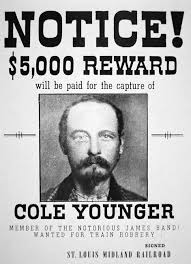
“The first issue of the “Prison Mirror,” the newspaper of the Minnesota State Prison in Stillwater, is published. Bank robber Cole Younger was associate editor.” *

Today is another day, Father, when I simply need to look for a solid primary source to even begin this prayer. Thanks for leading me to this excellent article below from the Stillwater Gazette! 

“The three Youngers – Cole, Jim and Bob – were part of the foiled bank robbery in Northfield on Sept. 7, 1876. During the robbery, the bank’s head cashier and a townsman were shot and killed. Several of the robbers were eventually killed, but two got away. It is believed that the elusive pair was Frank and Jesse James. But the Youngers were captured after a lively shoot-out with the law in a swampy area near Madelia.

The Youngers were charged with first-degree murder; they pled guilty and received life sentences at the Minnesota State Prison in Stillwater.

The brothers arrived at the prison on Nov. 22, 1876. They were addressed by Warden John Abbott Reed who assigned them numbers: Cole was inmate 699, Jim was number 700, and Bob was number 701. They were then processed like every other new convict and introduced to their new home.

The cultural side of prison life

The convicts also had access to a prison library, which Cole Younger oversaw. The library had about 6,000 volumes at the convicts’ disposal. Each inmate was given a library catalogue and was permitted to withdraw two books a week. If an inmate mutilated a book, however, he was denied further library privileges.

Music was a part of prison life, as the lockup had a band and orchestra. The inmate band was led by a citizen music teacher from outside the walls, and the instruments were paid for out of fees received from visitors, each of whom paid 25 cents to tour the prison. The band would play during drill time and on Sundays.

The Minnesota State Prison at Stillwater also had an institutional newspaper launched with funds raised – incredibly enough – by the inmates themselves. The Prison Mirror began publication in August 1887 with $200 seed money, $50 of it donated by the Youngers. In the first edition, Cole was given the “honorary” title of “Printer’s Devil.” By the second edition, he was assistant editor. By edition three, the editor had been paroled and Cole toiled on in anonymity, no longer receiving any editorial credit in the future editions.

Cole would occasionally submit items to be published in the Mirror, and he was mentioned in the paper periodically for his prison shenanigans.

The Prison Mirror is still published, and remains the oldest continuously published prison newspaper in the United States.

Warden Henry Wolfer took over command of the Stillwater Prison in 1892, and brought a radical new approach to prison management. Rather than punishing hardened criminals, Wolfer instead instituted ways to reform the convicts and try to mold them into useful citizens upon release. He did this by instituting educational classes so convicts could learn to read and write. He also allowed more “drill time,” or time outside in the yard. With these and other innovations, Wolfer quickly became known as the country’s leading prison expert.

Wolfer also saw that the old prison needed to be replaced. The limestone walls were crumbling, and the swamps were taking over the prison yard. Through Wolfer’s efforts, money was set aside for a new prison by the state legislature in 1905 and 1907. It was Henry Wolfer that helped design the state prison that is now in operation in Bayport.

It was during the construction of the new prison that W.C. Heilbron wrote his book, “Convict Life.” In 1910, a former Stillwater prison convict named John Carter wrote an article for Century Magazine entitled, “Prison Life as I found it.” This article seemed to be a response to Heilbron’s book. Carter didn’t portray the “modern prison” as rosy as Heilbron, but did give the warden credit for reforms. In his lengthy article, Carter suggested several things to make prison life more bearable for the inmates, such as allowing inmates to talk to each other and having a baseball field available for their use.

A few months later, Wolfer responded to the article through an open letter in the magazine. Wolfer said he found Carter’s suggestions credible, and “with the completion of our new prison, we shall be able to correct most, if not all, of the defects mentioned by Mr. Carter.” **

In 1914, the last of the convicts were moved out of the old prison in Stillwater and moved to the new quarters in Bayport. The Bayport prison is now 82 years old, and to Wolfer’s credit, the institution is still being used as a “modern prison.”

It was Warden Henry Wolfer who started the national reform movement in America’s prisons. It is not known whether Wolfer would have allowed the weight rooms and cable television found in prisons today.

William Heilbron’s “Convict Life,” written nearly 90 years ago, gives us a peek into what it was like to be behind the limestone walls of Stillwater Prison. The book is being re-published by the Stillwater-based Valley History Press. The new issue tells the whole interesting story in 190 pages. It is filled with photographs and information that will truly put the reader in the cellblock of the old state prison. The book also includes a chapter written by one of the most notorious outlaws to ever spend time behind the Stillwater walls: Cole Younger.

Birth: Jan. 15, 1844 Lees Summit Jackson County Missouri, USA

Death: Mar. 21, 1916 Jackson County Missouri, USA

Post Civil War Outlaw. 

“Today, Cole Younger’s days of outlawry evokes romance and even chivalry in American folklore. However, the romantic, loveable character portrayed is far from the truth. Cole was instead a heartless cold blooded murderer of not only peace officers and bank tellers but women and children. Cole first killed at 17, was wanted dead or alive at 18 and is credited with killing dozens including innocent bystanders. He was born near Lee’s Summit as Thomas Coleman Younger, the son of a prosperous livery and dry goods business owner into a family of 14 children. His father was robbed and killed by members of the Kansas Militia. Spurred on by many injustices attributed to federal authorities, he joined William Clarke Quantrill as a member of his Confederate raiders during the Civil War, participating in many daring and bloody exploits, including the infamous Lawrence, Kansas, massacre. He was 18 at the time, selected because he owned a revolver. Younger left Quantrill’s renegades and joined the regular Confederate Army attaining the rank of Captain and led his own company while serving in Louisiana and later California. At the close of the war, Cole returned home and went to work on his mother’s farm. He soon became a desperado, robbing banks, trains, stagecoaches and people with Jesse Woodson James at times then a gang of his own, a family affair, with many of his brothers. Cole Younger was friends with Myra Shirley (Bell Starr) who he knew from childhood and during flights from lawmen would sometimes hide out at the Shirley family farm. Bell would turn to crime herself. A fateful attempt in 1876 to rob the Northfield, Minnesota bank, severely wounded, Younger was captured, tried and sentenced to twenty five years in state prison at Stillwater, Minnesota. There he became a hero helping to protect women convicts during a disastrous fire. He founded the “Prison Mirror,” a newspaper intended to shed a ray of light upon the lives of those behind bars. Paroled and able to obtain a pardon at age 59, his first job was at the Peterson Granite Company in Stillwater making tombstones. He later teamed up with his old comrade Frank James to form a Wild West show. Finding religion, he went on the Chataqua lecture circuit speaking on the evils of crime and drink. He wrote and had published a badly embellished autobiography of his criminal past. With old age creeping ever closer, Cole purchased a house in Lee’s Summit enjoying the good life while sitting on his porch reading his ever present bible and talking with neighbors, reporters and friends. Impressionable youngsters began calling him “Uncle Cole.” His health steadily declined. He died peacefully in his own bed from Heart and kidney failure at the most unrealistic age of 72. His closely examined remains determined 14 bullets were still embedded in his body. After a well attended funeral at the Lee’s Summit Baptist church where he attended regularly, the last member of the James-Younger Gang was buried in the town cemetery next to his brothers Jim and Bob and their mother. There’s not much left of the old prison at Stillwater which was closed in 1914. During its time it held many notorious prisoners beside the Younger Brothers. The Warden’s house a 1853 stone building remains and is now a museum as well as a few workhouse buildings. This is where Bernard Casey worked as a prison guard, before becoming a dencecelebrated beatified priest, befriending Cole Younger with his counseling influencing him to lay aside his bitterness and lead a model life while incarcerated which he continued in his post prison life. Many plaques were erected marking locations of the Cole Younger gang robberies put up by proud gleeful towns in Missouri and Kansas. The house constructed by his father remains standing to this day. 8,000 acre Robbers Cave State Park located in Wilburton, OK is a popular tourist destination and contains the cave purported to be a hiding place of the James-Younger gang.” ***

Lord, how can a victim of a crime forgive? How can a perpetrator of a heinous crime find peace, meaning to life, and a new identity? How can he forgive himself? It must be by the power of your blood! It must be through Your miracle of grace; Your example of freely given unmerited favor!

The life of Cole Younger is a powerful example of a man who once was led by his most base desires, and learned a new trade and a new path. Thank you for his life! Thank you for his faithfulness in establishing the “Prison Mirror”!

Our prison system seems to be an inevitable necessity in this fallen world. Those without self control must be restrained from hurting themselves and others. Victims need a sense of safety, others protection from sworn vengeance, and so we continue to “lock’em up, and throw away the key”. 

But what of the spirits of both the offender and the offended? The offender seems to have the most to gain through forgiveness at first glance. If he is pardoned by the victim, or their family, he could still be in shackles, but his spirit is free.

But what does the victim gain by forgiveness? To once again breech the dyke holding back oceans of pain? To lose a loved one, or innocence, or a sense of justice, and again become vulnerable? This seems inhuman! Yet, Father, this is you command to us; “Love your enemy?!”

Father, will You give us this gift, this miracle of forgiveness? Will You wipe the slate clean in the state of Minnesota between the perpetrators of crime, and their victims? This is especially difficult for those who received a terrible, unprovoked blow! Yet, Your standards remain the same?! Will you free the victims of crime from any self-made dungeons of unforgiveness stemming from the beginning of the prison system in Minnesota, through the present, and into the future? Will You give us Your ideas about justice?

Will You uphold the “Prison Mirror” and other ways that the incarcerated can form a new identity? Will You demonstrate Your power and restore faith and honor to the lives of all victims of Minnesotan crime? Will You free the land where the prisons lie, their grounds, gates, and bars from the poison of bitterness, fear, anger, rage, and discontent? When we offend our brother, we have offended his Creator! I ask this unmerited favor from You. Feed us so we don’t covet here in Minnesota! Feed us life so we are content, and crime is not attractive! Spiritus, have mercy!

* http://www.mnhs.org/about/dipity_timeline.htm

** http://www.stillwatergazette.com/articles/2008/09/24/news/news330.txt

*** http://www.findagrave.com/cgi-bin/fg.cgi?page=gr&GRid=1138


Standard
19th Century, Agriculture, farming, History, Indian, Intercession, Minnesota, Native Americans, omnipresent history, State Government, Treaties

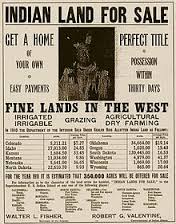
The Dawes Act 1887

unknown

February 8, 1887

“Congress enacts legislation that allots 160-acre tracts of land to heads of households of American Indian families. The rest of the reservation land is thrown open to non-Indian  homesteaders. Eventually, Native-held lands are reduced by more than two thirds.” *

The act “was the culmination of American attempts to destroy tribes and their governments and to open Indian lands to settlement by non-Indians and to development by railroads.” Land owned by Indians decreased from 138 million acres in 1887 to 48 million acres in 1934.

Senator Henry M Teller of Colorado was one of the most outspoken opponents of allotment. In 1881, he said that allotment was a policy “to despoil the Indians of their lands and to make them vagabonds on the face of the earth.” Teller also said, “the real aim [of allotment] was “to get at the Indian lands and open them up to settlement. The provisions for the apparent benefit of the Indians are but the pretext to get at his lands and occupy them….If this were done in the name of Greed, it would be bad enough; but to do it in the name of Humanity…is infinitely worse.” **

Messiah, there is such a gap between intent and actions. One the one hand, the Dawes Act points to a desire to respect the property of Native Americans. On the other hand, it ‘gives’ them title to land if they accept the conditions. Is this freedom, or fiefdom?

First, as a human being and fellow Minnesotan, I want to acknowledge our sin of envy. We are not content with what we have. Lord forgive us the envy contained in the Dawes Act of Native lands! Will You heal the whole inheritance of envy, and heal the lands that were annexed unjustly?

Second, I want to acknowledge the mixed motives of our hearts! I acknowledge the honest desire of many at this time that Native peoples assimilate and become one people with the United States, and with Minnesota. Many were motivated by a desire to share ‘common ground’ figuratively and literally with Indians. As in “I’m a simple Norwegian farmer who is trying to start a new life in America. What does my indian neighbor have against me? I used to hunt and fish with him. I’m not a land man for the railways, or a representative of the Department of the Interior, but their actions make me the bad guy to my Indian neighbors.”

Many Natives did not want to not feel the pains of being a foreign enclave in their homelands. While they resisted many aspects of Western Culture, they also admired and even craved some of its fruits: new technologies and techniques, trade for useful products, positive interactions with new neighbors, etc. They seemed to both admire and fear the new culture in their land. Some Natives willfully accepted new ways, and others did not.

Lord, have mercy on these hearts! Some on both sides of this divide, whether Immigrant or Indian, wanted to take a chance and embrace. Some were repelled by clashing with another culture. Lord forgive how we have feared our brother’s ways, and rejected what You have to teach us through him! Lord, forgive us our hesitancy to trust! Will you restore us to chesed? ***

Next, I want to acknowledge that both cultures succumbed to the “power men” within them. There were plenty of Minnesotans willing to capitalize on the imbalance of power the Dawes Act gave them! Too many tried to moralize the outright theft of property! They claimed desires to civilize native peoples to gain public approval for their land grab. Nothing changes. they are still among us. However, I mourn before you this day, and acknowledge this offense against my Native brothers! Have mercy! Will You reverse this curse? Will You restore these injustices?

Lastly, I want to acknowledge the counter judgments that some Native peoples made in response to these ‘land grabbers’. They chose to meet offense with counter offense. It is clear to see these fruits yielding a harvest of separation even today in our state. 

Will You have mercy on our natural desires for vengeance stemming from the Dawes Act? Will you give us a new common inheritance as Minnesotans? Will you take the bitter roots from our hands so that we can receive from You? When we must disagree, will You teach us to do it with understanding and respect? Amen.

* http://www.mnhs.org/about/dipity_timeline.htm

** https://en.wikipedia.org/wiki/Dawes_Act

***  https://en.wikipedia.org/wiki/Chesed


Standard
19th Century, African American, Black History, Democrat, education, History, Intercession, Minnesota, Republican, State Government

Minnesota State Constitution 1857

unknown

1857
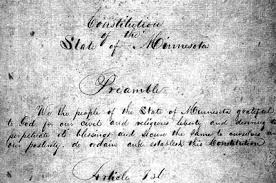
“Before it can become a state, Minnesota Territory must draw up a constitution. Republicans and Democrats disagree on fundamental issues and hold separate conventions. Much of the debate focuses on suffrage–Republicans believe black males should be able to vote; most Democrats oppose the measure.

When the two conventions come together in a “compromise committee,” Republicans agree to limit the right to vote to white males as long as the constitution is relatively easy to change at a future date. In 1868, the legislature passes an amendment giving black males the right to vote.” *

Jesus, thank for the good that comes from making a compact, covenant, or contract. It’s good to positively define what to do , as well as what not to do. Thank You for the battles of this Constitutional Convention in 1857.

Will You forgive the Democrats of Minnesota their judgments’ of Republicans. More accurately, will You forgive this Democratic judgment of black Minnesotans, and the desire to withhold the vote from them. Forgive the Republican party its counter-judgments of Democrats, and Minnesotans of African descent. Forgive both parties offenses of using “moral superiority” as a political weapon, and all assumptions, judgments, and counter-judgments based on it. Will You forgive the judgments, grudges, and bitterness of black Minnesotans’ towards each party?

Jesus, as a member of Your inheritance, and an heir to the state of Minnesota, I want to pronounce forgiveness for the acknowledgement of sins between the Democrat and Republican parties and black Minnesotans. Lord, will You bring this act to fruition? Lord, will use our state as an example of restoration? Will You reverse the generational curses we have received by our participation in these political parties? Will You reverse the curses pronounced over any American of African descent, and especially all Minnesotans of African heritage? Will You leave a heritage of blessing?

“Therefore, as God’s chosen people, holy and dearly loved, clothe Yourselves with compassion, kindness, humility, gentleness and patience. Bear with each other and forgive whatever grievances you may have against one another. Forgive as the Lord forgave you.” Colossians 3:12-13

http://www.mnhs.org/about/dipity_timeline.htm

Standard
19th Century, Agriculture, Governors, History, Industry, Intercession, law, Minnesota, omnipresent history, Politics, Republican, State Government

McGill Becomes Governor

mcgill_andrew_ryan

January 5, 1887 to January 9, 1889

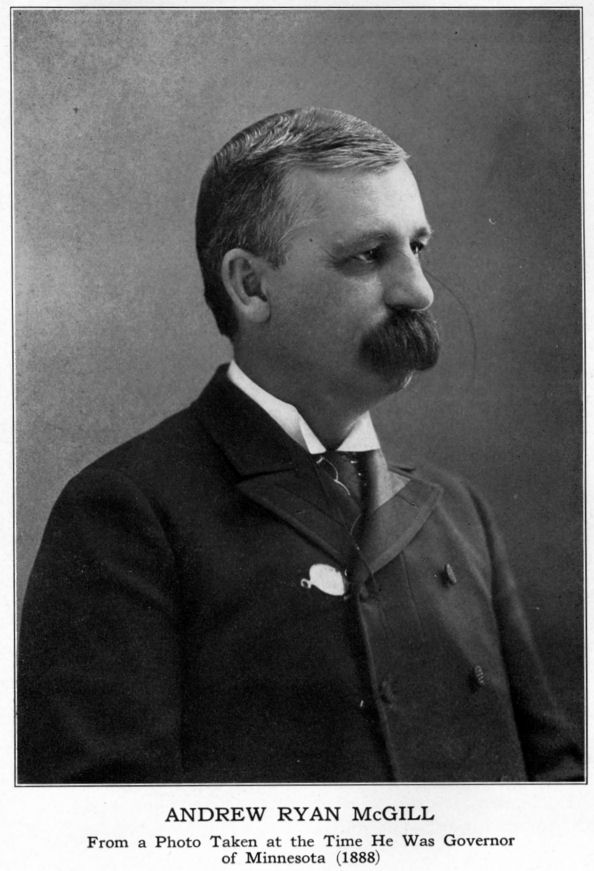
“A. R. McGill becomes the state’s 10th governor on January 5, 1887. During his term he recommends a revision of the railroad laws pertaining to transportation, storage, and grading of wheat; the watering of railroad stocks; a simplification of the tax laws; regulation of liquor; abolition of contract prison labor; establishment of a soldiers’ home; and creation of a Bureau of Labor Statistics.” *

“Transcript

Office of COUNTY AUDITOR, Marshall County Warren, Minn. March 16th 1887 Gov. A. R. McGill St. Paul, Minn. Honorable Sir: I enclose herewith Application from our County for Seed Grain, showing Number of Applicants and Amt of grain desired. We have allowed no one applicant to exceed the Maximum limit of $75.00 worth of grain, although many applied for much larger amounts. You will notice that the average am[oun]t we have allowed each applicant is only about $55.00 worth. We trust that you will allow our County a sufficient apportionment to cover the amount which we have asked for, as these applicants are certainly in needy circumstances. Trusting that our application is all correct and that there will be no delay in getting our apportionment, I am Sir Respectfully Yours, W. F. Powell Ch Bd. of Co. Commissioners Marshall County W. F. Powell. Co. Aud. 

(March. 16th 1887 Matters relating to applications for seed grain relief)” **

Lord, this doesn’t seem like a man whose governorship aroused much controversy at first glance. However, each change in law impacted a powerful coalition or group of Minnesotans. Changing law often seems to use an element of force to exert authority. But how do You view the elimination of law from an eternal perspective?

From what I gather about local perceptions of Governor McGill, he had a mixed reviews. On one hand, he had to mediate between the powerful lobby of the rails, yet gain concessions much needed by Minnesota interests’: farming, lumber, and mining. 

So what did he accomplish, and did he find a middle path?

“During his tenure, a state normal school was established in Moorhead; the improvement of state railroad laws was promoted; iron ore was discovered in the Mesabi Range; liquor regulations were supported; and a state school tax was sanctioned.” ***

Will You forgive our bitterness that comes with new laws whether local, state, or federal? Will You forgive us for the anger we have felt over the perceived loss of freedoms, liberties, and or benefits to us or our business? The state may attempt to take away rights that are not theirs, and give rights that they do not possess in the first place. 

Lord, help us find the middle ground! Will You forgive our usurpation of the other man’s inalienable rights, and teach us how to better protect them in the future? May our civic laws never surpass our privilege to love You, the Lord our G-d, our neighbor, and ourselves!

“And above all these put on love, which binds everything together in perfect harmony.” Colossians 3:14 ESV ****

* http://www.mnhs.org/about/dipity_timeline.htm

** http://reflections.mndigital.org/cdm/compoundobject/collection/mhs/id/624/rec/

*** https://www.nga.org/cms/home/governors/past-governors-bios/page_minnesota/col2-content/main-content-list/title_mcgill_andrew.default.html

****http://biblehub.com/colossians/3-14.htm


Standard
19th Century, Business, History, Intercession, marketing, Minnesota, omnipresent history

Sears Starts Selling 1886

richardsears-young

1886

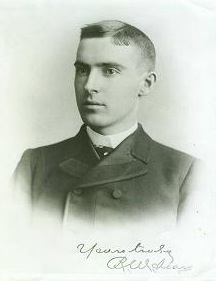
“Twenty-two-year-old Richard Sears starts selling pocket watches out of Redwood Falls. Encouraged by his quick success, he opens a mail-order company in Minneapolis. He then moves to Chicago, takes on a partner, and in 1893 forms Sears, Roebuck & Company. 

By the turn of the century, only the Bible has more readers than the Sears, Roebuck catalog. From its pages people order everyday items and oddities including clothing, harnesses, buggies, bicycles, guns, pianos, and parlor organs. 

1897 – Sears, Roebuck sends 318,000 catalogs across the Midwest. 

1908 – 3.6 million people receive Sears, Roebuck catalogs in a single mass mailing.” * 

God bless Richard Sears, and his embrace of the imagination you gave him. Thank you for fulfilling his vision to provide people with a new way to acquire needs, and wants irregardless of geography. Thank you that his catalog was a bridge builder between urban and rural, mountain and prairie, young and old, and many other stratifications of society!

Father You are generous with us. You allow us to express both needs and wants, and are infinitely able to provide for us. Your freedom allows our heart to be tested with what we have been given. Will we share our blessings? We will humble ourselves to make our needs known to others, or pridefully hide our lacking from the eyes of others?

Will you forgive the judgements cast on Richard Sears, his company, his employees, and his astounding success? He put possibilities in front of millions of eyes, and let them decide what was useful, or what was luxury. His business created heaps of jobs, and probably ended many smaller enterprises that could not, or would not, adapt to this new way of doing business. It is hard for us to admit when we have been outdone by another’s incredible effort. Have mercy! Will you forgive us this type of jealousy? Will you release us from the envy of another’s success in Minnesota? Will you give us hearts that rejoice at our brother or sister’s success?

In many ways, the mail order business predicated the modern world of advertising. Through it, we are tested daily to discern between our needs and wants, likes and dislikes. It is a good thing to have a choice! It is wonderful to have a plethora of options for nearly every item we desire.

However, the knowledge of many things often leaves us with a craving for many things. We often feel a lack by the simple knowledge of what we do not yet possess. Again, this option tests our mettle! Is it bad to know what we do not have? Sometimes it inspires us to new efforts. Sometimes a new tool gives us an inspiration for working a new way.

Lord, forgive us for choosing to focus on our discontent. Forgive the pining for something new that will bring us contentment! We too often love things, and use people! Will You break the roots of those cravings that came from the Sears catalog, and still bind us today? Will You help us in this struggle to want everything we see?

* http://www.mnhs.org/about/dipity_timeline.htm

**More about this extraordinary pioneer of marketing? https://www.britannica.com/biography/Richard-W-Sears


Standard
19th Century, Health, History, Intercession, Medicine, Minnesota, omnipresent history, University, women

Ripley Maternity Hospital Opens 1886

unknown

1886

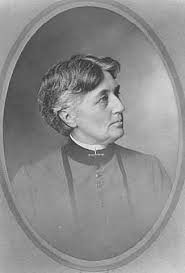
“Dr. Martha Ripley opens a maternity hospital for unwed mothers in Minneapolis. A pioneer in combining social care with medical treatment, she teaches new mothers how to care for their babies and helps them find work. 

Martha Ripley’s training was in medicine, but her interest was in the rights of women. She advocated for women’s right to vote and consistently argued against the abuses that led women to her hospital.” *

Thank you, Lord, that your personality is balanced; You are protector and nurturer! Will You bless Martha Ripley and her generations in the imitation of Your character? She expressed the mother nurture for those women and girls who did not have an adequate voice in society, or means for their pregnancy. 

Our society has often skewed into imbalance in its’ emphasis of one gender over the other. We have denied the good attributes and blessings of the opposite sex that You have intended for our state. We have failed to balance our head and our heart! We have failed to balance rational thought with the relational thoughts based on love. Lord have mercy! 

How has this been expressed? In the over emphasis of male political leadership and exclusive male voting rights for much of our history. We have suppressed the benefits of female scholarship, and the Imago Dei that is intellectually expressed best by a female mind. Our churches have too often promoted female submission to male head of households, without equally emphasizing male responsibility to selfless love and leadership. We have negated Your example of humble servant-leadership. Hear our prayer!

Lord, will You forgive us for discounting your voice in the opposite sex? Will You forgive the negation of female doctors, scientists, and cultural leaders like Dr. Ripley? Lord, will forgive us for emphasis on submission rather than freedom? Will You teach us the healthy bounds of submission to one another in choice-based love?

Will You stop us from overreacting and rejecting the opposite sex based on our painful experiences? Will You help Minnesotans’ forgive our mothers or fathers, and deliver us from the cycle of offense, counter-offense? Will You give us the forbearance for our ‘beloved enemies’ of the opposite sex? All our rejections of the opposite sex deny Your masterpiece in each. Will You forgive us?


Standard
19th Century, Americana, Culture, History, Intercession, Minnesota, omnipresent history, St. Paul Winter Carnival

First St. Paul Winter Carnival 1886

3_ice_palace1886_internet

February 5th, 1886

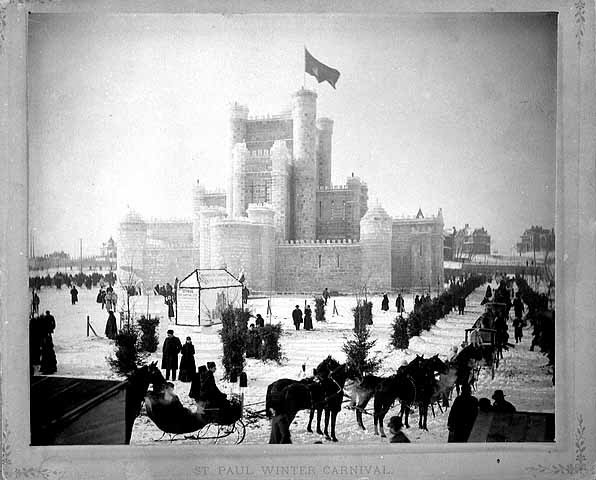
“The city that discovered winter” erects an enormous ice palace and crowns Boreas Rex during its first Winter Carnival. Three years later the carnival is canceled because of warm weather.” *

Sometimes, one cannot do better than let a primary source speak for itself! Please enjoy this editorial ca. 1886!

Minneapolis day at the St. Paul winter carnival was a complete and memorable success. It is estimated that more than ten thousand Minneapolitans visited the neighbor city yesterday afternoon and evening, and St. Paul was thronged with guests from more distant points. It is hard to conceive a more fantastic, extraordinary, and brilliant sight than the “storming” of the ice palace last evening. The great transparent structure was aglow from the foundation to the top of every turret with red lights burning inside. Surrounding it were the many hundreds of brightly uniformed members of toboggan clubs and other organized sporting bodies participating in the parade, all bearing torches. These constituted the besieging army. At a given signal the assailants began to play Roman candles upon the castle, and the assault was soon followed by elaborate and profuse discharges of fireworks from within. There ensued for some time a pyrotechnic display that was indescribably gorgeous. It was a cold night, and the tens of thousands of spectators who filled the carnival grounds and blocked the adjacent streets were pretty thoroughly chilled; but their admiration and ardor triumphed over physical discomfort, and everybody was enthusiastic.

The carnival, it must be owned, is outstripping all anticipations. The people of St. Paul have shown a patriotic zeal in the matter that is simply astonishing. The whole city is organized into uniformed toboggan clubs. Men, women and children alike wear the blanket costumes and parade the streets with torches. Last winter not one of these people in a dozen would have known a toboggan from a gondola; but now tobogganing has become the supreme object of life. Doubtless this amazing and unprecedented devotion to winter sports will be followed by some reaction. But the carnival is certain to have the excellent result of permanently domesticating and popularizing in the Northwest all the healthful out-of-door recreations which are in vogue among our Canadian neighbors. St. Paul deserves the highest credit for having led the way in the promotion of this good cause. Minneapolis has not failed to show appreciation and goodwill. St. Paul will doubtless be ready to return yesterday’s compliment by coming en masse to attend the Exposition opening some months hence.” **,***

Lord, thank You for the St. Paul Winter Carnival. Thank You for the appreciation  of our hearty weather it brought to many, even generations, of Minnesotans. Will You bring us into the future Jesus? Will You lead us to new forms and expressions of gratitude that honor the Creator of Snow and Winter? 

Bless our inheritance to handle the rigors of frigid weather, and make us a people that can share those joys, techniques, and innovations yet unknown!

**http://www.wintercarnivalfanclub.com/saint_paul/winter_carnival/ice_palace/1886_ice_palace.htm

*** Welter, Ben. ”Feb. 5, 1886: St. Paul’s first Winter Carnival”, StarTribune, Mpls.,MN. Internet. 1/30/2011. http://www.startribune.com/local/blogs/114876604.html

Standard
19th Century, Americana, Architecture, Business, Civics, Energy, History, Industry, Intercession, Minnesota, omnipresent history, Real Estate, Science, Technology

Industrial Exposition 1886

pf128164

1886

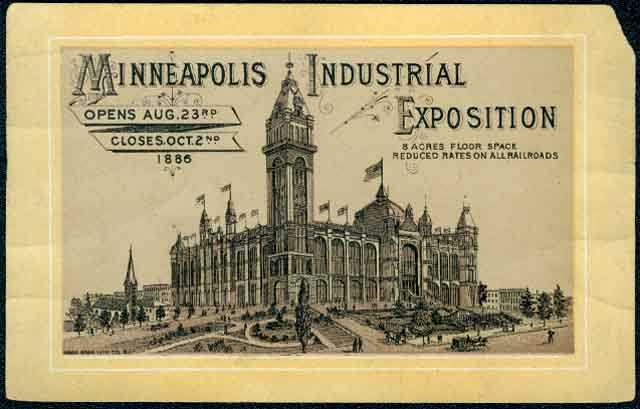
“The Mill City answers St. Paul’s State Fair with the Minneapolis Industrial Exposition. Despite elaborate attractions and the latest wares of 800 exhibitors, the exposition can’t compete with the fair and closes its doors in 1893.” * 

“The idea for an exposition in Minneapolis arose in August 1885, when it became known that St. Paul had secured the permanent home of the Minnesota State Fair. Prominent citizens of Minneapolis such as Minneapolis Tribune owner Alden Blethen felt slighted, and an open meeting was called to gauge public support for an annual Minneapolis industrial fair, or exposition, to rival St. Paul’s agricultural one.” **

 Lord, we are competitors. Competition is not a sin, but the envy or covetousness that often accompany it leads to disunity or complete breaks in relationship. What do You want to reveal in this moment of rivalry in 1886? 

The Twin Cities of Minneapolis and St. Paul have had friendly rivalries that go far into our history. Will You forgive, first, the jokes, speech, and written words that have been used to put down the ‘other’ Twin City? Will You forgive the heart it reveals, one of mockery and pride? 

How many actions have resulted in our heritage because one “prominent citizen” felt slighted? There is nothing wrong with a human being of any status in society taking leadership according to their conscience. However, if the attitude of civic pride, in this case personified by Alden Blethen was an offense to You, will You forgive us? Will You forgive us our pettiness over another’s blessing? Will you help us; “seek the peace and prosperity of the city to which I have carried you into exile. Pray to the LORD for it, because if it prospers, you too will prosper.” Jeremiah 29:7 ***

You have ideas for both of these places that we have not considered. What are they? Will You replace the rivalry of Minneapolis and St. Paul stemming from the Industrial Exposition of 1886 with blessing? Will You download into us a mindset that rejoices at the success of the other? Will You bless us with the kind of competition that brings virtue, excellence, and mutual respect?

* http://www.mnhs.org/about/dipity_timeline.htm

**Learn about the short life of this huge structure?

http://www.mnopedia.org/structure/industrial-exposition-building-minneapolis

***http://biblehub.com/jeremiah/29-7.htm


Standard
19th Century, Agriculture, Business, farming, History, Intercession, Minnesota, omnipresent history, State Government

Minnesota State Fair Finds a Home at Ramsey County Poor Farm’s Expense 1885

mn_state_fair_4

1885

“The Minnesota State Fair finds a permanent home in the Midway area of Saint Paul. (The 1885 fair was the 27th annual state fair.)” *

Lord, it does help to have more information when interceding; and most facets of life. Even with my limited research, I see a few things: 1. Establishing Fairgrounds was a priority by the city government of St. Paul, and the state government of Minnesota. 2. the Poor Farm and it’s people were clearly displaced. 3. There was a sense of rivalry between Minneapolis and St. Paul. 4. Care for the poor from the county, to the state, and to the Federal government.

To begin, I want to announce to the land formerly known as the Ramsey County Poor Farm the jubilee and blessing of the Lord Jesus Christ! Thank You for this example of caring for the the elderly and poor! I want to bless those generations attached to the Poor Farm whether as employees or residents, and ask that any bitterness on their part be forgiven and removed. 

  Lord, will You forgive our lack of relationship with those in need? Will You heal the rift over HOW we do charity, and WHAT it looks like? Each election, we still battle over WHO gets the credit for being charitable; the State or individuals!?! May this land that is now called the State Fairgrounds be a place where we iron out these differences! May we find Your way of blessing each other; rich to poor, in any state of health!

Also, will You forgive the political and business rivalry between Minneapolis and St. Paul? Will You set us free from the emotions of Alden Blethen? Jesus, will You make these “Twin Cities” live at peace with each other? Holy Spirit, will You inhabit this property now known as the State Fair and bring your life there? Will You dignify the poor and show them their potential to contribute for their loved ones and society, and most importantly, their eternal value to You?

More on how the poorhouse was transformed into the Minnesota State Fair:

**http://www.postcardy.com/msf.html

***http://www.mnopedia.org/structure/industrial-exposition-building-minneapolis

****https://en.wikipedia.org/wiki/Poorhouse


Standard
19th Century, education, History, Intercession, Minnesota, omnipresent history, Social Studies, State Government

School Required 1885

images-1

1885

“The state legislature passes a mandatory school-attendance law, requiring all children between the ages of 8 and 16 to attend twelve weeks of school a year.” *

Jesus, will You observe this law with me? What is on Your mind when looking at the idea of mandatory school attendance? You don’t use the law forcibly in the New Testament, but did require certain obedience in the Old Testament. You instructed parents to teach, but also said, ‘Let the children come to me” when restrained by the disciples. You demand all from us, but want obedience from the place of lovingkindness rather than empty religious duty.

In any case, I thank You that Minnesotans’ have valued education. I thank You for the heart behind this law that children should be allowed a time and place solely for learning. I thank you that these 12 weeks were set aside to enhance the exposure of young minds’ to the enjoyable discipline of education.

As is the case whenever new laws spring up, I’m sure there was an element in the state that was resistant to comply for varying reasons. “What if my child becomes smarter than me? What if the school teaches something that I do not agree with? What is wrong with the way I am raising my child currently? Does the government of Minnesota know better than me? I need my son or daughter at home because they are essential workers on the farm!”

Lord, for these attitudes of distrust from the people to the state, have mercy on our judgements! Lord, for the attitudes of the state to the people, have mercy on our judgements! We are all people capable of misusing our authority. We are all people who capable of using some element of force when we do not get our way. We are not benevolent like You; we often do good things from impure motives. 

Christ, will You have mercy on our motive conflicts? Will You give the correct balance in this contested area of education in the life of our state? Will you give us the grace for our neighbor that is inherent in Your law, and in the laws of Minnesota? How can we expect our freedom of choice to be respected, when we will not even acknowledge our neighbor’s vantage point as one worthy of consideration?

* http://www.mnhs.org/about/dipity_timeline.htm

** Peruse the details of this law? https://www.revisor.mn.gov/laws/?view=session&year=1885&type=0


Standard