19th Century, African American, Black History, Faith, History, law, Minnesota

Slavery in Court: Dred and Harriet Scott

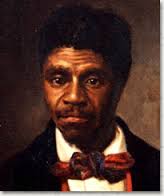
Dred Scott

Dred Scott

1857
“Dred and Harriet Scott, slaves who lived at Fort Snelling in the 1830s, claim they became free in Minnesota, where slavery was illegal. The U.S. Supreme Court rules that, because they returned to Missouri where slavery is legal, they are still the property of their owners.

In 1836, the African American slave Dred Scott was brought to Fort Snelling by his owner, Dr. John Emerson. While at the fort, Scott married another slave, Harriet. Later, Emerson moved to St. Louis, taking his slaves, the Scotts, with him. In 1846, Dred Scott sued for his freedom. He claimed that, since he had been taken to live at Fort Snelling–at the time part of Wisconsin Territory, where slavery was prohibited–he was a free man.

In March 1857, after 11 years of trials and appeals, the U.S. Supreme Court declares that because Scott isn’t a citizen of Missouri (a slave isn’t allowed to be a citizen), he’s not entitled to sue in its courts; and that slaves are property and that no law can deprive a person–that is, a white slaveowner–of his rights to life, liberty, and property.” *

Christ have mercy! We often want privileges under the law for ourselves, and not for others. This is not Your example. “In the beginning was the Word, and the Word was with God, and the Word was God. He was with God in the beginning.” John 1:1,2 Jesus, You submitted to the limitations of this world. You went from the total freedom of heaven to living in Satan’s jurisdiction. You know what it’s like to have Your rights curtailed! Thank you that You are able to relate to everyone who has endured under slavery, and that You never knelt to hatred of authority.

Firstly, bless Dred and Harriet Scott, their generations, and their dwellings in Jesus’ name! Thanks for giving him the boldness to challenge the system. Forgive our system for allowing human beings to ever be classified as ‘property’! May we inherit a heart to challenge falsehoods and misbeliefs of our state.

Secondly, forgive Missouri and the U. S. Supreme Court this offense against You, and the inalienable rights You’ve freely given to all people, everywhere, at all times. You made all men in your image! You’ve made all women in Your image! Is not an affront to one an attempt at mutiny? You are our God, and we are Your people!

Third, forgive the judgment made against the Scotts’, and counter-judgments made towards Minnesota, Missouri, or the U.S. in general. Will You release us from our heritage of bitter judgments and curses, and make the way for forgiveness and blessing?
http://www.mnhs.org/about/dipity_timeline.htm
Standard
19th Century, Business, Civil War, Economics, Intercession, Jesus, justice, law, Minnesota, omnipresent history, Real Estate

Financial Panic Changes the Economic Climate July 1, 1857  

images-9

Fueled by wild speculation in land prices, the economy of Minnesota Territory became overheated. This speculative bubble burst in July when banking failures in the East began to spread panic in the West. The resulting crash in land values caused credit to dry up in Minnesota. Local banks closed and other business failed as well. The economy of Minnesota did not improve until the Civil War.*

Father, how often has this happened in our history as human beings? How often has money, property, or wealth been manipulated to bring an otherwise peaceful people to war? Lord, we seem immune to recognize the inner causes of these type of panics and economic downturns; we want what we do not have. Will You forgive us our desire for easy money? Will You forgive the greed of the banks involved: Eastern or Western or foreign?

Will You wipe out the painful judgments of our states’ debtors towards these banks, and their unforgiveness of debt? Will You forgive us for being seduced by the spirit of speculation to the detriment of our brothers and sisters? It seems there is a perpetual battle between those who value the land as a home that sustains life and those who view it only as a profitable commodity. Lord, will You give balance to our judgments of the land, and free our land of the curses we have committed against it?

*Note – PrayThroughHistory uses the timeline located for several years at the Minnesota Historical Society Web site, at this URL: mnhs.org/about/dipity_timeline.htm .

Standard
19th Century, government, History, Indian, Intercession, law, Leadership, Minnesota, Native Americans, omnipresent history, State Government

Gorman Becomes Territorial Governor

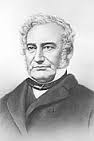
Willis Arnold Gorman

Willis Arnold Gorman

May 15, 1853 to April 27, 1857
“Willis Arnold Gorman takes office as the territory’s 2nd governor. As a U.S. Representative from Indiana, he supported Franklin Pierce in his successful bid for the presidency and was rewarded with the governorship of the Minnesota Territory.” *

“Democrat Franklin Pierce took office in March 1853 and replaced Ramsey with Willis as Minnesota territorial governor.” **

Today I told the Lord that this is a portion of our history that I don’t know much about. I don’t know about Gorman or why he was replaced. Some days I watch and pray and things flow easily. Others days it is difficult to see the significance of the event I’m meditating on.

After some research I found one plausible answer why the Governor Ramsey was replaced by Governor Gorman. The facts seem to indicate that he wrestled with balancing his interactions with the Ojibwe and with the powerful lumbering interests. Looks like he was caught in the middle; which master to serve? His waffling is documented below:
“This quagmire of incompetence and callousness went on for three years, while several hundred Indians died of starvation and disease.” ***

As to Governor Gorman’s temperament, he was a lifelong lawyer, and his character of self-restraint seemed better suited to the times. His legalistic disposition must have helped to find nuanced solutions for a government between a First Nation, and a booming timber industry. He was so dedicated to law that he returned to it after serving in the Civil War! There he remained, serving as St. Paul City attorney, for the rest of his life.

Thanks for Governor Gorman! In him, You brought a man who was even-keeled and suited to the issues of his days! Bless him and all leaders who calmly and deliberately serve their constituents!

As for Governor Ramsey, will You forgive his double-mindedness? We are humans just like him, and sometimes fail to be strong in our decisions. Irregardless of Your mercy, will You bring justice to all human suffering caused by his hesitancy? Will You bring restoration to the Ojibwe, both then, now, and into our future?
http://www.mnhs.org/about/dipity_timeline.htm
** Redix, Eric M., “The Murder of Joe White: Ojibwe Leadership and Colonialism in Wisconsin”.
*** Risjord, Norman K. “A Popular History of Minnesota”

Standard
19th Century, cultural transference, Culture, government, History, Indian, Intercession, law, Minnesota, Native Americans, Treaties

Lower and Upper Sioux Agencies

Unknown-3

Unknown-2

1853
“The government builds the Lower and Upper Sioux Agencies as it moves the Dakota onto the reservations created in the treaties of 1851.” *

Jesus, You are our agency. We must use human mechanisms to get back our share from the government that has taken from us. Have mercy!

Will You forgive the offense of the U.S. government, Minnesota Territory, their representatives and interests against the land of the Upper Sioux; the Pejuhutazizi Kapi? Will You forgive the offenses of these same representatives against any member of this Oyate whether Sisseton or Wahpeton? Will You, Fair Judge, create restoration and bring resolution to this conflict beginning in 1853?

Will You forgive the offense of the the U.S. government, Minnesota Territory, their representatives and interests against the land of the Lower Sioux: the Cansa’yapi (where they marked the trees red)? Will You forgive the offenses of these same representatives against any member of this Oyate whether Mdewakanton or Wahpekute? Will You, Fair Judge, create restoration and bring resolution to this conflict beginning in 1853?

You are the One who blessed and planted these indigenous nations here so long ago. We remember these offenses to the Dakota Oyate as offenses to You! Will You lift them up from the land, out of our hearts, and onto the cross of Christ? We cannot heal the sky above, or all that is below the original boundaries of the Dakota, but You can!
Will You bless our common future?
http://www.mnhs.org/about/dipity_timeline.htm

** More information on the Upper Sioux http://mn.gov/indianaffairs/tribes_uppersioux.html
*** More information on the Lower Sioux Agency http://mn.gov/indianaffairs/tribes_lowersioux.html


Standard
19th Century, Culture, government, History, Indian, Intercession, law, Minnesota, Native Americans, Politics, State Government, Treaties

Treaties Ratified by Senate without Land Guarantee  

7500156b

June 23, 1852
“The treaties of Traverse des Sioux and Mendota go to the U.S. Senate to be ratified, but become entangled in the battle over the balance of power between the slave and free states. Southern senators hope the Dakota will refuse because of a key change in wording: in reference to reservation lands, the Senate replaces “in perpetuity” with “at the discretion of the President.” Before final ratification, the Dakota must agree to changes in the treaty. Minnesota territorial governor Alexander Ramsey is charged with attaining the necessary signatures to finalize the treaties, which he accomplishes through a combination of negotiation, withholding of goods and food, and the threat of military force. The Dakota are left with little choice and begin moving to the new lands along the Minnesota River in 1853.” *

Lord, today may we acknowledge the sins and major points of separation of this treaty before You; the Merciful, yet Just Judge of the Universe?

-Ramsey’s willingness to withhold goods and food.
-Ramsey’s threat of military force.
-The US Senate’s willingness to betray the trust of the Dakota through rewording of the treaty.
-Any counter-judgments made by the Dakota.

Jesus, we all betray. We make betrayal worse by responding to offense with unforgiveness. We often make our own prisons when we harden our hearts. I acknowledge these things to You, and pronounce forgiveness based on the promise of Matthew 6:14 “For if you forgive men when they sin against you, your heavenly Father will also forgive you.”
May all parties be moved to show remorse, ask forgiveness, and be restored into right relationship! Amen!
http://www.mnhs.org/about/dipity_timeline.htm
Standard
19th Century, Civics, education, government, History, law, Minnesota, Politics, Prayer, railroad, State Government

Bill for Minnesota Territory January 18, 1849  

Unknown-12

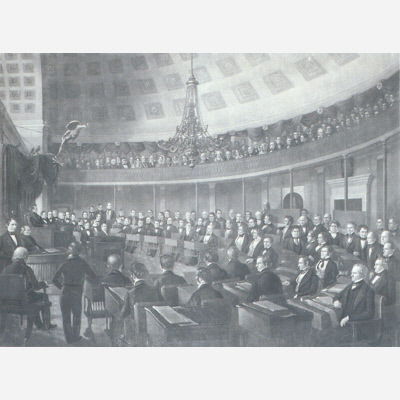
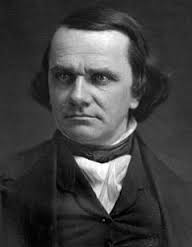
“Stephen Douglas proposes a bill for the creation of the Minnesota Territory.” *

Douglas was born in Vermont, and spent his early years there. When he was able, he migrated west and settled in Illinois. Within a year of moving west wrote is relatives back in Vermont saying,”I have become a Western man, have imbibed Western feelings principles and interests…” His political principles meshed nicely with the free-spirited populism of the west.**

Delegate to Congress from the soon-to-be “Western” Minnesota Territory, Henry H. Sibley worked with Senator Douglas to develop the nuts and bolts of this original proposal. Called the Organic Act, it provided organization of legal and legislative representation for the new territory. As an interesting sidebar, “an important provision of the Organic Act was the reservation of sections 16 and 36 of each township for school purposes.” ***

So we come to You to remember this event, Lord. We see, again, the spectacle of the mixed motives of Minnesota’s founders. On the one hand, they believe in organization, law, and education. On the other hand, the Territory soon enabled massive railroad land grants and corruption. In 1854, the Minnesota & Northwest Railroad, (eventually known as the Great Northern) committed so much fraud and bribery that their charter and land grants were revoked. Within three years, the same was granted five million acres and millions of dollars in bonds, yet they only built ten miles of railroad!? ****

We remember this dichotomy of purpose with You. Will You bless those, like Douglas and Sibley, who created the potential behind our state? We thank You for the aspirations of great men and women like them, who see the end from the beginning.

Conversely, we confess the dangers of living in a free society. Those who misuse their freedom can seek their own ends, and cause such devastation to their neighbors and the land. Will You have mercy on their selfishness, as well as the counter-judgment’s made by those most affected?

Minnesota is Your land. We are Your incomplete people. Come and help us live in right relationship with You and each other. Amen.

* http://www.mnhs.org/about/dipity_timeline.htm
** http://en.wikipedia.org/wiki/Stephen_A._Douglas
*** https://www.sos.state.mn.us/about-minnesota/minnesota-government/organic-act-of-1849/
**** http://www.landgrant.org/history.html

Standard
19th Century, education, History, law, Minnesota, Native Americans, women

Saint Paul’s 1st Public School 1847

bishoporig

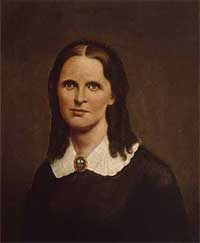
New Englander Harriet Bishop arrives in St. Paul and opens the town’s first public school. In a log cabin that had once been a blacksmith’s shop, students sit on wooden benches while chickens wander in and out.*

Thanks for Harriet Bishop and her desire to make education ‘public’. There were few opportunities for female teachers in New England, and she relished the adventure of moving west into unfamiliar territory.  She credits Harriet Newell and Ann Bishop, missionaries to Burma, as her inspiration.

The first school house, which she opened in a former blacksmith shop on July 19, 1847, was a “mud walled log hovel… covered with bark and chinked with mud” at what is now St. Peter Street and Kellogg Boulevard in the relatively isolated fur trading post of Saint Paul. Of the seven students in her first class, only two were caucasian. She had to rely on a student who was fluent in French, Dakota, and English to translate for her classes (which she taught in English). http://en.wikipedia.org/wiki/Harriet_Bishop

It’s astounding to think that most schools in our nation were private or parochial at the time. Public schools were often for the benefit of Protestants and the poor, whose communities did not have the resources or organizational structure to support them. How far we have come from this log cabin filled with students and wandering chickens!

However, presently we fail future generations because learning is disconnected from the Omniscient One. We have generations leading lives filled with facts, technology, and the benefits of science, but detached from meaning or a reason for being. This state was made by our Loving God, but even Your presence in school is an affront to the humanistic underpinnings of our current system of education! Will you forgive us this offense? Will You forgive our education system, legal system, and hearts where we have blocked You, and therefore any real sense of Divine Purpose, from our lives!

Today I remember the risk of Harriet Bishop, and her heart to see all children learn! Perhaps her home culture did not value her, but we thank You for incredible contributions to our state! Will You bless her, and all like her, who bravely risk the frontiers of our educational system?

Will You forgive any arrogance and academic pride of our forbearers, as You forgive us those same separations in the present? Will You bless future schools of Minnesota with wonder and awe of knowledge beyond our reach? May we remember the Infinite One who perceives the oceans of information beyond our drop in the bucket! May we receive Your forbearing spirit for each other, and a willingness to honor each other in Minnesota’s classrooms regardless of our faith in God or man?

Standard
18th Century, 19th Century, African American, Canada, Economics, government, Great Britain, Great Lakes, History, law, Minnesota, Politics, State Government, Treaties

Webster-Ashburton Treaty Signed Aug 9, 1842


180px-Map_of_Minnesota_highlighting_Lake_of_the_Woods_County.svg

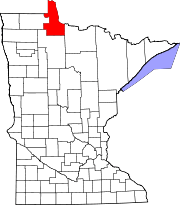
The Webster-Ashburton Treaty, which established the boundary between the United States and Canada, was signed by the United States and Great Britain. Minnesota’s “Northwest Angle” was a result of this treaty.*

It is hard to imagine a time where our most pressing and trying foreign policy questions concerned Great Britain or Canada. The hot button issues of the slave trade, impressment of United States sailors, or resolving the unrest due to the Canadian Rebellion of 1837 needed resolution.

Webster-Ashburton, though months in the making, resolved disputes that went back to the Revolutionary War. Lack of clarity in the Treaty of Paris of 1783 seeded conflict on our Northern Border. Lord Ashburton and Secretary of State Daniel Webster made clear land boundaries with open navigation on key portions of the Great Lakes. **

Jesus, thanks that You respect our boundaries. Thanks for the generations of peaceful relationships we have enjoyed with Canada and Great Britain since this agreement. Will You watch over this national border, all Minnesota state borders, and our personal borders? Will You be the Keeper of our Peace?

*mnhs.org/about/dipity_timeline.htm
** https://history.state.gov/milestones/1830-1860/webster-treaty


Standard
19th Century, Culture, government, History, Intercession, Jesus, law, Minnesota, Native Americans, State Government, Treaties

Doty Treaty July 31, 1841

Unknown-2


images

James Doty, the governor of Wisconsin Territory, fashions a treaty intended to provide a permanent home west of the Mississippi River for the Dakota, the Ho Chunk, and other tribes. Tracts of land are to be set aside for each band on the left bank of the Mississippi; each tribe is to have a school, agent, blacksmith, gristmill, and sawmill. The initial treaty is negotiated with the Sisseton, Wahpeton, and Wahpekute bands; negotiations with the Mdewakanton collapse. The United States does not ratify the treaty.*

Another treaty I know too little about. Help me, Jesus! Help me, wikipedia! Help me, Library of Congress! Help me tribal websites!

Lord, may I sit and watch this treaty in the making with You? Where do you wish to go? What can You teach about Governor Doty, and the Sisseton, Wahpeton, Wahpekute, and Mdewakaton nations? You are unlimited by time; what does this day of July 31, 1841 look like from the Eternal Now?

It was difficult to find a succinct summary of the Doty Treaty, but these are the pieces I see so far. Governor Doty was a Democrat who befriended Whigs. He seems less interested in party than principle. His intention for these permanent homelands may have come from within or from external motives to assuage land speculators. This is not clear to me yet.

In any case, Good Father, I bring these petitions to You who know each heart. Will You remember the benevolent intentions of Doty’s treaty to supply each nation with permanent claims to land, schools, agents, and the practical industries of his day? Will You bless his efforts to ratify this treaty at the Federal level, in spite of its failure?

I know even less about the responses of the Sisseton, Wahpeton, Wahpekute, and Mdwakaton towards Governor Doty, or how much information they were privy to. As a fellow human, empathetic to these people at this time, may I bring my heart for them to You?

I begin with a general idea; trust. Will You remember the effect on these specific tribes, who have known great fluctuations in spirit from the United States? Will you remember those who negotiated with them in good faith? Will You recall those who broke their trust in the name of our states and nation?

I especially pray for their reactions to times of broken trust much like I would pray for an individual who has undergone a great trauma, neglect, or abuse. We cannot escape some horrors of life, but we can choose our response. Will You break any response of fear, bad faith, or hatred for those that may have chosen such?

Honest One, our innermost lives are in Your plain view. We have offended Your diplomacy when we betray our brother in false negotiations. We have offended You when we break another’s faith. We, too often, think of ourselves as able to make good judgments although we have such an incomplete handle on the truth, or the pain another has lived through. Will you forgive, then and today, these offenses?

Slow us down! May we embrace the pain of choosing to love; to show mercy on our enemies! Will You write “Mercy Over Judgment” over the left bank of the Mississippi, and “Love Your Enemy” over the right bank?

Was this part of Your response, Lord?

“Treaty of October 13, 1846 — A treaty of cessions, and intended acquisition of lands west of the Mississippi River for a new homeland, concluded in the City of Washington. [Proclamation, February 4, 1847; 9 Stat., 878]. James K. Polk, President.”http://www.ho-chunknation.com/available-services/heritage-preservation/cultural-resources/history-of-ho-chunk-nation/treaties-of-the-ho-chunk-nation.aspx

Standard
18th Century, Catholic, Culture, government, History, Intercession, Jesus, law, Minnesota, Native Americans, Transference, war

Spanish Claims 1763  

Louis XV France

Louis XV France

“Half of Minnesota passes to Spain when France gives up her trade west of the Mississippi. The exchange happens not because of activity in the Americas but as the result of a war in far away Europe.

No Spanish representatives are known to have visited the area after this trade and the Dakota and Ojibwe know nothing of it. Spain will return the land to France in 1800.” *

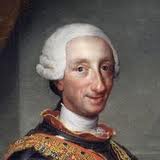
Charles III of Spain

Charles III of Spain

Allow me to amplify this story? Louis XV had just lost the French and Indian War to Britain. This meant that Canada was claimed by England. Simultaneously, France was losing the Seven Years War on the Continent. He contacted his cousin, King Charles III of Spain, and secretly ceded his rights to all New France west of the Mississippi to Spain.

These facts are plain, Lord, but why would France yield such a massive stake in lucrative North America stretching from Louisiana through Minnesota? Was it pure politics and resentment of Britain? Was it born of familial ties between these men, or the bonds of the Catholic faith? It did bring an absence of war, but is absence of war the same as peace?

Lord, I don’t know how this transaction affected our state in this era. Help me see. It seems that Spain ruled with such a light touch that most Minnesotans were not aware of the change. Will You forgive any bondage or bitter roots created in this specific geographical territory because of the judgments held by Britain, France or Spain, Dakota or Ojibwe?

Whether these men were kind-hearted or connivers, that is Your judgment, but I acknowledge that we are no different today. We use or perhaps misuse whatever measure of authority or influence at our disposal when we feel our claims are threatened. We, like these two cousins, may secretively craft plans to block the advances of the opposing team to “keep it in the family.”

Will You teach us Your humility in our diplomacy? When we lose in life, may it not be doubled by the vow, “I will lose to anybody else, but not them.” Christ have mercy on us. May we become the generation that is content to be the humble, temporary tenants of Your land!


*Note – PrayThroughHistory uses the timeline located for several years at the Minnesota Historical Society Web site, at this URL: mnhs.org/about/dipity_timeline.htm .  The current URL is www.dipity.com/Minnesota/History/Minnesota-History/ and only works if typed, not pasted, in browser. It is worth the effort!
 

Standard