19th Century, education, Governors, History, Intercession, Minnesota, Natural Disaster, Social Studies, State Government

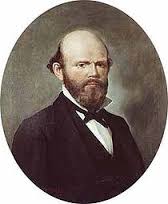
Pillsbury Becomes Governor

george_alfred_pillsbury


January 7, 1876 to January 10, 1882

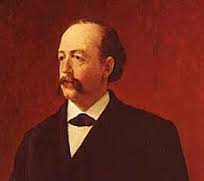
“John S. Pillsbury became the state’s 8th governor. As Minnesota’s eighth governor, Pillsbury was a practical and compassionate administrator, finally resolving a sensitive railroad bond issue and increasing aid to those ravaged by the grasshopper plague. He also encouraged legislators to create the office of public examiner to detect and purge corruption in public office.” * 

Lord, thanks that You have chosen to spread Your gifts out among us so we are aware of our need for each other! Thanks for John S. Pillsbury and the benefits of his governorship.  It appears that he was skilled in mediation and negotiation. Will You forgive the bitter roots that come from even his best negotiations? 

Will You again kindly watch between the railroad interests, ( or any major future economic power), and the people and Minnesota? Will You forgive  us when we expect the State to rescue us, and do not see the provision that You have for us? Will You sanctify the suffering caused by: the grasshopper plague, the corruption of the government, and the dominance of the railroads? Forgive us our flippant and well-forged assessments as we forgive our assessors!


Standard
19th Century, Agriculture, Business, farming, Food, History, Intercession, Minnesota, State Government

Bonanza Farms 1875

423478855

1875
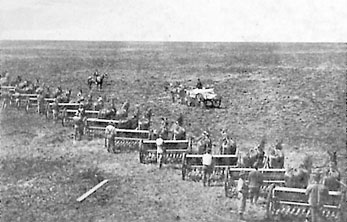
“Investors grow wheat on a grand scale in the Red River Valley. Their “bonanza farms” cover thousands of acres and are harvested by huge crews and the latest machinery.
A financial panic in 1873 stopped the construction of the Northern Pacific Railroad to the Red River Valley. In order to pay back its Eastern investors, the bankrupt company allowed its investors to exchange their bonds for land. As a result, large urban investors immediately became owners of thousands of acres of land (unlike homesteaders who had to live on the land for five years to get 160 acres). The new owners turn the land into large-scale commercial farms run by hired managers with cheap labor and expensive machinery.” *

Lord, You hate corruption of any sort in any relationship. “The LORD detests dishonest scales, but accurate weights find favor with him.” Proverbs 11:1** This Panic of 1873, again at the hands of the railroads under federal authority, really stole land from the homesteaders. (The principle of sowing and reaping? The homesteaders just years before may have been party to land being swindled from the Dakota.) Anyway, we are people capable of both sharing and defrauding land from our neighbors.

Will You forgive us this debt? Will You cause restoration and repentance to grow in the heart of this State and Nation? Will You forgive Minnesotans’ resentments against the Federal Government? Will You forgive the Railroads for manipulating the Panic of 1873 to their benefit? Will You remove this curse from our land, skies, waters, and hearts? Thank you that You deal with us in such a generous manner!

http://www.mnhs.org/about/dipity_timeline.htm
**http://biblehub.com/proverbs/11-1.htm


Standard
19th Century, Agriculture, farming, Governors, History, Intercession, Jesus, Leadership, Minnesota, Natural Disaster, Politics, State Government

Cushman Becomes Governor

unknown

January 7, 1874 to January 7, 1876

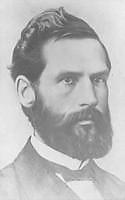
“Cushman K. Davis takes office as the state’s seventh governor. During his single term as Minnesota’s seventh governor, Cushman K. Davis confronted a menace that threatened to ruin the state’s farm economy. A five-year-long grasshopper plague began in 1873, and Davis’s offer of aid to farmers whose crops had been devoured by invading locusts represented an early form of state-sponsored disaster relief.” * 

“The state, governed by three different men during the grasshopper plague years, also failed to provide adequate relief to affected farmers. Under governors Horace Austin and Cushman K. Davis, the state provided small sums of direct, state-funded relief, but the governors focused their efforts on encouraging charitable giving to the cause. Unlike his predecessors, Governor John S. Pillsbury did not call for any direct, state-funded relief for farmers. Elected in 1876, Pillsbury believed that poverty was a fact of life on the frontier and that providing relief would make farmers dependent on the state. Instead, Pillsbury focused on efforts to eradicate the grasshoppers. This included a controversial bounty measure that required every able-bodied man in affected counties to destroy grasshopper eggs for one day a week, for five straight weeks.

In the summer of 1877, the grasshoppers left just as quickly as they had arrived. An April snowstorm damaged many of their eggs, which encouraged farmers to redouble their efforts to destroy the grasshoppers. The surviving grasshopper eggs hatched, but by August, the grasshoppers had flown away. Many attributed the end of the grasshopper plague to divine intervention, since Governor Pillsbury had proclaimed April 26 a day of prayer, after receiving many requests to do so.” **

I’m first thunderstruck by two facts jumping off the page at me: that Cushman spearheaded state charity, and that a day of prayer is recorded as an action point. Will You guide me to ponder these notions? Will You give some insights as to how to intercede?

To the first point, it seems quite unusual for a Republican of this era to use state-funded relief. Cushman appears to be a man of principals, but not so rigid that he fails his constituents during such dire times of need. Will You bless him, and his commitment to the survival of his fellow man? Will You keep balance in this constant teeter-totter of public versus private charity within the souls of our leaders? If taxes were gifts, we would give them for Christmas. If charity is coerced, the heart disengages, and it no longer is charity but, perhaps, extortion. Have mercy on our “mercy”! 

It’s curious to me that politicians sometimes endorse prayer as an action point. Many leaders currently would see the endorsement of prayer as a failure to adequately separate “Church and State”. (Help me probe this a little longer!) Yet we condition our minds and spirits through repetitive thoughts daily; we listen to songs over and over, view movies again and again, and repeat instructions internally to project us past sales objections. (I know these are quite random, but perhaps they are also a form of prayer?)

I’m grateful to You, the masterful inventor of every grasshopper, for Your beautiful destruction of our security. Will You forgive our barriers to seeing the heart and mind conditioning, (aka “prayer”), as a legitimate response to the plagues of our lives? Will You make us flexibly rigid in our principals enough to love our neighbor as they experience heartache and misfortune?

** https://www.minnpost.com/mnopedia/2013/06/winged-menace-minnesota-grasshopper-plagues-1873-1877


Standard
19th Century, Civics, Democrat, Governors, History, Intercession, Leadership, Minnesota, Politics, Prayer, railroad, Republican, State Government

Austin Becomes Governor

candidate37119

January 9, 1870 to January 7, 1874
“Horace Austin takes office as the state’s sixth governor.

A reputation for clearheaded objectivity and disdain for contentious party politics enhanced the appeal of Judge Horace Austin as a gubernatorial candidate in 1869. Minnesota’s sixth governor was determined to bring legislative power to bear against the railroad barons. His advocacy of strictly regulated passenger and freight rates and his opposition to the wholesale allocation of state lands to railroad development earned him a second term. But he was unable to resolve completely the problems inherent in controlling a booming transportation industry and curbing the excesses of its owners.” *

Lord, thanks that You are our shield! To my knowledge, our people have suffered much through the over-reaching hands of the railroad. (Especially the farmers!) Thank You for providing a governor that would stand up to these barons; even if partially successful.

Will You forgive the judgements between us all: Minnesotans’, the railroad barons’, the U. S. Government, and our state government? We know that You have told us in Leviticus 19:35,36 to use “honest scales and honest weights”. Because You have forgiven us our debts, we forgive the numerous injustices perpetuated by all railroads, their employees, their owners, financiers, and any other party unnamed that have been bound in this unforgiveness.

Will You return us to a right relationships from where they skewed off in Austin’s term? Will You restore the lands that have been cursed through the contention between Indian Nations, citizens, and the railroad companies? There’s enough freedom for all in Your kingdom; help us to receive and give honor and freedom to our neighbor today! Thank You that Governor Horace Austin looked for solutions between the Democrats and Republicans! May we have more Governors and leaders like him who see and think in the areas of our common humanity. Amen!

* http://www.mnhs.org/about/dipity_timeline.htm


Standard
19th Century, Americana, History, Immigration, Intercession, Minnesota, omnipresent history, Real Estate, State Government

Nininger City Fails

unknown-2

1869
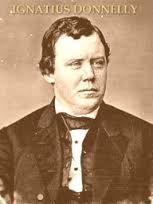
“The Panic of 1857 and the decision of the steamboats to use Hastings instead of Nininger as a river port doom Nininger City, the dream town of Ignatius Donnelly.

Nininger declines steadily after the financial panic of 1857 that causes banks across the country to call in loans. Donnelly tries to put a positive spin on the eastern bank failures by issuing a handbill entitled “Cure for the Panic. Emigrate to Minnesota! Where no Banks exist.

People move away anyway. By the 8th U.S. census in 1860, only 469 remain. Buildings disappear and by 1869 no other buildings remain besides Ignatius Donnelly’s house. The town eventually disappears from the map.” *

Have mercy on us! We make our dreams into idols, and are heartbroken and bitter when they fail us! Thank you for Donnelly and bless Your heart within his dreams! How bitter for him it must have been to see Hastings thrive?!

Lord, will You forgive any judgments that Donnelly had against Hastings, and vice versa? Will you make us free in the present from this bitter root? Will You bless the river and the lands involved? Will You preserve Nininger and Hastings in the season of flooding? Will You cause us to bless the town next door as much as our own?

http://www.mnhs.org/about/dipity_timeline.htm

Standard
19th Century, Culture, History, Indian, Intercession, Minnesota, Native Americans, State Government, Treaties

Sisseton Wahpeton Reservations Established

Unknown-2

February 19, 1867
“The Sisseton (or Lake Traverse) Reservation in northeastern South Dakota and the Devil’s Lake Reservation in central North Dakota are established for the Sisseton and Wahpeton bands, originally from Minnesota. These two bands had argued for the restoration of their treaty rights on the grounds that they had not fully participated in the war of 1862.” *

Lord Jesus, I ask that You enter this negotiation of February 19 so long ago. Will You bring Your justice into this situation? Will You free the Minnesotan and tribal members from the sins of their generations? Will You bring a new peace between Sisseton Wahpeton and our State?

http://www.mnhs.org/about/dipity_timeline.htm

Standard
19th Century, Americana, History, Immigration, Intercession, Minnesota, Politics, State Government

Attracting Settlers

Unknown

1867
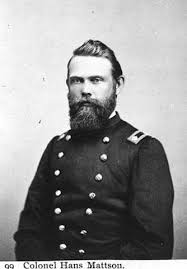
“People mean progress and prosperity to the new state. Minnesota establishes a board of immigration to attract settlers. Hans Mattson, secretary of the board, makes several trips to Sweden to recruit immigrants. Mattson had been a founder of Goodhue County’s Vasa colony in the 1850s. Now he encourages newly-immigrated Swedes to farm mainly in the central part of the state, with great successes in Wright, Meeker, and Kandiyohi counties.” *

Thanks for the establishment of a board of immigration! Thank You for Hans Mattson and his work to advertise Minnesota. Thank You that this state could be a shelter for many Europeans, but in this case, especially Swedish immigrants.

May any bitter root judgments between Wright, Meeker, Kandiyohi, Mattson, Minnesota, or Sweden be broken in the name of the Lord Jesus Christ! Will You soothe the burning frustrations between citizens of Minnesota and illegal immigrants past? Will You show our nation how to resolve the problems of having a population of perhaps 20 million non-citizens in the present? Will You forgive our sins against You and our fellow human beings through this issue into the future?

http://www.mnhs.org/about/dipity_timeline.htm

Standard
19th Century, Business, Geology, History, Industry, Intercession, Minnesota, omnipresent history, State Government

Falling Falls

Unknown

1866 to 1880
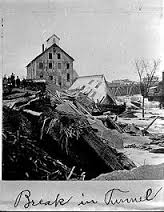
“Construction begins on a wooden apron to protect St. Anthony Falls. Mills depend on the falls for industrial power, and their owners hope the apron will stop its erosion and collapse. Floodwaters destroy this first attempt the following year. Collapses follow. It’s 1880 before a useful apron is completed.” *

The Eastman Tunnel once ran below the St. Anthony Falls, connecting Nicollet island with Hennepin Island. It’s collapse almost destroyed the utility of the falls for the milling industry. Congress gave the Army Corps of Engineers $50,000 to fix the falls by basically filling in the tunnel with concrete, and making a wooden apron. This attempt failed also, and it wouldn’t be until 1874 when a lasting apron would be built.**

Jesus, our life is a series of attempts, successes, and failures. Help us view failures as You do; teachable moments. Thanks that this failure to build an apron eventually led to a successful preservation of the utility of St. Anthony Falls and the milling industry, but at the cost of destroying its’ natural beauty.

Will You bless us again through the Falls and the Mississippi? Will You gift us to persevere today when our work is totally destroyed by forces beyond our control? Will You help us work in harmony with beauty and nature?
http://www.mnhs.org/about/dipity_timeline.htm
** https://www.esci.umn.edu/courses/1001/1001_kirkby/SAFL/WEBSITEPAGES/5.html

Standard
19th Century, Chippewa, Exploration, History, Intercession, Minnesota, Native Americans, Ojibwe, State Government

Beltrami County Formed

images

February 28, 1866
“Beltrami County was formed.” *

A seemingly simple note in history. A county is born, but what makes this place unique, Lord? Why is it special in the history of my state? It’s the headwaters of the great Mississippi, supplies drinking water for a quarter of Minnesota, supports hundreds of species of animals, and gives witness to approx. 10,000 years of human history.**

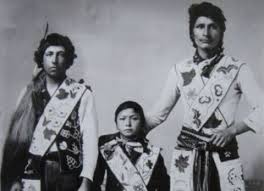
Some of the land Beltrami County sits upon was originally Ojibwe (Chippewa) land. “Home to the federally recognized Red Lake Band of Chippewa, it is unique as the only “closed reservation” in Minnesota. In a closed reservation, all land is held in common by the tribe and there is no private property.” *** Will You direct my thoughts and prayers today for this peoples’ influence on this event?


Unknown

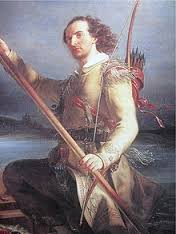
This county is named after the Italian count Giacomo Beltrami. He explored the area ca. 1825 and claimed to have discovered the headwaters of the Mississippi. After more years of adventures and travels he wrote his memoirs, but could not get them published by the Church-led government of Italy. What, if any, prayer points does this bring to the fore? ****

First, I will give thanks for the gift of this river; the Mississippi. What would Minnesota be without it? It has given so much to so many: a 2300+ mile waterway, massive hunting and fishing grounds, thousands of years of drinking water, and immense beauty! May we forever remember this blessing from You, and be honorable stewards of it!

Next, I commend the Ojibwe-Chippewa Nation to You. I remember their choice to live in common, a huge commitment to trusting relationships most moderns will not dare undertake.You entrusted them with the gift of the Mississippi, and they did not withhold this treasure from Beltrami. *****

Lastly, I observe this lesson from this snippet of Minnesota history; the debt of gratitude is like a great river. Minnesota owes a debt of thanks to Italy, who owes a debt of gratitude to Giacomo Beltrami who owes a debt to the Ojibwe, who owe a debt to their forebearers, yet we all owe a perpetual debt of honor to the King of the Universe. As long as there is time, may this river of remembrance and honor never cease to flow and refresh! Amen!
http://www.mnhs.org/about/dipity_timeline.htm
** http://mississippiheadwaters.org/History.asp
*** Charles Brill (1992). Red Lake Nation: Portraits of Ojibway Life, University of Minnesota Press, p. 19.
**** https://en.wikipedia.org/wiki/Giacomo_Beltrami
***** http://www.sciencebuzz.org/blog/would-you-trust-your-life-red-umbrella


Standard
19th Century, Governors, History, Indian, Intercession, justice, Minnesota, Native Americans, omnipresent history, State Government, Transference, Treaties, U.S. Government, war

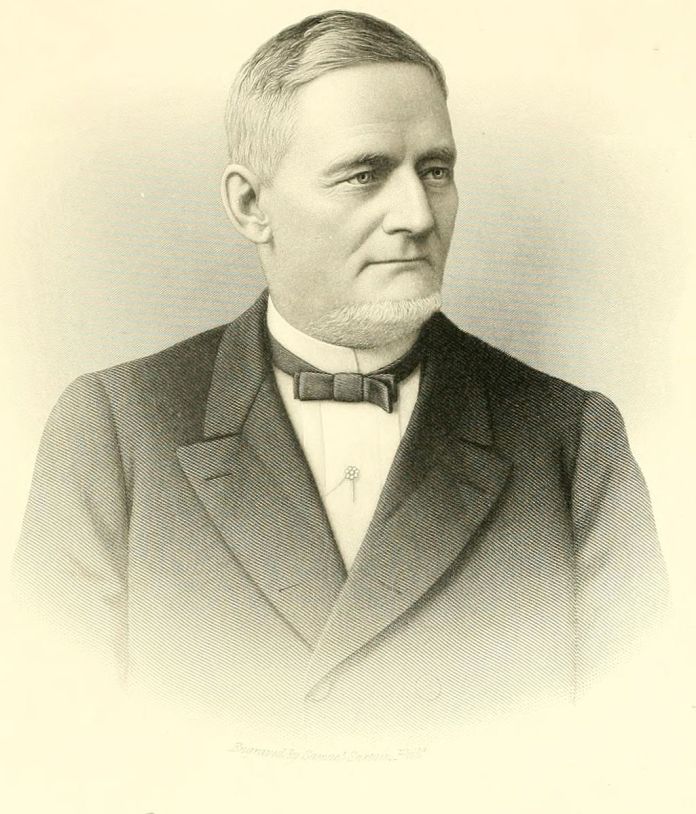
Marshall Becomes Governor

Unknown

January 8, 1866 to January 7, 1870
“William R. Marshall becomes the state’s fifth governor. Energy and ambition characterized the life of Minnesota’s fifth—and only southern-born—governor. During William Marshall’s administration, his adoptive state experienced a post-Civil-War surge of growth and development: its population doubled to 350,000, its railroad mileage quadrupled, and its commercial endeavors flourished.” *

Governor Marshall personified the spirit of his pioneering neighbors in the Midwest. His work experience included: dairy farming, livestock farming, reporting the news, and banking. He voluntarily fought in the Civil War, and the Dakota Wars. **

Some of us, living in the present, may stumble over Marshall’s support of the abolition of slavery, and then fighting to expel the Dakota Nation from Minnesota. Would modern scholars, educated in the doctrines of the Frankfurt School or Cultural Marxism, consider him a racist because he fought for African-Americans, but against Native Americans?

Perhaps we would do better to enter the worldview of his era, and see things through the lens of 19th Century Midwesterners? Maybe it’s consistent with his belief system to come to the rescue of slaves because they did not aggress against his country (United States)? What if he rationalized specifically fighting the Dakota Nation, (not all Native Americans), because a few hundred of them made war on Minnesota?

Lord, I simply do not know his heart. You are the Only Wise Justice of this world, so will You reason and wrestle with us in prayer? It is easy to applaud those who voluntarily gave their lives to fight in the Civil War, if it was out of a heart to end the institution of human slavery. It is less laudable, but still reasonable, to assume that some Minnesotans fought the South because of political rather than moral or spiritual reasons.

In the same fashion, we know little of Marshall’s rationalizations for his role in the Dakota Wars. Did he fight for the protection of his political state? Did he do battle because he was “just following orders”? Was Marshall a man given to ethnocentrism and racism towards “Indians”? Was he an amoral conqueror, only acting out his role in the drama of natural selection? Did he fight out of a sense of justice?

So we go to prayer, Eternal Father, beginning with gratitude that You are the Only One who can unravel the mixed motives of the human heart. We do good with a bad heart. We do bad things to others with good intentions. Will You forgive us our pride whether in doing justice, or in our failures to do so? Will You forgive us the pride of a glorious, self-righteous martyrdom; of “falling on the sword” for others with narcissistic hearts?

Regardless of his motives, we applaud the honorable actions of the governorship and life of William R. Marshall. We thank You that he took part in: freeing slaves, protecting settlers, and growing our economy? Where Marshall offended You in the displacement of the Dakota Nation; will You bring forgiveness and healing?

Holy Spirit, thank You for the encouragement of charity Marshall brought to the state of Minnesota. Forgive any judgments established from him or to him through the generations. Thanks for his heart of good will towards our most vulnerable neighbors shown by the following quote below.

“It is due to the State that an enlarged philanthropy should characterize its efforts for its helpless ones. These children of sorrow, the blind, the dumb, the insane, have a claim upon us that we cannot disregard. If speedy action for their relief is not taken it will be a reproach to our Christian civilization.”

Lord, may we be civil because we are Yours! May we love our enemies! May we be conduits of Your generosity for those in need! Amen!
http://www.mnhs.org/about/dipity_timeline.htm
** https://en.wikipedia.org/wiki/William_Rainey_Marshall
*** Minnesota Historical Society Collections. “The inaugural address of Governor Marshall, January 8, 1866, “Executive Documents for the state of Minnesota for the year 1865”, pages 31-38 (St. Paul, 1866).

Standard