20th Century, Culture, Environment, Faith, Great Lakes, History, Humor, Labor, Logging, Minnesota, outdoors

Paul Bunyan is “born” 1914

3675aa754daaa63dc4c0e9a41c453187--paul-bunyan-white-pines

1914
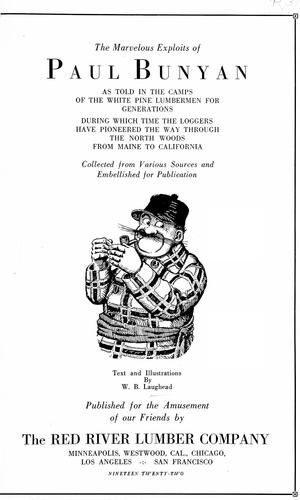
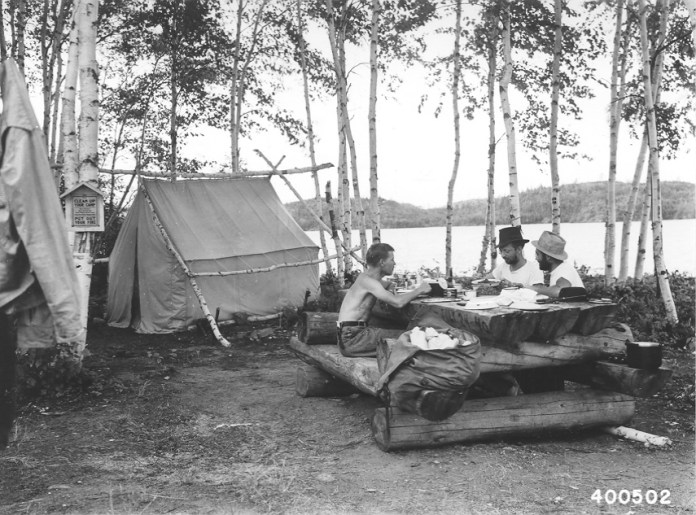
Paul Bunyan, the mythical lumberjacking giant who logged off most of North America, is created as an advertising gimmick by the Red River Lumber Company in Minneapolis.*

There’s something that makes me smile just reading the name, “Paul Bunyan”. His name is synonymous with the North Woods of Minnesota. For the past 100 years, most midwestern kids have heard about him at camp, at a summer cabin, or sitting around the campfire.

I won’t bore you with the breadth and depth of research as to the origins of his legend, but report a few quick facts. His stories came from the oral tradition of logging camps. They were most commonly credited to William B. Laughead writing promotional material for the Red River Lumber Company. Some researchers think his legend started with the French Canadian folk tales of Paul Bon Jean or Tit Jean. Bunyan phonetically is similar to the Quebec expression for surprise; “bon yenne”.**

So here begins my prayer, Lord, thanks for the legend of Paul Bunyan! Help me reflect on his folktales, and find their blessing.

Christ, I thank You for Your masterful parables. You chose to allow those who were looking for meaning to catch it, and for those listeners who were not, to breeze over its intent for their heart and remain relationally open to You. Stories seem to have a magic to get past our trip wires, and speak deeply and gently to us.

I thank You for the good these tales did for the loggers. They entertained, distracted from boredom, aches and pains, and maybe even planted seeds of inspiration. Who wouldn’t want to be the ultimate mans’ man in those rough work conditions? Paul laughed at fear and the elements, did an impossible workload each day, ate mountains of food, and maybe even created some mountain ranges playfully wrestling his giant blue ox. (Wink wink!)

So today, Creator of the Forests, I thank You for the gifts of hyperbole, folklore and camp stories. I thank You for the relationships born of telling and listening to “tall tales” like Paul Bunyan in Minnesota. I thank You for an example, though fictional, of a huge, happy man loving his hard work in Your outdoors!

May You enable this State to take to heart and to practice the rule of Saint Benedict to pray and work; “Ora et Labora”.**** May You bless us to practice contentment in our work until You come. May we forever return to You the free, yet costly gift of doing our best!


“Whatever you do, work heartily, as for the Lord and not for men.” Colossians 3:23 ESV


*P.T.H. cites timeline formerly at this URL: mnhs.org/about/dipity_timeline.htm
The Minnesota Historical Society Web site, http://www.mnhs.org, is fantastic! Check it out! Images are from https://images.google.com/?gws_rd=ssl; again, an amazing resource!
**https://en.wikipedia.org/wiki/Paul_Bunyan
***https://en.wikipedia.org/wiki/Pray_and_work
****http://biblehub.com/colossians/3-23.htm

Standard
19th Century, 20th Century, Business, Environment, Great Lakes, History, Intercession, Judgment & Counter-Judgment Cycle, Lake Superior, Minnesota, omnipresent history, Shipping, Transportation

Split Rock Lighthouse Opens 1910

Unknown

July 31, 1910

“Shipwrecks from a mighty 1905 November gale prompted this rugged landmark’s construction. The construction was an engineering feat in such a remote location. The lighthouse was completed by the U.S. Lighthouse Service in 1910.” *

Why is it that pain elicits an active response that “normal” life doesn’t? Why is it that we do not neglect action after a certain level of loss? Why do we wait to become creative problem solvers?

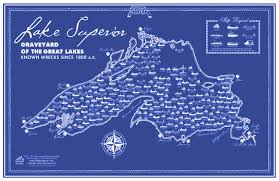
Will You guide this writing to elucidate the reader to the level of shipwrecks in this era of iron ore, grain, lumber, and fish shipments across Lake Superior and the Great Lakes? In a single season of November 1905, there were 78 fatalities and 29 disabled or destroyed ships.** When one adds in the frigid water, rocky coastline, and tendency of these shippers to overload their vessels it is easy to empathize with the concerns of sailors.

In response, United States Steel Corporation lobbied Congress to build a lighthouse with a foghorn. This effort was executed by engineer Ralph Russell Tinkham of the U.S. Lighthouse Establishment. All building materials had to be hoisted up the 110 foot cliff from lakeside either by steam-powered derick, or railed up on a freight tram. Workers spent 13 months living and working on the cliff in tents with a brief respite during the coldest months of winter.

This day we remember the names of these lost vessels and their unnamed crews to You, Lord of All Seas: the A.C. Adams, Alice Vivian, Amboy, Bob Anderson, Lotta Bernard, A. Booth, E.T. Carrington, Charley, City of Winnipeg, Comet, Belle P. Cross, F.L. Danforth, Donna Marie, Duluth, Elgin, Samuel P. Ely, U.S.S. Essex, Fayling, E.P.Ferry, Fiorgyn, Thomas Friant, F.W. Gillet, R.F.Goodman, Criss Grover, Harriet B, George Herbert, Hesper, B.B. Inman, Isle Royale, John H. Jeffrey Jr., J.C. Keyes, Lafayette, Lewie, Liberty, Madeline, Madeira, Mary Martini, May Flower, Mentor, Niagara, Benjamin Noble, Oden, Onoko, Osprey, G. Pfister, Rebel, George Spencer, Ella G. Stone, Stillman Witt, Stranger, Robert Wallace, Thomas Wilson,  and the Six Dredge Scows. 

Will You forgive any judgments’ we made of these lost seamen, their wives, families and friends, and employers towards each other and towards You in their aeon? Will You cleanse Superior and the Great Lakes of its vast depths of unforgivenness? 

Will You especially release the pain caused by the urgency of the timber, iron mining, and taconite industries to expedite these shipments to world markets? Will You forgive us our industriousness that broke with Your Sabbath? We have missed Your wisdom when we work too much.

We remember also the efforts of Ralph Russell Tinkham and his construction workers. We thank You for their superhuman efforts to build Split Rock Lighthouse. Will You bless them, their progeny, and those who follow in their footsteps? Will You give us strength and acceptance when we face storms beyond our control? Will You make us  beacon and horn today to lead our peers away from the rocks and towards safe harbor?

* http://www.mnhs.org/about/dipity_timeline.htm

**http://www.mnhs.org/splitrock/learn/shipwrecks

***http://www.mnhs.org/places/nationalregister/shipwrecks/list.php


Standard
20th Century, Boys, Environment, Exploration, Faith, History, Intercession, Judgment & Counter-Judgment Cycle, Leadership, Men, Minnesota, omnipresent history, outdoors

Minnesota Boy Scouts Organization Forms 1910

journal_1913boyscouts

1910

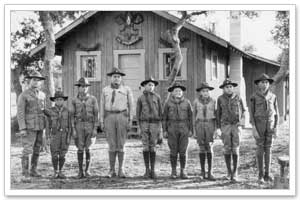
“A growing fear of “boys in trouble” leads to the founding of Minnesota’s first Boy Scout troop, only eight months after the organization arrives in the United States from England.” * 

What can I say and pray about the Scouts, Lord? For openers, thanks that it’s founders sought a way to connect boys with each other. Each Scout is an important part of his troop. For many, this is a first affirmation of their value as a human being and in his maleness. He learns that he can do his part and become worthy of trust. 

Even in failure, like forgetting key food items for a camping trip, the troop may rib him, but ultimately close ranks and support him. That Scout learns, “ I can make do if I’m in need, and overcome temporary discomfort.” What an important lifelong lesson!

Next, the Boy Scouts will get a child or teen out of his home environment. A city kid will see places that are truly wild and untamed. He will get to know nature, stop fearing the outdoors, and learn a proper respect for living things. He may explore the deserts, make camp in the snow, or learn wilderness survival. The Scouts exist to both invite and instill a sense of adventure in young men. 

Finally, a Scout becomes aware that he can learn expertise. A simple item, like a rope, becomes the means to teach him knots and lashings, but also symbolically recognizes his work by earning a merit badge. Why do the Scouts collect merit badges? Maybe, because its a tangible symbol of honor given by significant males, and then reinforcing the message in a ceremony that says“Well done!”

Lord, thanks for this important event in 1910. Thanks for, thereby, giving thousands of boys a place to belong, share adventures, learn life skills, and to give and receive honor. Will You help them thrive in helping Minnesota boys become men? Will You give us inspiration as a society to create more pathways, like the Scouts, that call our boys out of complacency and into a life of purpose, expertise, relationship, and adventure? 

* http://www.mnhs.org/about/dipity_timeline.htm

**More on the character traits taught by the Scouts. http://www.boyscouttrail.com/content/content/scout_law-1760.asp


Standard
20th Century, Faith, Governors, History, Minnesota, omnipresent history, Politics, Republican, State Government

Eberhart Becomes Governor 1909

Unknown

September 21, 1909

“Adolph Olson Eberhart takes office as the state’s 17th governor upon the death of Governor John A. Johnson. Eberhart was subsequently elected twice on his own merits.” *

It’s a timeless challenge to any society, during any period in human history, to change their leaders and maintain a continuity of authority. When a sibling stands in for mom or dad, they usually aren’t received with the same respect. The same goes for an anonymous lieutenant governor, Eberhart, suddenly thrust into prominence.

Events like these seem to underscore the importance of relationship and authority. We give our allegiance more easily to those whom we know. It seems a logical and reasonable unwritten precept of our survival instincts. We gain trust through consistent and positive relational knowledge of our neighbor.

I thank You that Governor Eberhart was up to the task. I don’t know the details of how he won the populace of Minnesota over, but it is recorded that he did. And he repeated his success twice.** Perhaps it was his consistent work ethic and and stalwart service to his constituents.

Author of authority, thank You for Eberhart’s continuity. Will You bless those who stand in a gap such as him? Will You bless those leaders who are challenged at every step, but simply follow the plan? Thank You for leaders who are not subject to reward, recognition, or favor-seeking. Bless those who lead because it is their nature!

* http://www.mnhs.org/about/dipity_timeline.htm

**https://www.nga.org/cms/home/governors/past-governors-bios/page_minnesota/col2-content/main-content-list/title_eberhart_adolph.html


Standard
20th Century, Democrat, Governors, Health, History, Intercession, Judgment & Counter-Judgment Cycle, Medicine, Minnesota, Politics, State Government

Governor Johnson Dies in Office 1909

1909-09-21postcardGovJohnsonFuneralTrainRochesterMN

September 21, 1909

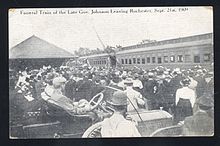
“John A. Johnson was the state’s first governor to die in office, following surgery.” *

My first question to You is; “Why do we exalt our political leaders?” Does a governor’s death hold more weight and import than one his constituents? Perhaps our Johnson’s death connotes the identification Minnesotans had with him; he was one of us.

Lord, thank You that Minnesotans did indeed relate with Governor Johnson! Thanks for the gift of empathy one feels for a fellow countryman. Thank You that we were created with a longing and value of our sense of place. Our geography imprints on our soul whether: city streets, a warehouse, open roads, or open fields.

We seem to own what our eyes often take in. A street we frequent becomes our ‘stomping grounds’. Hunter’s tend to know their woods “like the back of their hand”. May our leaders continue Johnson’s legacy of being “one of us”.

Good Governor of All, will You remember us when we lose a head of state, or maybe even a hero? Will You help us deal with losing a key leader or mentor in our lives? Will You honor the memory of Governor Johnson? Will You keep us from the extremes of guilt through creating a cult of personality around politicians, or neglecting to groom and constantly call forth the headship of the next generation?

* http://www.mnhs.org/about/dipity_timeline.htm


Standard
20th Century, Environment, History, Intercession, Judgment & Counter-Judgment Cycle, Minnesota, National Parks, Native Americans, State Parks

Superior National Forest Established 1909

fsm91_047141

February 13, 1909

“President Theodore Roosevelt establishes Superior National Forest. Exploitative practices are restricted in these areas, thereby preserving the beauty of lakes and trees for future generations. Six weeks later, Ontario’s government responds in kind by creating the adjacent Quetico Provincial Forest Reserve.” * 

Again, how fitting it is to be awed by such natural beauty as I watch this event with you: the creation of Superior National Forest. My first thought, dear Lord, is to acknowledge that our eyes are bigger than our stomachs. I’ve seen the North Shore, explored the Gunflint Trail, and the Boundary Waters many times, but cannot imagine how much greater the awe of those  who saw it at the end of the 19th century. How humbling it must have been to walk as a grasshopper among the pine, fir and spruce forests!

I can smell the crisp scent  of Your evergreen forest Lord, even as I write this. Will You forgive us for over-harvesting your forests in Minnesota? This we have done, this I acknowledge to You.

Next, I thank You for moving the heart of President Roosevelt to preserve such areas, and to be mindful of future generations. That said, I also acknowledge that sometimes self-interest drives our attempts to be nature’s caretaker. It is good to be your steward of nature! I just want to remember to You that we are also subject to impure motives even when doing good.

So I ask You, did Roosevelt establish this forest with a pure heart? Was he looking to enhance his legacy? Were there commercial interests that he was motivated to favor or disfavor? Perhaps he was motivated to increase Federal authority over state lands? If so, how did he gain the legal rights if they were not implicitly stated in the Constitution?

His actions allude to his belief that our state’s authority had failed this parcel of land. Did Minnesota trust the logging or mining industries too much? Did the President trust our states rights too little? Only You know the heart Lord.

In your mercy, hear my prayer. Will You forgive us our impure motives even while we do good whether past, present, or future? Will You forgive our prideful hearts? We honestly act, at times, as if we will save your lands. We act as if we will improve Your creation, but often, at our best, we simply do no harm.

Our government established Federal authority to protect and preserve this land. Did we also seek Your celestial authority to protect and preserve it, or were we too busy making commerce? We often rule the land. We stake our claims declaring ourselves it’s savior, but in the end, we simply rule over other men. Will You forgive how we have fought over the title to Your land? Will You grant us humility of heart in Your state known as Minnesota? Will You give us the necessary self-control  in land issues that we remain in balance with nature and each other? Will you preserve our hearts from the greed of over-harvesting, or the fear that locks the same lands up subjecting them to the ravages of under-harvesting?

Will You forgive our short memories? We forget that Natives managed your forests here long before the Department of Natural Resources, or a Bureau of Land Management. They did so well that the first European explorers and settlers were dazzled by its bounty. Remember these tribal stewards Lord Jesus! **

As a final thought, dear Father, I do not suggest we as humans necessarily err in our “doing good”. After all, we are made in Your image, therefore capable of brilliance, ingenuity, and true greatness. I simply want to bow to You, to record and remember, that such brilliance, ingenuity, and greatness often builds a monument to our name. 

* http://www.mnhs.org/about/dipity_timeline.htm

** Read the relationship of American Indians to the land, and the differing views of historians on the subject. This excellent article by William Cronin and Richard White for the American Heritage Society shows the breadth of variety of Native American responses to environmental change and conservation of land and species. http://www.americanheritage.com/content/indians-land


Standard
20th Century, Architecture, banking, History, Intercession, Judgment & Counter-Judgment Cycle, Minnesota, omnipresent history

Sullivan’s Owatonna Bank Opens 1908

Unknown-1

1908

“Master architect Louis Sullivan’s National Farmers’ Bank, perhaps the most famous small-town bank in the U.S., graces the corner of Broadway and Cedar streets in downtown Owatonna. One of the first American architects to break free from the influence of revival styles, Louis Sullivan completed a series of eight banks in small Midwest towns during the last years of his career. The National Farmers’ Bank of Owatonna is arguably the best.” * 

In 1896, in an article in “Lippincott’s Monthly Magazine”, Mr. Sullivan wrote the following:

“It is the pervading law of all things organic and inorganic, of all things physical and metaphysical, of all things human, and all things super-human, of all true manifestations of the head, of the heart, of the soul, that the life is recognizable in its expression, that form ever follows function. This is the law.”

It makes me curious why an architect of his stature would embrace the job of designing a small town bank. Just look at this track record. He is called both the “father of modernism” and the “father of skyscrapers”. He is one of the triumvirate of great American architects alongside Frank Lloyd Wright and Henry Hobson Richardson.**

What would behove him to design a small town bank in Minnesota?

A clue could be that he was considered to be a hard drinker and past his prime by the time he accepted this task. His client, Carl Bennett, had also died to his dream of being a conductor to attend family duties running the bank. Perhaps this serendipitous meeting fulfilled a need for both men to create again. It’s success does seem to be a merger of each as it is labelled as a “Symphony of Color”.***

Merciful Messiah, thank You for their dreams. Thank You that, though deferred, they created a everyday temple to commerce that stills sings! Thank You for positioning their relationship and life circumstances to better enable them to savor the moment. 

Will You continue to bless the artist and architects of Minnesota? Will You give them the talent that bedazzles the routines of our lives? Will You give our lives form that follows function, and let us trust that that’s enough?

* http://www.mnhs.org/about/dipity_timeline.htm

**https://en.wikipedia.org/wiki/Louis_Sullivan

***http://news.minnesota.publicradio.org/features/200002/28_buzenbergb_owatonna/


Standard
20th Century, History, Industry, Intercession, Judgment & Counter-Judgment Cycle, Labor, Mining, Minnesota, omnipresent history, Unions

Mesabi Range Strike 1907

Unknown

July 20, 1907 to August 15, 1907

“The 1907 strike was the first organized, widespread strike on the Iron Range. The immigrant miners—mostly Finnish—had little experience with unions or large-scale strikes. Although the union (Western Federation of Miners)had been planning a strike, the immediate cause was the layoff in July of 200 union members by the Oliver Iron Mining Company. A strike was called on July 20. In early August, strikebreakers were brought in and “deputies” hired to protect them. By mid-August, sufficient numbers of strikebreakers, combined with improved economic conditions, broke the strike.” *

What causes a man to be ready to say “enough is enough” Lord? Like many strikes, the motivations seem to be dangerous working conditions and too little pay. But is there more to this circumstance Lord?

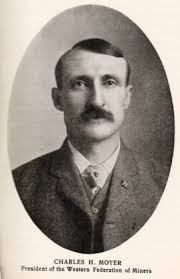
I ran across the person of Charles Moyer, the leader of the Western Federation of Miners from 1902 -1926. This is a quote I found on Wikipedia regarding this strike:

“His experiences with the IWW led Moyer to the conclusion that the federation was too radical. Moyer was especially disturbed by the IWW’s refusal to ally with or endorse any political party, which had been the key to Moyer’s support for the creation of the IWW. In 1908, Moyer led the WFM out of the IWW, taking most of the IWW’s membership (which belonged to the WFM) with him. Concerned that the WFM’s reputation for radicalism was making it difficult to reach collective bargaining agreements, Moyer re-affiliated his union with the conservative American Federation of Labor (AFL) in 1911.” **

“This strike was not started by the I.W.W., but has been underway the past six years. We have appealed to every labor official in Minnesota to have the miners on the range organized, but we have been shuttled back and forth between the Western Federation of Miners and other organizations who passed us on again until finally the miners took things into their own hands and went out without organization.” ***                                 M.E. Shusterich A leader of the Mesabi Range Strike

So to briefly summarize the situation, Mesabi’s miners wanted relief from the stains of their labor. One union, the WFM, wished to settle with owners, and those influenced by the more aggressive IWW did not wish to settle. This is much more complex than I originally thought, but I ask You to help me unravel these motive conflicts. Like many of our struggles in life, our motives become less clear when loyalties to multiple relationships are involved.

Let’s start at the beginning, with the Finnish workers. Lord, You have seen how these men worked and know the exact conditions they strained under. Will You give acknowledgement to their labors, and remember the dangers they faced? Will You forgive any envy or discontent in their hearts if that led them to demanding more? Will You forgive their judgements and expectations of their employer; the Oliver Iron Mining Company?

Likewise, will You remember the strains of those in management at Oliver Mining? Will You hear their frustrations of trying to communicate with those who don’t speak the language of business? Will You forgive them their false assessments of these Finnish laborers? Assessments such as, “lazy”, “ungrateful”, and “not man enough for the job” come to mind. 

Another set of issues that added to the fog of this strike were as simple as culture and language clashes. These were readily identified and understood by the Italian Socialist Teofilo Petriella who joined with the WFM to assist with the strike.

“The WFM asked Petriella to organize these ethnically diverse miners on the Mesabi Range. In a 1907 report to the WFM, Petriella noted that the steel trust had earned a net total of $156,624,273, but had only paid out $47,765,540 in wages to the 202,457 men they employed. This was important information the miners needed to know because they had not been given a raise in two years. Unfortunately none of the WFM organizers spoke Slovenian, Italian, or Finnish so they could not effectively communicate with the vast majority of disgruntled workers. Petriella’s arrival heralded a new beginning for the organization efforts because he could address the Italians in their native tongue. He also brought in Finnish and Slovenian speakers to assist in the recruitment drive. With their help, he was able to establish or found new union chapters in Hibbing, Chisholm, Buhl, Virginia, Eveleth, and Aurora, plus many other smaller communities in the region. Within these organizations, Petriella split the membership along ethnic lines, which allowed immigrants to organize with their fellow countrymen.****

Will You remember these contributions towards clarity made by Petriella, Lord? Will You forgive the judgments made in this strike based on region? Will You forgive the Northern Europeans their prejudices towards the Southern Europeans, and vice versa? So many of our disputes stem from language and or culture. They did not reach clarity because of imprecise language skills to have a nuanced conversation. Presently, we still have the same problem. Forgive us our failures, past and present, to learn and speak each others’ language. Will You inspire future generations to know each other better by knowing both culture and language?

This event encapsulates the ironies of our human nature and heritage in the conflict of the WFM and the IWW. These two organizations both sought to represent their large memberships in labor disputes. Though their stated purpose was to unify miners, in this case, their conflict with each other left their memberships without representation in Mesabi.

Lord, will You forgive the judgements of the WFM towards the IWW? Will You forgive their assessment of the “radicalism” of the IWW? Conversely, will You forgive the IWW of their judgements of the “conservatism” of the WFM? Will You forgive these internal conflicts of labor leadership that left the miners on their own? Will You show us Your plan to resolve such situations? Will You unify us as Your people and forgive our denial of the other man’s talents? 

When all is said and done, a huge elephant in this room is envy. It reveals itself to be a root cause of many schisms and revolutions, especially driven by the popular socialist thought that justice is necessarily economic equality. Yet, I question if the human heart would be pleased if we ever reached exact and total economic equality.

Why? There are too many examples in history and life where the difference between envy and contentment is a decision of the spirit, mind, will, and emotions. We may not be able to control our environment or living conditions, but we can choose our response.

For example, my wife worked with the Sisters of Charity in Haiti. These nuns owned two changes of clothes and a bucket. That’s it! No other possessions. Yet, they found joy in the midst of squalor, and their contentment brought hope and help to thousands of poor. 

I do not diminish that it’s right to oppose evil. I do not think truth tellers should lose their jobs, be beaten, or even killed for standing up for themselves and others. What I ask of You is that You empower us to oppose evil without becoming evil.

Lord Jesus Christ, You know what it’s like to be poor, homeless, and friendless. Will You give us character that chooses contentment in spite of circumstances? Direct our eyes to You in our seasons of struggle when we are truly powerless and suffering. Will You take this envy from the Mesabi Strike of 1907 up, out, and onto Your cross? Will You be our Heavenly Mediator in our strikes today with oppression, economic injustice, and the envy of our own hearts, and bring a just settlement?

* http://www.mnhs.org/about/dipity_timeline.htm

**http://en.wikipedia.org/wiki/Charles_Moyer

*** Philip Sheldon Foner, History of the labor movement in the United States, 1980, 4th edition, pages 493-494.

**** This quote is from a transcript on “Teofilo Petriella : Marxist Revolutionary” given by Paul Lubotina at Michigan Tech.   http://digitalcommons.mtu.edu/cgi/viewcontent.cgi?article=1001&context=copperstrikesymposium


Standard
20th Century, Culture, History, Indian, Intercession, Judgment & Counter-Judgment Cycle, Minnesota, music, Native Americans, omnipresent history, women

Densmore Begins Recording Indian Music 1907

Unknown-1

1907
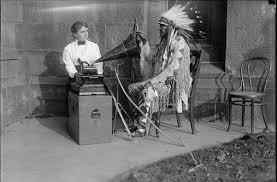
Red Wing native Frances Densmore embarks on a life-long study of Indian music and culture. From a single recording of a performance by Kitchimakwa (“Great Bear”) at White Earth, she eventually collects thousands of songs of the Ojibwe, Dakota, and 10 other tribes. By the time of her death in 1957, Densmore will have also written 22 books and over 100 articles on Indian life.*

What a fascinating woman, Lord! I love the paradox that Ms. Densmore studied piano, organ, and harmony at Oberlin, and found joy in music of the people. Perhaps she is a testimony of her school’s philosophy?
Father, I’m grateful that by chance she read a book, that led her to her first experience with Indian music, that led into a passion.** I’m grateful that she took delight in listening, which is an inherent quality of great recording engineers, musicians, and producers. One adds a personal statement while listening to other players.
Will You bless Frances and her generations with her love of music and culture? Will You bless all the tribes she recorded with appreciation for her remarkable gift? Will You bless the all non-Native Minnesotans with ears to hear the importance of their voice in our common history?
As Plato said, “Music gives a soul to the universe, wings to the mind, flight to the imagination and life to everything.” May we listen to the music of each culture of this state, and so be enlivened! Amen!

*P.T.H. cites timeline formerly at this URL: mnhs.org/about/dipity_timeline.htm
The Minnesota Historical Society Web site, http://www.mnhs.org, is fantastic! Check it out! Images are from https://images.google.com/?gws_rd=ssl; again, an amazing resource!

**Explore more about Densmore at MPR feature “Song Catcher”. http://news.minnesota.publicradio.org/features/199702/01_smiths_densmore/docs/index.shtml

Standard
20th Century, baseball, Culture, History, Intercession, Judgment & Counter-Judgment Cycle, Minnesota, omnipresent history, sports

Saints vs. Millers: Streetcar Double Headers 1907


s-l225

1907 Spalding Guide - Hart - MPLS team

April 1907

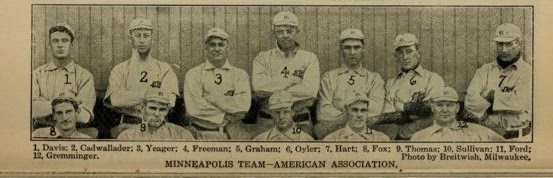
“A heated sibling rivalry develops between the Twin Cities’ two pro baseball teams, the Saints and Millers. Streetcar doubleheaders are scheduled on Decoration Day, July 4, and Labor Day, with a game in each city.” * 

A bit of background is in order to help those who may not know much about the Twin Cities. There is definitely much in common between these two places, but it’s the distinctions that give each it’s flavor. They may not be thought of as ‘strong’ flavors by those who consider Minnesota ‘flyover country’, but that is a matter of taste.

St. Paul is the older brother of Minneapolis. According to local legend, first two structures in St. Paul were a log trading post that doubled as a pub, and a log Catholic church. There are very strong communities derived from nations with a Roman Catholic heritage: Irish, French, Polish, Italian, and Mexican. This city leans blue-collar, tends to move slower, and with more respect for tradition.

Minneapolis is the kid brother that just kept growing. It historically has been more Protestant, with residents mostly from Western and Northern European descent. It leans more white collar and entrepreneurial, with more nightlife to spend new money.

Holy Umpire, thanks for the heritage of baseball in Minnesota! What an awesome combination of sport with times for team play, and individual achievement! Baseball truly is a mirror of the best attributes of our culture.

Unfortunately, Saints and Millers reflect the darker sides of our nature too. Sometimes we, as fans attempted to “help” our home team. Check out this example of ‘sportsmanship from 100 years ago;

“The newspapers joined the struggle, firing their artillery at enemy camps across the Mississippi River. In the 1890s, when both cities were represented in the Western League, the Minneapolis Tribune leveled a charge of “dirty ball” against its neighbors to the east, the Saints, who were owned and managed at that time by Charles Comiskey. “Manager Comiskey,” reported the Tribune, “will be served with a formal notice that the Minneapolis club will not play today’s game unless guaranteed that there will be no spiking of Minneapolis players, no interference on the part of the crowd, no throwing of rocks, no throwing of dust and dirt in the eyes of the Minneapolis players, and a few other tricks which the game yesterday was featurized by.” ** 

God, thanks that You gave a home team to enjoy and be proud of. Will You forgive us for when we have gone overboard and over identify ourselves with a baseball team? Will You forgive harsh words that were sowed then between Minneapolis and St. Paul that still smart today? 

Today I want to acknowledge specific sports offenses to You. We have loved winning more than losing, but doesn’t losing build character? We have loved showboat personalities more than the team at times, but innately we know that a single player can’t win the game. We  can behave like spoiled brats at games, then lecture our kids about the importance of sportsmanship. God help our ERA and our era!  Have mercy on our inconsistent batting average with beloved rivals of yesterday, today, and tomorrow. Thanks that these hostilities birthed a solution; the Minnesota Twins! Will You help us find creative ways to find common ground with our rivals today?

* http://www.mnhs.org/about/dipity_timeline.htm

** Thornley, Stew. On to Nicollet: The Glory and Fame of the Minneapolis Millers.

*** Peruse this wonderful link to the complete article by Stew Thornley. http://www.stewthornley.net/millers_paydays.html

**** Dig into a book on the Saint Paul Saints, again, by Stew Thronley. http://www.mnhs.org/mnhspress/books/st-paul-saints

Standard