19th Century, History, Intercession, Minnesota, omnipresent history, Softball, sports

Softball Invented in Minneapolis 1895

Unknown

1895

“Minneapolis fireman Lewis Rober invented outdoor softball in 1895. Called kitten ball by Rober, who hand-made the leather balls himself. Rober was inducted into the National Softball Hall of Fame in 1996.” *

 What is significant about the invention of this game? What makes challenging another to a team sport appealing? Is it simply about getting some exercise? Jesus, guide my thoughts and heart this day. Help me bless and confess what may stem from the invention of kittenball.

Thank You for Lewis Rober, and his desire to organize a fun activity for his firemen. Waiting is fatiguing enough, let alone waiting for events that may involve risking one’s life. By inventing a kitten ball, bigger and softer than a baseball, he made a wonderful sport that occupied his firefighters, gave them exercise, and perhaps most importantly, took their minds off the incessant waiting for danger! Will You bless the heritage of Lewis Rober, of all who have, are, or will play the game he loved so much?

Next, it seems important to meditate on the nature of competitive sport. A

 challenge can be a fun test or a fight without weapons, therefore testing the character and heart of the players. Frequently, children are told to “be a good sport” in their games by parents who are quite inconsistent in modeling that same. 

So, our kids go through this mental wrestling match: wanting the glory of winning vs. contentment in a game well-played. We see the benefit of them facing “fight or flight” challenges as a means of conditioning them for life’s tests, and building endurance and tenacity in adversity. We teach them to choose their attitude with phrases like, “it’s not whether you win or lose, but how you play the game.” 

Yet, we often fail to see these same benefits on a cosmic scale. So often we judge Your character, and wonder: “Why would a Father send his son to die? Why would a G-d of love allow this natural disaster? Why do the rich fleece the poor, generation after generation? Why does an all-powerful being allow hunger, genocide, terrorism, and war?” It seems consistent with the theme that good parents sometimes allow their kids to experience the effects of the “bad sports”, without intervention, even though they have the ability to spare them.

It may seem like a jump, to go from kitten ball to genocide, but You are are the King of Quantum Leaps. You are before time, in time, and beyond time. You observed the exact moment, the exact decision, that led a benevolent ruler’s heart from leading all the people to choosing the tyranny that exists beyond the law. Yet, many times You have chosen not to intervene.

Why? Why should we be faced over and over throughout the span of time with the decision to hate our enemy, or love our enemy? Do You want us to shake hands with evil and say “Good game”? You box us in and force us to choose: “What will it be today, forgiveness or bitterness? What world do you want to create? Do you want to be a microcosm of division, or unity?”

Have mercy Lord! If we still haven’t learned to play softball, what will we do in the face of hardball! There is so little love in us for those that offend, disgrace, and injure us in small ways. What will we do in the face of the atrocities of this age? Give us enough love for this day! Give us grace that overcomes our opponent with a game well-played! Will You make us firefighters in our field today?

* http://www.mnhs.org/about/dipity_timeline.htm

** Take a peek at the birthplace of kittenball; the Minneapolis Fire Department? http://www.extraalarm.org/ltrober.htm

***Fire Station No. 19 https://en.wikipedia.org/wiki/Fire_Station_No._19_(Minneapolis,_Minnesota)


Standard
19th Century, Environment, Fires, History, Intercession, Judgment & Counter-Judgment Cycle, Logging, Minnesota, Natural Disaster, omnipresent history, Uncategorized

Fire Destroys Hinckley and Sandstone 1894

Unknown-2

September 1, 1894

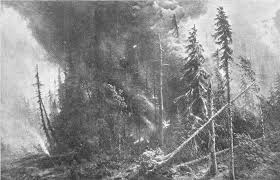
“Extremely dry conditions, high winds, and acres of tender-dry “slash” left over from timber cutting, combine to create a horrific fire with walls of flame 200 feet high reaching temperatures of 1,600 degrees Fahrenheit. Four hundred thirty six persons were known to have died and both towns were completely destroyed. Only the heroic actions of a number of railway employees, who evacuated several hundred residents, kept the death toll from being much higher. This was among the worst disasters in Minnesota history.” *

Why is it that You allow adversity, tragedy, and disasters such as this fire, Lord? If this people were dependent on logging and wood products for their livelihood, why would You let it be taken away? Why would You allow this inferno to compound their grief by such a dramatic loss of life? 

We often respond to catastrophe with a short-term perspective. Our senses are overloaded, and it is all we can do is observe the wreckage. It is not natural to stop and think, “What good can possibly come from this horror?”

Another typical response is to a painful event of this magnitude is to dissociate ourselves from it. We seek relief usually by one of two routes: responsibility or blame. The first is to rationalize what happened, and escape emotionally by seeking causes and responsibility, all the while remaining a ‘brave’ composure. The second response is to attach to our hearts, but close our minds by assessing ‘guilty’ parties of the blame due them.

I don’t know the hearts of my fellow Minnesotans this day, nor will I attempt to be their psychologist gazing back in judgment from the future. I do trust in Your omnipresent nature, and that this fire, the loss of these lands, people, and property 100-odd years ago remains in Your eternal ‘now’. Will You guide me to intercede Jesus?

Will You forgive those of us who offended You by choosing the pathway of blame? Will you forgive those of us who kept cool heads, were responsible, but never allowed the grief of this day to exit our hearts and consciousness? Will You break the pain that was passed forward into future generations by our lack of forgiveness and resolution?

Will You help us release the idol of control? We often hate what we cannot control. We cannot accept that we cannot control or manipulate our environment to our liking or desired outcome. 

According to the city of Hinckley, and its’ Fire Museum, we have a primary source to read about this disaster.

“Because of the dryness of the summer, fires were common in the woods, along railroad tracks and in logging camps where loggers would set fire to their slash to clean up the area before moving on. Some loggers, of course left their debris behind, giving any fire more fuel on which to grow. Saturday, September 1st, 1894 began as another oppressively hot day with fires surrounding the towns and two major fires that were burning about five miles (8 km) to the south. To add to the problem, the temperature inversion that day added to the heat, smoke and gases being held down by the huge layer of cool air above. The two fires managed to join together to make one large fire with flames that licked through the inversion finding the cool air above. That air came rushing down into the fires to create a vortex or tornado of flames which then began to move quickly and grew larger and larger turning into a fierce firestorm. The fire first destroyed the towns of Mission Creek and Brook Park before coming into the town of Hinckley. When it was over the Firestorm had completely destroyed six towns, and over 400 square miles (1,000 km2) lay black and smoldering. The firestorm was so devastating that it lasted only four hours but destroyed everything in its path.” **

Will You forgive us as Minnesotans’ for vainly attempting to control our forests? Will You turn this tragic day into a blessing for present and future generations? Will you show us the good fruits of September 1, 1894? Will You kindly help us to manage our inner environments as we manage our external ones?
* http://www.mnhs.org/about/dipity_timeline.htm

** http://en.wikipedia.org/wiki/Great_Hinckley_Fire


Sep 1, 1894
Extremely dry conditions, high winds, and acres of tender-dry “slash” left over from timber cutting, combine to create a horrific fire with walls of flame 200 feet high reaching temperatures of 1,600 degrees Fahrenheit. Four hundred thirty six persons were known to have died and both towns were completely destroyed. Only the heroic actions of a number of railway employees, who evacuated several hundred residents, kept the death toll from being much higher. This was among the worst disasters in Minnesota history.*

Why is it that You allow adversity, tragedy, and disasters such as this fire, Lord? If this people were dependent on logging and wood products for their livelihood, why would You let it be taken away? Why would You allow this inferno to compound their grief by such a dramatic loss of life?

We often respond to catastrophe with a short-term perspective. Our senses are overloaded, and it is all we can do is observe the wreckage. It is not natural to stop and think, “What good can possibly come from this horror?”

Another typical response is to a painful event of this magnitude is to dissociate ourselves from it. We seek relief usually by one of two routes: responsibility or blame. The first is to rationalize what happened, and escape emotionally by seeking causes and responsibility, all the while remaining a ‘brave’ composure. The second response is to attach to our hearts, but close our minds by assessing ‘guilty’ parties of the blame due them.

I don’t know the hearts of my fellow Minnesotans this day, nor will I attempt to be their psychologist gazing back in judgment from the future. I do trust in Your omnipresent nature, and that this fire, the loss of these lands, people, and property 100-odd years ago remains in Your eternal ‘now’. Will You guide me to intercede Jesus?

Will You forgive those of us who offended You by choosing the pathway of blame? Will you forgive those of us who kept cool heads, were responsible, but never allowed the grief of this day to exit our hearts and consciousness? Will You break the pain that was passed forward into future generations by our lack of forgiveness and resolution?

Will You help us release the idol of control? We often hate what we cannot control. We cannot accept that we cannot control or manipulate our environment to our liking or desired outcome.

According to the Hinckley Fire Museum:
“Because of the dryness of the summer, fires were common in the woods, along railroad tracks and in logging camps where loggers would set fire to their slash to clean up the area before moving on. Some loggers, of course left their debris behind, giving any fire more fuel on which to grow. Saturday, September 1st, 1894 began as another oppressively hot day with fires surrounding the towns and two major fires that were burning about five miles (8 km) to the south. To add to the problem, the temperature inversion that day added to the heat, smoke and gases being held down by the huge layer of cool air above. The two fires managed to join together to make one large fire with flames that licked through the inversion finding the cool air above. That air came rushing down into the fires to create a vortex or tornado of flames which then began to move quickly and grew larger and larger turning into a fierce firestorm. The fire first destroyed the towns of Mission Creek and Brook Park before coming into the town of Hinckley. When it was over the Firestorm had completely destroyed six towns, and over 400 square miles (1,000 km2) lay black and smoldering. The firestorm was so devastating that it lasted only four hours but destroyed everything in its path.”
http://en.wikipedia.org/wiki/Great_Hinckley_Fire

Will You forgive us as Minnesotans’ for vainly attempting to control our forests? Will You turn this tragic day into a blessing for present and future generations? Will you show us the good fruits of September 1, 1894? Will You kindly help us to manage our inner environments as we manage our external ones?

Unknown-1

PS Lord, Will You honor the everyday heroes like Tommy Dunn?

“One of the many heros of this tragedy was the telegrapher stationed at the St. Paul and Duluth Depot in Hinckley. Tommy Dunn remained loyal to his post and waited for orders. Eventually the very tracks the trains traveled on burned and no orders came. The young telegrapher perished in the fire. He had been determined to save the people of this area. His last know message that he tapped out on his key to the agent in Barnum was “I think I’ve stayed too long” Tommy Dunn had waited until it was too later for his own escape.”

http://www.hinckley.govoffice2.com/index.asp?Type=B_BASIC&SEC=%7BFD8DC19D-5036-4403-8C87-061FFE2E781A%7D


*P.T.H. cites timeline formerly at this URL: mnhs.org/about/dipity_timeline.htm
The Minnesota Historical Society Web site, http://www.mnhs.org , is fantastic! Check it out! Images are from https://images.google.com/?gws_rd=ssl; again, an amazing resource!

Standard
19th Century, History, Intercession, Judgment & Counter-Judgment Cycle, Logging, Minnesota, Mississippi River

Giant Logjam 1894

Unknown

1894

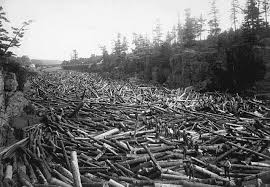
“Logs bound for sawmills choke the Mississippi River at Little Falls. It takes six months to break up the six-mile-long woodpile. For the past 50 years, rivers have been the highways that carry logs to the mills. Lumberjacks keep the logs moving and break up jams. Now, small trunk railway lines are also heading deep into the forests to haul out the logs.” * 

What an apropos metaphor for work! We work hard to improve out lot in life. We take risks and make investments, but our timing can be off, and our productivity grinds to a halt. Forces beyond our control stop our progress, and sometimes years of our efforts are undone?! 

Why is this, One Who Orders the Universe? Why do we kill ourselves for a future payoff that may or may not come? Why are we dissatisfied with ’enough’, and push for ‘a little bit more’? Why do others we depend on slack and coast in their work? 

Again, thanks that You are a good dad! You gave this land a blessing of trees that were the perfect building material for this climate. You gave this land a blessing of a mighty river to move those trees to others. Thanks that You provide good things for us to use for ourselves and share with others! 

Will You forgive us our gluttony for lumber? Whether it was the loggers, the mills, or the lumber barons it does not matter. You know how each party contributed to this problem. Will You forgive us this offense, and the judgements of those upriver, downriver, or in the office?

* http://www.mnhs.org/about/dipity_timeline.htm

**Learn more details about this giant logjam and the community of Little Falls, MN? http://chroniclingamerica.loc.gov/lccn/sn89064525/

***How did logging in this era impact the environment? 

https://www.ncrs.fs.fed.us/gla/reports/history.htm


Standard
19th Century, education, First Nations, History, Indian, Intercession, Judgment & Counter-Judgment Cycle, Minnesota, Native Americans, omnipresent history, State Government

Indian Schools 1893

original_Carlisle-Indian-School-web-3

1893

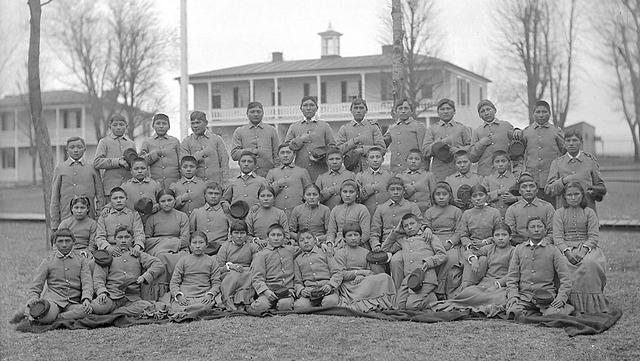
“Indian children are forced to attend government schools. Children in communities without local schools are sent away to boarding schools. White educators hope still that separating children from their families will make it easier to teach them to reject Indian ways. 

“I believe in immersing the Indians in our civilization, and when we get them under, holding them there until they are thoroughly soaked.” 

-Richard Henry Pratt, head of the Carlisle Institute 

I must read from books instead of from Nature. I must learn of the birds and the animals and the trees from books instead of from daily contact with them. This was what the white man said I should do, and I could do nothing but obey. Again I would forget the language of my people and speak in the tongue of the school.” 

-Way-quah-gishig was six years old when he was sent away to a boarding school in South Dakota and given the name John Rogers. During the next six years, he and his sisters were not able to see or write their family.” * 

Father, I don’t understand Your ways. I don’t understand why You tolerate events that pit one people versus another. I do believe that part of the answer is that You allow us to choose our actions, inactions, and how we order our lives in the context of place and time.

Help me observe this event with you Holy Spirit. I invite Your reflections, insights, and direction as I write. Will you lead me? As I wait, the question arose of requiring immersion education for Native American students. If immersion education was simply offered rather than required, wouldn’t that have been more consistent with our Constitutional principals, and with Your word? 

As Washington once said, “Government is not reason; it is not eloquence; it is force! Like fire, it is a dangerous servant and a fearful master.” 

If a student is placed in a servant-master relationship, where is the room for the joy of discovery? Can curiosity be born in an atmosphere of mandatory compliance?

Lord, will You forgive the offense of required immersion to the Native people of Minnesota? Will You forgive the offense of wanting to mold others into our image? Will You forgive this zeal to change others by force, rather than persuasion, and real relationship? Will You forgive the impatience of this event? We separated children from their families instead of meeting them family to family? 

Conversely, will You free Native Minnesotans’ from the temptation to hold onto this offense? American Indians were natural “homeschoolers” or “unschoolers”** during this era, will you forgive them their judgments against the State-defined modes of education? Will You remove this curse, and bring a blessing in its place? May we unlearn force, and learn to offer freedom to each other in this state!

* http://www.mnhs.org/about/dipity_timeline.htm

**Learn more about homeschooling and unschooling? http://www.homeschool.com/new/difstyles.asp#unschooling

***Peruse a brief history of U.S. government policies regarding the education of Native children? http://www.edweek.org/ew/projects/2013/native-american-education/history-of-american-indian-education.html


Standard
19th Century, Agriculture, Business, Dakota, Governors, History, Intercession, Judgment & Counter-Judgment Cycle, Minnesota, Native Americans, Ojibwe, omnipresent history, railroad, State Government, Treaties

Nelson Becomes Governor 1893

unknown-1

January 4, 1893 to January 31, 1895

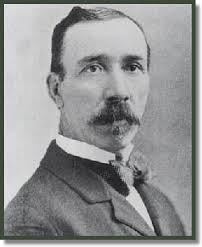
“Norwegian immigrant Knute Nelson becomes the state’s 12th governor in 1893, the first Scandinavian to hold the office. A fighter for farmers’ interests against the railroads and grain merchants, he resigned in 1895 to run successfully for the United States Senate, where he remained until 1923.” * 

Thank You for the life of Knute Nelson and his leadership in Minnesota. He became a prominent leader roughly 25 years after becoming a citizen. Negative attitudes about Scandinavians were tempered by his success.

Looking back at his career, the area of greatest contention were probably those issues concerning railroad interests. On one hand, the rails offered new markets to farmers and also supplied them with manufactured goods from the east. This relationship fueled western land development, and modernized communities along the way.

However, like all new technology, railroads were often the vehicle of economic bondage for immigrant settlers, and greedy for Native Americans’ land. Farmers became dependent on the rails to bring grain to market, but having a product with limited shelf life, were subject to the manipulations of the market and shipping costs charged by the railroad companies.

But how did the railways effect the Native Minnesotans? It is understandable that a sitting Governor wants to further the economic growth and standard of living in his state, but at what cost? These questions point to his writing of the Act cited below: 

“The Nelson Act of 1889 was a United States federal law intended to relocate all the Anishinaabe people in Minnesota to the White Earth Indian Reservation in the western part of the state, and to expropriate the vacated reservations for sale to European Americans. [1]

Approved by Congress on January 14, 1889, the Nelson Act was the equivalent for reservations in Minnesota to the Dawes Act of 1887, which had mandated allotting communal Indian lands to individual households in the Indian Territory, and selling the surplus. The goal of the Nelson Act was to consolidate Native Americans within the state of Minnesota on a western reservation, and, secondly, to encourage allotment of communal lands to individual households in order to encourage subsistence farming and assimilation. It reflected continuing tensions between whites and American Indians in the state. Especially after the Dakota Conflict of 1862, many Minnesota white residents were eager to consolidate the reservations, reduce the amount of land controlled by Indians and make the surplus available for sale and settlement by European Americans.

Minnesota congressmen Knute Nelson pushed for the allotment of Ojibway lands in Northern Minnesota and sale of “surplus” to non-Natives. He and others intended to force the Ojibway to relinquish most of their reservation lands. The intention was to relocate the peoples to the westernmost White Earth Reservation. All would receive individual allotments, with the remainder to be available for sale to European Americans. These actions were illegal and violated the treaties which the US had made with the tribes, but the government proceeded anyway. The Red Lake Band of the Ojibway were able to keep the southern portion of their Reservation.”**

Father, this story brings to mind the desire of King Ahab for his neighbor’s vineyard.

1 Kings 21:1-16

New International Version (NIV)

Naboth’s Vineyard

1 Some time later there was an incident involving a vineyard belonging to Naboth the Jezreelite. The vineyard was in Jezreel, close to the palace of Ahab king of Samaria. 2 Ahab said to Naboth, “Let me have your vineyard to use for a vegetable garden, since it is close to my palace. In exchange I will give you a better vineyard or, if you prefer, I will pay you whatever it is worth.”

3 But Naboth replied, “The Lord forbid that I should give you the inheritance of my ancestors.”

4 So Ahab went home, sullen and angry because Naboth the Jezreelite had said, “I will not give you the inheritance of my ancestors.” He lay on his bed sulking and refused to eat.

5 His wife Jezebel came in and asked him, “Why are you so sullen? Why won’t you eat?”

6 He answered her, “Because I said to Naboth the Jezreelite, ‘Sell me your vineyard; or if you prefer, I will give you another vineyard in its place.’ But he said, ‘I will not give you my vineyard.’”

7 Jezebel his wife said, “Is this how you act as king over Israel? Get up and eat! Cheer up. I’ll get you the vineyard of Naboth the Jezreelite.”

8 So she wrote letters in Ahab’s name, placed his seal on them, and sent them to the elders and nobles who lived in Naboth’s city with him. 9 In those letters she wrote:

“Proclaim a day of fasting and seat Naboth in a prominent place among the people. 10 But seat two scoundrels opposite him and have them bring charges that he has cursed both God and the king. Then take him out and stone him to death.”

11 So the elders and nobles who lived in Naboth’s city did as Jezebel directed in the letters she had written to them. 12 They proclaimed a fast and seated Naboth in a prominent place among the people. 13 Then two scoundrels came and sat opposite him and brought charges against Naboth before the people, saying, “Naboth has cursed both God and the king.” So they took him outside the city and stoned him to death. 14 Then they sent word to Jezebel: “Naboth has been stoned to death.”

15 As soon as Jezebel heard that Naboth had been stoned to death, she said to Ahab, “Get up and take possession of the vineyard of Naboth the Jezreelite that he refused to sell you. He is no longer alive, but dead.” 16 When Ahab heard that Naboth was dead, he got up and went down to take possession of Naboth’s vineyard.

These verses tell of an authority figure who is complicit in the annexation of his neighbor’s land. The part that stands out to me are the words of verse 3; “The Lord forbid that I should give you the inheritance of my ancestors.” Naboth did not want to sell away an inheritance.

Lord, there are many nuances that I do not know about this Act. I don’t know the Governor’s heart, his motivations, or the pressures on him. I simply see an action that is typically the breeding ground of bitterness and contention.

Will You forgive the injustice of this Act towards Native Minnesotans, their inheritance, property, and generations’? Will you release them from any binding counter-judgments that may hold them captive from receiving an inheritance from You? Will You reverse any curses on the lands specifically mentioned in this Act, and restore a right relationship between all Native Minnesotans and government?

Will You teach this state to have neither a tyranny of the majority or the minority? Will You enable us to neither feel the shame of asking for the help of our state, nor shame those who have graciously helped? Will You teach us about boundaries, property, lands, and inheritance?

Will You give honor to the just actions of Knute Nelson, his heritage, and generations? Will You forgive us in our judgments of the humanity and motive conflicts within our own natures’? Will You give us internal peace, contentment, and satisfaction in our hearts so we do not want another’s possession?

** http://en.wikipedia.org/wiki/Nelson_Act_of_1889

*** For more depth on Governor Knute Nelson see the “Biographical Directory of the United States Congress”. http://bioguide.congress.gov/scripts/biodisplay.pl?index=n000040

**** More on property rights of the ancient Middle East. https://tifwe.org/resource/ownership-and-property-in-the-old-testament-economy/


Standard
19th Century, History, Intercession, Judgment & Counter-Judgment Cycle, Minnesota, music, omnipresent history

Dvorak Composes at Falls

unknown

1893

“Antonin Dvorak, the renowned Czech composer, visits Minnehaha Falls in Minneapolis. Inspired by the beauty of the scene, he composes a melody on the spot, writing the music on his starched shirt cuff. The “Minnehaha Theme” is featured as a violin line in Dvorak’s Sonatina in G Major, opus 100.” * 

The first name You describe Yourself with in the scriptures is “Elohim”, which means something akin to “Artist” or “Strong Creator”. Your signature is in, around, and through all creation. You have created living art that is capable of reproduction, yet each “copy” is a unique masterpiece?! Whether we view the nano particle level through microscopes, observe with our own eyes, or with powerful telescopes, we are in awe of the Master’s handiwork!

It is no wonder that Dvorak saw an inspiring scene at Minnehaha Falls. It’s beauty has been renowned by Minnesotans for generations. What is a wonder is his response; that this beauty is so valued that it is worth recording immediately without thought to practicality or cost. Thank You that Antonin instantly responded to the beauty presented to him.

Will You bless him, his family, and the nation of the Czech Republic? Will You bless his indirect generations of artists, composers, writers, and simply those who listen and respond to greatness? Will You bless this place and those who visit it in perpetuity?

Will You forgive us the judgments we as a people make on those who follow instinct? Will You forgive our judgments of those who pursue their visions, no matter how absurd or irrational they may appear? I believe it was the Celts who likened the Holy Spirit to the wild goose. Will You give us wisdom and discernment to support those on “a wild goose chase”?

* http://www.mnhs.org/about/dipity_timeline.htm

** Read more about Dvorak’s visit to these lovely falls? http://www.classicalmpr.org/story/2014/07/24/the-music-of-minnehaha-falls

*** Learn about a “wild goose chase”? http://thewildgooseisloose.com/why-wild-goose/


Standard
19th Century, History, Intercession, Judgment & Counter-Judgment Cycle, Mining, Minnesota, omnipresent history

Gunflint Trail 1893

homeslide4

1893

“The American Realty Company and the Gun Flint Iron Company rejoice at the completion of the Gunflint Trail. They will use it to transport iron ore from inland mines to Grand Marais, where it can be moved by ship.

The area lies on the eastern edge of the Mesabi Iron Range, but proves to be less rich in iron-ore deposits than prospectors had originally hoped. In the end, the road is used more by logging trucks and later by tourists.”* 

Thank You Messiah that You encourage and allow us to dream, and the strength to fulfill even part of those dreams. Lead me on the path of Your thoughts on the Gunflint Trail of Minnesota. What will You reveal today?

I share the joy of the American Realty Company and the Gun Flint Iron Company of the completion of this task. How could they know that their ore trail would become a logging trail, or one of the most lovely roads leading people to the peace of the Boundary Waters? How will You repurpose this road in the future?

I will assume that the motive of a realty company building a road is to create access to land, and make it usable for the needs of that generation. This hits a past and present wound; our judgement(s) of others’ land use. Each generation tends to judge or blame or assess the actions of the ones before.


So, here I will start; Lord, this piece of ground known as Minnesota is Your property. All treasures above, below, or on the surface of its boundaries belong to its Creator! Forgive our offense to You by judging the motives of this generation in 1893. Forgive our offense to You through the many battles fought in our courts over Your property. Our vision is short-sighted. We lack mercy. We hate what our brother does with the ground You’ve allotted him, and we sue him. We despise the generosity of resources You give to our sister, and we steal it from her!

Will You remove these curses on the Gun Flint Trail? Will You bless it thoroughly?       Will You break the cycle of judgment between those who want it for recreation, those who want it completely undeveloped and pristine, and those who want to use its resources?

Our state government has accrued land, or limits the use of privately held land through regulation. what are Your thoughts on that, Lord? Is that simply, “nothing new under the sun” because that is the way of rulers? Is it a wise idea to set aside land for  future use, and does it truly increase ‘sustainability’? Are we like the servant who buries our talents, in this case land resources, because we refuse to utilize them?

* http://www.mnhs.org/about/dipity_timeline.htm

** Need a primary source? Peruse the “Cook County Herald”? https://www.loc.gov/newspapers/?q=grand+marais+minn

***More on the Gun Flint Iron Company? http://www.padwrr.ca/iron.html


Standard
19th Century, African American, History, Intercession, Judgment & Counter-Judgment Cycle, Minnesota, Politics, Republican, women

1892 Republican National Convention in Minneapolis

theresa-a-jenkins-portrait-archives

June 7, 1892 to June 10, 1892

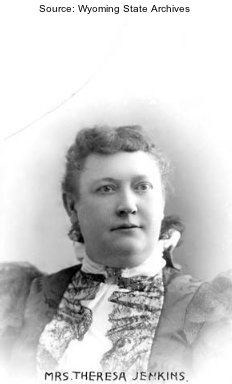
“The 1892 Republican National Convention was held in Minneapolis and was also the first convention where women were allowed to be delegates. Mrs. Therese Alberta (Parkinson) Jenkins, delegate from Wyoming, cast the first vote by a woman for President. Wyoming had granted full suffrage for women at statehood in 1890.” *

Politics, in practice, is often a game of solidifying one’s base and fracturing the support of political opponents. One seeks to heal and forgive, while the other actively fragments relationships and maintains a grudge?! Although there will always be those who are honestly committed to their principles, most often, the duplicitous ‘win-at-all-cost’ partisans seem to be the norm. 

Rules and procedures are put in place to ensure that conventions are fair. However, those who know the rules often use them to beat up those who don’t, or those who simply trust in the integrity of their party. It’s like watching a board game played by children; the worst child will change the rules until he wins! 

Jesus, show me what You see. I have limited vision of this convention, but am not unfamiliar with the Republican Party. Help me dredge what is crucial, and leave the rest of the silt at the bottom of the river.

To begin, I thank You that one day, You will bring Your government to earth, and we will see real peace! Thank You that You cannot be double-minded, or attempt to create something good with false motives! You are the summit of integrity because You are perfect in contentment! You resist all bribes because there are no possessions that finite beings can give to the Eternal “I Am”!

Your names in the Bible describe your character, and they include both male and female attributes. Men and women are both made in Your image. Thank You that we finally began to recognize this fact politically on June 7, 1892! Will You bless this day, those who participated, their opponents, and their heritage? 

Will You forgive the dominant male pride and ego in the politics of Minnesota, its parties, and conventions? Conversely, will You forgive the bitter counter-judgments of women whether past, present, or future? Men want to lead like men, women want to lead like women, and we both fail to recognize Your wisdom and glory in the other at times! We fail to see Your hand of leadership in the other because we do not recognize  its style or legitimacy. Have mercy on our judgments of our fathers’ strength of love, and our mothers’ tenderness of love!

Bless the heritage of pioneers like Mrs. Therese Alberta (Parkinson) Jenkins. Bless her commitment and bravery. Forgive the scoffing her ears heard, the contemptuous faces she saw, and the judgments of her motives. Will You reverse the curses of this convention of 1892, and may we receive Your future insights whether housed in a male or female messenger?

**To read more, see: http://www.mnopedia.org/event/republican-national-convention-june-1892

***Another wonderful article about the convention? Read “African Americans and the 1892 Republican National Convention, Minneapolis” by Iric Nathanson

http://collections.mnhs.org/mnhistorymagazine/articles/61/v61i02p076-082.pdf


Standard
19th Century, Architecture, History, Intercession, Judgment & Counter-Judgment Cycle, Labor, Minnesota, omnipresent history

James J. Hill House Completed

unknown

1891

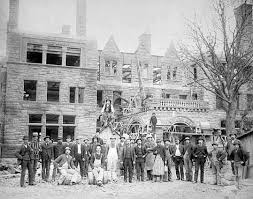
“Rugged stone, massive scale, fine detail, and ingenious mechanical systems recall the powerful presence of James J. Hill, builder of the Great Northern Railway. Completed in 1891, the red sandstone residence was the setting of the public and private lives of the Hill family.” *

Lord, what is the importance of home construction in Your economy?  Albeit this is an impressive home, but why does it matter now? Will You guide my heart and mind toward Your thoughts on the matter?

Eternal Father, a commencement thought; our home reflects our character. Mr. Hill spent much his life on the epic tasks of building a railway. His home reflects a willingness to solve difficult problems: custom shaping stones, miles of board feet of trim, and making a castle comfortable enough to live in Minnesota’s weather extremes. 

So I want to bless the heritage of Mr. Hill’s patience, long-range planning, and tenacity to face both expected and unexpected problems.I want to bless the myriad of workmen who truly put their sweat and soul into their trades to make this home exceptional. Will You bless them and all their generations of tradesmen in the present? Will You help us view the trades as an act of worship?

I’m reminded that my Messiah chose to be a carpenter, and apprenticed under His earthly father. (Joseph) Will You help us, especially men, see that worship is not just obscure and ancient songs and rituals in a church, but in fitting pipes, framing walls, running electrical lines, and every kind of working with our hands? May all who labor in tasks that go unseen and unnoticed be blessed this day in Jesus’ name! 

Another idea that attaches to character; we can build to serve a function, or build to impress others. Lord, I will not condemn this man for the pursuit of greatness. I think You get the credit when we succeed at exceptional endeavors, I think a fractal of the light of Your character shines through any human who dares to do what they love.

But Lord hear this prayer, our lives are often like homes! We build for ‘curb appeal’. We erect lovely facades. We spend considerable time and effort on the way things look to the detriment of the way things are. We already possess the favor of the King of the Universe, but how we work for the favor of our fellow human beings?! 

Will You forgive James J. Hill the past sins of empire building? Will You release his heritage, our state, and even the ground that those objects of empire occupy from separations past, present, and future? Will You forgive us for the empire building in our hearts? Will You forgive us for maintaining facades we build to our own greatness? Will You help us humbly acknowledge the efforts others have spent in our successes? Father, have mercy! Christ, have mercy! Counselor, have mercy!

* http://www.mnhs.org/about/dipity_timeline.htm


Standard