19th Century, Agriculture, Emigration, Exploration, farming, Food, History, Immigration, Minnesota, Native Americans, State Government, trade, Treaties

Settlement in Minnesota 1849 to 1860

images-8

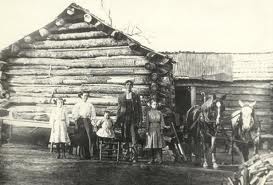
“The number of non-Indian people in Minnesota jumps from 3,814 in 1849 to 172,072 in 1860, a 4,500 percent increase! The newcomers break sod, start businesses, plot towns, look for jobs, and dream of getting rich.

Pent-up demand for good agricultural land is the primary reason. Iowa and Wisconsin had been heavily settled and had both passed from territorial to statehood status by 1848. It had been dangerous and illegal to settle on land in most of Minnesota before treaties with the Dakota and the Ojibwe were signed. But after several treaties were ratified in the 1850s, the floodgates of migration burst open.” *

When we move, we make assessments of our new neighbors and neighborhood. They, in return, watch us move into their neighborhood, and may ‘size us up’ by our friendliness, possessions, (or lack of possessions), our physical appearance, etc. These assessments, I believe, are instincts designed for our survival, but must be tempered or they can morph into prejudice.

Lord, what were the judgments of these ‘new neighbors’ in Minnesota? Will You forgive us the inheritance of those who knowingly moved into the state illegally? Will You forgive the betrayals committed between settler and tribe, and their counter-betrayals? Will You break the power of the derogatory words and names given among these groups? Will You break the vows made in anger, envy, revenge, arrogance, unforgiveness, fear, and unbelief of each group towards its real or supposed nemesis?

Thinking about the impact of these past separations on the present, will You forgive the heart behind the relocation of Native Americans? Will you free us from the bondages and entanglements within poorly made treaties? Will You bring Your heart of restoration to Minnesota? Will You bring to light a new kind of history in Minnesota? Will You write a history that remembers the good, the pleasing, the fair, the gracious, the restored relationship on our hearts? Will you give us Your eyes to see our neighbors’ inherent value?

*mnhs.org/about/dipity_timeline.htm

Standard
19th Century, Culture, History, Minnesota, Native Americans, Politics, Treaties

Winnebago Moved to Reservation 1847  

xa-hochun

A treaty with the U.S. government moves the Winnebago (Ho-Chunk) from northeastern Iowa and southeastern Minnesota to a reservation in Todd County. With the Ojibwe to the north and the Dakota to the south, government officials hope the Winnebago reservation will serve as a buffer zone between Minnesota’s two larger Indian nations.

The Winnebago prefer the terrain of the prairie to this wooded area, and in 1855, they relocate to a smaller tract of land in Blue Earth County. They remain there until after the U.S.-Dakota Conflict, when the government forces them to move with the Dakota to the Crow Creek reservation in South Dakota.*

Jesus, thanks for the peoples of Minnesota. Thanks that You made us Your people whether of Winnebago, Ojibwe, Dakota, English, German, French, or Swedish descent. It’s wonderful that we are uniquely made, distinct families conveying some reflection of Your light!
Will You illuminate and forgive the bitter root judgments of the US government towards the Winnebago and vice versa? Will You forgive the government’s desire to use this people as a “buffer” between Ojibwe and Dakota, and the implications that they needed help maintaining peace between their peoples? Will You fill hearts and lands with the gift of restoration here in Minnesota, South Dakota, Iowa, and replace the curses from the hearts of all parties in this event?

*www.dipity.com/Minnesota/History/Minnesota-History/

Standard
19th Century, education, History, law, Minnesota, Native Americans, women

Saint Paul’s 1st Public School 1847

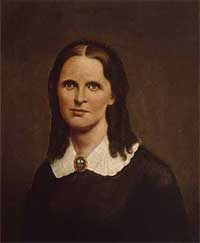
bishoporig

New Englander Harriet Bishop arrives in St. Paul and opens the town’s first public school. In a log cabin that had once been a blacksmith’s shop, students sit on wooden benches while chickens wander in and out.*

Thanks for Harriet Bishop and her desire to make education ‘public’. There were few opportunities for female teachers in New England, and she relished the adventure of moving west into unfamiliar territory.  She credits Harriet Newell and Ann Bishop, missionaries to Burma, as her inspiration.

The first school house, which she opened in a former blacksmith shop on July 19, 1847, was a “mud walled log hovel… covered with bark and chinked with mud” at what is now St. Peter Street and Kellogg Boulevard in the relatively isolated fur trading post of Saint Paul. Of the seven students in her first class, only two were caucasian. She had to rely on a student who was fluent in French, Dakota, and English to translate for her classes (which she taught in English). http://en.wikipedia.org/wiki/Harriet_Bishop

It’s astounding to think that most schools in our nation were private or parochial at the time. Public schools were often for the benefit of Protestants and the poor, whose communities did not have the resources or organizational structure to support them. How far we have come from this log cabin filled with students and wandering chickens!

However, presently we fail future generations because learning is disconnected from the Omniscient One. We have generations leading lives filled with facts, technology, and the benefits of science, but detached from meaning or a reason for being. This state was made by our Loving God, but even Your presence in school is an affront to the humanistic underpinnings of our current system of education! Will you forgive us this offense? Will You forgive our education system, legal system, and hearts where we have blocked You, and therefore any real sense of Divine Purpose, from our lives!

Today I remember the risk of Harriet Bishop, and her heart to see all children learn! Perhaps her home culture did not value her, but we thank You for incredible contributions to our state! Will You bless her, and all like her, who bravely risk the frontiers of our educational system?

Will You forgive any arrogance and academic pride of our forbearers, as You forgive us those same separations in the present? Will You bless future schools of Minnesota with wonder and awe of knowledge beyond our reach? May we remember the Infinite One who perceives the oceans of information beyond our drop in the bucket! May we receive Your forbearing spirit for each other, and a willingness to honor each other in Minnesota’s classrooms regardless of our faith in God or man?

Standard
19th Century, Business, Economics, History, Logging, Minnesota, Native Americans, trade

Stillwater as Lumber Center 1844

local0509-Goodrich-JohnWEB-140x140

Maine lumberman John McKusick forms the Stillwater Lumber Company. Other New Englanders follow, making Stillwater the early center of Minnesota lumbering.*

May I watch this moment in 1844 with You? Can I sit with You on the east bank of the St. Croix bluff and take in the whole valley? I can practically smell the forest, and feel the calming flow of the St. Croix river.
On this day I remember to You the Ojibwe and Dakota nations that shared this land with us. Will You remember their open-handedness? I thank You for all, past present and future, who are blessed by this kindness.

The forests of this valley, and its’ proximity to such a wide river must have been an amazing discovery to lumbermen like McKusick. Huge trees could be harvested, rolled downhill, and floated to the sawmill. What prime real estate for the woodsman?!

May I thank You for Mc Kusick and the utility of these vast stands of timber? May we ponder the needs those woods supplied for that generation? Thank You for the hard, but good work provided through logging in that era.

As with almost any endeavor, with success comes competition. I know too little about the specifics of the competitive nature of these loggers in Stillwater, but relate to them as human who knows what it’s like to protect something valuable. It is easy to over invest in one’s work, to have our nose so close to the grindstone that we can’t see beyond it.

Will You forgive their fears of losing face, of being lesser? Will You forgive their offenses to You and each other through over harvesting, stealing logs, ignoring boundaries? Will You bless those who practiced happy competition, and enjoyed the camaraderie of Your woods?

Last thought, You present us with an odd paradox in our behavior; we often love what we harvest. Who loves the soil more than the farmer? Who loves ducks like their hunters? Who loves the woods like the logger? Who loves words like the writer?

Thank You for whatever it is we harvest now, or our future generations! May we humbly acknowledge You, and our dependence on Your resources. You commanded the Hebrews to not harvest up to the edges of their fields, but leave some behind so the needy would have food. Will You bless us to do this now and always, whatever our field or forest looks like?

Standard
19th Century, Culture, Faith, History, Intercession, Jesus, Minnesota, Native Americans

Ezekiel Gear Arrives at Fort Snelling Apr 28, 1839

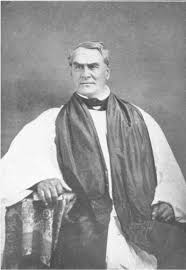
Unknown-10

Episcopal priest arrives at Fort Snelling. He is chaplain at Fort Snelling from 1839-1858. He remains in Minnesota until his death in 1875.*

Thank you for Gear, and his commitment to Minnesota. Thank you for the blessing his presence had on early Minnesota and especially Fort Snelling. Thank you for his example to future generations here: we are free to reach across cultural boundaries when motivated by Your love!

It is my belief that we have a limited view of our history. We know in part, and we often project our vantage point onto the characters of the past. Perhaps we need a new lens to view the history of Native Minnesotans and its European settlers? May we equally remembers those that built relational bridges in this meeting of peoples as those who tore them down.

The following excerpt demonstrates where the heart of Priest Gear:

“Ezekiel Gilbert Gear was horn in Middletown, Connecticut, September 13th, 1793. He was ordained deacon by Bishop Griswold in the same church in which he was baptized, and his diaconate was passed in that diocese. He was ordained priest by Bishop Hobart, and was appointed missionary in the western part of New York state. There he labored at Onondaga Hill, Avon, Manlius, Ithaca, Syracuse, Binghamton and Brownsville. He also worked among the Oneida and Onondaga Indians, baptizing, marrying, and admitting many to the communion of the Church. He was present at the confirmation by Bishop Hobart of ninety-seven Indians, presented by Eleazar Williams. We can well imagine that this previous connection with Indian work led him to take an especial interest in advocating, as he did, the beginning of work among the Sioux and Ojibways of Minnesota.”

http://anglicanhistory.org/usa/mn/edsall_gear.html

*Note – PrayThroughHistory uses the timeline located for several years at the Minnesota Historical Society Web site, at this URL: mnhs.org/about/dipity_timeline.htm .  The current URL is www.dipity.com/Minnesota/History/Minnesota-History/ and only works if typed, not pasted, in browser. It is worth the effort!
Standard
19th Century, Culture, government, History, Intercession, Jesus, Minnesota, Native Americans, Treaties

1837 Treaties

c6c38485-2901-4201-bc7e-2aa4468ba134

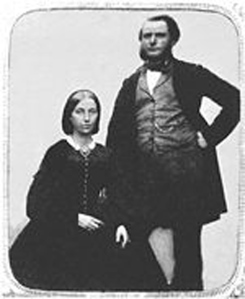
The United States negotiates treaties with the Ojibwe and the Dakota for the wedge of land between the St. Croix and Mississippi Rivers—land that will later become part of Minnesota. Ratification of the treaties opens the land for settlement by non-Indians. The Ojibwe will receive payments in money, goods, and provisions for 20 years; they also reserve the right to hunt, fish, and gather wild rice within the ceded area. The Dakota do not reserve their hunting or fishing rights, but their annuities are to be perpetual. Indian Agent Lawrence Taliaferro boasts that he made the better bargain for the Dakota.*

Lord, this wedge of land is quite valuable real estate in the present. It contains parts  of St. Paul, Oakdale, Stillwater, Lake Elmo, Woodbury, Cottage Grove, and Hastings which are all fast growing parts of the metro area. This is surely a challenge for our present-day lawmakers; how do you give hunting rights in a suburban develop ment?

We need Your wisdom for all such cases. First, we need to accurately understand the meanings of past treaties which is no simple matter. Next, how does one interpret the spirit of this meaning into a present-day context that preserves the spirit and the heart of the treaty? Will You enable our government to honor these treaties in the present and future, as well as make restitution as specific and meaningful as possible?

By Your mercy, will You free all parties in the past of dissension and bitter assessments: the U.S. government and its agents , the Dakota, and the Ojibwa? Will You make us free from the fruit of this event in the present, and create the proper honor and respect between all parties?

*Note – PrayThroughHistory uses the timeline located for several years at the Minnesota Historical Society Web site, at this URL: mnhs.org/about/dipity_timeline.htm .  The current URL is www.dipity.com/Minnesota/History/Minnesota-History/ and only works if typed, not pasted, in browser. It is worth the effort!
Standard
19th Century, Agriculture, Christian, education, farming, Fundamentalist, History, Minnesota, Native Americans, Technology

Missionaries at Lac qui Parle 1835

hane-and-herman-bigger

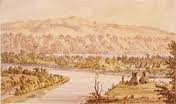
Presbyterian ministers Thomas Williamson and Jedediah Stevens establish a mission at Lac Qui Parle to the west. They bring a farmer along to teach the Dakota how to raise crops in the European manner.*

Lord, thanks for the benefits of European farming, and Native farming. Thank you for the benefits of this heritage: seldom have we lacked food as a state, often we have contributed food to others! Will You continue to bless the productivity  of all Minnesota farmland? Will You enhance the nutrition of our soil and food? Amen.

*Note – PrayThroughHistory uses the timeline located for several years at the Minnesota Historical Society Web site, at this URL: mnhs.org/about/dipity_timeline.htm .

Standard
19th Century, Culture, government, History, Intercession, Jesus, Minnesota, Native Americans, Treaties

Pike’s Treaty Nov 23, 1804 12:00 pm

treatiesmatter.org

Zebulon Pike, a lieutenant in the U.S. Army, meets with a party of about 150 Dakota people at the confluence of the St. Peter’s (Minnesota) and Mississippi Rivers. Pike’s commanding officer, Gen. James Wilkinson, wants to obtain sites for future military posts in case of war with Great Britain. Pike makes a deal with two Dakota leaders for roughly 100,000 acres of land; enough for the U.S. government to build a trading post and fort. Though the boundaries are poorly defined, the agreement becomes the basis for U.S. claims on the land at the confluence. The “treaty” was ratified by Congress in 1808, but since Pike didn’t have the authority of the U.S. Senate or the President, it was not an official government act. According to an 1856 Senate committee report, “There is no evidence that this agreement, to which there was not even a witness . . . was ever considered binding upon the Indians, or that they ever yielded up the possession of their lands under it.”*

Lord, I praise Your omnipotence, omniscience, and omnipresence! I’m grateful that You are “Faithful and True”! Lord, because You are omnipresent, may I observe this event with You? It appears that Pike’s Treaty of Nov. 23, 1804 @12:00pm is lacking: “poorly defined boundaries”, “not even a witness”, “Pike didn’t have the authority of the U.S. Senate or the President.” This is a legal issue for us as inheritors of the actions between the Dakota peoples present, Pike, Wilkinson, the U.S. Army, and indirectly to Great Britain, and anyone else present and unrecorded.

Jesus, thank you that You love clear boundaries. Your word says:

“Do not move an ancient boundary stone or encroach on the fields of the fatherless, for their Defender is strong; he will take up their case against you.” Proverbs 23:10,11

“Judah’s leaders are like those who move boundary stones. I will pour out my wrath on them like a flood of water.” Hosea 5:10

Lord, will You have mercy on the confusion, injustices, and bitter responses to this event? Will You bring conviction of sin, Holy Spirit, to victim and victimizer? I remember these things to You today. Come and heal our land!

Also, Lord I acknowledge my ability to run over another’s personal boundary stones. I have sinned against You, myself, wife, family, etc. through sinful force of will. Lord have mercy! We as Minnesotans’ and Americans’ and Native Americans’ are all guilty of not respecting another human’s limits. We have offended You when we hold offense in our heart towards ANY of Your children! We have offended You when we use the power of law, popular opinion, and the authority of government to FORCE another’s actions for our gain and benefit.

Hear my prayer, King of the Universe, because You are: “The Lord, the Lord, the compassionate and gracious God, slow to anger, abounding in love and faithfulness, maintaining love to thousands (of generations), and forgiving wickedness, rebellion, and sin.”… Exodus 34:6,7a Will You reverse the curses of Pike’s Treaty, and leave a blessing in it’s place?

*Note – PrayThroughHistory uses the timeline located for several years at the Minnesota Historical Society Web site, at this URL: mnhs.org/about/dipity_timeline.htm .  The current URL is www.dipity.com/Minnesota/History/Minnesota-History/ and only works if typed, not pasted, in browser. It is worth the effort!
Standard
18th Century, Catholic, Culture, government, History, Intercession, Jesus, law, Minnesota, Native Americans, Transference, war

Spanish Claims 1763  

Louis XV France

Louis XV France

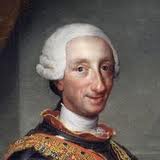
“Half of Minnesota passes to Spain when France gives up her trade west of the Mississippi. The exchange happens not because of activity in the Americas but as the result of a war in far away Europe.

No Spanish representatives are known to have visited the area after this trade and the Dakota and Ojibwe know nothing of it. Spain will return the land to France in 1800.” *

Charles III of Spain

Charles III of Spain

Allow me to amplify this story? Louis XV had just lost the French and Indian War to Britain. This meant that Canada was claimed by England. Simultaneously, France was losing the Seven Years War on the Continent. He contacted his cousin, King Charles III of Spain, and secretly ceded his rights to all New France west of the Mississippi to Spain.

These facts are plain, Lord, but why would France yield such a massive stake in lucrative North America stretching from Louisiana through Minnesota? Was it pure politics and resentment of Britain? Was it born of familial ties between these men, or the bonds of the Catholic faith? It did bring an absence of war, but is absence of war the same as peace?

Lord, I don’t know how this transaction affected our state in this era. Help me see. It seems that Spain ruled with such a light touch that most Minnesotans were not aware of the change. Will You forgive any bondage or bitter roots created in this specific geographical territory because of the judgments held by Britain, France or Spain, Dakota or Ojibwe?

Whether these men were kind-hearted or connivers, that is Your judgment, but I acknowledge that we are no different today. We use or perhaps misuse whatever measure of authority or influence at our disposal when we feel our claims are threatened. We, like these two cousins, may secretively craft plans to block the advances of the opposing team to “keep it in the family.”

Will You teach us Your humility in our diplomacy? When we lose in life, may it not be doubled by the vow, “I will lose to anybody else, but not them.” Christ have mercy on us. May we become the generation that is content to be the humble, temporary tenants of Your land!


*Note – PrayThroughHistory uses the timeline located for several years at the Minnesota Historical Society Web site, at this URL: mnhs.org/about/dipity_timeline.htm .  The current URL is www.dipity.com/Minnesota/History/Minnesota-History/ and only works if typed, not pasted, in browser. It is worth the effort!
 

Standard
18th Century, Culture, History, Intercession, Jesus, Minnesota, Native Americans, Transportation

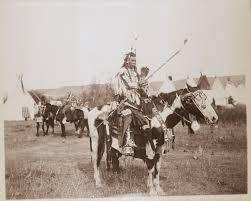
Horses Arrive 1740 to 1760

“By the mid-1700s, thUnknown-1e Dakota are riding horses, obtained in trade with other tribes, on their buffalo hunts on the prairie. They can now follow the herds farther west on the plains.

Horses had been extinct in the Americas for about 8,000 years. Columbus reintroduced them when he carried European breeds to the continent in 1493. Nearly 200 years later, horses were abundant on the plains, where they transformed the lives of the region’s inhabitants.” *

Master, thank You for the creation that You allow us to live and thrive in! Thank You that horses have blessed the lives of the Dakota and immigrant alike! Thank You for the gift of the buffalo to our forbearers! Thank You for reintroducing the horse to North America, and for it’s profound impact on Dakotans’ survival!

Why did You use Europeans to bless North America with the horse? It is good to remember that European explorers were not solely the “exploiters”  of North America as some revisionists may hold. In this case, will You remember those who brought the horse as “contributors?” Thank you, Father, that all cultures are free to choose to contribute and be blessed by those they may not yet know!

Will You bless both horse and rider in Minnesota forever? Will You make us better as a people in our treatment of all horses? Will You give us insight into Your masterpiece; the horse?

*Note – PrayThroughHistory uses the timeline located for several years at the Minnesota Historical Society Web site, at this URL: mnhs.org/about/dipity_timeline.htm .  The current URL is http://www.dipity.com/Minnesota/History/Minnesota-History/ and only works if typed, not pasted, in browser. It is worth the effort!


Standard