19th Century, government, History, Indian, Intercession, law, Leadership, Minnesota, Native Americans, omnipresent history, State Government

Gorman Becomes Territorial Governor

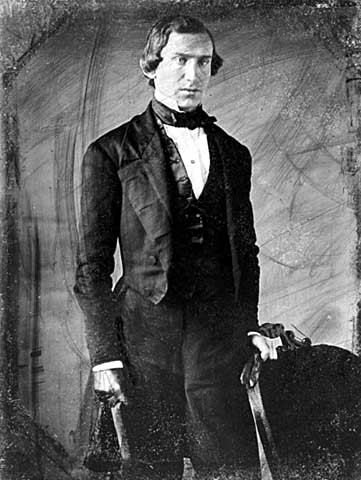
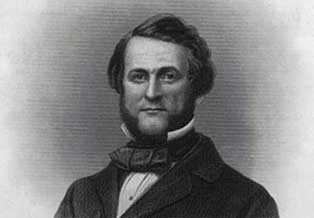
Willis Arnold Gorman

Willis Arnold Gorman

May 15, 1853 to April 27, 1857
“Willis Arnold Gorman takes office as the territory’s 2nd governor. As a U.S. Representative from Indiana, he supported Franklin Pierce in his successful bid for the presidency and was rewarded with the governorship of the Minnesota Territory.” *

“Democrat Franklin Pierce took office in March 1853 and replaced Ramsey with Willis as Minnesota territorial governor.” **

Today I told the Lord that this is a portion of our history that I don’t know much about. I don’t know about Gorman or why he was replaced. Some days I watch and pray and things flow easily. Others days it is difficult to see the significance of the event I’m meditating on.

After some research I found one plausible answer why the Governor Ramsey was replaced by Governor Gorman. The facts seem to indicate that he wrestled with balancing his interactions with the Ojibwe and with the powerful lumbering interests. Looks like he was caught in the middle; which master to serve? His waffling is documented below:
“This quagmire of incompetence and callousness went on for three years, while several hundred Indians died of starvation and disease.” ***

As to Governor Gorman’s temperament, he was a lifelong lawyer, and his character of self-restraint seemed better suited to the times. His legalistic disposition must have helped to find nuanced solutions for a government between a First Nation, and a booming timber industry. He was so dedicated to law that he returned to it after serving in the Civil War! There he remained, serving as St. Paul City attorney, for the rest of his life.

Thanks for Governor Gorman! In him, You brought a man who was even-keeled and suited to the issues of his days! Bless him and all leaders who calmly and deliberately serve their constituents!

As for Governor Ramsey, will You forgive his double-mindedness? We are humans just like him, and sometimes fail to be strong in our decisions. Irregardless of Your mercy, will You bring justice to all human suffering caused by his hesitancy? Will You bring restoration to the Ojibwe, both then, now, and into our future?
http://www.mnhs.org/about/dipity_timeline.htm
** Redix, Eric M., “The Murder of Joe White: Ojibwe Leadership and Colonialism in Wisconsin”.
*** Risjord, Norman K. “A Popular History of Minnesota”

Standard
19th Century, Business, History, Minnesota, omnipresent history

Saint Paul Mutual Insurance Company Incorporated

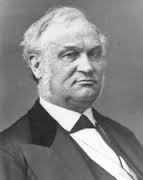
Alexander Wilkin

Alexander Wilkin

March 5, 1853
“The legislature incorporates the St. Paul Mutual Insurance Company, forerunner of the insurance giant St. Paul Companies, the state’s oldest business corporation.” *

Lord, thanks for the conception of corporations, and the good intended through their creation. Our culture has taken a bitter view of business entities such as the “corporation” because of the publicized abuses of some business leaders. This is like tossing away the idea of going to a court for justice on the basis that there are some mistrials. It’s like tossing the Bible because we read it as a punishment instead of Your love letter to humanity.

I commend the three men who founded this company today to You; dear Founder of the Universe. I thank You for the life of Alexander Wilkin, and his impetus to create an insurance company for Minnesotans’! I thank You for George and John Farrington, his partners and investors! I observe that these men, going “all-in”, could barely raise the $50,000 necessary to start their business. Yet, You have allowed it to grow to $20.68 billion in four generations?!

Jesus, I acknowledge the failures of corporations in Minnesota to honor Your standards of integrity. Even the best businesses operate on the basis of mutually beneficial self-interest, but are not expected to exhibit love. Forgive the judgments of our society towards its corporations and vice versa from March 5, 1853 forward.

Likewise, forgive the believers of Minnesota for our judgments of its corporate body, the Church. Forgive the bitter judgments and lack of love towards its parts, and failure to recognize that a rejection in part is a rejection of its corporateness. On the basis of this confession, I want to pronounce the Lord’s forgiveness to the businesses of Minnesota both past and present, and invite Your favor on our states’ corporations and all Church business. Make us one, Jesus!

http://www.mnhs.org/about/dipity_timeline.htm
** More on St. Paul Companies http://www.fundinguniverse.com/company-histories/the-st-paul-companies-inc-history/

Standard
19th Century, cultural transference, Culture, government, History, Indian, Intercession, law, Minnesota, Native Americans, Treaties

Lower and Upper Sioux Agencies

Unknown-3

Unknown-2

1853
“The government builds the Lower and Upper Sioux Agencies as it moves the Dakota onto the reservations created in the treaties of 1851.” *

Jesus, You are our agency. We must use human mechanisms to get back our share from the government that has taken from us. Have mercy!

Will You forgive the offense of the U.S. government, Minnesota Territory, their representatives and interests against the land of the Upper Sioux; the Pejuhutazizi Kapi? Will You forgive the offenses of these same representatives against any member of this Oyate whether Sisseton or Wahpeton? Will You, Fair Judge, create restoration and bring resolution to this conflict beginning in 1853?

Will You forgive the offense of the the U.S. government, Minnesota Territory, their representatives and interests against the land of the Lower Sioux: the Cansa’yapi (where they marked the trees red)? Will You forgive the offenses of these same representatives against any member of this Oyate whether Mdewakanton or Wahpekute? Will You, Fair Judge, create restoration and bring resolution to this conflict beginning in 1853?

You are the One who blessed and planted these indigenous nations here so long ago. We remember these offenses to the Dakota Oyate as offenses to You! Will You lift them up from the land, out of our hearts, and onto the cross of Christ? We cannot heal the sky above, or all that is below the original boundaries of the Dakota, but You can!
Will You bless our common future?
http://www.mnhs.org/about/dipity_timeline.htm
** More information on the Upper Sioux http://mn.gov/indianaffairs/tribes_uppersioux.html
*** More information on the Lower Sioux Agency http://mn.gov/indianaffairs/tribes_lowersioux.html


Standard
18th Century, 19th Century, 20th Century, 21st Century, African American, Anglican, Canada, Christian, education, Evangelism, Great Britain, History, Indian, Intercession, Jesus, justice, Lutheran, Minnesota, Native Americans

Church Missionary Society founded in Minnesota

images-2

August 25, 1851
“The Church Missionary Society for Minnesota was founded on August 25, 1851.

G-d, I’m not entirely sure which Church or who composed this society, but most likely it was the work of Josiah Pratt who dedicated his life to reach the ends of the earth with the Gospel. Minnesota Territory, in this context, qualified as the extremity and meeting place of Western civilization and North American Native cultures. The Society reached out to Canadian and Midwestern First Nations through a branch known as the North West America Mission. **

Please read and enjoy this brief summary of the Church Missionary Society and it’s profound impact on the 19th Century.

“Our story began more than 200 years ago with a group of Christians whose hearts were stirred to put their call into action.
This group included people like William Wilberforce, John Venn, and John Newton. Together they worked to abolish the slave trade, they fought for the rights of oppressed people at home and they launched out on dangerous seas to share Jesus with the world.
The effects of their efforts – as well as the work of thousands of men and women who have followed in their footsteps – are still seen and felt across the globe today.

A brief history of Church Mission Society
The Society was founded in Aldersgate Street in the City of London on 12 April 1799. Most of the founders were members of the Clapham Sect, a group of activist evangelical Christians. They included Henry Thornton MP and William Wilberforce MP. The founders of CMS were committed to three great enterprises: abolition of the slave trade, social reform at home and world evangelisation.

Wilberforce was asked to be the first president of the Society but he declined due to his workload but took on the office of vice president. Thornton became the first treasurer. The Rev Josiah Pratt, curate of St John, Bedford Row (London) soon emerged in a proto-chief executive role.

The spiritual background to the emergence of CMS was the great outpouring of energy in Western Europe now called The Great Awakening. John Wesley, an Anglican priest and failed missionary, became a key player in the UK version of the story. Not all those influenced by the revival left the Anglican Church to become Methodists. One such was John Venn, the saintly rector of Clapham.

Members of the second and third generation following the revival saw many opportunities to consolidate its effects. Alongside the main Clapham agenda they sponsored Sunday Schools for evangelism and education, founded Bible Societies and much more.

The Reformation and the abolition of monasteries and religious orders left the Church of England without vehicles for mission, especially for outreach to the non-Christian world. This new membership society agreed to be loyal to the leadership of bishops and an Anglican pattern of liturgy, but not dominated by clergy and emphasised the role of laymen and women. Much of what we call the Anglican Communion today traces its origins to CMS work. However CMS today is not confined just to Anglicanism, both in terms of people it sends out in mission or ally agencies and projects around the world.

It was expected that Church of England clergy would quickly come forward to be missionaries. When this didn’t materialise CMS turned towards mainland Europe and the earliest missionaries were German Lutherans. For over a century CMS enjoyed rich work relations with the Churches and seminaries of Western Europe. Sadly this was gradually eroded as the European superpowers vied with each other in the race for colonial expansion. Even so we can say the 20th-century quest for Christian unity began through the experience of mission.” **
G-d, regretfully I haven’t yet located primary sources for the founding of CMS in Minnesota Territory, but I thank you for it. May the full number of Minnesotans see You in all Your beauty, and know and fulfill the mission you have created for them! May we follow in their paths to abolish slavery, take just and practical actions to better our State, and give away the happy news of the Gospel; Jesus loves us, wants us, forgives us, and helps us practice living free! Forgive our purposeless living! Forgive our fears of chasing the Wild Goose! (An ancient Celtic image for the Holy Spirit.) May we be blessed to fly, and under Your authority serve to heal all nations!

http://www.mnhs.org/about/dipity_timeline.htm
** “The Church Missionary Atlas (Canada)”. Adam Matthew Digital. 1896. pp. 220–226. Retrieved 19 October 2015.
*** https://churchmissionsociety.org/about/our-history/

Standard
19th Century, 20th Century, 21st Century, Faith, History, Indian, Intercession, Minnesota, Native Americans, Treaties

Treaty of Mendota

0_0_3236_5041

August 5, 1851
“In August the commissioners begin negotiations with the Lower Bands at Mendota. The Mdewakanton and Wahpekute are pressured into agreeing to terms similar to those forced on the Upper Bands, including $220,000 in upfront cash to the fur traders. Both treaties promise the Dakota new reservations along the Minnesota River “in perpetuity,” a pledge that will not be kept.” *
Lord, forgive the human desire to ‘work the system’ and pad our own nests! Will You forgive this heinous offense of the fur traders towards the Mdewakanton and Wahpekute within the Treaty of Mendota? Even greater, will You forgive this breech of justice committed against You through the deception of these two tribes?

Per contra, will You forgive the shame and anger of the Mdewakanton and Wahpekute towards: Lea, Sibley, Ramsey, Minnesota Territory, the U.S. Bureau of Indian Affairs, the U.S. Federal Government, and all unnamed parties participating in their deception? Sweet Jesus, it’s always so hard for the victims of injustice to let go of their righteous anger; will You give this gift to the Mdewakanton and Wahpekute Nations? Will You kindly and gently take this generational curse which has bound them to their historic offenders up, out, and onto the Cross of Christ? Will You restore what the enemy has taken from them, and bring Your Healing Presence to the peoples and lands involved? This land is Your property, may we view it as such both now and “in perpetuity”!

We, in the present, are angered by the deception of the Upper and Lower Dakota Bands at the hands of Luke Lea, and Alexander Ramsey through the trustful signing of the “Trader’ Papers”!!! The desire to disconnect ourselves from this event is powerful, yet Your Word gives us no escape when we offend You by accusing our neighbors. You do not yield the spirit of the law to comply with the letter of the law. You are both Grace and Truth! Help us remember this example spoken to self-righteous human accusers so many centuries ago?

“They said this to test Him, in order to have a basis for accusing Him. But Jesus bent down and began to write on the ground with His finger. When they continued to question Him, He straightened up and said to them, “Let him who is without sin among you be the first to cast a stone at her.” Berean Study Bible, John 8:6-7 **

Will You give us the merciful eyes of Christ today, and into the eternal future of Minnesota? Help us see the humanity within victim and victimizer, the accuser and the accused, and to stand humbly with You against evil and for the good? May we become agents of humanity against the division and deception of the Evil One; the Author of All Grudges. Amen!

http://www.mnhs.org/about/dipity_timeline.htm
** https://biblehub.com/john/8-7.htm

Standard
19th Century, education, Faith, History, Intercession, Minnesota, omnipresent history

Minnesota Historical Society Created

Edward_Duffield_Neill_by_W&F_Langenheim_c1842

The territorial legislature convenes and, as one of its first acts, establishes the Minnesota Historical Society.
“Write your history as you go along, and you will confer a favor upon the future inhabitants of Minnesota, for which they will be ever grateful.” ~The Rev. Edward D. Neill at one of the Society’s first meetings.*

Jesus, I wonder if the Reverend had any inkling of the gravity his speech? I agree so strongly with him that we have been shown favor! Why do You allow us to access Your nature, (present at all times), to participate in Your work of healing Minnesota? You are so different from every object of worship and our human style of leadership! Even our best leaders can act out of pride; and the greatest out of a need for recognition.

Lord, will You acknowledge the present leaders of Minnesota so that they do not need the accolades of men? Lord, will You forgive all leaders past of seeking the approval of people rather than Your pleasure? And by this I don’t mean merely political leaders, chiefs of tribes, captains of industry, or spiritual leaders! I mean ALL who have had influence.

To the future generations of Minnesotans, “Speak and act as those who are going to be judged by the law that gives freedom, because judgment without mercy will be shown anyone who has not been merciful. Mercy triumphs over judgment!” James 2:12,13

*http://www.mnhs.org/about/dipity_timeline.htm


Standard
19th Century, History, Indian, Minnesota, Native Americans, omnipresent history, Politics, State Government

Ramsey Appointed Territorial Governor

Unknown-14

June 1, 1849
“As the first territorial governor and second governor of the state, Alexander Ramsey presides over the early days of Minnesota politics. A shrewd, practical politician, he acquires Indian lands and promotes growth. Later, he becomes a U.S. senator and secretary of war, and will live into the 20th century, a symbol of Minnesota’s pioneer past.” *

Lord, I want to bless the memory of Alexander Ramsey, and acknowledge to You his humanity. The ability of politicians’ to use their power for their own good rather than the benefit of the State is well recorded throughout human history. Unfortunately, our state is no exception to this rule.

For example, Ramsey is also noted for his stern statements calling for the killing or removal of specific Native Americans, chiefly the Sioux (Dakota) people that lived in the state of Minnesota. Ramsey declared on September 9, 1862: “The Sioux Indians of Minnesota must be exterminated or driven forever beyond the borders of the state.” **

Lord, I acknowledge the tangle of treaties in Minnesota, the likelihood of confusion, and unjust acquisitions of Indian land. Where Indians failed to maintain right relationship with the State and the Federal government; have mercy! Where Ramsey wronged Indians in the name of Minnesota in both word and deed, we acknowledge this sin. Will You give us a heart of repentance and restoration? Will You untangle our web of treaties?

* http://www.mnhs.org/about/dipity_timeline.htm
** http://en.wikipedia.org/wiki/Alexander_Ramsey

Standard
19th Century, Civics, education, government, History, law, Minnesota, Politics, Prayer, railroad, State Government

Bill for Minnesota Territory January 18, 1849  

Unknown-12

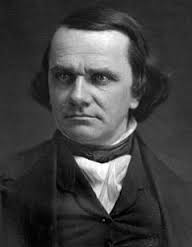
“Stephen Douglas proposes a bill for the creation of the Minnesota Territory.” *

Douglas was born in Vermont, and spent his early years there. When he was able, he migrated west and settled in Illinois. Within a year of moving west wrote is relatives back in Vermont saying,”I have become a Western man, have imbibed Western feelings principles and interests…” His political principles meshed nicely with the free-spirited populism of the west.**

Delegate to Congress from the soon-to-be “Western” Minnesota Territory, Henry H. Sibley worked with Senator Douglas to develop the nuts and bolts of this original proposal. Called the Organic Act, it provided organization of legal and legislative representation for the new territory. As an interesting sidebar, “an important provision of the Organic Act was the reservation of sections 16 and 36 of each township for school purposes.” ***

So we come to You to remember this event, Lord. We see, again, the spectacle of the mixed motives of Minnesota’s founders. On the one hand, they believe in organization, law, and education. On the other hand, the Territory soon enabled massive railroad land grants and corruption. In 1854, the Minnesota & Northwest Railroad, (eventually known as the Great Northern) committed so much fraud and bribery that their charter and land grants were revoked. Within three years, the same was granted five million acres and millions of dollars in bonds, yet they only built ten miles of railroad!? ****

We remember this dichotomy of purpose with You. Will You bless those, like Douglas and Sibley, who created the potential behind our state? We thank You for the aspirations of great men and women like them, who see the end from the beginning.

Conversely, we confess the dangers of living in a free society. Those who misuse their freedom can seek their own ends, and cause such devastation to their neighbors and the land. Will You have mercy on their selfishness, as well as the counter-judgment’s made by those most affected?

Minnesota is Your land. We are Your incomplete people. Come and help us live in right relationship with You and each other. Amen.

* http://www.mnhs.org/about/dipity_timeline.htm
** http://en.wikipedia.org/wiki/Stephen_A._Douglas
*** https://www.sos.state.mn.us/about-minnesota/minnesota-government/organic-act-of-1849/
**** http://www.landgrant.org/history.html

Standard
19th Century, Business, Economics, History, Industry, Minnesota, Native Americans, Politics, trade

1st Lumber Mills in MN 1848

history_franklinSteele

Pioneer businessman Franklin Steele builds a sawmill at the falls of Saint Anthony. By 1856, there are eight mills at the falls.*

May I sit with You and observe this chapter of life in my state? Mr. Steele came here through the invitation of the man who would become his brother-in-law; Henry Hastings Sibley, a prominent Minnesotan. He staked an advantageous claim on the east bank of the St. Anthony Falls. Soon, he established a partial dam, sawmills, and a crew upriver to supply him logs, and commence a successful business. **

Digging further, this is what I found:
“But Steele surreptitiously staked the first claim on the choicest land before sunrise on the first day of legal settlement.” *** Is there nothing new under the sun? Once again, a man becomes successful through an inside scoop, and bending the rules to his advantage. We, indeed, are people of mixed motives, bearing both good and bad fruit!

Will You forgive his offense to You in making an illegal claim? Will You forgive his offense to all parties affected in his day whether Native, immigrant, loggers, and sawyers? Will You restore the losses of Steele’s contemporaries?

Yet, we too sometimes exhibit the same heart as Steele; we try to grow beautiful things from ugly roots! We often esteem the shrewd, and shun those led by conscience. We are so in love with success stories that we brush past those whom our heroes stepped on and over in the process. Will You forgive us our “illegal claims” today?

Precisely because I am a man with a mixed up heart like Franklin, I am drawn to Your mercy! Through Your kindness, I can offer honest thanks for the accomplishments of others with on-again/off-again hearts. Thanks for providing ample waterpower in Minnesota! Thanks for the resources of wood! Thanks for Franklin Steele who put together an enterprise to use both for the betterment of Minnesota!

http://www.mnhs.org/about/dipity_timeline.htm
** http://en.wikipedia.org/wiki/Franklin_Steele
*** http://www.nps.gov/miss/learn/historyculture/upload/River_Ch_6.pdf

Standard
19th Century, Culture, History, Minnesota, Native Americans, Politics, Treaties

Winnebago Moved to Reservation 1847  

xa-hochun

A treaty with the U.S. government moves the Winnebago (Ho-Chunk) from northeastern Iowa and southeastern Minnesota to a reservation in Todd County. With the Ojibwe to the north and the Dakota to the south, government officials hope the Winnebago reservation will serve as a buffer zone between Minnesota’s two larger Indian nations.

The Winnebago prefer the terrain of the prairie to this wooded area, and in 1855, they relocate to a smaller tract of land in Blue Earth County. They remain there until after the U.S.-Dakota Conflict, when the government forces them to move with the Dakota to the Crow Creek reservation in South Dakota.*

Jesus, thanks for the peoples of Minnesota. Thanks that You made us Your people whether of Winnebago, Ojibwe, Dakota, English, German, French, or Swedish descent. It’s wonderful that we are uniquely made, distinct families conveying some reflection of Your light!
Will You illuminate and forgive the bitter root judgments of the US government towards the Winnebago and vice versa? Will You forgive the government’s desire to use this people as a “buffer” between Ojibwe and Dakota, and the implications that they needed help maintaining peace between their peoples? Will You fill hearts and lands with the gift of restoration here in Minnesota, South Dakota, Iowa, and replace the curses from the hearts of all parties in this event?

*www.dipity.com/Minnesota/History/Minnesota-History/

Standard