19th Century, education, History, law, Minnesota, Native Americans, women

Saint Paul’s 1st Public School 1847

bishoporig

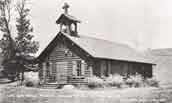
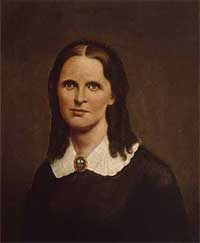
New Englander Harriet Bishop arrives in St. Paul and opens the town’s first public school. In a log cabin that had once been a blacksmith’s shop, students sit on wooden benches while chickens wander in and out.*

Thanks for Harriet Bishop and her desire to make education ‘public’. There were few opportunities for female teachers in New England, and she relished the adventure of moving west into unfamiliar territory.  She credits Harriet Newell and Ann Bishop, missionaries to Burma, as her inspiration.

The first school house, which she opened in a former blacksmith shop on July 19, 1847, was a “mud walled log hovel… covered with bark and chinked with mud” at what is now St. Peter Street and Kellogg Boulevard in the relatively isolated fur trading post of Saint Paul. Of the seven students in her first class, only two were caucasian. She had to rely on a student who was fluent in French, Dakota, and English to translate for her classes (which she taught in English). http://en.wikipedia.org/wiki/Harriet_Bishop

It’s astounding to think that most schools in our nation were private or parochial at the time. Public schools were often for the benefit of Protestants and the poor, whose communities did not have the resources or organizational structure to support them. How far we have come from this log cabin filled with students and wandering chickens!

However, presently we fail future generations because learning is disconnected from the Omniscient One. We have generations leading lives filled with facts, technology, and the benefits of science, but detached from meaning or a reason for being. This state was made by our Loving God, but even Your presence in school is an affront to the humanistic underpinnings of our current system of education! Will you forgive us this offense? Will You forgive our education system, legal system, and hearts where we have blocked You, and therefore any real sense of Divine Purpose, from our lives!

Today I remember the risk of Harriet Bishop, and her heart to see all children learn! Perhaps her home culture did not value her, but we thank You for incredible contributions to our state! Will You bless her, and all like her, who bravely risk the frontiers of our educational system?

Will You forgive any arrogance and academic pride of our forbearers, as You forgive us those same separations in the present? Will You bless future schools of Minnesota with wonder and awe of knowledge beyond our reach? May we remember the Infinite One who perceives the oceans of information beyond our drop in the bucket! May we receive Your forbearing spirit for each other, and a willingness to honor each other in Minnesota’s classrooms regardless of our faith in God or man?
Standard
19th Century, Culture, Faith, History, Intercession, Jesus, Minnesota, Native Americans

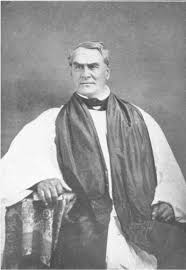
Ezekiel Gear Arrives at Fort Snelling Apr 28, 1839

Unknown-10

Episcopal priest arrives at Fort Snelling. He is chaplain at Fort Snelling from 1839-1858. He remains in Minnesota until his death in 1875.*

Thank you for Gear, and his commitment to Minnesota. Thank you for the blessing his presence had on early Minnesota and especially Fort Snelling. Thank you for his example to future generations here: we are free to reach across cultural boundaries when motivated by Your love!

It is my belief that we have a limited view of our history. We know in part, and we often project our vantage point onto the characters of the past. Perhaps we need a new lens to view the history of Native Minnesotans and its European settlers? May we equally remembers those that built relational bridges in this meeting of peoples as those who tore them down.

The following excerpt demonstrates where the heart of Priest Gear:

“Ezekiel Gilbert Gear was horn in Middletown, Connecticut, September 13th, 1793. He was ordained deacon by Bishop Griswold in the same church in which he was baptized, and his diaconate was passed in that diocese. He was ordained priest by Bishop Hobart, and was appointed missionary in the western part of New York state. There he labored at Onondaga Hill, Avon, Manlius, Ithaca, Syracuse, Binghamton and Brownsville. He also worked among the Oneida and Onondaga Indians, baptizing, marrying, and admitting many to the communion of the Church. He was present at the confirmation by Bishop Hobart of ninety-seven Indians, presented by Eleazar Williams. We can well imagine that this previous connection with Indian work led him to take an especial interest in advocating, as he did, the beginning of work among the Sioux and Ojibways of Minnesota.”

http://anglicanhistory.org/usa/mn/edsall_gear.html

*Note – PrayThroughHistory uses the timeline located for several years at the Minnesota Historical Society Web site, at this URL: mnhs.org/about/dipity_timeline.htm .  The current URL is www.dipity.com/Minnesota/History/Minnesota-History/ and only works if typed, not pasted, in browser. It is worth the effort!

Standard
19th Century, Culture, government, History, Intercession, Jesus, Minnesota, Native Americans, Treaties

1837 Treaties

c6c38485-2901-4201-bc7e-2aa4468ba134

The United States negotiates treaties with the Ojibwe and the Dakota for the wedge of land between the St. Croix and Mississippi Rivers—land that will later become part of Minnesota. Ratification of the treaties opens the land for settlement by non-Indians. The Ojibwe will receive payments in money, goods, and provisions for 20 years; they also reserve the right to hunt, fish, and gather wild rice within the ceded area. The Dakota do not reserve their hunting or fishing rights, but their annuities are to be perpetual. Indian Agent Lawrence Taliaferro boasts that he made the better bargain for the Dakota.*

Lord, this wedge of land is quite valuable real estate in the present. It contains parts  of St. Paul, Oakdale, Stillwater, Lake Elmo, Woodbury, Cottage Grove, and Hastings which are all fast growing parts of the metro area. This is surely a challenge for our present-day lawmakers; how do you give hunting rights in a suburban develop ment?

We need Your wisdom for all such cases. First, we need to accurately understand the meanings of past treaties which is no simple matter. Next, how does one interpret the spirit of this meaning into a present-day context that preserves the spirit and the heart of the treaty? Will You enable our government to honor these treaties in the present and future, as well as make restitution as specific and meaningful as possible?

By Your mercy, will You free all parties in the past of dissension and bitter assessments: the U.S. government and its agents , the Dakota, and the Ojibwa? Will You make us free from the fruit of this event in the present, and create the proper honor and respect between all parties?

*Note – PrayThroughHistory uses the timeline located for several years at the Minnesota Historical Society Web site, at this URL: mnhs.org/about/dipity_timeline.htm .  The current URL is www.dipity.com/Minnesota/History/Minnesota-History/ and only works if typed, not pasted, in browser. It is worth the effort!

Standard
19th Century, Culture, education, Faith, History, Intercession, Jesus, Minnesota, Native Americans

Lake Harriet Mission School July 19, 1836  

lac_qui_parle1

Six students attend the opening of the Lake Harriet Mission School for the Dakota, founded by the Reverend Jedediah D. Stevens. An early example of education within the boundaries of present-day Minnesota, the school was sponsored by the Presbyterian Missions Board and taught by the founder’s niece, Lucy C. Stevens, in a cabin built by Gideon H. and Samuel W. Pond.*

Good Teacher, thank you for the benefits of the Lake Harriet Mission School for the Dakota. Thank you for the heart of providing education to all! It’s so good to share what we know and have it received.

It is not easy to be the first. It takes boldness to reach out across cultural lines. On one side of this picture we have Dakota students who are reaching out to Stevens. Conversely, he is stepping out of his comfort zone to meet and teach members of an unfamiliar culture. Will You bless both sides of this exchange? Will You remember their boldness and trust to know each other? Each group is an exploratory party of sorts. May we never forget what its like to be an alien!

Lord, I also want to acknowledge our separations that may begin as academic pride. We assume our knowledge will change our ‘underprivileged’. We often fail to pass on wisdom (good judgment), and even foster an academic culture that hesitates to recognize the merits of wisdom. As moderns, we cringe at even the word ‘judgement’, although one could argue that good judgment is the root of justice?!

I feel prompted to acknowledge the potential judgments of Stevens and Williamson against the Pond brothers, and perhaps a spirit of competitiveness. Lord, will you forgive any heritage of academic  or religious pride stemming from  them forward to us if this is the case? Will you forgive the stinging pain of criticism towards or counter-judgments from the Ponds, the Dakotas, these first six students, or any other pertinent unaddressed party? Will You free the land  of Minnesota from these judgments, and bring the blessing of humility that we all have betrayed You, Your peoples, and our selves? Will You make us humble teachers and students of the “knowledge” You have revealed to us? Amen.

*The current URL is www.dipity.com/Minnesota/History/Minnesota-History/ and only works if typed, not pasted, in browser. It is worth the effort!

Standard
19th Century, Business, Culture, Economics, History, Intercession, Jesus, Leadership, Minnesota, State Government

American Fur Company 1833


images-6

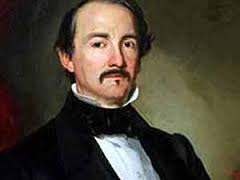
Young Henry Sibley takes over the American Fur Company post at Mendota in 1834 and stays on to be a leader in building Minnesota. He will become Minnesota’s first territorial delegate to Congress and its first state governor–an indivisible part of the state’s history for more than 50 years.*


Thank you for the life of Henry Sibley, and his leadership role in this state. You have seen Sibley’s work and heart, will You guide this prayer? Will You give insight into the ramifications of this new role for Sibley as head of this important company so long ago?


I do not know how conscientious or just he was, or if he favored the American Fur Company in his civil leadership roles. Lord, I just want to acknowledge that when I have power, it is tempting to favor those with whom I have the strongest trust and relationship. Will You forgive me this sin?

Forgive any favoritism, or judgments against those favored by Henry Sibley, the American Fur Company, and the government of Minnesota? Will You forgive us as Minnesotans’ from our savior-complex? Sometimes we shield those we favor from learning by the cause and effect of their actions. God, these are some contemporary examples of our civic favoritism: >“This company (or bank) is too big to fail.” >”We need a new Vikings stadium.” >”Our state can pay for equality of outcomes.” You are the Savior of Minnesota! Cleanse us from 1833 to now of our favoritism.

Why is this offensive to You, Just One? Is it because misuse of authority exhibits the limitations of our trust for our fellow man, or their Maker? Do we deny those around us that they also have Your inalienable right of choice?

Of course, there are times when you authorize and condone our exercise of judgment on behalf of others. For example, a mother must choose, moment by moment, what is best for the care of her newborn child. Yet if this same woman were to be constantly advising her adult child, it would be a sick relationship, and probably feel quite smothering.

In the same way, will You bless the future of all leaders of this state with Your proper balance of authority? May they be blessed with strength balanced by tenderness! May they neither fear the loneliness of leadership, nor the humility that nurtures future leaders. Amen!


Standard
19th Century, History, Intercession, Jesus, Minnesota

1st Post Office Established Aug 25, 1827


Minnesota’s first post office is established at Fort Snelling.*

Lord, thank you for establishing a post office here! Communication is a gift and blessing on us and our state! May You provide more inspiration to improve and enhance our technology of communication in the future. May You give us hearts of reconciliation that strengthen the communication of our state by Jesus’ authority!

*Note – PrayThroughHistory uses the timeline located for several years at the Minnesota Historical Society Web site, at this URL: mnhs.org/about/dipity_timeline.htm .  The current URL is www.dipity.com/Minnesota/History/Minnesota-History/ and only works if typed, not pasted, in browser. It is worth the effort!

images-4

Standard
19th Century, Exploration, government, History, Minnesota

Fort Snelling Completed

ft_snelling_sm

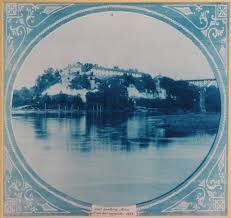
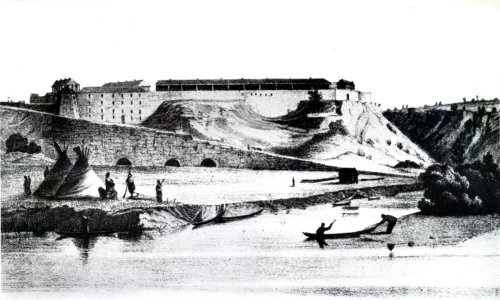
In 1819, the 5th Regiment of Infantry arrived at the junction of the Mississippi and Minnesota Rivers to build the northwest link in this chain of forts and agencies. Here, where traffic could be controlled on two major rivers, Fort Snelling was completed in 1825.*

Lord, thank You for the establishment of order. Ft. Snelling was established to maintain order of our government. Thank You for the Fort’s benefits of regulating trade on the rivers, but forgive any offenses of overstepping its Constitutional bounds. May any injustices starting with the Fort be ended now by Jesus authority. Amen.

*Note – PrayThroughHistory uses the timeline located for several years at the Minnesota Historical Society Web site, at this URL: mnhs.org/about/dipity_timeline.htm .  The current URL is www.dipity.com/Minnesota/History/Minnesota-History/ and only works if typed, not pasted, in browser. It is worth the effort!

Standard
19th Century, Business, Economics, Exploration, Health, History, Minnesota, riverboat, Technology, Transportation

First Steamboat at Ft. Snelling 1823

images-3

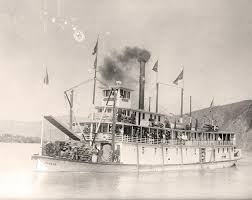
The “Virginia” is the first steamboat to reach Fort Snelling. Needed supplies are missing from the cargo, though the boat does carry the umbrella-wielding Italian count Giacomo Beltrami.*

Today’s meditation is on the relevance of the arrival of steamboats in the state of Minnesota. For the author, the practical is spiritual, and often the super-normal is the basis of the super-natural. Therefore, if I want to hear what my Good Father is saying to me today, I may have to slow my thoughts to the speed of a paddle-wheeler headed upstream. That said, below is a succinct general history to amplify this event:

“As early as the 17th Century a handful of explorers, hardy French voyageurs, and missionaries had ventured into the environs of the Upper Mississippi River Valley. Through a variety of relationships that included cooperation, intermingling, and competition with the native inhabitants of the region, several temporary encampments and forts had been established to support the lucrative fur trade. But most historians agree that nothing changed the frontier as quickly as steam transportation.

In April, 1823 the small steam packet Virginia backed out into the channel of the Mississippi from the St. Louis levee to become the first boat to ascend the Father of Waters into what would later become the Minnesota Territory. This remarkable journey was chronicled by Giacomo Constantine Beltrami, the Italian explorer who went on to play an important role in Minnesota history.  A Kentucky family en route to the lead mines of southern Wisconsin on board the 118-foot vessel represented the first trickle of what would soon become a deluge of immigration. Also on board the Virginia for this historic trip was Captain William Clark of the famed Lewis and Clark Expedition of 1805.

Imagine the contrast of traveling in the relative ease and comfort of this sturdy little boat given his experience of just a few years earlier.” **

There is much here to ponder: the new technology of the steamboat, how this technology changed history, and what timeless truths can we grasp from it? Lord of Mighty Rivers hear my simple thoughts and prayers.

Strong Creator, thank You for the scientific properties of water. It’s truly amazing! It’s like Your character, it can appear as ice, liquid, or steam, yet it is always the same substance. You put it into Your creative children to harness this transitional power for the betterment of humankind. Which of their ancestors would imagine that one day their boiling tea kettle would power massive loads upstream against the might of the Mississippi?

Here is my first confession and petition. Lord forgive our lack of imagination, both for ourselves, and for the dreams of others. May we practice to spur this generation to dream, and to the enjoyable discipline necessary to their fulfillment. May we be a voice of encouragement that pushes others to defy the current! Thank You for the symbolic value of the lonely Virginia moving slowly to its destination!

Next, new technology often makes the impossible possible, and the impractical practical. Again, who in the 18th century would think that their steaming iron maple syrup pot could actually become a boiler? And that that boiler would have the power to move unthinkable payloads up and downstream? And that those payloads would enable trade and previously unimaginable lifestyle for the average American?

We, in the 21st century, have the luxury to throw away old socks and t-shirts. Cotton products have become so accessible they are practically disposable. We do not know or remember that our ancestors may have experienced the incredible comfort of cotton articles from the South for the first time because of this steamboat’s success. Conversely, those in the South were likely amazed at the beautiful white flour Minnesota could send them so affordably.

Lord, we don’t often pause to remember what it’s like to do without. We do not see the masterful design of a plain white cotton t-shirt, or ponder that in past generations, it was a garment fit for a king. Or that the greatest chefs of Paris were astounded at the silky wheat flour from some unknown place called Minnesota. It was “Incroyable”!

Incredible Dreamer, thanks that You are not offended by our inventions! Thanks that this steamboat enabled Beltrami to better share his discoveries with a much wider audience. Ultimately, thanks that You take pleasure in our discoveries! May this river valley yield new discoveries and discoverers who make the impossible possible! (Just like You!)

*Note – PrayThroughHistory uses the timeline located for several years at the Minnesota Historical Society Web site, at this URL: mnhs.org/about/dipity_timeline.htm .  The current URL is www.dipity.com/Minnesota/History/Minnesota-History/ and only works if typed, not pasted, in browser. It is worth the effort!

** http://www.winonahistory.org/sesqui/steam/


Standard
19th Century, government, History, Intercession, Jesus, justice, Minnesota, Native Americans, Politics

Taliaferro Becomes Indian Agent 1820  

pinterest

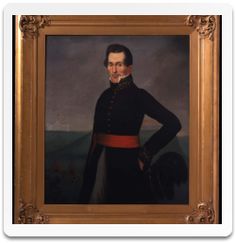
Lawrence Taliaferro

Virginian Lawrence Taliaferro (pronounced “Tolliver”) becomes the Indian agent at Fort Snelling. Respected by the Indians for never making promises he could not keep, he works hard for 20 years to rid the fur trade of whisky and cheating. At last, in poor health and tired of the government’s broken promises, he resigns.*

Lord, thank you for honest people! What pleasure it is to have someone return our phone, admit a mistake in our favor at the cash register, or actually put a lost item into the “lost and found” so we can reclaim it. As King Solomon wrote so many years ago, “An honest answer is like a kiss on the lips.” I simply wish to honor and remember the “honest people” of the world to You today, and commend to You their example.

Father of Honesty, Mother of Truth, today I wish to honor  and remember Lawrence Taliaferro, who crystallizes this type of character. Thank you that he wanted a square deal for Indians of Minnesota who came to him at Fort Snelling. There is such power in a person who is willing to let their yes mean “Yes”, and their no mean “No”.

We are no different than Lawrence. There are many times that we tire of doing good and quit. Often, there is more punishment and criticism for doing the right thing than sweeping the wrong thing under the rug!? Will You forgive our hearts to quit doing right and forgive Mr. Taliaferro!? Will you forgive any assessments he made, probably quite logically, of the Federal government’s failure to honor its promises? Will You bless these specific tribes of Indians in the specific areas that they have been wronged? Will You forgive any tribal counter-judgments or resentments of State or Federal government? Will You begin to heal these centuries-old heartaches today?

*Note – PrayThroughHistory uses the timeline located for several years at the Minnesota Historical Society Web site, at this URL: mnhs.org/about/dipity_timeline.htm .  The current URL is www.dipity.com/Minnesota/History/Minnesota-History/ and only works if typed, not pasted, in browser. It is worth the effort!

Standard
History, Prayer, Uncategorized

Grand Portage is established 1784

Unknown-6


“Grand Portage on Lake Superior becomes the western headquarters of the new North West (fur) Company. From here the British dominate the North American fur trade until Americans arrive in the early 1800s.” *

Grand Portage is both a place and a route. The route refers to an 8 1/2 mile portage that starts at the settlement and ends at the Pigeon River, above its waterfalls. Traveling from there through the many lakes along the Canadian Shield, a person could reach the Pacific or the Arctic Ocean without carrying a canoe much farther than the Grand Portage itself.

People and goods could reach Grand Portage, the place, from the East via the Great Lakes, from the South by the St. Croix and Mississippi rivers, and from the West by the Grand Portage route. That location had been a central meeting point for trade long before Europeans came looking for furs. Once the fur trade began, Grand Portage also became a port–the westernmost point where goods could be delivered from the east coast by ship.

It is hard for us to imagine in this present era why fur could be so sought after. For moderns, it is a luxury that is contentious and risky to wear despite its  beauty. Most of us don’t know that our world experienced a small “Ice Age” and these European explorers were driven to find furs, like native Minnesotans, because of their warmth.

Will you forgive any judgments of North West Company? We show loyalty to our beloved brands of outerwear like: Columbia, North Face, Filson, Orvis, L.L. Bean etc. We buy these brands because we are convinced they are the best for our purpose. Yet, we have hated those companies who saw the beaver and said, “This is the best source material for warmth, comfort, and style.” Will You forgive our arrogance towards a company that saw an opportunity, provided work to both Native and European Minnesotans, and created useful and beautiful items for trade?

This brings me to ponder that You created fur to shield Your beloved creatures: the mink, the beaver, and the fox to name a few. I am in awe of your artistry in these first “fur coats”?! This day I thank You for the meaning of fur: first to the animals, then to Native Americans, European explorers and traders, and finally to the state of Minnesota!

Not only did You create this astonishingly warm fur, but provided a waterway to it! Thanks that you revealed Grand Portage to Indians, who shared it with the French and English who further established this trade route and town! Will You forgive our conflicts over the fur trade? Will You forgive our grudges, past, present, and leave a blessing?

*Note – PrayThroughHistory uses the timeline located for several years at the Minnesota Historical Society Web site, at this URL: mnhs.org/about/dipity_timeline.htm .  The current URL is www.dipity.com/Minnesota/History/Minnesota-History/ and only works if typed, not pasted, in browser. It is worth the effort!

Standard