19th Century, authors, Culture, Exploration, History, Immigration, Intercession, Journalism, Minnesota

Icelandic Colony 1875

unknown-3

1875
“Icelander Gunnlogur Petursson relocates to Lyon County, laying the foundation for the second largest Icelandic colony in the United States. Its residents acquire land in surrounding Lincoln and Yellow Medicine counties, but Minnesota becomes the center of the Icelandic colony’s business, social, and cultural activities.

Many of the Minnesota Icelanders’ are highly literate farmers who love to read and who fill their modest homes with books they brought with them across the Atlantic Ocean. Icelanders establish the Lestrarfjelag (Reading Society) and publish Vinland, a monthly Icelandic-language newspaper with a literary focus.” *

Thanks for Gunnlogur Petursson and the Icelandic peoples of Minnesota! I am so happy to hear that over a century ago, they were common farmers with an enjoyment for learning and reading. Thank You, Lord, that You do not limit us the way our societies sometimes do. You give us a curiosity to know, and reward our searching. Why do we fritter away so much time on entertainment and other amusements; You have something even better to teach us each day if we can focus and listen!?

I want to bless the heritage of this Icelandic colony, their generations, their dwellings, and property in the name of the Lord Jesus Christ! May Lyon County and all Icelandic descendants know You in all Your beauty in the present, and experience Your Majesty throughout their future! Amen.

http://www.mnhs.org/about/dipity_timeline.htm


Standard
19th Century, authors, Culture, farming, History, Intercession, Minnesota, Natural Disaster

Laura Ingalls in Minnesota May 1874 to Jul 1876

2aff6dc1997b9813e7a8180cdf4a5037

May 1874 to July 1876

“Seven-year-old Laura Ingalls and her family settle 1.5 miles north of Walnut Grove along the banks of Plum Creek. Charles and Caroline Ingalls settle on the property in May 1874, declaring their intent to homestead it. After three consecutive years of crop failures they decide not to complete the homestead process and instead purchase the land in July 1876 from the U.S. government and immediately sell it and move to Iowa.” * 

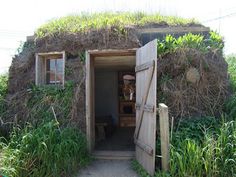
In 1932 Laura Ingalls Wilder writes the story of the time that she, Pa, Ma, and sister Mary spent in their dugout house at Plum Creek. **

It may strange to say, Eternal Father, but almost nothing helps me see You more than the story of another human being. How many readers have had their minds opened to this era because an ordinary girl recorded the stories of herself, her family, and their everyday life!?! To me, Ms. Ingalls-Wilder demonstrates that every life is an adventure, each day is a universe, and that You are there profoundly in the simple moments. ***

I praise You for Laura Ingalls; both the author and her story! Will You bless our writers in each generation to see the value of their lives, and to tell their tales with such similar and stark honesty as she? Thank You for shaping her Minnesota experience, and blessing her with a heart to share her story! 

** “On the Banks of Plum Creek”; Newly illustrated, uniform ed. LC Online Catalog. Retrieved 2015-09-18.

*** https://en.wikipedia.org/wiki/On_the_Banks_of_Plum_Creek


Standard
19th Century, Agriculture, Business, Current Events, Energy, farming, Food, History, horses, Intercession, Medicine, Minnesota, Natural Disaster, Transportation

Energy Crisis 1872

unknown

1872

“Epizootic fever strikes horses throughout the Midwest. The three-month sickness plunges horse-powered Minnesota into its first energy crisis.” *

I need to let this one simmer for a bit; “the three-month sickness plunges horse-powered Minnesota into its first energy crisis.” It’s hard to relate to this not-so-distant past when “horse-power” really meant the labor of a workhorse. I believe it was as late as W. W. II  when the majority of Minnesotans still lived on farms, and felt this connection to living “horse-power. (I still need to let this steep.)

There’s something good about the connection between human and horse. Your draft animal as a precious commodity, means of production, and even friend?! A car with a face? A tractor with a face? A companion who saw the same sights, and explored the same paths as its master?

Below is some documentation of the breadth and width of this epizootic fever.

“Beginning in Toronto, Canada, in the late summer of 1872, in only three days the disease hit nearly all the livery stables and the horses used to pull streetcars in that city. By mid-October, horses in all of Canada, Michigan and the New England states were infected. By the beginning of November the disease had spread to Illinois, Ohio and South Carolina. By the end of the month, Florida and Louisiana reported cases.” **

Holy Spirit, today I remember the I remember this equine flu epidemic of 1872. I accede to You in the relationship between the suffering of animals and the people of this state. I acknowledge the contribution of veterinarians to the well-being of these individual animals, and indirectly to our state.  

Will You forgive us any judgments made against Your goodness or holiness because of this chapter of epizootic fever?  You care about each detail of our lives, and of each creature in Your world. We give You thanks for these horses past, and sincerely thank You for Minnesota’s present stock. We ask Your blessings on each colt, filly, mare, stallion, bronco, foal, and gelding that will walk the North Star state in perpetuity!

** http://www.heritagebarns.com/the-great-epizootic-of-1872/#.V9s-fmPSfVo


Standard
19th Century, Civics, Democrat, Governors, History, Intercession, Leadership, Minnesota, Politics, Prayer, railroad, Republican, State Government

Austin Becomes Governor

candidate37119

January 9, 1870 to January 7, 1874
“Horace Austin takes office as the state’s sixth governor.

A reputation for clearheaded objectivity and disdain for contentious party politics enhanced the appeal of Judge Horace Austin as a gubernatorial candidate in 1869. Minnesota’s sixth governor was determined to bring legislative power to bear against the railroad barons. His advocacy of strictly regulated passenger and freight rates and his opposition to the wholesale allocation of state lands to railroad development earned him a second term. But he was unable to resolve completely the problems inherent in controlling a booming transportation industry and curbing the excesses of its owners.” *

Lord, thanks that You are our shield! To my knowledge, our people have suffered much through the over-reaching hands of the railroad. (Especially the farmers!) Thank You for providing a governor that would stand up to these barons; even if partially successful.

Will You forgive the judgements between us all: Minnesotans’, the railroad barons’, the U. S. Government, and our state government? We know that You have told us in Leviticus 19:35,36 to use “honest scales and honest weights”. Because You have forgiven us our debts, we forgive the numerous injustices perpetuated by all railroads, their employees, their owners, financiers, and any other party unnamed that have been bound in this unforgiveness.

Will You return us to a right relationships from where they skewed off in Austin’s term? Will You restore the lands that have been cursed through the contention between Indian Nations, citizens, and the railroad companies? There’s enough freedom for all in Your kingdom; help us to receive and give honor and freedom to our neighbor today! Thank You that Governor Horace Austin looked for solutions between the Democrats and Republicans! May we have more Governors and leaders like him who see and think in the areas of our common humanity. Amen!

* http://www.mnhs.org/about/dipity_timeline.htm


Standard
19th Century, Americana, History, Immigration, Intercession, Minnesota, omnipresent history, Real Estate, State Government

Nininger City Fails

unknown-2

1869
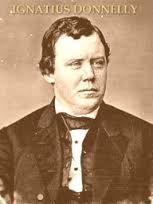
“The Panic of 1857 and the decision of the steamboats to use Hastings instead of Nininger as a river port doom Nininger City, the dream town of Ignatius Donnelly.

Nininger declines steadily after the financial panic of 1857 that causes banks across the country to call in loans. Donnelly tries to put a positive spin on the eastern bank failures by issuing a handbill entitled “Cure for the Panic. Emigrate to Minnesota! Where no Banks exist.

People move away anyway. By the 8th U.S. census in 1860, only 469 remain. Buildings disappear and by 1869 no other buildings remain besides Ignatius Donnelly’s house. The town eventually disappears from the map.” *

Have mercy on us! We make our dreams into idols, and are heartbroken and bitter when they fail us! Thank you for Donnelly and bless Your heart within his dreams! How bitter for him it must have been to see Hastings thrive?!

Lord, will You forgive any judgments that Donnelly had against Hastings, and vice versa? Will you make us free in the present from this bitter root? Will You bless the river and the lands involved? Will You preserve Nininger and Hastings in the season of flooding? Will You cause us to bless the town next door as much as our own?

http://www.mnhs.org/about/dipity_timeline.htm
Standard
19th Century, Culture, History, Indian, Intercession, Minnesota, Native Americans, State Government, Treaties

Sisseton Wahpeton Reservations Established

Unknown-2

February 19, 1867
“The Sisseton (or Lake Traverse) Reservation in northeastern South Dakota and the Devil’s Lake Reservation in central North Dakota are established for the Sisseton and Wahpeton bands, originally from Minnesota. These two bands had argued for the restoration of their treaty rights on the grounds that they had not fully participated in the war of 1862.” *

Lord Jesus, I ask that You enter this negotiation of February 19 so long ago. Will You bring Your justice into this situation? Will You free the Minnesotan and tribal members from the sins of their generations? Will You bring a new peace between Sisseton Wahpeton and our State?

http://www.mnhs.org/about/dipity_timeline.htm
Standard
19th Century, Art, authors, Culture, History, Intercession, Minnesota

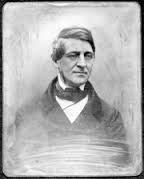
Emerson Speaks 1867

Unknown-1

1867
“Ralph Waldo Emerson braves sub-zero weather in an open sleigh to lecture in Winona. The poet and essayist–known to many as “the wisest American”–gives four other speeches in Minnesota before returning to Massachusetts.” *

“Mr. Emerson leaves to the world no system of philosophy, no orderly presentation of new or great truths; but he has done a a great and usually salutary work by stimulating the thought of two generations and by helping courageously to clear away the intellectual rubbish which the centuries had gathered. . . He has done the needed work of the iconoclast in so kindly and decorous a way as to hurt as little as possible the enduring good.” ** Minneapolis Tribune April 28, 1882

Lord, I have not experienced much of Emerson’s wisdom, but I ask that You bless him, his generations, dwellings, and property in the name of the Lord Jesus Christ! May we follow in his footsteps to do the intellectual work You have for us in this life. May we bless the future of Minnesota with “enduring good”!

http://www.mnhs.org/about/dipity_timeline.htm

** Cited by Hubert H. Hoeltje in “Emerson in Minnesota”

Click to access v11i02p145-159.pdf

Standard
19th Century, Americana, History, Immigration, Intercession, Minnesota, Politics, State Government

Attracting Settlers

Unknown

1867
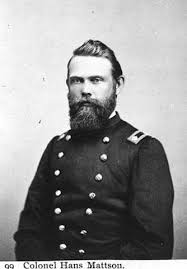
“People mean progress and prosperity to the new state. Minnesota establishes a board of immigration to attract settlers. Hans Mattson, secretary of the board, makes several trips to Sweden to recruit immigrants. Mattson had been a founder of Goodhue County’s Vasa colony in the 1850s. Now he encourages newly-immigrated Swedes to farm mainly in the central part of the state, with great successes in Wright, Meeker, and Kandiyohi counties.” *

Thanks for the establishment of a board of immigration! Thank You for Hans Mattson and his work to advertise Minnesota. Thank You that this state could be a shelter for many Europeans, but in this case, especially Swedish immigrants.

May any bitter root judgments between Wright, Meeker, Kandiyohi, Mattson, Minnesota, or Sweden be broken in the name of the Lord Jesus Christ! Will You soothe the burning frustrations between citizens of Minnesota and illegal immigrants past? Will You show our nation how to resolve the problems of having a population of perhaps 20 million non-citizens in the present? Will You forgive our sins against You and our fellow human beings through this issue into the future?

http://www.mnhs.org/about/dipity_timeline.htm
Standard
19th Century, Agriculture, Business, education, farming, Food, History, horses, Intercession, Minnesota, omnipresent history, Science, trade

Kelley on the Grange

Unknown-1


1867
“Elk River homesteader Oliver H. Kelley, claiming to be “as full of public spirit as a dog is full of fleas,” leads the founding of the Patrons of Husbandry, or Grange.
The organization, which includes women as equal members, sweeps across rural America, promoting scientific agriculture and enriching the social and cultural life of farm families.” *

What was Mr. Kelley like as a human, Jesus? What desires did You put into his nature for his fellow farmers?
“Encourage them to read and think; to plant fruits and flowers,—beautify their homes; elevate them; make them progressive,” he wrote in a letter to a friend. “I long to see the great army of producers in our country, turn their eyes up from their work; stir up those brains, now mere machines … set them to think,—let them feel that they are human beings, the strength of the nation, their labor honorable, and farming the highest calling on earth.” **

His zeal reminds me of the heart of the Benedictines, whom are renowned for “ora et labora”; prayer and work. Dear Father, how we need that balance between heart and head! Kelley, sort of, reminds me of those with a prophetic calling who operate in the spirit of encouragement. ***

Lord, make more like Kelley, who want to lift up humanity! Lord, may those of us who have this call remain humble, and not cross over in judgment of our neighbor! Will You grow the Grange, and dignify our labor today?
http://www.mnhs.org/about/dipity_timeline.htm
** http://www.mnopedia.org/person/kelley-oliver-hudson-1826-1913
*** http://www.religious-vocation.com/differences_religious_orders.html
**** Images are from https://images.google.com/?gws_rd=ssl; again, an amazing resource!


Standard
19th Century, Business, Geology, History, Industry, Intercession, Minnesota, omnipresent history, State Government

Falling Falls

Unknown

1866 to 1880
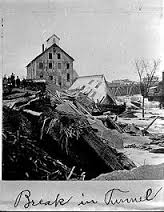
“Construction begins on a wooden apron to protect St. Anthony Falls. Mills depend on the falls for industrial power, and their owners hope the apron will stop its erosion and collapse. Floodwaters destroy this first attempt the following year. Collapses follow. It’s 1880 before a useful apron is completed.” *

The Eastman Tunnel once ran below the St. Anthony Falls, connecting Nicollet island with Hennepin Island. It’s collapse almost destroyed the utility of the falls for the milling industry. Congress gave the Army Corps of Engineers $50,000 to fix the falls by basically filling in the tunnel with concrete, and making a wooden apron. This attempt failed also, and it wouldn’t be until 1874 when a lasting apron would be built.**

Jesus, our life is a series of attempts, successes, and failures. Help us view failures as You do; teachable moments. Thanks that this failure to build an apron eventually led to a successful preservation of the utility of St. Anthony Falls and the milling industry, but at the cost of destroying its’ natural beauty.

Will You bless us again through the Falls and the Mississippi? Will You gift us to persevere today when our work is totally destroyed by forces beyond our control? Will You help us work in harmony with beauty and nature?
http://www.mnhs.org/about/dipity_timeline.htm
** https://www.esci.umn.edu/courses/1001/1001_kirkby/SAFL/WEBSITEPAGES/5.html

Standard