19th Century, Business, Economics, History, Industry, Minnesota, Native Americans, Politics, trade

1st Lumber Mills in MN 1848

history_franklinSteele

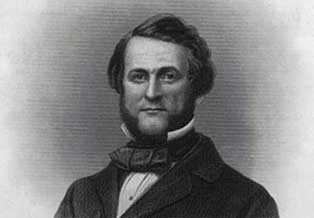
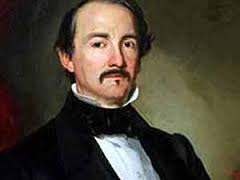
Pioneer businessman Franklin Steele builds a sawmill at the falls of Saint Anthony. By 1856, there are eight mills at the falls.*

May I sit with You and observe this chapter of life in my state? Mr. Steele came here through the invitation of the man who would become his brother-in-law; Henry Hastings Sibley, a prominent Minnesotan. He staked an advantageous claim on the east bank of the St. Anthony Falls. Soon, he established a partial dam, sawmills, and a crew upriver to supply him logs, and commence a successful business. **

Digging further, this is what I found:
“But Steele surreptitiously staked the first claim on the choicest land before sunrise on the first day of legal settlement.” *** Is there nothing new under the sun? Once again, a man becomes successful through an inside scoop, and bending the rules to his advantage. We, indeed, are people of mixed motives, bearing both good and bad fruit!

Will You forgive his offense to You in making an illegal claim? Will You forgive his offense to all parties affected in his day whether Native, immigrant, loggers, and sawyers? Will You restore the losses of Steele’s contemporaries?

Yet, we too sometimes exhibit the same heart as Steele; we try to grow beautiful things from ugly roots! We often esteem the shrewd, and shun those led by conscience. We are so in love with success stories that we brush past those whom our heroes stepped on and over in the process. Will You forgive us our “illegal claims” today?

Precisely because I am a man with a mixed up heart like Franklin, I am drawn to Your mercy! Through Your kindness, I can offer honest thanks for the accomplishments of others with on-again/off-again hearts. Thanks for providing ample waterpower in Minnesota! Thanks for the resources of wood! Thanks for Franklin Steele who put together an enterprise to use both for the betterment of Minnesota!

http://www.mnhs.org/about/dipity_timeline.htm
** http://en.wikipedia.org/wiki/Franklin_Steele
*** http://www.nps.gov/miss/learn/historyculture/upload/River_Ch_6.pdf

Standard
19th Century, Business, Economics, History, Logging, Minnesota, Native Americans, trade

Stillwater as Lumber Center 1844

local0509-Goodrich-JohnWEB-140x140

Maine lumberman John McKusick forms the Stillwater Lumber Company. Other New Englanders follow, making Stillwater the early center of Minnesota lumbering.*

May I watch this moment in 1844 with You? Can I sit with You on the east bank of the St. Croix bluff and take in the whole valley? I can practically smell the forest, and feel the calming flow of the St. Croix river.
On this day I remember to You the Ojibwe and Dakota nations that shared this land with us. Will You remember their open-handedness? I thank You for all, past present and future, who are blessed by this kindness.

The forests of this valley, and its’ proximity to such a wide river must have been an amazing discovery to lumbermen like McKusick. Huge trees could be harvested, rolled downhill, and floated to the sawmill. What prime real estate for the woodsman?!

May I thank You for Mc Kusick and the utility of these vast stands of timber? May we ponder the needs those woods supplied for that generation? Thank You for the hard, but good work provided through logging in that era.

As with almost any endeavor, with success comes competition. I know too little about the specifics of the competitive nature of these loggers in Stillwater, but relate to them as human who knows what it’s like to protect something valuable. It is easy to over invest in one’s work, to have our nose so close to the grindstone that we can’t see beyond it.

Will You forgive their fears of losing face, of being lesser? Will You forgive their offenses to You and each other through over harvesting, stealing logs, ignoring boundaries? Will You bless those who practiced happy competition, and enjoyed the camaraderie of Your woods?

Last thought, You present us with an odd paradox in our behavior; we often love what we harvest. Who loves the soil more than the farmer? Who loves ducks like their hunters? Who loves the woods like the logger? Who loves words like the writer?

Thank You for whatever it is we harvest now, or our future generations! May we humbly acknowledge You, and our dependence on Your resources. You commanded the Hebrews to not harvest up to the edges of their fields, but leave some behind so the needy would have food. Will You bless us to do this now and always, whatever our field or forest looks like?

Standard
19th Century, Business, Culture, History, livestock, maps, Minnesota, Native Americans, trade, Transportation

Red River Oxcart Trade 1840 to 1850

Unknown-11

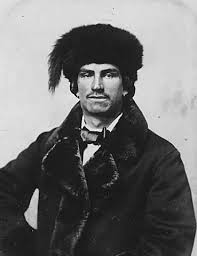
Métis families (formed by marriages between whites and Indians) take their furs from the Red River Valley to St. Paul in oxcarts. Long caravans of up to 200 carts travel from as far away as Winnipeg, Canada, making St. Paul one of the leading fur markets in the country from the 1840s to the 1860s.*

My first question, Lord, is who are the Metis people? Doing what any modern American would do when faced with something they haven’t encountered before I went straight to wikipedia, and found the following excerpt below.

“The Métis are the descendants of Indigenous Cree or Anishinaabe women who married French or Scottish fur traders during the early colonial period. They have a specific, unique culture. Most are found among the Michif-speaking peoples of the Red River region in modern ManitobaNorth Dakota, and Minnesota.[1] The Red River peoples are part of the same ethnic group as many of the Canadian Métis peoples. There is also a broader but limited use of the term to describe any people who descend from the united culture created by the intermarriage of various French and British fur traders and various Algonquian, Cree and other Native American groups intermarrying during the 17th, 18th and 19th centuries. This use would exclude from Métis people-hood those whose ancestries became mixed between these different ethnic groups in other settings or more recently than about 1870.” **

So now I have a place to begin my prayer; with at least an inkling of a back story of the Metis. God, I don’t really feel too prayerful tonight, but I’m willing to wait with You and see where it goes. Ok?

To begin, thank You that the Metis are Your people, and included in Your family. Thanks that You have watched over and led them for generations before their participation in the fur trade took place. Today I give your gratitude for the this era of the oxcart trail!

Next, I thank You that Metis marriages became an intersection between Scotch, Irish, French, Cree, Anishinaabe, and perhaps more nations of people! My late aunt, Ingrid Trobisch, an author and marriage counselor once told me, “Interracial marriages may be doubly difficult, but they are also doubly blessed.” I  commend  and honor these marriages that forged a new and unique culture from their culture of origin to You Good Father! Will you bless the Metis and all their future generations with the same forbearing spirit?

How interesting that, again, a people group becomes synonymous with a form of transportation: the Sami people of Finland the reindeer, the Arabs the horse, the Peruvians the llama, and the Metis the oxcart. All through history You have given us gifts and innovative thoughts that improve our lives. Thank You for these gifts. Will You bless those who rode these caravans, and continue to provide for their needs in the present and future? Will You cause us to pause as we drive I-94 west of Minneapolis, and remember who those who first blazed this road; the Metis?

Lord, I ponder what those in the future will think about us when the car is an antiquated beast. Will our interstates lead them somewhere, or will they cease to have purpose ? Will we be associated with our vehicles? In any case, I ask that You bless the future forms of transportation that may be discovered here in Minnesota, and that they would be inhabited by people who drive them to intersect with their neighbors as the Metis did.

*Note – PrayThroughHistory uses the timeline located for several years at the Minnesota Historical Society Web site, at this URL: mnhs.org/about/dipity_timeline.htm .  The current URL is www.dipity.com/Minnesota/History/Minnesota-History/ and only works if typed, not pasted, in browser. It is worth the effort!

** https://en.wikipedia.org/wiki/Métis


Standard
19th Century, Business, Economics, History, Industry, Intercession, Jesus, Minnesota

Timber industry begins in Minnesota 1839

6-11_0

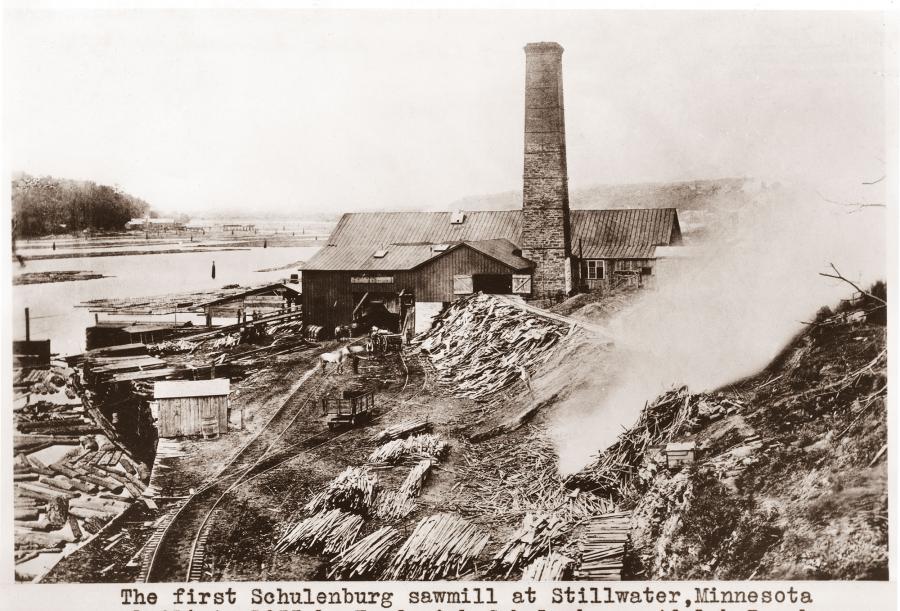
More than two-thirds of Minnesota is covered with trees when Minnesota’s first commercial sawmill is constructed at Marine on St. Croix–the beginning of Minnesota’s first industry.

On the east side of the Mississippi, a vast forest of pine and other evergreens stretches to the Canadian border. Many white pine along the St. Croix River are 200 feet tall and five feet in diameter.*

Jesus, thanks for our timber resources in Minnesota. Thank you for all who have, who are at present, or who will work in our forests in the future! Will You send your blessing into every place where Your Minnesota forests have gone: furniture, homes, barns, fences, etc.? Will You bless every recipient of Minnesota wood as You chop the roots of blame, and judgment, grudge and jealousy, envy and anger?

As you said in Romans 11:16b “…if the root is holy; so are the branches.” At present, will You forgive any worship of nature itself, and the lack of acknowledgement of to the Creator of the Woods? I’m guilty Lord too: we love stuff and use people instead of loving people and using stuff! Have mercy!

*Note – PrayThroughHistory uses the timeline located for several years at the Minnesota Historical Society Web site, at this URL: mnhs.org/about/dipity_timeline.htm .  The current URL is www.dipity.com/Minnesota/History/Minnesota-History/ and only works if typed, not pasted, in browser. It is worth the effort!

Standard
19th Century, Business, Culture, Economics, History, Intercession, Jesus, Leadership, Minnesota, State Government

American Fur Company 1833


images-6

Young Henry Sibley takes over the American Fur Company post at Mendota in 1834 and stays on to be a leader in building Minnesota. He will become Minnesota’s first territorial delegate to Congress and its first state governor–an indivisible part of the state’s history for more than 50 years.*


Thank you for the life of Henry Sibley, and his leadership role in this state. You have seen Sibley’s work and heart, will You guide this prayer? Will You give insight into the ramifications of this new role for Sibley as head of this important company so long ago?


I do not know how conscientious or just he was, or if he favored the American Fur Company in his civil leadership roles. Lord, I just want to acknowledge that when I have power, it is tempting to favor those with whom I have the strongest trust and relationship. Will You forgive me this sin?

Forgive any favoritism, or judgments against those favored by Henry Sibley, the American Fur Company, and the government of Minnesota? Will You forgive us as Minnesotans’ from our savior-complex? Sometimes we shield those we favor from learning by the cause and effect of their actions. God, these are some contemporary examples of our civic favoritism: >“This company (or bank) is too big to fail.” >”We need a new Vikings stadium.” >”Our state can pay for equality of outcomes.” You are the Savior of Minnesota! Cleanse us from 1833 to now of our favoritism.

Why is this offensive to You, Just One? Is it because misuse of authority exhibits the limitations of our trust for our fellow man, or their Maker? Do we deny those around us that they also have Your inalienable right of choice?

Of course, there are times when you authorize and condone our exercise of judgment on behalf of others. For example, a mother must choose, moment by moment, what is best for the care of her newborn child. Yet if this same woman were to be constantly advising her adult child, it would be a sick relationship, and probably feel quite smothering.

In the same way, will You bless the future of all leaders of this state with Your proper balance of authority? May they be blessed with strength balanced by tenderness! May they neither fear the loneliness of leadership, nor the humility that nurtures future leaders. Amen!


Standard
19th Century, Business, Economics, Exploration, Health, History, Minnesota, riverboat, Technology, Transportation

First Steamboat at Ft. Snelling 1823

images-3

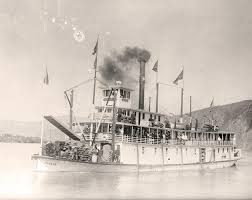
The “Virginia” is the first steamboat to reach Fort Snelling. Needed supplies are missing from the cargo, though the boat does carry the umbrella-wielding Italian count Giacomo Beltrami.*

Today’s meditation is on the relevance of the arrival of steamboats in the state of Minnesota. For the author, the practical is spiritual, and often the super-normal is the basis of the super-natural. Therefore, if I want to hear what my Good Father is saying to me today, I may have to slow my thoughts to the speed of a paddle-wheeler headed upstream. That said, below is a succinct general history to amplify this event:

“As early as the 17th Century a handful of explorers, hardy French voyageurs, and missionaries had ventured into the environs of the Upper Mississippi River Valley. Through a variety of relationships that included cooperation, intermingling, and competition with the native inhabitants of the region, several temporary encampments and forts had been established to support the lucrative fur trade. But most historians agree that nothing changed the frontier as quickly as steam transportation.

In April, 1823 the small steam packet Virginia backed out into the channel of the Mississippi from the St. Louis levee to become the first boat to ascend the Father of Waters into what would later become the Minnesota Territory. This remarkable journey was chronicled by Giacomo Constantine Beltrami, the Italian explorer who went on to play an important role in Minnesota history.  A Kentucky family en route to the lead mines of southern Wisconsin on board the 118-foot vessel represented the first trickle of what would soon become a deluge of immigration. Also on board the Virginia for this historic trip was Captain William Clark of the famed Lewis and Clark Expedition of 1805.

Imagine the contrast of traveling in the relative ease and comfort of this sturdy little boat given his experience of just a few years earlier.” **

There is much here to ponder: the new technology of the steamboat, how this technology changed history, and what timeless truths can we grasp from it? Lord of Mighty Rivers hear my simple thoughts and prayers.

Strong Creator, thank You for the scientific properties of water. It’s truly amazing! It’s like Your character, it can appear as ice, liquid, or steam, yet it is always the same substance. You put it into Your creative children to harness this transitional power for the betterment of humankind. Which of their ancestors would imagine that one day their boiling tea kettle would power massive loads upstream against the might of the Mississippi?

Here is my first confession and petition. Lord forgive our lack of imagination, both for ourselves, and for the dreams of others. May we practice to spur this generation to dream, and to the enjoyable discipline necessary to their fulfillment. May we be a voice of encouragement that pushes others to defy the current! Thank You for the symbolic value of the lonely Virginia moving slowly to its destination!

Next, new technology often makes the impossible possible, and the impractical practical. Again, who in the 18th century would think that their steaming iron maple syrup pot could actually become a boiler? And that that boiler would have the power to move unthinkable payloads up and downstream? And that those payloads would enable trade and previously unimaginable lifestyle for the average American?

We, in the 21st century, have the luxury to throw away old socks and t-shirts. Cotton products have become so accessible they are practically disposable. We do not know or remember that our ancestors may have experienced the incredible comfort of cotton articles from the South for the first time because of this steamboat’s success. Conversely, those in the South were likely amazed at the beautiful white flour Minnesota could send them so affordably.

Lord, we don’t often pause to remember what it’s like to do without. We do not see the masterful design of a plain white cotton t-shirt, or ponder that in past generations, it was a garment fit for a king. Or that the greatest chefs of Paris were astounded at the silky wheat flour from some unknown place called Minnesota. It was “Incroyable”!

Incredible Dreamer, thanks that You are not offended by our inventions! Thanks that this steamboat enabled Beltrami to better share his discoveries with a much wider audience. Ultimately, thanks that You take pleasure in our discoveries! May this river valley yield new discoveries and discoverers who make the impossible possible! (Just like You!)

*Note – PrayThroughHistory uses the timeline located for several years at the Minnesota Historical Society Web site, at this URL: mnhs.org/about/dipity_timeline.htm .  The current URL is www.dipity.com/Minnesota/History/Minnesota-History/ and only works if typed, not pasted, in browser. It is worth the effort!

** http://www.winonahistory.org/sesqui/steam/


Standard