19th Century, education, Exploration, Geology, History, Intercession, Jesus, Minnesota, Native Americans, Natural Science

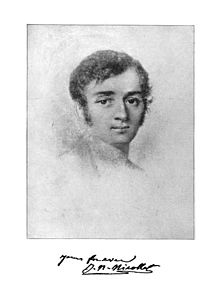
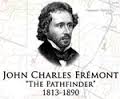
Nicollet and Fremont visit Pipestone quarries 1838

Nicollet

Nicollet

Fremont

Fremont

While on expedition, Nicollet and John Fremont camp at the Pipestone quarries (in what is now Pipestone National Monument in Pipestone County) and engrave their initials near the Winnewissa Falls, leaving a lasting record of their presence there.*

God, since when did graffiti become history? It seems we are unaware of our actions today on future generations. Yet historians and achaeologists surely appreciate these moments of civil disobedience. What is literally scrawled on the walls of the present gives us a much more colorful picture of what happened in the past. Thanks for graffiti artists!

More specifically, thank You for moving Nicollet and Fremont to explore and physically record their attendance to Your pipestone quarry. All on earth belongs to You, but You move some of us to wonder, to travel, to seek out the wonders You have made. It is only my opinion, but I sense a smile on Your eternal face when our curiosity moves us outward, beyond, and into the the unknown!

Thanks for the blessings of pipestone and its amazing uses. Its physical properties made it a natural treasure for past and present minnesotans. Will You bless the quarries at Pipestone! May we continually discover incredible uses for this resource, and use it wisely. Will You free the quarries from the bitter judgments between all relevant parties over its use/misuse?

*Note – PrayThroughHistory uses the timeline located for several years at the Minnesota Historical Society Web site, at this URL: mnhs.org/about/dipity_timeline.htm .  The current URL is www.dipity.com/Minnesota/History/Minnesota-History/ and only works if typed, not pasted, in browser. It is worth the effort!

Standard
19th Century, Exploration, Geology, History, Minnesota, Native Americans

Schoolcraft discovers the source of the Mississippi River 1832

Ozawindib (“Yellow Head”) and other Ojibwa guide Henry Rowe Schoolcraft as he maps the source of the Mississippi river. He calls the lake where the great river begins “Itasca.”*

Thanks for the blessing of this event on all Minnesotans’! Thanks for men like Schoolcraft who recorded the knowledge of men like Ozawindib and the other Ojibwe guides. May there be recognition and appreciation of the importance of both kinds of men.

Thank you, Father, that Ozawindib chose to be a guide in Your image. He offered his expertise, perhaps not knowing the import of his knowledge to the outer world. He knew where the Mississippi started!?

In this day, and for future Minnesotans I ask this blessing of You great Guide of the Universe: may we offer our piece of knowledge and expertise back to You, and to others. Will You multiply it?

*Note – PrayThroughHistory uses the timeline located for several years at the Minnesota Historical Society Web site, at this URL: mnhs.org/about/dipity_timeline.htm .  The current URL is www.dipity.com/Minnesota/History/Minnesota-History/ and only works if typed, not pasted, in browser. It is worth the effort!

Ozawindib

images-5

Standard
19th Century, Exploration, government, History, Minnesota

Fort Snelling Completed

ft_snelling_sm

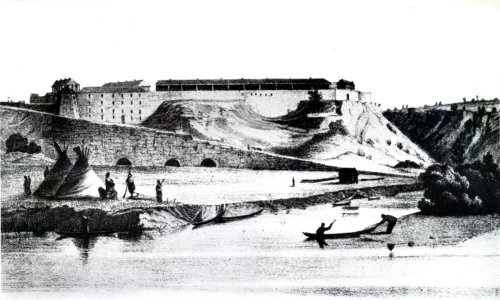
In 1819, the 5th Regiment of Infantry arrived at the junction of the Mississippi and Minnesota Rivers to build the northwest link in this chain of forts and agencies. Here, where traffic could be controlled on two major rivers, Fort Snelling was completed in 1825.*

Lord, thank You for the establishment of order. Ft. Snelling was established to maintain order of our government. Thank You for the Fort’s benefits of regulating trade on the rivers, but forgive any offenses of overstepping its Constitutional bounds. May any injustices starting with the Fort be ended now by Jesus authority. Amen.

*Note – PrayThroughHistory uses the timeline located for several years at the Minnesota Historical Society Web site, at this URL: mnhs.org/about/dipity_timeline.htm .  The current URL is www.dipity.com/Minnesota/History/Minnesota-History/ and only works if typed, not pasted, in browser. It is worth the effort!

Standard
19th Century, Business, Economics, Exploration, Health, History, Minnesota, riverboat, Technology, Transportation

First Steamboat at Ft. Snelling 1823

images-3

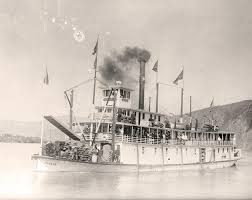
The “Virginia” is the first steamboat to reach Fort Snelling. Needed supplies are missing from the cargo, though the boat does carry the umbrella-wielding Italian count Giacomo Beltrami.*

Today’s meditation is on the relevance of the arrival of steamboats in the state of Minnesota. For the author, the practical is spiritual, and often the super-normal is the basis of the super-natural. Therefore, if I want to hear what my Good Father is saying to me today, I may have to slow my thoughts to the speed of a paddle-wheeler headed upstream. That said, below is a succinct general history to amplify this event:

“As early as the 17th Century a handful of explorers, hardy French voyageurs, and missionaries had ventured into the environs of the Upper Mississippi River Valley. Through a variety of relationships that included cooperation, intermingling, and competition with the native inhabitants of the region, several temporary encampments and forts had been established to support the lucrative fur trade. But most historians agree that nothing changed the frontier as quickly as steam transportation.

In April, 1823 the small steam packet Virginia backed out into the channel of the Mississippi from the St. Louis levee to become the first boat to ascend the Father of Waters into what would later become the Minnesota Territory. This remarkable journey was chronicled by Giacomo Constantine Beltrami, the Italian explorer who went on to play an important role in Minnesota history.  A Kentucky family en route to the lead mines of southern Wisconsin on board the 118-foot vessel represented the first trickle of what would soon become a deluge of immigration. Also on board the Virginia for this historic trip was Captain William Clark of the famed Lewis and Clark Expedition of 1805.

Imagine the contrast of traveling in the relative ease and comfort of this sturdy little boat given his experience of just a few years earlier.” **

There is much here to ponder: the new technology of the steamboat, how this technology changed history, and what timeless truths can we grasp from it? Lord of Mighty Rivers hear my simple thoughts and prayers.

Strong Creator, thank You for the scientific properties of water. It’s truly amazing! It’s like Your character, it can appear as ice, liquid, or steam, yet it is always the same substance. You put it into Your creative children to harness this transitional power for the betterment of humankind. Which of their ancestors would imagine that one day their boiling tea kettle would power massive loads upstream against the might of the Mississippi?

Here is my first confession and petition. Lord forgive our lack of imagination, both for ourselves, and for the dreams of others. May we practice to spur this generation to dream, and to the enjoyable discipline necessary to their fulfillment. May we be a voice of encouragement that pushes others to defy the current! Thank You for the symbolic value of the lonely Virginia moving slowly to its destination!

Next, new technology often makes the impossible possible, and the impractical practical. Again, who in the 18th century would think that their steaming iron maple syrup pot could actually become a boiler? And that that boiler would have the power to move unthinkable payloads up and downstream? And that those payloads would enable trade and previously unimaginable lifestyle for the average American?

We, in the 21st century, have the luxury to throw away old socks and t-shirts. Cotton products have become so accessible they are practically disposable. We do not know or remember that our ancestors may have experienced the incredible comfort of cotton articles from the South for the first time because of this steamboat’s success. Conversely, those in the South were likely amazed at the beautiful white flour Minnesota could send them so affordably.

Lord, we don’t often pause to remember what it’s like to do without. We do not see the masterful design of a plain white cotton t-shirt, or ponder that in past generations, it was a garment fit for a king. Or that the greatest chefs of Paris were astounded at the silky wheat flour from some unknown place called Minnesota. It was “Incroyable”!

Incredible Dreamer, thanks that You are not offended by our inventions! Thanks that this steamboat enabled Beltrami to better share his discoveries with a much wider audience. Ultimately, thanks that You take pleasure in our discoveries! May this river valley yield new discoveries and discoverers who make the impossible possible! (Just like You!)

*Note – PrayThroughHistory uses the timeline located for several years at the Minnesota Historical Society Web site, at this URL: mnhs.org/about/dipity_timeline.htm .  The current URL is www.dipity.com/Minnesota/History/Minnesota-History/ and only works if typed, not pasted, in browser. It is worth the effort!

** http://www.winonahistory.org/sesqui/steam/


Standard
19th Century, Exploration, History, Intercession, Jesus, Minnesota, Native Americans

Snake River Fur Post 1804

images-2


British fur trader John Sayer, a partner in the North West Company, leads a crew of 15 men up the Snake River. They build a fur post, trade with the Ojibwe over the winter, and leave in the spring with hundreds of furs.*

Jesus, thank you for the blessings of trade to Minnesota through this post. Will You forgive any offenses here through John Sayer, and redeem any future interactions with the Ojibwe? By Your authority, I want to bless the Ojibwe people at Snake River, their generations, and their dwellings! Lord help them fulfill the wonderful destiny You have in mind for them!

*Note – PrayThroughHistory uses the timeline located for several years at the Minnesota Historical Society Web site, at this URL: mnhs.org/about/dipity_timeline.htm .  The current URL is www.dipity.com/Minnesota/History/Minnesota-History/ and only works if typed, not pasted, in browser. It is worth the effort!

Standard
18th Century, Culture, Exploration, History, Intercession, Jesus, Minnesota

Carver Winters in Minnesota 1766 to 1767  

Jonathan Carver

Jonathan Carver


“Jonathan Carver, a former shoemaker from Massachusetts who claims to be a mapmaker, spends a winter in Minnesota as part of a western expedition. His mostly plagiarized account of his travels becomes a best seller in Europe. The book, “Travels through the Interior Parts of North America in the Years 1766, 1767, & 1768″, will be read in five different languages.” *

What a thoroughly human story: a man attaining significance mostly by borrowing the work of others! Father, I acknowledge the selfish ambitions of my heart! I too often strive for recognition, and forget that the King of the Universe has already accepted me; warts and all!!!

Lord I want to remember to You the hurts of those who Carver plagiarized. Will you free us from any bitterness resulting from his betrayal or their betraying in return through unforgiveness? Thank you for the good resulting from these stories. Thank you that You listen to our stories in spite of our glaring hypocrisies!

*Note – PrayThroughHistory uses the timeline located for several years at the Minnesota Historical Society Web site, at this URL: mnhs.org/about/dipity_timeline.htm .  The current URL is www.dipity.com/Minnesota/History/Minnesota-History/ and only works if typed, not pasted, in browser. It is worth the effort!

Standard
18th Century, Catholic, Culture, Exploration, History, Intercession, Jesus, Minnesota, Native Americans, Transportation

La Vérendrye & Grand Portage Trail 1731

Google Images

Google Images


“Using a map made on birch bark by Assiniboin guide Ochagach, Pierre La Vérendrye follows the Grand Portage trail from Lake Superior to Lake of the Woods. It is not a way to the western sea, as he has hoped, but fur traders will follow this trail for the next 100 years.” *

Sometimes the easy way is the hard way. A portage is an overland pathway that avoids dangerous rapids or falls for those traveling by river. Ochagach likely thought that the “western sea” that La Verendrye sought was Lake Winnipeg. Regardless of his disappointment, La Verendrye and the voyageurs respected and appreciated the wisdom in taking this 8.5mile trail past the dangers of the Pigeon River.

We often balk at the delays of modern life, even though we have such incredible technologies that serve our whims and convenience. Will You make us like Ochagach, so that we can see the dangers of convenience in our lives? Will You make us like La Verendrye, that we may heed the warnings of our friends to not try to foolishly “shoot the rapids?”

Father, thanks that You lead us on our way. Thanks that You delight in sharing your mysteries with us. Bless the Assiniboin people, Ochagach, and P. La Verendrye for the gift of this trail. Thank you that these two men showed trust to each other! Thanks for the lessons of the portage!

**Note – PrayThroughHistory uses the timeline located for several years at the Minnesota Historical Society Web site, at this URL: mnhs.org/about/dipity_timeline.htm .  Currently the timeline seems to be unavailable.

Standard
17th Century, Catholic, Culture, Exploration, History, Intercession, Jesus, Minnesota

Hennepin publishes book about his travels 1683 

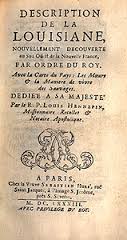
UnknownHennepin exaggerates his exploring feats in a book he writes after returning to France. In one colorful chapter he romanticizes St. Anthony Falls, turning it into a dream destination for adventure travelers. Hennepin becomes famous as his book is translated and read throughout Europe.

Hennepin writes that the falling water “of itself is terrible, and has something in it very astonishing.” Printed in multiple languages and editions, the book’s original title translates to Description of Louisiana: newly discovered to the southwest of New France, by order of the King. With a map of the land: the customs and the way of life of the natives. Dedicated to His Majesty by the R.P. Louis Hennepin, Franciscan missionary and apostolic notary.*

Thank you for choosing Father Hennepin to relay this story to France and the Continent! Often, You choose a spokesman who is imperfectly perfect for the job. In this way, we the recipients automatically relate to the humanity of the message.

Where Hennepin may have exaggerated his adventures; will You forgive him? Will You also forgive those of us like him who may embellish the truth because we lack the trust that the straight story is enough? Will You credit him with the fortitude to put pen to paper, and at least attempt to record what he experienced?

Lord, we are trapped at times by the limitations of words, and especially we historians who wrestle with tone and style. If we insert our voice into historical writing, we may be taken as “too passionate”, or “not impartial.” If we attempt to remain a transparent, neutral reporter, our personality still can betray us through our unspoken biases, our framing of events, and even the limitations or vastness of our vocabulary!

Will You bless those, like Hennepin, who may record our history for those a continent away? Will You give humility to reader and writer to appreciate the limitations of one human’s perceptions? Will You give present and future generations of explorers the bravery to simply write: whether ornamented or truncated?

Lord Jesus, thanks for Your book! Thanks for the power of story to connect head and heart! Will You give power to the stories of Minnesota, and help us to know each other better?

*Note – PrayThroughHistory uses the timeline located for several years at the Minnesota Historical Society Web site, at this URL: mnhs.org/about/dipity_timeline.htm .  Currently the timeline seems to be unavailable.

Standard
17th Century, Catholic, Culture, Exploration, France, History, Intercession, Minnesota, Native Americans

Hennepin at Falls of St. Anthony 1680  


Source:Google Images

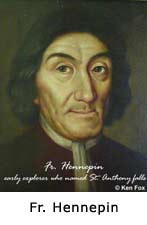
“Early explorer who named St. Anthony Falls” copyright Ken Fox


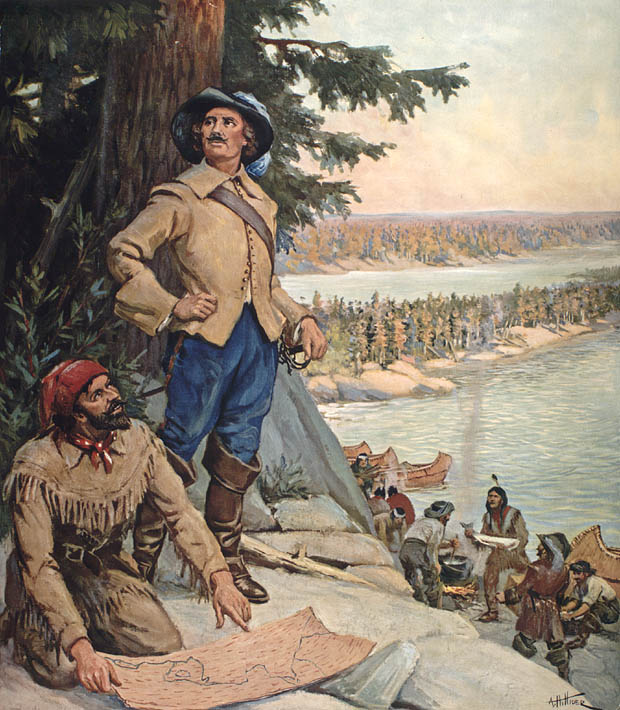
“Louis Hennepin, a missionary with the La Salle expedition in Illinois, is sent up the Mississippi to explore the country. The Dakota stop him and his two companions and take them to a village near Lake Mille Lacs. While Hennepin is with the Dakota, he sees a great waterfall on the Mississippi and names it after his favorite saint–Saint Anthony.” *

Lord, thanks that You position us to encounter Your mystery! I don’t know if Hennepin was stopped by force or friendliness, but thank You that You moved him to see the Falls, and the Dakotas to lead him! What a gift these Dakotas’ shared with a total stranger?! What a generosity of spirit! Will You remember their willingness to share the findings of their exploration? Release us from any false judgments or assumptions, Hennepin to Dakota, or vice versa, that stem from this event. Release Your blessings on both groups; the explorers and first residents of Minneapolis, Minnesota. Amen.

*Note – PrayThroughHistory uses the timeline located for several years at the Minnesota Historical Society Web site, at this URL:mnhs.org/about/dipity_timeline.htm .  Currently the timeline seems to be unavailable. I am hopeful that it will be back up in the future, as it was a valuable, user-friendly tool for anyone wishing to explore Minnesota history.

Standard
17th Century, Exploration, France, History, Intercession, maps, Minnesota, Native Americans

Allouez Creates Map of Lake Superior 1671

Vincenzo_Coronelli_Partie_occidentale_du_Canada_1688

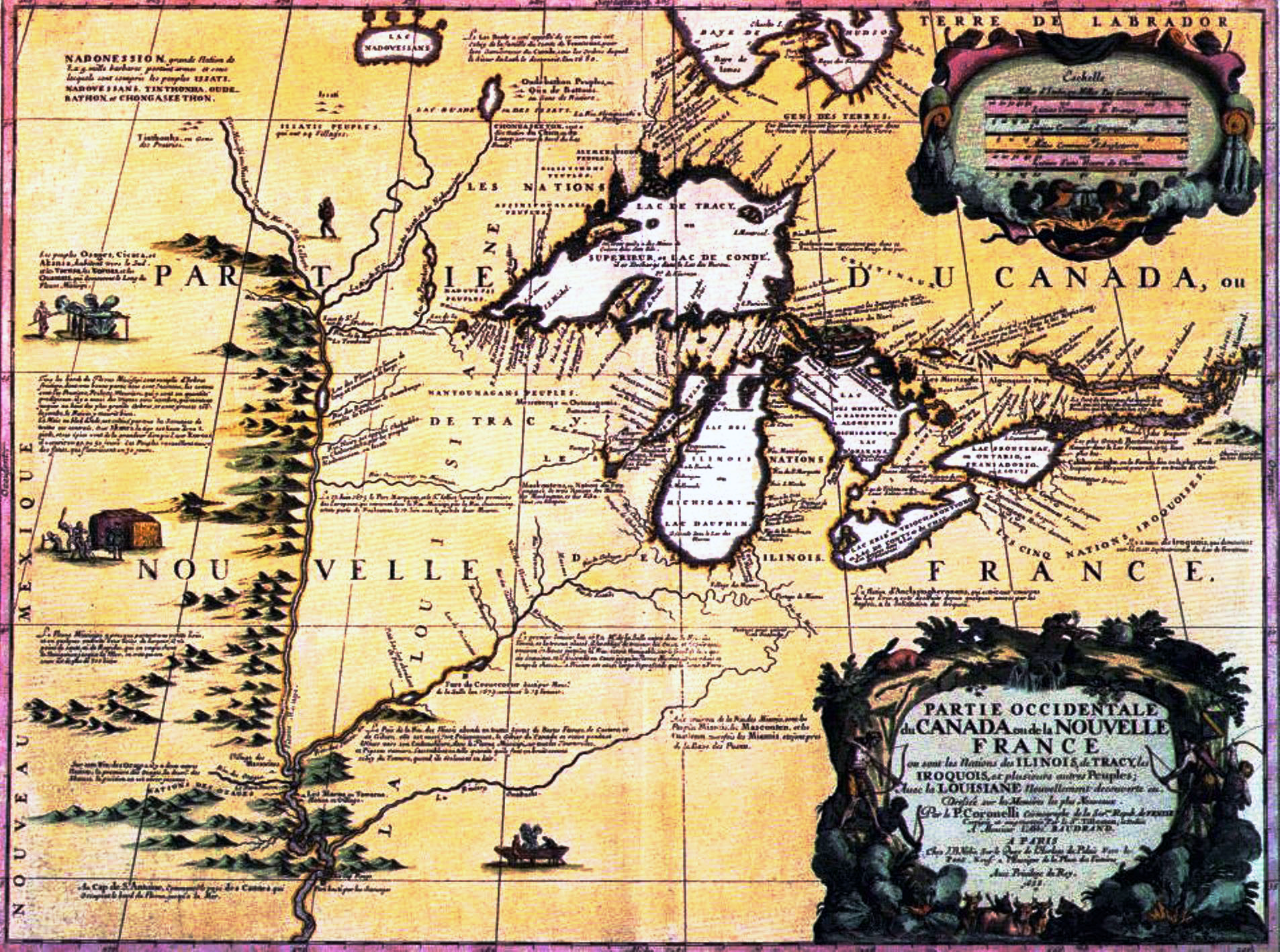
“Partie Occidentale du Canada ou de la Nouvelle France ou sont les Nations des Ilinois, de Tracy, les Iroquois, et Plusieurs autres Peuples; avec la Louisiane Nouvellement Decouverte etc. . . . 1688” Vincenzo Maria Coronelli / Jean-Baptiste Nolin. raremaps.com


“Claude Allouez, a missionary on Madeline Island in the 1660s, explores the western and northern shores of Lake Superior. In 1671, he produces one of the best early maps of the lake, indicating the first European awareness of Minnesota.” *

Lord Jesus, thank You that You are the Way! Thank You for the roadmap of forgiveness that restores broken hearts and relationship! Thank You for the discipline of map-making and bless Allouez, his generations, and dwellings for this gift! Will You bless all future Minnesotans who are committed to showing us the way?

*Note – PrayThroughHistory uses the timeline located for several years at the Minnesota Historical Society Web site, at this URL: mnhs.org/about/dipity_timeline.htm .  Currently the timeline seems to be unavailable. I am hopeful that it will be back up in the future, as it was a valuable, user-friendly tool for anyone wishing to explore Minnesota history.

Standard