20th Century, Agriculture, government, Governors, History, Intercession, Judgment & Counter-Judgment Cycle, Minnesota, omnipresent history, Politics, Republican, Uncategorized

Christianson Becomes Governor

Unknown

January 6, 1925

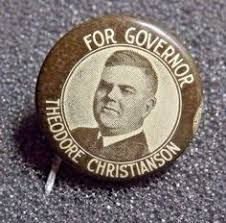
“Theodore Christianson takes office as the state’s 21st governor.” *

Sorry Lord! Christianson is another Minnesota Governor that I have no recollection of, but I come prepared with a brief backstory below.

“Theodore Christianson, the twenty-first governor of Minnesota, was born in Lac Qui Parle Township, Minnesota on September 12, 1885. His education was attained at the University of Minnesota, where he earned an undergraduate degree in 1906 and a law degree in 1909. After establishing a successful legal practice in Dawson, Christianson became the owner and publisher of the Dawson Sentinel. He entered politics in 1915, serving as a member of the Minnesota House of Representatives, a position he held ten years. He next secured the Republican gubernatorial nomination, and was elected governor by a popular vote in November 1924. He was reelected to a second term in 1926, and to a third term in 1928. During his tenure, a crime commission was formed, as well as a commission of administration and finance. Also, state expenditures were reduced; taxes were controlled; and state government was restructured. After completing his term, Christianson left office on January 6, 1931. He continued to stay politically active, serving as a member of the U.S. House of Representatives, a position he held from 1933 to 1937. Governor Theodore Christianson passed away on December 9, 1948, and was buried in the Sunset Memorial Cemetery in Minneapolis, Minnesota.**

Governor Christianson, a.k.a. “Tightwad Ted”,  was a very fiscally conservative Republican who limited the power of government in favor of the individual. In this era, there were many fears about the insider capitalism of Wall Street, and the destabilizing reactions of sabre rattling socialists. He gave mostly agrarian Minnesotans a chance to regroup and recoup after the personal and property losses of WWI. (Those who lost sons to the war also lost heirs to their farms, as well as their most capable and loyal farm hands.)

So, here we give You thanks for “Tightwad Ted”. We thank You for his accountability and respect for the resources of Minnesotans. Theres a ‘time to scatter and a time to gather’ and we pause to remember Governor Christianson as a man who gave respite and a return to normalcy and simplicity to his constituents. Will You bless his heirs, both familial and governmental, who accept that there is season that the most reasonable course forward is to tighten the belt? 

In this, we give You honor for taking us through seasons scarcity and plenty. We thank You for the eternal promise to be our Jehovah Jireh. We ask Your forgiveness where we have forgotten You; either through the sins of easy living, or sins of destitution. Have mercy on Minnesotans’ past, present, and future failure to give You and our neighbors the free gift of gratitude. Amen.

Keep deception and lies far from me, Give me neither poverty nor riches; Feed me with the food that is my portion, That I not be full and deny You and say, “Who is the LORD?” Or that I not be in want and steal, And profane the name of my God. Proverbs 30:8,9 NASB

PS. Will You continue to forgive the cycle of judgment & counter-judgment between the parties and political groups of this age? Perhaps the Republicans forgot Your principles of community because it came through a Socialist  or DFL messenger? Maybe the Socialists and Democrats failed Republicans and Your urgings to personal responsibility through lumping them in with Wall Street, and assumptions that they were against Main Street? Will You forgive all the judgments and counter-judgments of these parties committed then as well as their fruits poisoning the present? Will You make us a State of “tightwads” with our disparaging thoughts, words, and hearts against our neighbor?

* http://www.mnhs.org/about/dipity_timeline.htm
**https://www.nga.org/cms/home/governors/past-governors-bios/page_minnesota/col2-content/main-content-list/title_christianson_theodore.html


Standard
20th Century, Governors, History, Intercession, Judgment & Counter-Judgment Cycle, Lutheran, Minnesota, omnipresent history, Uncategorized

Preus Becomes Governor 1921

JacobPreus

January 5, 1921

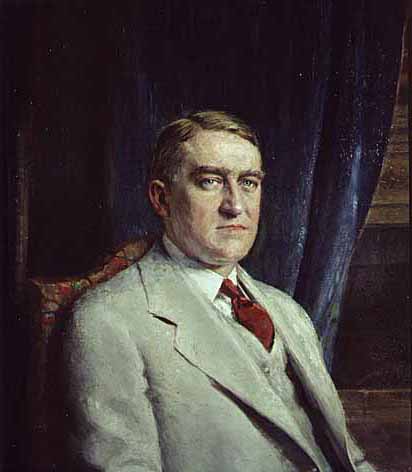
“J. A. O. Preus takes office as the state’s 20th governor.” *

When a man’s ways are pleasing to the Lord, he makes even his enemies live at peace with him. Proverbs 16:7 NIV

“When Preus first ran for governor in 1920, he adamantly opposed the Farmer-Labor Party, a coalition of discontented farmers and laborers who had formed a new political organization. The party, he declaimed, represented “socialism – a political cult that would destroy the principles of private property, our religion, and our homes.”

Despite his reservations about the Farmer-Labor philosophy, Governor Preus nonetheless encouraged the legislature to meet some of the farmers’ demands by broadening the legal powers of cooperatives, making low-interest loans available through the Rural Credit Bureau, and creating the Department of Agriculture. Preus also demanded higher taxes from the owners of ore-rich mines on the Iron Range, expanded highway construction, and improved equal rights and election procedures. His political savvy, combined with an apparent desire to correct inequities, made Minnesota’s twentieth governor a surprisingly prolific reformer.

After completing his second term, Preus became an insurance executive in Chicago. He returned to Minneapolis in 1958 and served until his death as board chairman of Lutheran Brotherhood, a fraternal insurance society he had co-founded in 1917. He also founded the Aid Association for Lutherans, which consolidated in the 1990s to become Thrivent Financial for Lutherans.”**

The actions of Governor Preus are a testimony of his character. He saw the people behind the labels of politics, and helped them. He listened to those whose ideas were diametrically opposed to his concepts of civic order, economic laws, and even his faith. He loved his political enemies, and did good to those who opposed him.

Lord of Governors, G-d of all Farmers and Laborers, will You bless the personal and figurative heritage of Governor Preus? Will You raise up wise elected officials, like Preus, who see their critics as You do; human beings with thoughts and needs worthy of respect and careful consideration? 

Will You have mercy on our heritage of bitter partisanship? We have loved our parties more than our neighbors! We have perpetuated a circle of judgment from this era to the present: the Progressives to the DFL and Republicans, the DFL to the Republicans and Progressives, and the Republicans to the Progressives and the DFL? We have defied aspects and reflections of Your image as expressed through our parties. Though imperfect and inconsistent, they often encapsulate our good will towards our neighbor. Will You bless the real, the good, the faithful and true within our system?

Will You bless us in our co-ops? Will You bless our Rural Credit Bureau and Department of Agriculture and family farms? Will You give us Your balanced view of taxation; may we adequately fund government while not punishing the rich, poor, or in between? Will You bless our infrastructure and those who build it? Will You bless the integrity of our elections and counting votes?

Will You forgive our judgments of the Lutheran Church of Minnesota? Will You bless its’ heritage of doing good for Minnesota’s citizens? Will You bless the heart of Martin Luther expressed through Governor Preus and the Lutheran Brotherhood?

* http://www.mnhs.org/about/dipity_timeline.htm
**https://en.wikipedia.org/wiki/J._A._O._Preus


Standard
20th Century, Governors, History, Minnesota, omnipresent history, Politics, Prayer, State Government

Burnquist Becomes Governor 1915

J.A.A. Burnquist

December 30, 1915

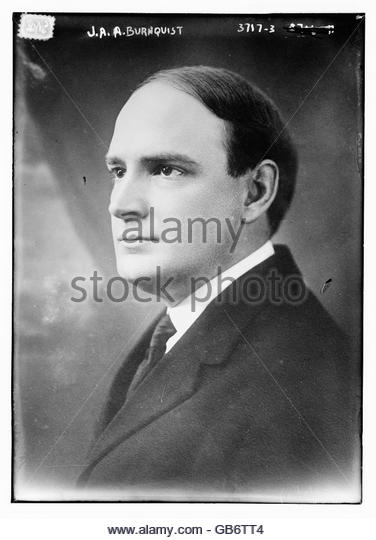
“J. A. A. Burnquist takes office as the states’ 19th governor upon the death of Governor Winfield S. Hammond.” *

Below are a few tidbits from our state’s archive underscoring the career of Governor Jospeh Alfred Arner Burnquist’s career as a statesman. 

“When Governor Hammond died on December 30, 1915, Burnquist

became the 19th governor of Minnesota. Although many people referred to 36-year-old Burnquist as “just a youngster,” he was the successful candidate for governor in 1916, and was continued in office until 1921. Governor Burnquist recommended and worked for many important laws which are still extant.”**

“Let it be also noted that he had the second longest career as Attorney General at sixteen years and one day. He listened to dissent and “always respected the right of each member of his staff to have an opinion and to hold to it” resulting in “many sound opinions.” **

So we remember these characteristics to You, Eternal Governor. We give thanks for Burnquist’s leadership, especially the example of listening to objections. Thank You that we are blessed by leaders who will listen and consider voices of objections. Thank You that his leadership, spanning the breadth of WWI, gave solidity to the peoples of Minnesota during the trials of war. 

We ask forgiveness of our failures, then and today, of hearing our neighbors’ voice, and more importantly, Your voice, that is prompting us to reconsider our position. Will You forgive us making an idol of our opinion? We have failed You and our neighbors by breaking relationship by closing our ears! Have mercy!

Will You remake us to be both an opinionated and considerate State? Will You bless our leaders to grow in discernment? May we neither betray our heart, or the hearts of those we lead. May our future be blessed with: accommodating, magnanimous, sympathetic, complaisant, and kindly decisions and judgments. Amen!

* http://www.mnhs.org/about/dipity_timeline.htm
**https://www.leg.state.mn.us/archive/LegDB/Articles/11509LMTribute.pdf


Standard
20th Century, Democrat, Faith, Governors, History, Intercession, Judgment & Counter-Judgment Cycle, Leadership, Minnesota, omnipresent history, Politics, Prayer, Social Studies, State Government

Governor Hammond Dies in Office 1915

Unknown

December 30, 1915

“Governor Winfield S. Hammond dies only eight months after taking office, when he suffered ptomaine poisoning on a trip south and died of a stroke in a little bayou town in Louisiana.” *

Governor Hammond was “a staunch Democrat in Republican community”, namely, the city of Mankato and Watonwan County. His ambitions politically were to minimize the bureaucracy of our state government, and eliminate waste. He achieved his political office with bipartisan support. **

What draws me to his story today is that he lived as a political minority in his hometown, yet achieved the highest post of leadership in the state. Politics, both in his era and the present, is more often a game of division than multiplication. The effects of partisanship, past and present, often turns friend against friend, spouse against spouse, and family against family.

What is Your wisdom for us in this, King of Kings? Each day, each moment, we are offered choice by You; will we make relationship, or break relationship? Daily You offer us this insight:

“Hear, O Israel, the Lord our G-d, the Lord is One.” Deuteronomy 6:4***

On the personal level, we can have a thriving connection with someone who disagrees with us. We often are married to such a person, work daily with them, or live nearby. We know that person so well, and love them, so we choose to agree to disagree in select areas for the sake of relationship.

Yet when it comes to politics, and its seasons of heated rhetoric, we allow our disagreements over knowledge to supersede our relational “knowing”. Why is this? Why does information trump partnership?

Eternal Father, have mercy on this condition, both in Hammond’s era and the present. We have asserted our superior knowledge against our resolve to continue relating in the context of relationships. We have broken faith with each other over the letters “D” or “R”.

Will You have mercy on on us? Will You help us to “love our enemies”? Will You especially give us grace for our beloved enemies; members of our own household whom we cannot reach agreement?

We offer thanks for Governor Hammond, and his propensity to listen and unite with his opponents. Will You bless him, his progeny, and those who work and especially listen to those across the aisle? Will You fulfill his incomplete visions to create a responsive system of leadership in Minnesota? Will You overcome the acceptance of faction and partisanship as a necessity for the civic leadership of our society? Will You replace knowledge with knowing, and make us one people? Amen!

* http://www.mnhs.org/about/dipity_timeline.htm

**https://en.wikipedia.org/wiki/Winfield_Scott_Hammond

***http://biblehub.com/deuteronomy/6-4.htm


Standard
20th Century, Faith, Governors, History, Minnesota, omnipresent history, Politics, Republican, State Government

Eberhart Becomes Governor 1909

Unknown

September 21, 1909

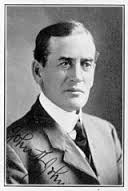
“Adolph Olson Eberhart takes office as the state’s 17th governor upon the death of Governor John A. Johnson. Eberhart was subsequently elected twice on his own merits.” *

It’s a timeless challenge to any society, during any period in human history, to change their leaders and maintain a continuity of authority. When a sibling stands in for mom or dad, they usually aren’t received with the same respect. The same goes for an anonymous lieutenant governor, Eberhart, suddenly thrust into prominence.

Events like these seem to underscore the importance of relationship and authority. We give our allegiance more easily to those whom we know. It seems a logical and reasonable unwritten precept of our survival instincts. We gain trust through consistent and positive relational knowledge of our neighbor.

I thank You that Governor Eberhart was up to the task. I don’t know the details of how he won the populace of Minnesota over, but it is recorded that he did. And he repeated his success twice.** Perhaps it was his consistent work ethic and and stalwart service to his constituents.

Author of authority, thank You for Eberhart’s continuity. Will You bless those who stand in a gap such as him? Will You bless those leaders who are challenged at every step, but simply follow the plan? Thank You for leaders who are not subject to reward, recognition, or favor-seeking. Bless those who lead because it is their nature!

* http://www.mnhs.org/about/dipity_timeline.htm
**https://www.nga.org/cms/home/governors/past-governors-bios/page_minnesota/col2-content/main-content-list/title_eberhart_adolph.html


Standard
20th Century, Democrat, Governors, Health, History, Intercession, Judgment & Counter-Judgment Cycle, Medicine, Minnesota, Politics, State Government

Governor Johnson Dies in Office 1909

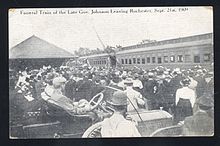
1909-09-21postcardGovJohnsonFuneralTrainRochesterMN

September 21, 1909

“John A. Johnson was the state’s first governor to die in office, following surgery.” *

My first question to You is; “Why do we exalt our political leaders?” Does a governor’s death hold more weight and import than one his constituents? Perhaps our Johnson’s death connotes the identification Minnesotans had with him; he was one of us.

Lord, thank You that Minnesotans did indeed relate with Governor Johnson! Thanks for the gift of empathy one feels for a fellow countryman. Thank You that we were created with a longing and value of our sense of place. Our geography imprints on our soul whether: city streets, a warehouse, open roads, or open fields.

We seem to own what our eyes often take in. A street we frequent becomes our ‘stomping grounds’. Hunter’s tend to know their woods “like the back of their hand”. May our leaders continue Johnson’s legacy of being “one of us”.

Good Governor of All, will You remember us when we lose a head of state, or maybe even a hero? Will You help us deal with losing a key leader or mentor in our lives? Will You honor the memory of Governor Johnson? Will You keep us from the extremes of guilt through creating a cult of personality around politicians, or neglecting to groom and constantly call forth the headship of the next generation?

* http://www.mnhs.org/about/dipity_timeline.htm


Standard
20th Century, Business, Governors, History, Intercession, Judgment & Counter-Judgment Cycle, Labor, Mining, Minnesota, omnipresent history

Johnson Becomes Governor

Unknown

January 4, 1905

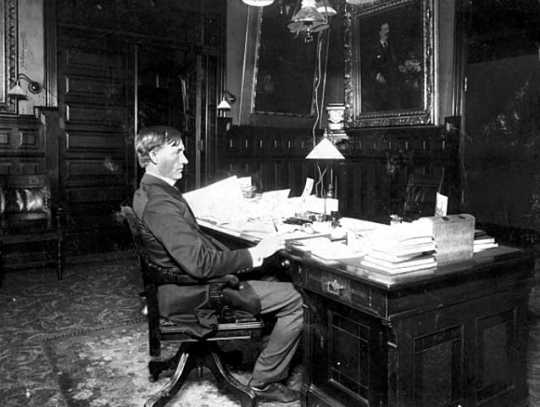
“John A. Johnson takes office as the state’s 16th governor. Johnson became the first Minnesota-born governor, the first to serve a full term in the present state capitol, and the first to die in office. He also was the first Minnesota governor to bask, fleetingly, in the national spotlight when he sought the 1908 Democratic presidential nomination, but lost to William Jennings Bryan.” 

G-d, it is so difficult to prayerfully write about politicians; there’s so much to know about these individuals, and mere facts do not often give one a grasp of their character and motivations. Will You guide me to information that tells the story You most want me to record? Will You give insight to my dullness today?

After a quick hunt on the internet, I found this excellent source at google e-books.   It was originally published in 1910, so the information would be a recent memory of the authors. This is what they had to say,

“As an executive the most spectacular achievement of his career was his handling of the strike on the Minnesota iron range in the summer of 1907.”

“Led by Italian socialist Teofilo Petriella…”

“Needed only a spark to explode this magazine of hatred and fancied wrong…”

“Without guard or escort, he sought out the leaders of the strike…”

“The leaders of the other side were seen in the same personal manner.”

“And the peace was kept without the use of a single soldier or the firing of a single shot-at the cost to the state only of the Governor’s trip to the Range.” **

Lord, I want to acknowledge this memory to You. Thank you for the peacemaking abilities of Governor Johnson. Thank You for the power of listening intently he showed those in this disagreement. Thank You for the gifts of wisdom this Governor exercised to avert hostility. 

However, absence of war alone does not mean peace. Those who followed Petriella to the precipice of revolt suggest that their grievances were deep and unresolved. Lord, will You forgive their bitterness towards their employers? Will You forgive their employers’ judgments towards them? 

As a man who did physical labor for years, I may understand part of their pleas for relief. We are human beings, not machines, and sometimes we simply cannot work more without rest. It is very hard to hear criticism from a boss when you have worked yourself to the point of exhaustion day after day. Will You remember the cross of physical exhaustion these men bore? Will You hear their yearnings for their labor to be valued and respected by their bosses and society? 

Conversely, hear the voices of their leaders, foremen, and employers! So few of us know the loneliness of being a leader, or of having extremely high pressure decisions on our plate day after day. Often these leaders have no one to confer with, or have insufficient time and data to make informed choices. They just have to “man up” and make the call.

Will You hear their longings for appreciation? Will You heal their feelings of beings hated and punished for creating jobs? Will You be with them in their lonely decisions? 

It is easy to look back on this situation and see how these two groups, labor and employer, may have misbeliefs towards each other. Each group has real needs and wants and limitations that should be heard and considered. In light of that, I bless these two groups of Minnesotans that have, are, or will work on the Iron Range; the laborer and the employer. Jesus Christ, will You overcome all their obstacles to a symbiotic relationship? Will You provide mediators like Governor Johnson who can skillfully deal with any crisis? Will You give us Your imagination, and offer new and creative means to repair rifts long before they erupt? 

Finally, forgive us, both then, now, and into perpetuity, of failing to see that judgements of our sister, brother, or boss are judgments of You. Who are we to judge Your laborers intents rather than actions? Didn’t You make them strong and skilled and able to withstand the elements? Who are we to judge your employers? Didn’t You give them the ideas to create useful products, to manufacture those products, and sell those products to the world for a profit that enables the cycle to continue? Didn’t You make some who are born leaders? “Blessed are the peacemakers, for the will be called the children of God.” Matthew 5:9

* http://www.mnhs.org/about/dipity_timeline.htm
** Frank Day and Theodore Macfarlane,Life of John Albert Johnson, Three Times Governor of Minnesota., Forbes and Company, 1910. pp.161-163.

***Excellent summary of this strike by Jack Lynch of the Hibbing Daily Tribune. http://www.hibbingmn.com/news/years_of_yore/petreila-brains-of-strike/article_9a2d9290-ee82-5421-b481-92b4012fef38.html


Standard
20th Century, government, Governors, History, Intercession, Judgment & Counter-Judgment Cycle, law, Minnesota, monopoly, omnipresent history, Politics, railroad, State Government

Van Sant Becomes Governor 1901

Unknown-1

January 7, 1901 to January 4, 1905

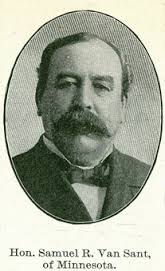
“Samuel R. Van Sant takes office as the state’s 15th governor on January 7, 1901. He began his career as a riverboat builder on the Upper Mississippi. As Minnesota’s fifteenth governor, he led the fight to brake the runaway powers of the railroads.” * 

Read an excerpt of what it meant to be a “trustbuster” in his era?

“The second was the establishment of the State Board of Control to take on the railroad monopolies. The old riverboat captain didn’t have much love for his main competition on the iron rails. He particularly detested the Northern Securities Company run by James J. Hill and J.P. Morgan. The jovial riverboat captain turned out to be a very determined trustbuster. Van Sant’s battle soon turned into one of the biggest court dramas to ever come out of Minnesota in this suit to dissolve the Hill-Morgan railroad monopoly. He soon won the backing of President Teddy Roosevelt under the newly passed Sherman Antitrust Act. In 1904 the Supreme Court, by a vote of 5 to 4, upheld the determination that the Northern Securities Company was an illegal restraint of trade and the trust was broken up.” **

Father, thank you that Van Sant fought the monopolist powers of Minnesota in his term. His experience with the Northern Securities Company underscores an achilles heel of free markets; highly successful companies may eventually eliminate the competition in their fields and form monopolies or oligarchies. The most sought after form of land transportation of the North Star state was controlled by just two men; James J. Hill and J. P. Morgan. 

You have given us clues in the Bible regarding property rights and ownership. Tribal allotment of specific geographic territories are described in the book of Joshua. All  descendants of the sons of Jacob had land based on birthright. Land could be bought and sold, more like leased, but only for a fixed number of years until the Jubilee.

The Year of Jubilee described in Leviticus 25:8-13 is a year of pardon, for personal sins, debts, release of slaves, and a return of tribal property. So, we currently practice ownership of property, but do not have a system for forgiveness whether personal, labor, or property-based. Some may argue that bankruptcy fulfills this role, but is incomplete when compared to the model of the Pentateuch.

Although the Supreme Court upheld the position of the people regarding the railroad monopolies, we have no universal reset button for society like You describe! How do we enact Your standards in modern society? We hold property, but are not tied to specific geography on the basis of our tribes unless we are Native Minnesotans. We are disconnected from the land, and from each other! Is it because there is so little forgiveness in our modern system based not on wealth, but debt? 

That said, Merciful One, do not let us be vain towards the successful, or return shrewdness with the counter-judgment of punishment! Will You forgive Minnesota its bitterness towards Morgan and Hill, and their company? Will You forgive them their “drive to power”? Most cannot relate to the unchecked influence of men like Morgan and Hill, but perhaps they can relate in a smaller way. If we have the power to change everyday situations in our favor, will we use it? Or misuse it? 

Father, will You forgive us when we look expectantly and only to our system for justice? We are vapors that dissipate in a day! You are the only unchangeable personality in the universe. You are self-content and not subject to bribery. Your integrity allows us to enter into justice if we are open to self-examination as well as other-examination! 

* http://www.mnhs.org/about/dipity_timeline.htm
**Tuma, John. “Let’s Not Go Backward.” Conservation Minnesota March 2012 Web. 22 Jun. 2013. http://www.conservationminnesota.org/news/headlines/lets-not-go-backward/

*** More flavor on Governor Van Sant? https://www.nga.org/cms/home/governors/past-governors-bios/page_minnesota/col2-content/main-content-list/title_van-sant_samuel.default.html


Standard
19th Century, Governors, History, Indian, Intercession, Judgment & Counter-Judgment Cycle, Minnesota, Native Americans, omnipresent history, Politics, State Government, Treaties

Lind Becomes Governor

pf098016

January 2, 1899 to January 7, 1901

“John Lind takes office as the state’s 14th governor on January 2, 1899. Lind, an outspoken political maverick, campaigned zealously for adoption of a more equitable tax burden, enlightened concern for the sick and poor, and direct elections of state officials. Although most of his efforts to change society failed, Lind paved the way for subsequent reform and Minnesota’s transition from an agrarian to an industrial society.” * 

Thank You for the struggles of John Lind. Thank You for all Minnesotans’ who have bucked at the limitations of the two-party system. Thanks that his heart was tender to others that wrestled with the industrial giants of their time, and usually lost.

Why this struggle? The people knew Minnesota had riches: excellent dairy pastures, productive farmland, timber, iron ore and minerals, thousands of lakes, and a waterway that crossed half a continent. What was there to complain about? Commodities are valuable if they can reach the markets that have need for such resources. What if the “middlemen” ate them alive with storage fees, transportation costs, and sales commissions? Or what if the laws of one’s business were written by giants for giants?

Lord, I don’t know many details of these Lind years, but I see this conflict as a worthy subject to acknowledge to You. Will you forgive our judgements of the land hunger of the giants of timber, iron, farmland speculators, and railroads that began on January 2, 1899 and still prevail? Will You also forgive the land hunger of Minnesotans’ that displaced the Anishinaabe (Chippewa, Objibwe)? Below is an excellent local source on these First Nations.

“Anishinaabe Reservations

The seven Anishinaabe reservations include: Grand Portage located in the northeast corner of the state; Bois Forte located in extreme northern Minnesota; Red Lake located in extreme northern Minnesota west of Bois Forte; White Earth located in northwestern Minnesota; Leech Lake located in the north central portion of the state; Fond du Lac located in northeast Minnesota west of the city of Duluth; and Mille Lacs located in the central part of the state, south and east of Brainerd.

All seven Anishinaabe reservations in Minnesota were originally established by treaty and are considered separate and distinct nations by the United States government. In some cases, the tribe retained additional lands through an Executive Order of the President. Six of the seven reservations were allotted at the time of the passage of the General Allotment Act. The Red Lake Reservation is the only closed reservation in Minnesota, which means that the reservation was never allotted and the land continues to be held in common by all tribal members. Each Indian tribe began its relationship with the U.S. government as a sovereign power recognized as such in treaty and legislation. The Treaty of 1863 officially recognized Red Lake as separate and distinct with the signing of the Old Crossing Treaty of 1863. In this treaty, the Red Lake Nation ceded more than 11 million acres of the richest agricultural land in Minnesota in exchange for monetary compensation and a stipulation that the “President of the United States direct a certain sum of money to be applied to agricultural education and to such other beneficial purposes calculated to promote the prosperity and happiness of the Red Lake Indian.” The agreements of 1889 and the Agreement of 1904, Red Lake ceded another 2,256,152 acres and the Band was guaranteed that all benefits under existing treaties would not change.”

Will You forgive the Anishinaabe their land hunger for tribes that they may have displaced? We seek Your judgement and restitution for our losses. You are the Master of Apportionment! We all are but temporary occupants of Your lands! Will You give us Your sense of mercy and justice towards our neighbors whether past, present, or future?

Will You forgive our claim to Your land also known as Minnesota? Will You forgive our claim to Your intellectual property: air, water, plants, minerals, animals, weather, day, night, and people? You have given enough for all! You let us play with Your building blocks! Let us be worthy builders! 

Father, help us deal with our pain that drives our anger. You have said in Ecclesiastes that there is:

3A time to kill, and a time to heal; a time to break down, and a time to build up; “

We often see anger as only negative, or as the expression of an emotion that separates us. Yet, it is the expression of anger that often lets others know that our boundaries have been crossed. There is an anger that is mad at separation.

Will You bless Governor Lind for expressing this kind of anger; the anger at injustice? Lind was known for having a temper. According to an article on the front page of the Moose Lake (Minnesota) Star on January 17, 1901: “Ex-governor John Lind after having freed himself from the duties of governor last Thursday walked down to the Dispatch office in St. Paul and administered to Editor Black a well-deserved licking. For a one armed man John Lind can make some telling blows once in a while.” *** 

* http://www.mnhs.org/about/dipity_timeline.htm

** http://www.indianaffairs.state.mn.us/tribes.html

*** http://en.wikipedia.org/wiki/John_Lind_(politician)


Standard
19th Century, Governors, History, Intercession, Judgment & Counter-Judgment Cycle, law, Minnesota, omnipresent history, Politics, Prayer, Social Studies, State Government

Clough Becomes Governor 1895

images

January 31, 1895 to January 2, 1899

“Lieutenant Governor D. M. (David Marston) Clough becomes the state’s 13th governor on Jan 31, 1895, when Governor Knute Nelson resigns to take a seat in the U.S. Senate. Clough’s first administration was notable for the ratification of significant amendments to the state constitution, including those establishing a Board of Pardons, withdrawing the right of aliens to vote, and authorizing municipalities to frame “home rule” charters. During his second term, narrowly won in 1896, the legislature raises taxes on several private industries and enacts child-labor laws.”* 

Governor Clough seems to be a reformer,** and it is no wonder given the times he lived in. The Panic of 1893, started in European markets, and spread to the United States until 1897. It rocked everything, but Minnesotans probably felt it most in commodities: lumber, ore mining, farming, and the rails that delivered it all.

Changing the rules during the game is a delicate business, let alone the constitution of a State. The volume of changes Clough enacted suggests his reforms were supported by the people. But what is the spiritual weight of even one of these reforms?

Establishing a Board of Pardons may suggest a few motives. Minnesotans experienced the ‘power plays’ of economic interests; the farmers vs. the railroads, the individual landowner vs. the lumber barons, etc. Perhaps the Board of Pardons appealed to their sense of mercy to neighbors who experienced this type of injustice. Where there is favoritism under the law, hopelessness and bitterness are not far behind.

Here is where we appeal to You! As a Minnesotan, will You forgive us the anger and bitterness stemming from this era in the fields of lumber, mining, farming, and transportation? Will You release the justly offended parties from the weight of being right? Will You free the powerful from their offense of misusing their power to strip the rights, property, and humanity from those they opposed? 

Eternal Father, one can still perceive the sadness of the Range, of Duluth Harbor, of small towns, farms, and Indian reservations where these conflicts arose. Will You change this atmosphere of the heart? Will You restore lost hope, property, and inheritances? Will You give favor to these specific peoples and geographic locations?

Will You bless the inheritance of Governor Clough, whether directly to his family of origin, or those who share his vision? Will You keep us from swinging to extremes? Will You help us stop the cycle of offense/counter offense, judgment/counter judgment?

***An Inventory of His Gubernatorial Records at the Minnesota Historical Society 


Standard