19th Century, Agriculture, farming, Food, History, Intercession, Minnesota

King Wheat  

images-12

1859

“Minnesota’s first shipment of spring wheat is warmly received in Chicago–marking the start of an agricultural export that will become King in coming years. Production grows wildly as railroads connect farms to inland markets.” *

“Minnesota or that part of it known as Cottage Grove has gone to wheat. Men work in wheat all day when it does not rain, lounge round talking about wheat when it is wet, dream about wheat at night, and I fear go to meeting Sabbath Day to think about wheat.”
-Rev. George Biscoe, in a letter to his sister, August 21, 1862.*

Jesus, thank you for the blessing spring wheat has been to our state! Imagine how miraculous it felt to find a strain of grain that liked northern climes and short summers? Thank You for their generous yields, and the kind and rich soil that produced them! Thank you for ability of farmers, past and present, to focus on the work You have given them. Will You continue to bless the farmer of Minnesota, and everyone who works to bring our food to market?

Will You forgive the judgments the farmers of MInnesota have made against You? Will You forgive our grumblings about the weather, the length of the seasons, and any other rash words we have spoken against You? Will You forgive the judgments made between farmer and city-folk? Will You forgive us when we allow our passions to overtake us; even something as innocent as a desire for better grain?

*P.T.H. cites timeline formerly at this URL: mnhs.org/about/dipity_timeline.htm
The Minnesota Historical Society Web site, http://www.mnhs.org , is fantastic! Check it out!


Standard
19th Century, History, Indian, Intercession, Minnesota, Native Americans, Treaties

Reservations Halved 1858

Unknown-11

1858
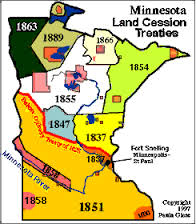
“The U.S. government seeks more land to accommodate an influx of European settlers into Minnesota. As a result, 26 Dakota leaders are pressured to negotiate yet another treaty. After four long months spent in Washington, D.C., the Dakota are forced to sell the north half of their reservation in exchange for goods and annuities and the continuing right to live on the southern strip of their reservation.” *

Jesus, I do not know the complexities of our laws’ surrounding the Dakota. I can see, with my limited vision and knowledge, that the Federal government with the state government of Minnesota as beneficiary, had a motive to acquire and to redistribute more land from them. This could be a non-issue, were it an amiable deal with a complete and clear understanding of terms.

However, I see the phrases here “are pressured” and “forced to sell”. A forced sale is not a sale, but coercion or extortion. Again, who would choose to submit to high pressure sales tactics of their own volition? Will You forgive this offense of coercion towards these 26 Dakota leaders and all their people and lands?

We have offended You by offending these exact Dakota bands? Will You forgive us this debt officially done in the name of Minnesota and our Federal government? Will You lift the spirit of coercion that still binds this specific Dakota land? Will You lift the spirit of harassment from the shoulders of these 26 Dakota representatives, their nation, and all their generations? Will You free our government and it’s Representatives from the bondages incurred through this event? Will You create remorse that leads to right relationship in those who specifically forced this “sale”, and their figurative children today?

With President Abraham Lincoln, today I pray for “a new birth of freedom”! Will you inspire us to create new means to legally restore such historic cases? Furthermore, will You teach us ways to unravel the generational damages to our bodies’, minds’, wills’, emotions’, and physical environments?

Good Father, how I love Your freedom! You do not force us to follow You, but have said, “Choose this day who you will serve.” (Joshua 24:16) May we forever cherish the Messiah’s example of laying down His life for both friend and enemy! He blessed those that cursed Him even during His execution!? May we consciously choose to love our neighbor! May we seek Your blessing, and the double blessing of our neighbors!

*P.T.H. cites timeline formerly at this URL: mnhs.org/about/dipity_timeline.htm
The Minnesota Historical Society Web site, http://www.mnhs.org , is fantastic! Check it out!


Standard
19th Century, government, Governors, History, Intercession, Minnesota

Sibley Becomes First State Governor

H.H. Sibley First Governor of Minnesota

H.H. Sibley
First Governor of Minnesota

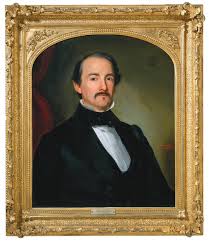
“Henry H. Sibley takes office as the state’s first governor. He served three times as territorial delegate to Congress, and with statehood imminent, he played a leading role in drafting the Minnesota constitution. He chose not to run for re-election as governor, but continued to serve the state as military commander during the Dakota War of 1862.” *

“Consequently, he who rebels against the authority is rebelling against what God has instituted, and those who do so will bring judgment on them selves.” Romans 13:2

Jesus, thank you for the leadership of Henry Sibley. Thank you that he had foresight to draft a constitution for the state. Lord, will You forgive the bitter judgments of his term, and those made of him? Starting with Sibley, will You retrain us to honor or leaders in our heart, bring our dissonance with them to You, and not merely show respect externally?


*http://www.mnhs.org/about/dipity_timeline.htm


Standard
19th Century, History, Minnesota, omnipresent history

North Star Statehood

images-10

May 11, 1858
“On May 11th, Minnesota is admitted into the Union as the 32nd state. News of statehood travels by telegraph and then by steamboat to St. Paul. Newspapers proclaim a glorious future for Minnesota.” *

Thank you for the statehood of Minnesota on May 11, 1858! Will You give us the plan that is in Your mind and heart for our state? What is our unique purpose in Your kingdom, in the redemption of the United States, and the history of the world? Give us Your imagination for the restoration of Minnesota! Jesus, we invite Your best! Enable us to receive Your gifts, and move us to serve You and all creation with them!

Lord, I want to acknowledge the pollution of our land. You say:
“’Do not pollute the land where you are. Bloodshed pollutes the land, and atonement cannot be made for the land on which blood has been shed, except by the one who shed it. Don not defile the land where you live and where I dwell, for I, the Lord, dwell among the Israelites.’” Numbers 35:33,34

Thank you Jesus that the Cross covers all the unrighteous bloodshed that curse our land! Release us this day from the curses of the Enemy and every act of bloodshed that has been committed throughout history within the boundaries of this state of Minnesota. May Your precious blood flow through our root sins, acts, and thoughts of bitterness and death, and release every prisoner of the Enemy. I announce that “Jesus is here!!!” to the bloodshed of Minnesota, and where the spirit of the Lord is, there is liberty! Amen!

* http://www.mnhs.org/about/dipity_timeline.htm

Standard
19th Century, African American, Black History, Faith, History, law, Minnesota

Slavery in Court: Dred and Harriet Scott

Dred Scott

Dred Scott

1857
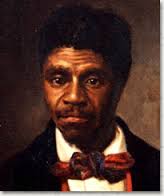
“Dred and Harriet Scott, slaves who lived at Fort Snelling in the 1830s, claim they became free in Minnesota, where slavery was illegal. The U.S. Supreme Court rules that, because they returned to Missouri where slavery is legal, they are still the property of their owners.

In 1836, the African American slave Dred Scott was brought to Fort Snelling by his owner, Dr. John Emerson. While at the fort, Scott married another slave, Harriet. Later, Emerson moved to St. Louis, taking his slaves, the Scotts, with him. In 1846, Dred Scott sued for his freedom. He claimed that, since he had been taken to live at Fort Snelling–at the time part of Wisconsin Territory, where slavery was prohibited–he was a free man.

In March 1857, after 11 years of trials and appeals, the U.S. Supreme Court declares that because Scott isn’t a citizen of Missouri (a slave isn’t allowed to be a citizen), he’s not entitled to sue in its courts; and that slaves are property and that no law can deprive a person–that is, a white slaveowner–of his rights to life, liberty, and property.” *

Christ have mercy! We often want privileges under the law for ourselves, and not for others. This is not Your example. “In the beginning was the Word, and the Word was with God, and the Word was God. He was with God in the beginning.” John 1:1,2 Jesus, You submitted to the limitations of this world. You went from the total freedom of heaven to living in Satan’s jurisdiction. You know what it’s like to have Your rights curtailed! Thank you that You are able to relate to everyone who has endured under slavery, and that You never knelt to hatred of authority.

Firstly, bless Dred and Harriet Scott, their generations, and their dwellings in Jesus’ name! Thanks for giving him the boldness to challenge the system. Forgive our system for allowing human beings to ever be classified as ‘property’! May we inherit a heart to challenge falsehoods and misbeliefs of our state.

Secondly, forgive Missouri and the U. S. Supreme Court this offense against You, and the inalienable rights You’ve freely given to all people, everywhere, at all times. You made all men in your image! You’ve made all women in Your image! Is not an affront to one an attempt at mutiny? You are our God, and we are Your people!

Third, forgive the judgment made against the Scotts’, and counter-judgments made towards Minnesota, Missouri, or the U.S. in general. Will You release us from our heritage of bitter judgments and curses, and make the way for forgiveness and blessing?
http://www.mnhs.org/about/dipity_timeline.htm

Standard
19th Century, Americana, History, justice, Minnesota, State Government

Saint Paul Keeps Capital Feb 27, 1857  

Joe Rolette

Joe Rolette

February 27, 1857
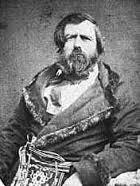
“Legislator Joe Rolette disappears with a scandalous bill that would transfer the territorial capital from Saint Paul to Saint Peter. For a week he drinks and plays poker with his friends, hiding in the attic of the Fuller House while the bill rests in the hotel’s safe. He reappears only after the legislature adjourns on March 7 and it is too late to get the bill signed into law.

Rolette is a councilor in the territorial legislature from northwest Pembina County. The questionable bill he hides is the work of government officials who bought land in Saint Peter and proposed the move to raise the value of their properties.

April 23, 1857 to May 24, 1858
Samuel Medary takes office as the territory’s 3rd, and last, governor.

When President James Buchanan appointed him governor in March, 1857, Minnesota was already in transition from a territory to a state. Medary was the recognized governor, although he spent most of his time outside the territory and conducted business through Charles L. Chase, the secretary of the territory. Some historians argue that Minnesota had three governors during this period: Henry H. Sibley, governor-elect, Charles L. Chase, acting governor, and Samuel Medary, de facto governor.” *

Father, thanks that You are just. No one can twist your Laws, or win the game by using parliamentary procedures. I acknowledge the temptation to win by changing the rules, or by trickery. Will You forgive Joe Rolette and all the parties he represents for this event in 1857? Will You free us from any judgments or counter-judgments that still affect Minnesotans’ today? Will You help us, and forgive us our frustrations with the governor of this state? Will You guide and preserve that office until You come, and work through the entire being of Governors past, present, and future?

* http://www.mnhs.org/about/dipity_timeline.htm

Standard
19th Century, abolition, African American, History, Indian, Men, Minnesota, Native Americans, News, women

Abolitionist Newspaper 1857

Unknown-6

1857
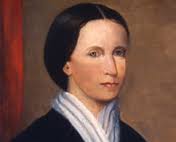
“Jane Grey Swisshelm, an outspoken critic of slavery and unequal treatment of women, moves to Minnesota in 1857 and publishes the St. Cloud Visiter newspaper. Mobs twice destroy her printing office, but she continues her courageous crusade for equal rights with the “St. Cloud Visiter” later renamed the “St. Cloud Democrat.” *

Jane G. Swisshelm was a pioneer in all senses of the word: in travel, in her passionate writings, and inwardly. She saw observed the cruelty of slavery when she lived in Kentucky. She lost her mother in Pennsylvania, and shortly afterwards, her husband lost his business. She moved to the Midwest to start over, joining her sister nearby. **

Already a established as a strong voice for abolition during her decade in Pittsburgh, she became the editor of a newspaper named the “St.Cloud Visiter”. Though owned by a Democrat, (who in those days were not usually abolitionists), she insisted on representing the paper as such. In effect, she offended local Democratic sensibilities resulting in the destruction of the “Visiter’s” offices and printing presses. ***

In the following decade, she aimed her pen at the Dakota Nation of Minnesota. Originally a supporter of Native Americans, the Dakota War of 1862 and their atrocities of unprovoked attacks on their neighbors changed her mind. Incensed by Native attacks, she even lobbied the Federal Government that more strident measures be taken against them. ***

Today, we thank You for voice of Jane Swisshelm, and her commitment to vigorously and forthrightly speak her mind. Her story is a cautionary tale that no individual, tribe, or nation gets it right all the time. Irregardless of passion, we all have an incomplete picture of the truth.

American politics of her day may shock modern ears; Republicans led the charge in the abolition of slavery, and the vast majority of slave states held to Democratic politics. Will You forgive us our over-identification with partisan politics in this era, and our failure to unite to oppose the evils of slavery? Will You forgive us our sins of partisan rhetoric, and more specifically to Swisshelm where her words unnecessarily broke relationship with our Southern brothers and sisters?

Next, we fail to understand much of the context of her era, and may draw some wrong conclusions from the women’s rights movement. Certainly, some 19th Century women suffered harsh abuses at the hands of men, often without hopes for a legal redress of their grievances. (We praise You that most of these legal issues are corrected, and that American women have known exceptionally high-status and equality when viewed through the lens of human history.)

Yet, our preset-day perspective may cause us to miss the ways that 19th Century male-female relationships were strong. Children trusted that their fathers’ were committed to provide for them. Wives trusted that their husbands’ love meant shelter and protection. Families busy with survival did not have lots of time to deal with legal or political issues, and often for them, it made sense to trust dad with that role.

Jesus, thanks that You have made us to be free. Will You forgive the city of St. Cloud and Minnesota any infringement of the freedom of Jane Swisshelm? Will You free us from her sinful judgment’s against those she opposed; broadbrushing all men, those who disagreed with her method of abolition, and promoting punishment against the Dakota? Thank You that Minnesota has raised awareness of the status of women and those in bondage through her voice! Thank You that even her words of judgment against the actions of a few hundred Dakota, as harsh as they may be, record the specifics of broken relationships. Will You enter into these rifts, bring humility, and restore to us a place in Your Land-Clear-Blue-Waters? Amen.

http://www.mnhs.org/about/dipity_timeline.htm
** Swisshelm, Jane Grey. Half a Century. Chicago: Jansen, McClurg, and Company, 1880.
*** Webster, Eric W. “Swisshelm, Jane Grey (1815–1884)”. Internet. https://www.mnopedia.org/person/swisshelm-jane-grey-1815-1884


Standard
19th Century, Americana, Business, Civics, History, Intercession, Minnesota, Real Estate

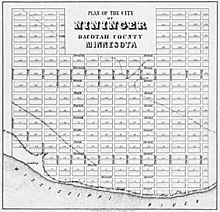
Nininger Founded

220px-Nininger

October 1, 1856
“Minnesota is booming with grandiose plans and get-rich-quick schemes. John Nininger and Ignatius Donnelly establish the town of Nininger—on the south bank of the Mississippi River, five miles up river from Hastings—in the summer of 1856. Their town exists only on paper, but in their dreams it is a great metropolis, a center of commerce and culture, a rival of Chicago. Active sale of land and building operations begin about October 1, 1856.” *
Donnelly promotes Nininger across the nation. In February 1858 the legislature grants a charter to the town, and the town has shops, churches, a dance hall, a poor house, a school, and a population of perhaps as many as 1,000 persons. The dream town of Nininger declines steadily after the financial panic of 1857 that causes banks across the country to call in loans. People move away. Buildings disappear. The town eventually disappears from the map.

Lord, we are looking for heaven… but usually the one of our own design. You have given us imagination to organize society and solve civic problems. We often lack the humility to remain in relationship when we are hurt, or to forgive and resolve problems. Forgive any judgments of Donnelly and Nininger towards the residents of Nininger and each other. Forgive any counter judgments of the people of Nininger. Will You continue this process until full restoration?
Also, I acknowledge the financial judgments made in the panic of 1857: Eastern banks judged Western farmers, small business judged large business, etc. Lord, we have sinned against You by the judgments of the panic of 1857! Many have paid debts unfairly placed on them, and made counter judgments towards banks, businessmen, lawyers, city, county, and state officials etc.

Unfortunately, we are bound by our judgments of banks, as well as state and federal laws! Free us as a people in the North Star state! Heal our economy and our hearts that easily are swayed into discontent! We have coveted our neighbor’s property! We have coveted our neighbors’ real and imagined legal freedoms! We often submit to debt out of envy! Hear our prayer! Heal our land past, free us in the present, and blesser relationships to it in the future!

*http://www.mnhs.org/about/dipity_timeline.htm

Standard
19th Century, Culture, History, Intercession, Jesus, Minnesota

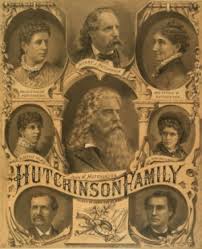
Hutchinson Founded by Singing Family Nov 19, 1855  

Unknown-5

Wishing to start an utopian community, three Hutchinson brothers—Asa, Judson, and John—travel west to Minnesota. On the Crow River they help found the town of Hutchinson and commit it to the values of education, equality, and temperance. The popular Hutchinson Family Singing Troupe promotes these same principles as they tour.

Abby, John, Judson, and Asa—4 of the 13 brothers and sisters—are the Hutchinson Family Singers. Called “the best known troupe of family singers in the country,” the Hutchinsons sing and compose songs about American life that often carry a social message.*

Lord, thanks for the memories of this family. Thank you for their persistence in using their gift of song and entertainment for good, rather than their own fame. May You release many of this generation to be so moved and committed to You! Thank you for the good You do for us through both the enjoyment of making and listening to music!

Father, forgive the judgments we’ve made towards each other on the basis of position towards alcohol. Especially during this era of temperance, Minnesotans who drink have judged non-drinkers, and vice versa. Will You forgive our disrespect of the positions of others and their cultures of origin? For example, the Germans of southern Minnesota had no conflict or fear of drinking beer. Many agreed with Martin Luther’s famous quote that “beer is proof that God loves us and wants us to be happy.” Will You give us the power to not use alcohol abusively in this generation, but to savor it properly? Will You give us faith that You are our brother’s keeper, so we don’t have to jerk his chains?

Will You release us from the bitter roots of alcoholism, and the effect it has had on the individuals, families, cities, counties, tribes, and nations that make up our state? Will You release from any residue of the self-righteous judgments of those who led the temperance movement from a heart of legalism and pride over real love for their neighbors? Sometimes we do good with a bad heart. Will You give us humility to deal with the sensitive spots in the conscience of our fellow man according to Your merciful example?

“A bruised reed he will not break, and a smoldering wick he will not snuff out. In faithfulness he will bring forth justice;” Isaiah 42:3

*Note – PrayThroughHistory uses the timeline located for several years at the Minnesota Historical Society Web site, at this URL: mnhs.org/about/dipity_timeline.htm .


Standard
19th Century, Art, authors, History, Indian, Intercession, Minnesota, Native Americans

“Song of Hiawatha” Published

images-8

November 10, 1855
“Henry Wadsworth Longfellow never visited Minnesota, but his epic poem The Song of Hiawatha immortalized the Minnesota forests, prairies, and waters he saw only in his imagination. Longfellow began Hiawatha on June 25, 1854, he completed it on March 29, 1855, and it was published November 10, 1855.” *
The famous story still attracts tourists from around the country to see, in the words of the poem,
“Where the Falls of Minnehaha
Flash and gleam among the oak-trees,
Laugh and leap into the valley.”

This poem could be revelatory of the best and worst aspects of pop culture…even if it was popular 160 years ago. A cynical synopsis? A man who never visited Minnesota or lived with the Ojibwe whose language he borrowed, wrote a pop lyric that morphed and mutated their culture with the East Coast Iroquois to the tune of the “Kalevela” of Finland?! Of course it became a smash hit, and the listeners accepted it as the truth!

I’m not a cynic, Jesus. So today I wish to focus on that which gives life in this poem by Longfellow. I want to practice seeing the potential in historical works, rather than judging their limitations according to the standards of the present.

Longfellow sought to learn real Indian languages, and wasn’t afraid to interact with real Indians. He invited Kahge-ga-gah-bowh, an Ojibwe Chief, to his home, and took the time to meet Blackhawk, Sac, and Fox Indians in Boston.

If the poet saw a connection between tribes of the East Coast of North America with those of the Midwest, can we forgive him? Artists are allowed to make connections where others do not see them. We can find fault in their “improper” labeling of a small branch of a larger concept, and stubbornly miss their heart.

As a drummer and percussionist, I seek to learn each new ethnic music from the ground up with great respect for its traditions. However, there is new life in breaking the rules once one knows them. If one hears a connection between Celtic music and samba, then merging them into a new style is natural.

Perhaps that is the explanation for Longfellow merging the sound and rhythms of Indians with the heartbeat of Finland? Maybe he borrowed an interesting “drumbeat” from Suomi poems to express what he felt about Native Americans? In any case:
“The Song of Hiawatha was written in trochaic tetrameter, the same meter as Kalevala, the Finnish epic compiled by Elias Lönnrot from fragments of folk poetry. Longfellow had learned some of the Finnish language while spending a summer in Sweden in 1835.” **

Father, will You bless Longfellow, Kahnge-ga-gah-bowh, and each Indian who shared his story? Will You continue to bless those who reach out to know a culture very different than their own? Will You honor those who see Your unyielding imagination expressed through all the families of nations?

Thank You for Longfellow’s example that we can create beauty beyond the confining aspects of our culture. Show us ways to “include, but not be limited to” the legalism of our traditions. Thank You, First Poet, for drawing the romance from hearts of stone! Thank You for the possibility of fusing peoples together when living under grace! May we never tire of creating, merging, or reaching to describe Your beauty mirrored in the faces of fellow humans! With this heart and mind, will You bless our state?

http://www.mnhs.org/about/dipity_timeline.htm

** Calhoun, Charles C. (2004). Longfellow: A Rediscovered Life. Boston: Beacon Press.


Standard