18th Century, Culture, History, Intercession, Jesus, Minnesota, Native Americans, Transportation

Horses Arrive 1740 to 1760

“By the mid-1700s, thUnknown-1e Dakota are riding horses, obtained in trade with other tribes, on their buffalo hunts on the prairie. They can now follow the herds farther west on the plains.
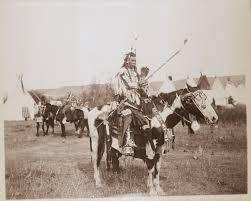
Horses had been extinct in the Americas for about 8,000 years. Columbus reintroduced them when he carried European breeds to the continent in 1493. Nearly 200 years later, horses were abundant on the plains, where they transformed the lives of the region’s inhabitants.” *

Master, thank You for the creation that You allow us to live and thrive in! Thank You that horses have blessed the lives of the Dakota and immigrant alike! Thank You for the gift of the buffalo to our forbearers! Thank You for reintroducing the horse to North America, and for it’s profound impact on Dakotans’ survival!

Why did You use Europeans to bless North America with the horse? It is good to remember that European explorers were not solely the “exploiters”  of North America as some revisionists may hold. In this case, will You remember those who brought the horse as “contributors?” Thank you, Father, that all cultures are free to choose to contribute and be blessed by those they may not yet know!

Will You bless both horse and rider in Minnesota forever? Will You make us better as a people in our treatment of all horses? Will You give us insight into Your masterpiece; the horse?

*Note – PrayThroughHistory uses the timeline located for several years at the Minnesota Historical Society Web site, at this URL: mnhs.org/about/dipity_timeline.htm .  The current URL is http://www.dipity.com/Minnesota/History/Minnesota-History/ and only works if typed, not pasted, in browser. It is worth the effort!

 

Standard
18th Century, Catholic, Culture, Exploration, History, Intercession, Jesus, Minnesota, Native Americans, Transportation

La Vérendrye & Grand Portage Trail 1731

Google Images

Google Images


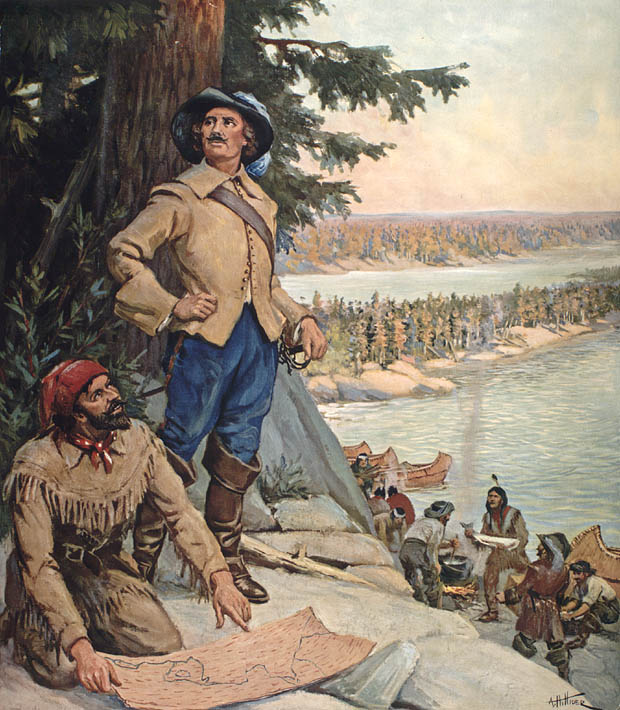
“Using a map made on birch bark by Assiniboin guide Ochagach, Pierre La Vérendrye follows the Grand Portage trail from Lake Superior to Lake of the Woods. It is not a way to the western sea, as he has hoped, but fur traders will follow this trail for the next 100 years.” *

Sometimes the easy way is the hard way. A portage is an overland pathway that avoids dangerous rapids or falls for those traveling by river. Ochagach likely thought that the “western sea” that La Verendrye sought was Lake Winnipeg. Regardless of his disappointment, La Verendrye and the voyageurs respected and appreciated the wisdom in taking this 8.5mile trail past the dangers of the Pigeon River.

We often balk at the delays of modern life, even though we have such incredible technologies that serve our whims and convenience. Will You make us like Ochagach, so that we can see the dangers of convenience in our lives? Will You make us like La Verendrye, that we may heed the warnings of our friends to not try to foolishly “shoot the rapids?”

Father, thanks that You lead us on our way. Thanks that You delight in sharing your mysteries with us. Bless the Assiniboin people, Ochagach, and P. La Verendrye for the gift of this trail. Thank you that these two men showed trust to each other! Thanks for the lessons of the portage!

**Note – PrayThroughHistory uses the timeline located for several years at the Minnesota Historical Society Web site, at this URL: mnhs.org/about/dipity_timeline.htm .  Currently the timeline seems to be unavailable.

Standard
17th Century, Catholic, Culture, Exploration, History, Intercession, Jesus, Minnesota

Hennepin publishes book about his travels 1683 

UnknownHennepin exaggerates his exploring feats in a book he writes after returning to France. In one colorful chapter he romanticizes St. Anthony Falls, turning it into a dream destination for adventure travelers. Hennepin becomes famous as his book is translated and read throughout Europe.

Hennepin writes that the falling water “of itself is terrible, and has something in it very astonishing.” Printed in multiple languages and editions, the book’s original title translates to Description of Louisiana: newly discovered to the southwest of New France, by order of the King. With a map of the land: the customs and the way of life of the natives. Dedicated to His Majesty by the R.P. Louis Hennepin, Franciscan missionary and apostolic notary.*

Thank you for choosing Father Hennepin to relay this story to France and the Continent! Often, You choose a spokesman who is imperfectly perfect for the job. In this way, we the recipients automatically relate to the humanity of the message.

Where Hennepin may have exaggerated his adventures; will You forgive him? Will You also forgive those of us like him who may embellish the truth because we lack the trust that the straight story is enough? Will You credit him with the fortitude to put pen to paper, and at least attempt to record what he experienced?

Lord, we are trapped at times by the limitations of words, and especially we historians who wrestle with tone and style. If we insert our voice into historical writing, we may be taken as “too passionate”, or “not impartial.” If we attempt to remain a transparent, neutral reporter, our personality still can betray us through our unspoken biases, our framing of events, and even the limitations or vastness of our vocabulary!

Will You bless those, like Hennepin, who may record our history for those a continent away? Will You give humility to reader and writer to appreciate the limitations of one human’s perceptions? Will You give present and future generations of explorers the bravery to simply write: whether ornamented or truncated?

Lord Jesus, thanks for Your book! Thanks for the power of story to connect head and heart! Will You give power to the stories of Minnesota, and help us to know each other better?

*Note – PrayThroughHistory uses the timeline located for several years at the Minnesota Historical Society Web site, at this URL: mnhs.org/about/dipity_timeline.htm .  Currently the timeline seems to be unavailable.

Standard
17th Century, Culture, Exploration, History, Intercession, Jesus, Minnesota, Native Americans

Radisson & Groseilliers 1659 to 1660  

resized_image2_90176285eed24c24a0653d9196e90b45


“Lured by rumors of vast untouched beaver preserves, brothers-in-law Pierre-Esprit Radisson and Medard Chouart (Sieur Des Groseilliers) ventured into the country north of Lake Superior in 1659 and spent the winter with the Dakota Indians in the Mille Lacs region. Their report of the wealth in furs led to the founding of the Hudson’s Bay Company in 1670.” *

Lord Jesus, thank you for this winter and the relationship of Pierre-Espirit Radisson and Medard Chouart and the Dakota Indians in the Lake Mille Lacs area of Minnesota.

Thank you for the generosity of the Dakotas.  Thanks for the wealth of natural resources given Minnesota, and in this case; a large beaver population. You managed the waterways of this state, long before humans, through this creature!

I want to acknowledge any bitter root judgments that stem from this event and the founding of the Hudson’s Bay Company. I acknowledge the envy of the human heart towards another’s wealth. I acknowledge the misuse of Your creation. Will You release us in the present from these past judgments and real offenses?

**Note – PrayThroughHistory uses the timeline located for several years at the Minnesota Historical Society Web site, at this URL: mnhs.org/about/dipity_timeline.htm .  Currently the timeline seems to be unavailable. I am hopeful that it will be back up in the future, as it was a valuable, user-friendly tool for anyone wishing to explore Minnesota history.

Standard
History, Intercession, Jesus, Minnesota, Uncategorized

What is PTH? Why pray about the past?

I freely confess that the following outline is a work in progress. I simply want to share the framework and rationale of why praying through history is pertinent to me. Everyone who names the name of Jesus is called to be a minister of reconciliation, and this is just one man’s attempt to practice.

I. There are specific “moments of separation” in human history. Our perceptions lead to thoughts that overlook or take offense. I will call these “thought-judgments”.

For example, the Seljuk Turks attack and overcome the city of Jerusalem.

II. Action-based judgments at the moment of the offense.

  • Jews to Seljuks, Jews to all Turks, Jews of Jerusalem towards any outsider.
  • Seljuks to Jerusalem’s Jews, Seljuks to all Jews, Seljuk’s towards all enemies.

III. Future judgments are formed based on memory and perception; bitter root judgments are formed.

  • Transference on a cultural scale.
  • Perpetuation of a past offense.
  • Walking backward into our future.

IV. Parties are held responsible for their actions and judgments in the Lord’s justice.

  • Even righteous anger betrays the victim. Perhaps even more so if the victim is a city, culture, tribe, or nation. Under the dominion of the Lord Jesus Christ, all have been forgiven all, and therefore must seek and practice to forgive all to remain true to His example. (This is not easy, but perhaps impossible apart from His mercy. The decision of the will may be simple, but the maintaining a heart of forgiveness is divine. )
  • This is not an endorsement of living without boundaries, especially personal boundaries. This is not an endorsement to submit to an abuser. Rather, it is a challenge of the rights of a human being to hold another prisoner by the maintenance of an offense.

V. We can representationally acknowledge historical sin before our Lord.

  • Through Christ we have access to his Omniscience, Omnipotence, and Omnipresence. He is present to all history, the present, and future events. He is within time, and beyond our comprehension of time. He knows all and can guide us to pray representationally, (intercession) for events of history, the present, and the future. He truly has unlimited power to forgive, heal, restore any human condition!
  • His only limitation is self-imposed: He is a gentleman with boundaries. He believes in good and evil, justice and injustice, lightness and darkness, separateness and relationship. Isaiah 5:20 “Woe to those who call evil good and good evil, who put darkness for light and light for darkness, who put bitter for sweet and sweet for bitter.” We can trust in distinctions because he trusts in distinctions. Denial of sin within the context of our relationship with Him or others offends God because it denies our condition of separateness, or that we may have a need to address. Denial allows us to keep our pride, hold a grudge, or maintain anger. To use an old Baptist analogy, “The whole world stands under the Niagara Falls of the Lord’s love. Some have their cups turned up and are filled. Others, though under a deluge of love, can’t seem to keep a drop because their cups are turned upside down.”

VI. Through acknowledgement of historical sins, we set the process of restoration in motion. It is a first step in a process, but is important because it removes the legal grounds of the accusations of the Enemy.

  • We become aware of sin. Often by conscience, or reading or hearing of history.
  • We confess it to the Lord. This is a legal admission of guilt.
  • We pronounce the Lord’s forgiveness of confessed sin. (1 John 1: 8-10)
  • He will guide it through the full process of restoration.
    1. Confession leads to remorse.
    2. Remorse leads to repentance.
    3. Repentance leads to reconciliation.
    4. Reconciliation leads to restoration.
  • We cannot change past events, but replace a heritage cursed relationships with a ray of blessed ones; a change beginning at a fixed point in time, but continuing into eternity.

VII. Additional scriptural principles or mandates that outline our authority under Christ to pray through history.

1. Author Derek Prince sheds light on several key passages of scripture:

  • “It is never the will of God that the judgment due the wicked should come upon the righteous.” Genesis 18: 23,25 NIV
  • “Will you sweep away the righteous with the wicked?” v. 23 Abraham asks.
  • ”Far be it from you to do such a thing — to kill the righteous with the wicked, treating the righteous and the wicked alike. Far be it from you! Will not the Judge of all the earth do right?” v. 25
  • On Christians’ dual citizenship: “By natural birth [the apostle Paul, like any Christian] is a citizen of an earthly nation, and he is subject to all the ordinances and requirements of his nation’s lawful government. But by spiritual rebirth through faith in Christ, he is also a citizen of God’s heavenly kingdom. This is the basis of Paul’s statement, … “We…are citizens of heaven.” Philippians 3:20 NEB
  • Another example, Jeremiah 1: 5,10 NIV – ”I appointed you as a prophet to the nations.” v.5
  • ”See, today I appoint you over nations and kingdoms to uproot and tear down, to destroy and overthrow, to build and to plant.” v.10
  • Jeremiah was subject as a citizen of Judah: he did not “preach or practice political subversion or anarchy. Nor did he ever seek to evade or resist decrees made by the government concerning him, even though these were at times arbitrary and unjust. Yet on the spiritual plane to which God elevated him through his prophetic ministry, Jeremiah exercised authority over the very rulers to whom he was in subjection on the natural plane.”
    – Derek Prince, Shaping History Through Prayer and Fasting,
     (Springdale, PA: Whittaker House,1973)  [Bolded emphasis mine.]

2. Theologian Timothy Tennent speaks to Christians’ God-given ability to express forgiveness from God.

  • Mark 2:1-12 NIV v 5. When Jesus saw their faith, he said to the paralytic, “ Son, your sins are forgiven.” v 10.
  • “But that you may know that the Son of Man has authority on earth to forgive sins…”He said to the paralytic, v11.
  • “I tell you, get up, take your mat and go home.” “It is interesting to note that in John 20:22-23, Jesus breathes upon his disciples to receive the Holy Spirit, and then pronounces, “If you forgive anyone his sins, they are forgiven; if you do not forgive them, they are not forgiven.”  Jesus is giving the church the authority to announce His forgiveness in the lives of those who come to Him in faith.
  • We do not have the innate ability to forgive anyone’s sins against God, or to withhold God’s forgiveness of sins from anybody.  But Jesus has given the Church the authority to act as His regents or representatives in the world, and to speak on His behalf.  We can declare that “God forgives you” with all the authority of Jesus, because we are not declaring our forgiveness, but rather His forgiveness in Christ.  We are merely pronouncing the forgiveness made possible by the sacrifice of Christ.”-Timothy Tennent, President, Asbury Theological Seminary http://blogs.asburyseminary.edu/global-talk/the-temple-is-here-mark-21-12/ [Bolded emphasis mine]

3.  His Holiness John Paul II, First Sunday of Lent “Day of Pardon” Presentation Vatican Basilica, 12 March 2000:

  • The meaning of the celebration of Lent: “…Christians are invited to acknowledge, before God and before those offended by their actions, the faults which they have committed. Let them do so without seeking anything in return, but strengthened only by the ‘love of God which has been poured finto our hearts’ (Rom 5:5)” (Incarnationis Mysterium, 11; cf. Terno Millennio Adveniente, 33).
  • …The Lord has been living and present in his Church, and through the Saints he has demonstrated that he continues to be at work in human history, in the midst of his community. Certainly, Christians, as pilgrims and wayfarers towards the Kingdom, remain sinners, frail, weak and subject to the temptations of Satan, the Prince of this world, despite their incorporation into the Body of Christ. In every generation the holiness of the Church has shone forth, witnessed by countless numbers of her sons and daughters; yet this holiness has been contradicted by the continuing presence of sin which burdens the journey of God’s People. The Church can sing both the Magnificat for what God has accomplished within her and the Miserere for the sins of Christians, for which she stands in need of purification, penance and renewal (cf. Lumen Gentium, 8).
  • “The Church cannot cross the threshold of the new millennium without encouraging her children to purify themselves through repentance of past errors and instances of infidelity, inconsistency and slowness to act” (Tertio Millennio Adveniente, 33). Consequently, a liturgy seeking pardon from God for the sins committed by Christians down the centuries is not only legitimate; it is also the most fitting means of expressing repentance and gaining purification.  Pope John Paul II, in a primatial act, confesses the sins of Christians over the centuries down to our own time, conscious that the Church is a unique subject in history, “a single mystical person”. The Church is a communion of saints, but a solidarity in sin also exists among all the members of the People of God: the bearers of the Petrine ministry, Bishops, priests, religious and lay faithful.– Source: http://www.catholiclinks.org/sacramentoperdondiadelperdon.htm  [Bolded emphasis mine.]

In Closing

Not all, but many, stories of the past are characterized by an antagonist/ protagonist relationship. I want to get beyond that broken record! I want to remember that I am just like them both; a human being with a heart filled with mixed motives! Perhaps one day we will learn to let the other guy off the hook, and create a just and merciful analytical model for history that will foster future generations in their struggles to ‘love their enemies, and do good to those who persecute them.’ May we, by the authority of the King of the Universe, practice to: heal the past, free the present, and bless the future. Amen!

James D. Orvis


Standard