19th Century, History, Minnesota, Politics, Prayer, State Government

Minnesota Territory Established

images-9

March 3, 1849

“Minnesota becomes an organized territory, an important step on the way to becoming a state. Minnesota Territory stretches west to the Missouri River in what will become North and South Dakota.” *

The name “Minnesota”comes from the Dakota word for “clear blue water.” Owing to its large number of lakes, the state is informally known as the “Land of 10,000 Lakes.” Its official motto is L’Étoile du Nord (French: Star of the North). **

Thanks that our ancestors decided to establish this Minnesota territory. There is power in naming or renaming. You renamed the people of Israel and Judah through the prophet Hosea saying, “So let your brothers be called “My People” and your sisters be called “Shown Mercy.” Hosea 2:1 Formerly, they had been called Lo-Ruhamah meaning “No Mercy” and Lo-Ammi meaning “Not My People.” Lord, will You continue to rename us throughout Minnesota territory from March 3, 1849 forward?

*Note – PrayThroughHistory uses the timeline located for several years at the Minnesota Historical Society Web site, at this URL: mnhs.org/about/dipity_timeline.htm .

**http://en.wikipedia.org/wiki/Minnesota


Standard
19th Century, Civics, education, government, History, law, Minnesota, Politics, Prayer, railroad, State Government

Bill for Minnesota Territory January 18, 1849  

Unknown-12

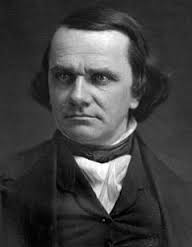
“Stephen Douglas proposes a bill for the creation of the Minnesota Territory.” *

Douglas was born in Vermont, and spent his early years there. When he was able, he migrated west and settled in Illinois. Within a year of moving west wrote is relatives back in Vermont saying,”I have become a Western man, have imbibed Western feelings principles and interests…” His political principles meshed nicely with the free-spirited populism of the west.**

Delegate to Congress from the soon-to-be “Western” Minnesota Territory, Henry H. Sibley worked with Senator Douglas to develop the nuts and bolts of this original proposal. Called the Organic Act, it provided organization of legal and legislative representation for the new territory. As an interesting sidebar, “an important provision of the Organic Act was the reservation of sections 16 and 36 of each township for school purposes.” ***

So we come to You to remember this event, Lord. We see, again, the spectacle of the mixed motives of Minnesota’s founders. On the one hand, they believe in organization, law, and education. On the other hand, the Territory soon enabled massive railroad land grants and corruption. In 1854, the Minnesota & Northwest Railroad, (eventually known as the Great Northern) committed so much fraud and bribery that their charter and land grants were revoked. Within three years, the same was granted five million acres and millions of dollars in bonds, yet they only built ten miles of railroad!? ****

We remember this dichotomy of purpose with You. Will You bless those, like Douglas and Sibley, who created the potential behind our state? We thank You for the aspirations of great men and women like them, who see the end from the beginning.

Conversely, we confess the dangers of living in a free society. Those who misuse their freedom can seek their own ends, and cause such devastation to their neighbors and the land. Will You have mercy on their selfishness, as well as the counter-judgment’s made by those most affected?

Minnesota is Your land. We are Your incomplete people. Come and help us live in right relationship with You and each other. Amen.

* http://www.mnhs.org/about/dipity_timeline.htm
** http://en.wikipedia.org/wiki/Stephen_A._Douglas
*** https://www.sos.state.mn.us/about-minnesota/minnesota-government/organic-act-of-1849/
**** http://www.landgrant.org/history.html

Standard
19th Century, Agriculture, Emigration, Exploration, farming, Food, History, Immigration, Minnesota, Native Americans, State Government, trade, Treaties

Settlement in Minnesota 1849 to 1860

images-8

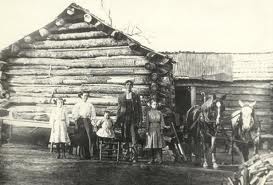
“The number of non-Indian people in Minnesota jumps from 3,814 in 1849 to 172,072 in 1860, a 4,500 percent increase! The newcomers break sod, start businesses, plot towns, look for jobs, and dream of getting rich.

Pent-up demand for good agricultural land is the primary reason. Iowa and Wisconsin had been heavily settled and had both passed from territorial to statehood status by 1848. It had been dangerous and illegal to settle on land in most of Minnesota before treaties with the Dakota and the Ojibwe were signed. But after several treaties were ratified in the 1850s, the floodgates of migration burst open.” *

When we move, we make assessments of our new neighbors and neighborhood. They, in return, watch us move into their neighborhood, and may ‘size us up’ by our friendliness, possessions, (or lack of possessions), our physical appearance, etc. These assessments, I believe, are instincts designed for our survival, but must be tempered or they can morph into prejudice.

Lord, what were the judgments of these ‘new neighbors’ in Minnesota? Will You forgive us the inheritance of those who knowingly moved into the state illegally? Will You forgive the betrayals committed between settler and tribe, and their counter-betrayals? Will You break the power of the derogatory words and names given among these groups? Will You break the vows made in anger, envy, revenge, arrogance, unforgiveness, fear, and unbelief of each group towards its real or supposed nemesis?

Thinking about the impact of these past separations on the present, will You forgive the heart behind the relocation of Native Americans? Will you free us from the bondages and entanglements within poorly made treaties? Will You bring Your heart of restoration to Minnesota? Will You bring to light a new kind of history in Minnesota? Will You write a history that remembers the good, the pleasing, the fair, the gracious, the restored relationship on our hearts? Will you give us Your eyes to see our neighbors’ inherent value?

*mnhs.org/about/dipity_timeline.htm

Standard
19th Century, Business, Economics, History, Industry, Minnesota, Native Americans, Politics, trade

1st Lumber Mills in MN 1848

history_franklinSteele

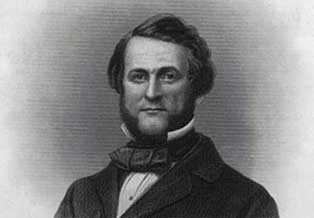
Pioneer businessman Franklin Steele builds a sawmill at the falls of Saint Anthony. By 1856, there are eight mills at the falls.*

May I sit with You and observe this chapter of life in my state? Mr. Steele came here through the invitation of the man who would become his brother-in-law; Henry Hastings Sibley, a prominent Minnesotan. He staked an advantageous claim on the east bank of the St. Anthony Falls. Soon, he established a partial dam, sawmills, and a crew upriver to supply him logs, and commence a successful business. **

Digging further, this is what I found:
“But Steele surreptitiously staked the first claim on the choicest land before sunrise on the first day of legal settlement.” *** Is there nothing new under the sun? Once again, a man becomes successful through an inside scoop, and bending the rules to his advantage. We, indeed, are people of mixed motives, bearing both good and bad fruit!

Will You forgive his offense to You in making an illegal claim? Will You forgive his offense to all parties affected in his day whether Native, immigrant, loggers, and sawyers? Will You restore the losses of Steele’s contemporaries?

Yet, we too sometimes exhibit the same heart as Steele; we try to grow beautiful things from ugly roots! We often esteem the shrewd, and shun those led by conscience. We are so in love with success stories that we brush past those whom our heroes stepped on and over in the process. Will You forgive us our “illegal claims” today?

Precisely because I am a man with a mixed up heart like Franklin, I am drawn to Your mercy! Through Your kindness, I can offer honest thanks for the accomplishments of others with on-again/off-again hearts. Thanks for providing ample waterpower in Minnesota! Thanks for the resources of wood! Thanks for Franklin Steele who put together an enterprise to use both for the betterment of Minnesota!

http://www.mnhs.org/about/dipity_timeline.htm
** http://en.wikipedia.org/wiki/Franklin_Steele
*** http://www.nps.gov/miss/learn/historyculture/upload/River_Ch_6.pdf

Standard
19th Century, Culture, History, Minnesota, Native Americans, Politics, Treaties

Winnebago Moved to Reservation 1847  

xa-hochun

A treaty with the U.S. government moves the Winnebago (Ho-Chunk) from northeastern Iowa and southeastern Minnesota to a reservation in Todd County. With the Ojibwe to the north and the Dakota to the south, government officials hope the Winnebago reservation will serve as a buffer zone between Minnesota’s two larger Indian nations.

The Winnebago prefer the terrain of the prairie to this wooded area, and in 1855, they relocate to a smaller tract of land in Blue Earth County. They remain there until after the U.S.-Dakota Conflict, when the government forces them to move with the Dakota to the Crow Creek reservation in South Dakota.*

Jesus, thanks for the peoples of Minnesota. Thanks that You made us Your people whether of Winnebago, Ojibwe, Dakota, English, German, French, or Swedish descent. It’s wonderful that we are uniquely made, distinct families conveying some reflection of Your light!
Will You illuminate and forgive the bitter root judgments of the US government towards the Winnebago and vice versa? Will You forgive the government’s desire to use this people as a “buffer” between Ojibwe and Dakota, and the implications that they needed help maintaining peace between their peoples? Will You fill hearts and lands with the gift of restoration here in Minnesota, South Dakota, Iowa, and replace the curses from the hearts of all parties in this event?

*www.dipity.com/Minnesota/History/Minnesota-History/

Standard
19th Century, education, History, law, Minnesota, Native Americans, women

Saint Paul’s 1st Public School 1847

bishoporig

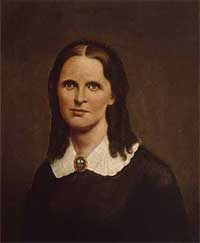
New Englander Harriet Bishop arrives in St. Paul and opens the town’s first public school. In a log cabin that had once been a blacksmith’s shop, students sit on wooden benches while chickens wander in and out.*

Thanks for Harriet Bishop and her desire to make education ‘public’. There were few opportunities for female teachers in New England, and she relished the adventure of moving west into unfamiliar territory.  She credits Harriet Newell and Ann Bishop, missionaries to Burma, as her inspiration.

The first school house, which she opened in a former blacksmith shop on July 19, 1847, was a “mud walled log hovel… covered with bark and chinked with mud” at what is now St. Peter Street and Kellogg Boulevard in the relatively isolated fur trading post of Saint Paul. Of the seven students in her first class, only two were caucasian. She had to rely on a student who was fluent in French, Dakota, and English to translate for her classes (which she taught in English). http://en.wikipedia.org/wiki/Harriet_Bishop

It’s astounding to think that most schools in our nation were private or parochial at the time. Public schools were often for the benefit of Protestants and the poor, whose communities did not have the resources or organizational structure to support them. How far we have come from this log cabin filled with students and wandering chickens!

However, presently we fail future generations because learning is disconnected from the Omniscient One. We have generations leading lives filled with facts, technology, and the benefits of science, but detached from meaning or a reason for being. This state was made by our Loving God, but even Your presence in school is an affront to the humanistic underpinnings of our current system of education! Will you forgive us this offense? Will You forgive our education system, legal system, and hearts where we have blocked You, and therefore any real sense of Divine Purpose, from our lives!

Today I remember the risk of Harriet Bishop, and her heart to see all children learn! Perhaps her home culture did not value her, but we thank You for incredible contributions to our state! Will You bless her, and all like her, who bravely risk the frontiers of our educational system?

Will You forgive any arrogance and academic pride of our forbearers, as You forgive us those same separations in the present? Will You bless future schools of Minnesota with wonder and awe of knowledge beyond our reach? May we remember the Infinite One who perceives the oceans of information beyond our drop in the bucket! May we receive Your forbearing spirit for each other, and a willingness to honor each other in Minnesota’s classrooms regardless of our faith in God or man?

Standard
19th Century, Business, Economics, History, Logging, Minnesota, Native Americans, trade

Stillwater as Lumber Center 1844

local0509-Goodrich-JohnWEB-140x140

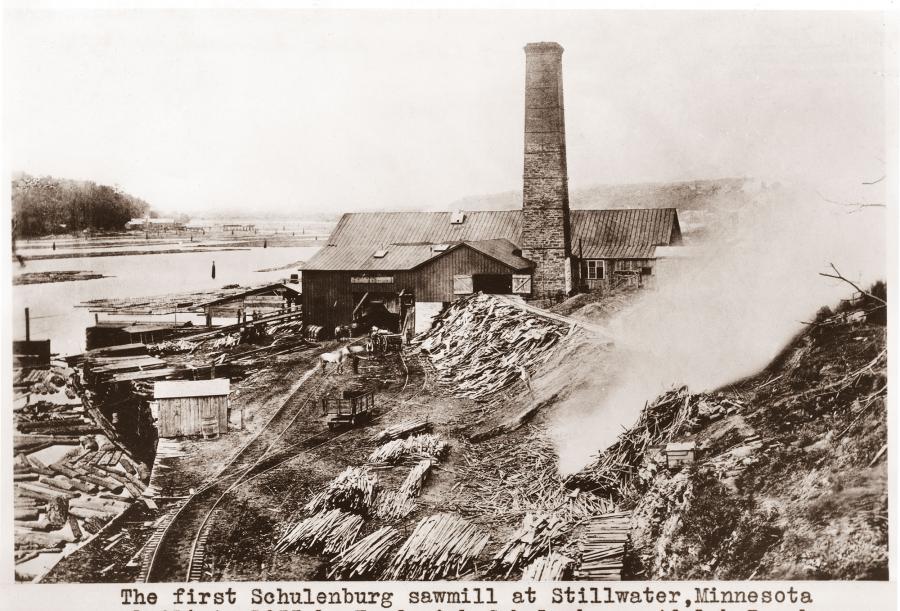
Maine lumberman John McKusick forms the Stillwater Lumber Company. Other New Englanders follow, making Stillwater the early center of Minnesota lumbering.*

May I watch this moment in 1844 with You? Can I sit with You on the east bank of the St. Croix bluff and take in the whole valley? I can practically smell the forest, and feel the calming flow of the St. Croix river.
On this day I remember to You the Ojibwe and Dakota nations that shared this land with us. Will You remember their open-handedness? I thank You for all, past present and future, who are blessed by this kindness.

The forests of this valley, and its’ proximity to such a wide river must have been an amazing discovery to lumbermen like McKusick. Huge trees could be harvested, rolled downhill, and floated to the sawmill. What prime real estate for the woodsman?!

May I thank You for Mc Kusick and the utility of these vast stands of timber? May we ponder the needs those woods supplied for that generation? Thank You for the hard, but good work provided through logging in that era.

As with almost any endeavor, with success comes competition. I know too little about the specifics of the competitive nature of these loggers in Stillwater, but relate to them as human who knows what it’s like to protect something valuable. It is easy to over invest in one’s work, to have our nose so close to the grindstone that we can’t see beyond it.

Will You forgive their fears of losing face, of being lesser? Will You forgive their offenses to You and each other through over harvesting, stealing logs, ignoring boundaries? Will You bless those who practiced happy competition, and enjoyed the camaraderie of Your woods?

Last thought, You present us with an odd paradox in our behavior; we often love what we harvest. Who loves the soil more than the farmer? Who loves ducks like their hunters? Who loves the woods like the logger? Who loves words like the writer?

Thank You for whatever it is we harvest now, or our future generations! May we humbly acknowledge You, and our dependence on Your resources. You commanded the Hebrews to not harvest up to the edges of their fields, but leave some behind so the needy would have food. Will You bless us to do this now and always, whatever our field or forest looks like?

Standard
19th Century, Business, Economics, History, Industry, Intercession, Jesus, Minnesota

Timber industry begins in Minnesota 1839

6-11_0

More than two-thirds of Minnesota is covered with trees when Minnesota’s first commercial sawmill is constructed at Marine on St. Croix–the beginning of Minnesota’s first industry.

On the east side of the Mississippi, a vast forest of pine and other evergreens stretches to the Canadian border. Many white pine along the St. Croix River are 200 feet tall and five feet in diameter.*

Jesus, thanks for our timber resources in Minnesota. Thank you for all who have, who are at present, or who will work in our forests in the future! Will You send your blessing into every place where Your Minnesota forests have gone: furniture, homes, barns, fences, etc.? Will You bless every recipient of Minnesota wood as You chop the roots of blame, and judgment, grudge and jealousy, envy and anger?

As you said in Romans 11:16b “…if the root is holy; so are the branches.” At present, will You forgive any worship of nature itself, and the lack of acknowledgement of to the Creator of the Woods? I’m guilty Lord too: we love stuff and use people instead of loving people and using stuff! Have mercy!

*Note – PrayThroughHistory uses the timeline located for several years at the Minnesota Historical Society Web site, at this URL: mnhs.org/about/dipity_timeline.htm .  The current URL is www.dipity.com/Minnesota/History/Minnesota-History/ and only works if typed, not pasted, in browser. It is worth the effort!

Standard
19th Century, Culture, education, Faith, History, Intercession, Jesus, Minnesota, Native Americans

Lake Harriet Mission School July 19, 1836  

lac_qui_parle1

Six students attend the opening of the Lake Harriet Mission School for the Dakota, founded by the Reverend Jedediah D. Stevens. An early example of education within the boundaries of present-day Minnesota, the school was sponsored by the Presbyterian Missions Board and taught by the founder’s niece, Lucy C. Stevens, in a cabin built by Gideon H. and Samuel W. Pond.*

Good Teacher, thank you for the benefits of the Lake Harriet Mission School for the Dakota. Thank you for the heart of providing education to all! It’s so good to share what we know and have it received.

It is not easy to be the first. It takes boldness to reach out across cultural lines. On one side of this picture we have Dakota students who are reaching out to Stevens. Conversely, he is stepping out of his comfort zone to meet and teach members of an unfamiliar culture. Will You bless both sides of this exchange? Will You remember their boldness and trust to know each other? Each group is an exploratory party of sorts. May we never forget what its like to be an alien!

Lord, I also want to acknowledge our separations that may begin as academic pride. We assume our knowledge will change our ‘underprivileged’. We often fail to pass on wisdom (good judgment), and even foster an academic culture that hesitates to recognize the merits of wisdom. As moderns, we cringe at even the word ‘judgement’, although one could argue that good judgment is the root of justice?!

I feel prompted to acknowledge the potential judgments of Stevens and Williamson against the Pond brothers, and perhaps a spirit of competitiveness. Lord, will you forgive any heritage of academic  or religious pride stemming from  them forward to us if this is the case? Will you forgive the stinging pain of criticism towards or counter-judgments from the Ponds, the Dakotas, these first six students, or any other pertinent unaddressed party? Will You free the land  of Minnesota from these judgments, and bring the blessing of humility that we all have betrayed You, Your peoples, and our selves? Will You make us humble teachers and students of the “knowledge” You have revealed to us? Amen.

*The current URL is www.dipity.com/Minnesota/History/Minnesota-History/ and only works if typed, not pasted, in browser. It is worth the effort!

Standard
19th Century, Business, Culture, Economics, History, Intercession, Jesus, Leadership, Minnesota, State Government

American Fur Company 1833


images-6

Young Henry Sibley takes over the American Fur Company post at Mendota in 1834 and stays on to be a leader in building Minnesota. He will become Minnesota’s first territorial delegate to Congress and its first state governor–an indivisible part of the state’s history for more than 50 years.*


Thank you for the life of Henry Sibley, and his leadership role in this state. You have seen Sibley’s work and heart, will You guide this prayer? Will You give insight into the ramifications of this new role for Sibley as head of this important company so long ago?


I do not know how conscientious or just he was, or if he favored the American Fur Company in his civil leadership roles. Lord, I just want to acknowledge that when I have power, it is tempting to favor those with whom I have the strongest trust and relationship. Will You forgive me this sin?

Forgive any favoritism, or judgments against those favored by Henry Sibley, the American Fur Company, and the government of Minnesota? Will You forgive us as Minnesotans’ from our savior-complex? Sometimes we shield those we favor from learning by the cause and effect of their actions. God, these are some contemporary examples of our civic favoritism: >“This company (or bank) is too big to fail.” >”We need a new Vikings stadium.” >”Our state can pay for equality of outcomes.” You are the Savior of Minnesota! Cleanse us from 1833 to now of our favoritism.

Why is this offensive to You, Just One? Is it because misuse of authority exhibits the limitations of our trust for our fellow man, or their Maker? Do we deny those around us that they also have Your inalienable right of choice?

Of course, there are times when you authorize and condone our exercise of judgment on behalf of others. For example, a mother must choose, moment by moment, what is best for the care of her newborn child. Yet if this same woman were to be constantly advising her adult child, it would be a sick relationship, and probably feel quite smothering.

In the same way, will You bless the future of all leaders of this state with Your proper balance of authority? May they be blessed with strength balanced by tenderness! May they neither fear the loneliness of leadership, nor the humility that nurtures future leaders. Amen!


Standard