19th Century, Business, Economics, History, Logging, Minnesota, Native Americans, trade

Stillwater as Lumber Center 1844

local0509-Goodrich-JohnWEB-140x140

Maine lumberman John McKusick forms the Stillwater Lumber Company. Other New Englanders follow, making Stillwater the early center of Minnesota lumbering.*

May I watch this moment in 1844 with You? Can I sit with You on the east bank of the St. Croix bluff and take in the whole valley? I can practically smell the forest, and feel the calming flow of the St. Croix river.
On this day I remember to You the Ojibwe and Dakota nations that shared this land with us. Will You remember their open-handedness? I thank You for all, past present and future, who are blessed by this kindness.

The forests of this valley, and its’ proximity to such a wide river must have been an amazing discovery to lumbermen like McKusick. Huge trees could be harvested, rolled downhill, and floated to the sawmill. What prime real estate for the woodsman?!

May I thank You for Mc Kusick and the utility of these vast stands of timber? May we ponder the needs those woods supplied for that generation? Thank You for the hard, but good work provided through logging in that era.

As with almost any endeavor, with success comes competition. I know too little about the specifics of the competitive nature of these loggers in Stillwater, but relate to them as human who knows what it’s like to protect something valuable. It is easy to over invest in one’s work, to have our nose so close to the grindstone that we can’t see beyond it.

Will You forgive their fears of losing face, of being lesser? Will You forgive their offenses to You and each other through over harvesting, stealing logs, ignoring boundaries? Will You bless those who practiced happy competition, and enjoyed the camaraderie of Your woods?

Last thought, You present us with an odd paradox in our behavior; we often love what we harvest. Who loves the soil more than the farmer? Who loves ducks like their hunters? Who loves the woods like the logger? Who loves words like the writer?

Thank You for whatever it is we harvest now, or our future generations! May we humbly acknowledge You, and our dependence on Your resources. You commanded the Hebrews to not harvest up to the edges of their fields, but leave some behind so the needy would have food. Will You bless us to do this now and always, whatever our field or forest looks like?
Standard
19th Century, Culture, Faith, History, Intercession, Jesus, Minnesota, Native Americans

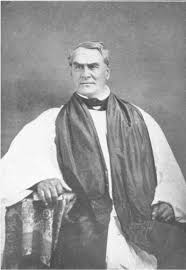
Ezekiel Gear Arrives at Fort Snelling Apr 28, 1839

Unknown-10

Episcopal priest arrives at Fort Snelling. He is chaplain at Fort Snelling from 1839-1858. He remains in Minnesota until his death in 1875.*

Thank you for Gear, and his commitment to Minnesota. Thank you for the blessing his presence had on early Minnesota and especially Fort Snelling. Thank you for his example to future generations here: we are free to reach across cultural boundaries when motivated by Your love!

It is my belief that we have a limited view of our history. We know in part, and we often project our vantage point onto the characters of the past. Perhaps we need a new lens to view the history of Native Minnesotans and its European settlers? May we equally remembers those that built relational bridges in this meeting of peoples as those who tore them down.

The following excerpt demonstrates where the heart of Priest Gear:

“Ezekiel Gilbert Gear was horn in Middletown, Connecticut, September 13th, 1793. He was ordained deacon by Bishop Griswold in the same church in which he was baptized, and his diaconate was passed in that diocese. He was ordained priest by Bishop Hobart, and was appointed missionary in the western part of New York state. There he labored at Onondaga Hill, Avon, Manlius, Ithaca, Syracuse, Binghamton and Brownsville. He also worked among the Oneida and Onondaga Indians, baptizing, marrying, and admitting many to the communion of the Church. He was present at the confirmation by Bishop Hobart of ninety-seven Indians, presented by Eleazar Williams. We can well imagine that this previous connection with Indian work led him to take an especial interest in advocating, as he did, the beginning of work among the Sioux and Ojibways of Minnesota.”

http://anglicanhistory.org/usa/mn/edsall_gear.html

*Note – PrayThroughHistory uses the timeline located for several years at the Minnesota Historical Society Web site, at this URL: mnhs.org/about/dipity_timeline.htm .  The current URL is www.dipity.com/Minnesota/History/Minnesota-History/ and only works if typed, not pasted, in browser. It is worth the effort!

Standard
19th Century, Culture, government, History, Intercession, Jesus, Minnesota, Native Americans, Treaties

1837 Treaties

c6c38485-2901-4201-bc7e-2aa4468ba134

The United States negotiates treaties with the Ojibwe and the Dakota for the wedge of land between the St. Croix and Mississippi Rivers—land that will later become part of Minnesota. Ratification of the treaties opens the land for settlement by non-Indians. The Ojibwe will receive payments in money, goods, and provisions for 20 years; they also reserve the right to hunt, fish, and gather wild rice within the ceded area. The Dakota do not reserve their hunting or fishing rights, but their annuities are to be perpetual. Indian Agent Lawrence Taliaferro boasts that he made the better bargain for the Dakota.*

Lord, this wedge of land is quite valuable real estate in the present. It contains parts  of St. Paul, Oakdale, Stillwater, Lake Elmo, Woodbury, Cottage Grove, and Hastings which are all fast growing parts of the metro area. This is surely a challenge for our present-day lawmakers; how do you give hunting rights in a suburban develop ment?

We need Your wisdom for all such cases. First, we need to accurately understand the meanings of past treaties which is no simple matter. Next, how does one interpret the spirit of this meaning into a present-day context that preserves the spirit and the heart of the treaty? Will You enable our government to honor these treaties in the present and future, as well as make restitution as specific and meaningful as possible?

By Your mercy, will You free all parties in the past of dissension and bitter assessments: the U.S. government and its agents , the Dakota, and the Ojibwa? Will You make us free from the fruit of this event in the present, and create the proper honor and respect between all parties?

*Note – PrayThroughHistory uses the timeline located for several years at the Minnesota Historical Society Web site, at this URL: mnhs.org/about/dipity_timeline.htm .  The current URL is www.dipity.com/Minnesota/History/Minnesota-History/ and only works if typed, not pasted, in browser. It is worth the effort!

Standard
19th Century, Exploration, History, Intercession, Jesus, Minnesota, Native Americans

Snake River Fur Post 1804

images-2


British fur trader John Sayer, a partner in the North West Company, leads a crew of 15 men up the Snake River. They build a fur post, trade with the Ojibwe over the winter, and leave in the spring with hundreds of furs.*

Jesus, thank you for the blessings of trade to Minnesota through this post. Will You forgive any offenses here through John Sayer, and redeem any future interactions with the Ojibwe? By Your authority, I want to bless the Ojibwe people at Snake River, their generations, and their dwellings! Lord help them fulfill the wonderful destiny You have in mind for them!

*Note – PrayThroughHistory uses the timeline located for several years at the Minnesota Historical Society Web site, at this URL: mnhs.org/about/dipity_timeline.htm .  The current URL is www.dipity.com/Minnesota/History/Minnesota-History/ and only works if typed, not pasted, in browser. It is worth the effort!

Standard
18th Century, Catholic, Culture, government, History, Intercession, Jesus, law, Minnesota, Native Americans, Transference, war

Spanish Claims 1763  

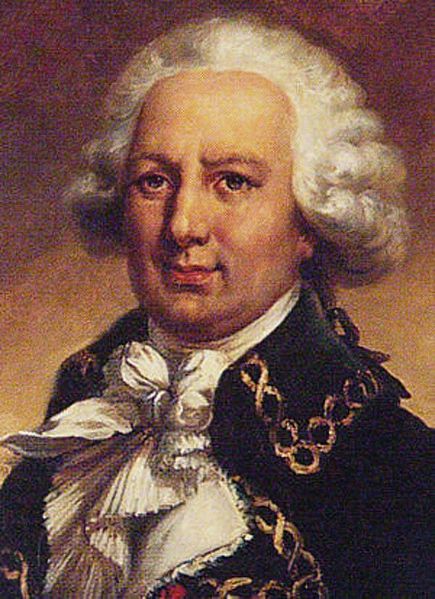
Louis XV France

Louis XV France

“Half of Minnesota passes to Spain when France gives up her trade west of the Mississippi. The exchange happens not because of activity in the Americas but as the result of a war in far away Europe.

No Spanish representatives are known to have visited the area after this trade and the Dakota and Ojibwe know nothing of it. Spain will return the land to France in 1800.” *

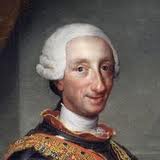
Charles III of Spain

Charles III of Spain

Allow me to amplify this story? Louis XV had just lost the French and Indian War to Britain. This meant that Canada was claimed by England. Simultaneously, France was losing the Seven Years War on the Continent. He contacted his cousin, King Charles III of Spain, and secretly ceded his rights to all New France west of the Mississippi to Spain.

These facts are plain, Lord, but why would France yield such a massive stake in lucrative North America stretching from Louisiana through Minnesota? Was it pure politics and resentment of Britain? Was it born of familial ties between these men, or the bonds of the Catholic faith? It did bring an absence of war, but is absence of war the same as peace?

Lord, I don’t know how this transaction affected our state in this era. Help me see. It seems that Spain ruled with such a light touch that most Minnesotans were not aware of the change. Will You forgive any bondage or bitter roots created in this specific geographical territory because of the judgments held by Britain, France or Spain, Dakota or Ojibwe?

Whether these men were kind-hearted or connivers, that is Your judgment, but I acknowledge that we are no different today. We use or perhaps misuse whatever measure of authority or influence at our disposal when we feel our claims are threatened. We, like these two cousins, may secretively craft plans to block the advances of the opposing team to “keep it in the family.”

Will You teach us Your humility in our diplomacy? When we lose in life, may it not be doubled by the vow, “I will lose to anybody else, but not them.” Christ have mercy on us. May we become the generation that is content to be the humble, temporary tenants of Your land!


*Note – PrayThroughHistory uses the timeline located for several years at the Minnesota Historical Society Web site, at this URL: mnhs.org/about/dipity_timeline.htm .  The current URL is www.dipity.com/Minnesota/History/Minnesota-History/ and only works if typed, not pasted, in browser. It is worth the effort!


Standard
17th Century, Culture, Economics, History, Intercession, Minnesota, Native Americans

Dakota & Ojibwe Treaty 1679


“Tensions mount between the Dakota and the Ojibwe newcomers. At a meeting arranged by Daniel du Luth, a European trader interested in keeping the peace, they strike a bargain. The Dakota agree to let the Ojibwe hunt in their territory, and the Ojibwe will let traders cross Lake Superior to trade with the Dakota.” *

Lord, thanks for being a good dad! Thanks that You know how to deal with the pettiness of children…and adults. I want to acknowledge the tensions that have risen in my own heart through the judgments of others, and the property that You have entrusted them with. I am just like du Luth, the Dakota, and the Ojibwe!

Will You forgive the fears of these groups towards one another? Will You forgive any envy of these groups? Will You release both victim and victimizer from the judgements of this event? Will You release us in the present from any heritage of bitterness or self-righteousness as it pertains to trade and commerce on Lake Superior? May You bless all, like du Luth, who seek to establish chesed (right relationship) rather than conflict?

*Note – PrayThroughHistory uses the timeline located for several years at the Minnesota Historical Society Web site, at this URL: mnhs.org/about/dipity_timeline.htm .  Currently the timeline seems to be unavailable. I am hopeful that it will be back up in the future, as it was a valuable, user-friendly tool for anyone wishing to explore Minnesota history.


Standard
17th Century, Culture, History, Intercession, Minnesota, Native Americans

Ojibwe arrived in Minnesota 1650 to 1700

OLYMPUS DIGITAL CAMERA

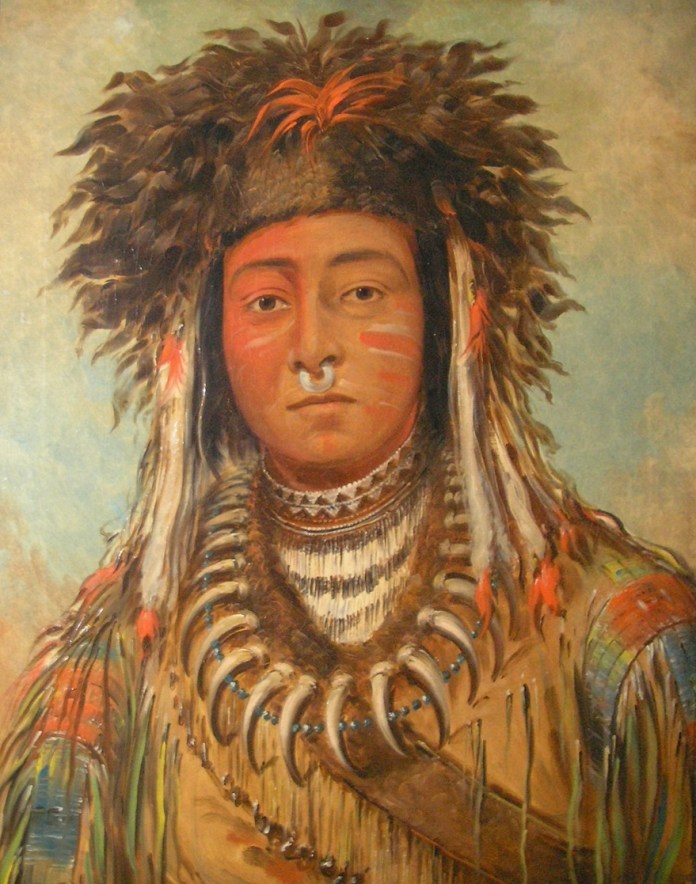
“Boy Chief” ca. 1835 George Catlin. https://en.wikipedia.org/wiki/Ojibwe

“The Ojibwe Indians, who have been moving westward for generations, reach the land we now call Minnesota. They encounter forest-dwelling Dakota people already here. The Ojibwe have gradually moved west from the region near the mouth of the St. Lawrence River, north of present-day Maine. By 1680, they have divided into three groups; the northern and southwestern groups have traveled west along the shores of Lake Superior. They have been involved in the fur trade for generations and possess guns. Like the Dakota, the Ojibwe are nature-based hunters, fishers, and horticulturalists.” *

Lord Jesus, thank You for using Minnesota as a meeting grounds for the Ojibwe and Dakota tribes! What good was in Your heart in this season for these tribes? Again, a migration of peoples from east to west, but this time Native Americans meeting Native Americans. Thank You for the potential released through the gift of new friendships.

I ask for the continuation and refreshment of this alliance begun in 1650 between these two tribes. If there were any bitter seeds planted then, will You kindly uproot them and release Your peace in its place? Will You retake any legal ground the Enemy may hold through this event, and specifically as it affects these tribal lands? Will You send your grace and truth into any contentious areas? May all Dakota and Ojibwe be blessed by You; Exalted Chief of the hunter, the fisherman, and the planter!

*Note – PrayThroughHistory uses the timeline located for several years at the Minnesota Historical Society Web site, at this URL: mnhs.org/about/dipity_timeline.htm .  Currently the timeline seems to be unavailable. I am hopeful that it will be back up in the future, as it was a valuable, user-friendly tool for anyone wishing to explore Minnesota history.


Standard