19th Century, Civics, education, government, History, law, Minnesota, Politics, Prayer, railroad, State Government

Bill for Minnesota Territory January 18, 1849  

Unknown-12

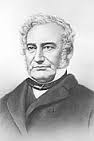
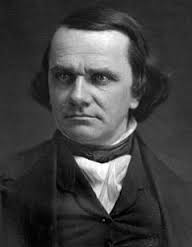
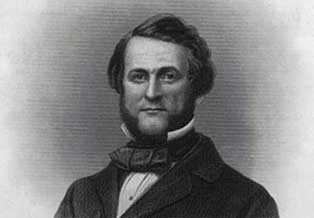
“Stephen Douglas proposes a bill for the creation of the Minnesota Territory.” *

Douglas was born in Vermont, and spent his early years there. When he was able, he migrated west and settled in Illinois. Within a year of moving west wrote is relatives back in Vermont saying,”I have become a Western man, have imbibed Western feelings principles and interests…” His political principles meshed nicely with the free-spirited populism of the west.**

Delegate to Congress from the soon-to-be “Western” Minnesota Territory, Henry H. Sibley worked with Senator Douglas to develop the nuts and bolts of this original proposal. Called the Organic Act, it provided organization of legal and legislative representation for the new territory. As an interesting sidebar, “an important provision of the Organic Act was the reservation of sections 16 and 36 of each township for school purposes.” ***

So we come to You to remember this event, Lord. We see, again, the spectacle of the mixed motives of Minnesota’s founders. On the one hand, they believe in organization, law, and education. On the other hand, the Territory soon enabled massive railroad land grants and corruption. In 1854, the Minnesota & Northwest Railroad, (eventually known as the Great Northern) committed so much fraud and bribery that their charter and land grants were revoked. Within three years, the same was granted five million acres and millions of dollars in bonds, yet they only built ten miles of railroad!? ****

We remember this dichotomy of purpose with You. Will You bless those, like Douglas and Sibley, who created the potential behind our state? We thank You for the aspirations of great men and women like them, who see the end from the beginning.

Conversely, we confess the dangers of living in a free society. Those who misuse their freedom can seek their own ends, and cause such devastation to their neighbors and the land. Will You have mercy on their selfishness, as well as the counter-judgment’s made by those most affected?

Minnesota is Your land. We are Your incomplete people. Come and help us live in right relationship with You and each other. Amen.

* http://www.mnhs.org/about/dipity_timeline.htm
** http://en.wikipedia.org/wiki/Stephen_A._Douglas
*** https://www.sos.state.mn.us/about-minnesota/minnesota-government/organic-act-of-1849/
**** http://www.landgrant.org/history.html
Standard
19th Century, Agriculture, Emigration, Exploration, farming, Food, History, Immigration, Minnesota, Native Americans, State Government, trade, Treaties

Settlement in Minnesota 1849 to 1860

images-8

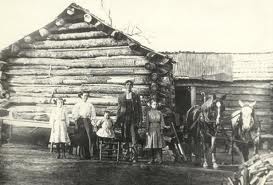
“The number of non-Indian people in Minnesota jumps from 3,814 in 1849 to 172,072 in 1860, a 4,500 percent increase! The newcomers break sod, start businesses, plot towns, look for jobs, and dream of getting rich.

Pent-up demand for good agricultural land is the primary reason. Iowa and Wisconsin had been heavily settled and had both passed from territorial to statehood status by 1848. It had been dangerous and illegal to settle on land in most of Minnesota before treaties with the Dakota and the Ojibwe were signed. But after several treaties were ratified in the 1850s, the floodgates of migration burst open.” *

When we move, we make assessments of our new neighbors and neighborhood. They, in return, watch us move into their neighborhood, and may ‘size us up’ by our friendliness, possessions, (or lack of possessions), our physical appearance, etc. These assessments, I believe, are instincts designed for our survival, but must be tempered or they can morph into prejudice.

Lord, what were the judgments of these ‘new neighbors’ in Minnesota? Will You forgive us the inheritance of those who knowingly moved into the state illegally? Will You forgive the betrayals committed between settler and tribe, and their counter-betrayals? Will You break the power of the derogatory words and names given among these groups? Will You break the vows made in anger, envy, revenge, arrogance, unforgiveness, fear, and unbelief of each group towards its real or supposed nemesis?

Thinking about the impact of these past separations on the present, will You forgive the heart behind the relocation of Native Americans? Will you free us from the bondages and entanglements within poorly made treaties? Will You bring Your heart of restoration to Minnesota? Will You bring to light a new kind of history in Minnesota? Will You write a history that remembers the good, the pleasing, the fair, the gracious, the restored relationship on our hearts? Will you give us Your eyes to see our neighbors’ inherent value?

*mnhs.org/about/dipity_timeline.htm

Standard
19th Century, Business, Economics, History, Industry, Minnesota, Native Americans, Politics, trade

1st Lumber Mills in MN 1848

history_franklinSteele

Pioneer businessman Franklin Steele builds a sawmill at the falls of Saint Anthony. By 1856, there are eight mills at the falls.*

May I sit with You and observe this chapter of life in my state? Mr. Steele came here through the invitation of the man who would become his brother-in-law; Henry Hastings Sibley, a prominent Minnesotan. He staked an advantageous claim on the east bank of the St. Anthony Falls. Soon, he established a partial dam, sawmills, and a crew upriver to supply him logs, and commence a successful business. **

Digging further, this is what I found:
“But Steele surreptitiously staked the first claim on the choicest land before sunrise on the first day of legal settlement.” *** Is there nothing new under the sun? Once again, a man becomes successful through an inside scoop, and bending the rules to his advantage. We, indeed, are people of mixed motives, bearing both good and bad fruit!

Will You forgive his offense to You in making an illegal claim? Will You forgive his offense to all parties affected in his day whether Native, immigrant, loggers, and sawyers? Will You restore the losses of Steele’s contemporaries?

Yet, we too sometimes exhibit the same heart as Steele; we try to grow beautiful things from ugly roots! We often esteem the shrewd, and shun those led by conscience. We are so in love with success stories that we brush past those whom our heroes stepped on and over in the process. Will You forgive us our “illegal claims” today?

Precisely because I am a man with a mixed up heart like Franklin, I am drawn to Your mercy! Through Your kindness, I can offer honest thanks for the accomplishments of others with on-again/off-again hearts. Thanks for providing ample waterpower in Minnesota! Thanks for the resources of wood! Thanks for Franklin Steele who put together an enterprise to use both for the betterment of Minnesota!

http://www.mnhs.org/about/dipity_timeline.htm
** http://en.wikipedia.org/wiki/Franklin_Steele
*** http://www.nps.gov/miss/learn/historyculture/upload/River_Ch_6.pdf

Standard
19th Century, Culture, History, Minnesota, Native Americans, Politics, Treaties

Winnebago Moved to Reservation 1847  

xa-hochun

A treaty with the U.S. government moves the Winnebago (Ho-Chunk) from northeastern Iowa and southeastern Minnesota to a reservation in Todd County. With the Ojibwe to the north and the Dakota to the south, government officials hope the Winnebago reservation will serve as a buffer zone between Minnesota’s two larger Indian nations.

The Winnebago prefer the terrain of the prairie to this wooded area, and in 1855, they relocate to a smaller tract of land in Blue Earth County. They remain there until after the U.S.-Dakota Conflict, when the government forces them to move with the Dakota to the Crow Creek reservation in South Dakota.*

Jesus, thanks for the peoples of Minnesota. Thanks that You made us Your people whether of Winnebago, Ojibwe, Dakota, English, German, French, or Swedish descent. It’s wonderful that we are uniquely made, distinct families conveying some reflection of Your light!
Will You illuminate and forgive the bitter root judgments of the US government towards the Winnebago and vice versa? Will You forgive the government’s desire to use this people as a “buffer” between Ojibwe and Dakota, and the implications that they needed help maintaining peace between their peoples? Will You fill hearts and lands with the gift of restoration here in Minnesota, South Dakota, Iowa, and replace the curses from the hearts of all parties in this event?

*www.dipity.com/Minnesota/History/Minnesota-History/

Standard
19th Century, education, History, law, Minnesota, Native Americans, women

Saint Paul’s 1st Public School 1847

bishoporig

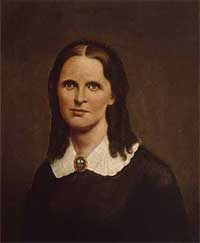
New Englander Harriet Bishop arrives in St. Paul and opens the town’s first public school. In a log cabin that had once been a blacksmith’s shop, students sit on wooden benches while chickens wander in and out.*

Thanks for Harriet Bishop and her desire to make education ‘public’. There were few opportunities for female teachers in New England, and she relished the adventure of moving west into unfamiliar territory.  She credits Harriet Newell and Ann Bishop, missionaries to Burma, as her inspiration.

The first school house, which she opened in a former blacksmith shop on July 19, 1847, was a “mud walled log hovel… covered with bark and chinked with mud” at what is now St. Peter Street and Kellogg Boulevard in the relatively isolated fur trading post of Saint Paul. Of the seven students in her first class, only two were caucasian. She had to rely on a student who was fluent in French, Dakota, and English to translate for her classes (which she taught in English). http://en.wikipedia.org/wiki/Harriet_Bishop

It’s astounding to think that most schools in our nation were private or parochial at the time. Public schools were often for the benefit of Protestants and the poor, whose communities did not have the resources or organizational structure to support them. How far we have come from this log cabin filled with students and wandering chickens!

However, presently we fail future generations because learning is disconnected from the Omniscient One. We have generations leading lives filled with facts, technology, and the benefits of science, but detached from meaning or a reason for being. This state was made by our Loving God, but even Your presence in school is an affront to the humanistic underpinnings of our current system of education! Will you forgive us this offense? Will You forgive our education system, legal system, and hearts where we have blocked You, and therefore any real sense of Divine Purpose, from our lives!

Today I remember the risk of Harriet Bishop, and her heart to see all children learn! Perhaps her home culture did not value her, but we thank You for incredible contributions to our state! Will You bless her, and all like her, who bravely risk the frontiers of our educational system?

Will You forgive any arrogance and academic pride of our forbearers, as You forgive us those same separations in the present? Will You bless future schools of Minnesota with wonder and awe of knowledge beyond our reach? May we remember the Infinite One who perceives the oceans of information beyond our drop in the bucket! May we receive Your forbearing spirit for each other, and a willingness to honor each other in Minnesota’s classrooms regardless of our faith in God or man?

Standard
19th Century, Business, Economics, History, Logging, Minnesota, Native Americans, trade

Stillwater as Lumber Center 1844

local0509-Goodrich-JohnWEB-140x140

Maine lumberman John McKusick forms the Stillwater Lumber Company. Other New Englanders follow, making Stillwater the early center of Minnesota lumbering.*

May I watch this moment in 1844 with You? Can I sit with You on the east bank of the St. Croix bluff and take in the whole valley? I can practically smell the forest, and feel the calming flow of the St. Croix river.
On this day I remember to You the Ojibwe and Dakota nations that shared this land with us. Will You remember their open-handedness? I thank You for all, past present and future, who are blessed by this kindness.

The forests of this valley, and its’ proximity to such a wide river must have been an amazing discovery to lumbermen like McKusick. Huge trees could be harvested, rolled downhill, and floated to the sawmill. What prime real estate for the woodsman?!

May I thank You for Mc Kusick and the utility of these vast stands of timber? May we ponder the needs those woods supplied for that generation? Thank You for the hard, but good work provided through logging in that era.

As with almost any endeavor, with success comes competition. I know too little about the specifics of the competitive nature of these loggers in Stillwater, but relate to them as human who knows what it’s like to protect something valuable. It is easy to over invest in one’s work, to have our nose so close to the grindstone that we can’t see beyond it.

Will You forgive their fears of losing face, of being lesser? Will You forgive their offenses to You and each other through over harvesting, stealing logs, ignoring boundaries? Will You bless those who practiced happy competition, and enjoyed the camaraderie of Your woods?

Last thought, You present us with an odd paradox in our behavior; we often love what we harvest. Who loves the soil more than the farmer? Who loves ducks like their hunters? Who loves the woods like the logger? Who loves words like the writer?

Thank You for whatever it is we harvest now, or our future generations! May we humbly acknowledge You, and our dependence on Your resources. You commanded the Hebrews to not harvest up to the edges of their fields, but leave some behind so the needy would have food. Will You bless us to do this now and always, whatever our field or forest looks like?

Standard
19th Century, education, Exploration, France, government, History, maps, Minnesota, Native Americans, Science, State Government

Nicollet Maps of Upper Mississippi River 1843

220px-Joseph_Nicollet_001

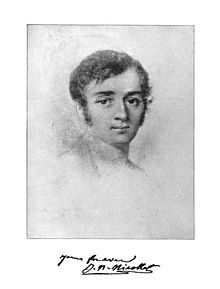
French astronomer Joseph Nicollet’s accurate maps of the upper Mississippi region, made over the course of several visits to Fort Snelling, are published by the U.S. Senate in 1843.*

Thanks for the blessing of accurate maps. Thanks that You give us a real assessment of the situations of our lives. Thank you that good maps help define land uses and indirectly, land disputes!

As I ponder Messr. Nicollet’s involvement in the life of this state, I quickly come to the question, “Why is an astronomer mapping terra firma so far from home?” Although I know so little about astronomy, I can easily imagine that he was trained to map the vastness of space. Perhaps working on such a small scale was a new challenge to him, or no challenge at all. His motives in this work are unknown to me, but would be an interesting campfire story.

However, I am practicing thinking about history as the Eternal Now. This is where Your Spirit leads me. I thank You that You led this man outside his discipline. I thank You that he was taken far beyond his home into the wilderness of North America. I thank You that he shared his gift, even if it was second place to astronomy! Will You bless us as his progeny to embrace the moments in life we are taken out of our expertise, and into the woods?

*www.dipity.com/Minnesota/History/Minnesota-History/

Standard
18th Century, 19th Century, African American, Canada, Economics, government, Great Britain, Great Lakes, History, law, Minnesota, Politics, State Government, Treaties

Webster-Ashburton Treaty Signed Aug 9, 1842


180px-Map_of_Minnesota_highlighting_Lake_of_the_Woods_County.svg

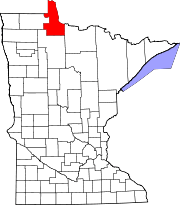
The Webster-Ashburton Treaty, which established the boundary between the United States and Canada, was signed by the United States and Great Britain. Minnesota’s “Northwest Angle” was a result of this treaty.*

It is hard to imagine a time where our most pressing and trying foreign policy questions concerned Great Britain or Canada. The hot button issues of the slave trade, impressment of United States sailors, or resolving the unrest due to the Canadian Rebellion of 1837 needed resolution.

Webster-Ashburton, though months in the making, resolved disputes that went back to the Revolutionary War. Lack of clarity in the Treaty of Paris of 1783 seeded conflict on our Northern Border. Lord Ashburton and Secretary of State Daniel Webster made clear land boundaries with open navigation on key portions of the Great Lakes. **

Jesus, thanks that You respect our boundaries. Thanks for the generations of peaceful relationships we have enjoyed with Canada and Great Britain since this agreement. Will You watch over this national border, all Minnesota state borders, and our personal borders? Will You be the Keeper of our Peace?

*mnhs.org/about/dipity_timeline.htm

** https://history.state.gov/milestones/1830-1860/webster-treaty


Standard
19th Century, Culture, government, History, Intercession, Jesus, law, Minnesota, Native Americans, State Government, Treaties

Doty Treaty July 31, 1841

Unknown-2


images

James Doty, the governor of Wisconsin Territory, fashions a treaty intended to provide a permanent home west of the Mississippi River for the Dakota, the Ho Chunk, and other tribes. Tracts of land are to be set aside for each band on the left bank of the Mississippi; each tribe is to have a school, agent, blacksmith, gristmill, and sawmill. The initial treaty is negotiated with the Sisseton, Wahpeton, and Wahpekute bands; negotiations with the Mdewakanton collapse. The United States does not ratify the treaty.*

Another treaty I know too little about. Help me, Jesus! Help me, wikipedia! Help me, Library of Congress! Help me tribal websites!

Lord, may I sit and watch this treaty in the making with You? Where do you wish to go? What can You teach about Governor Doty, and the Sisseton, Wahpeton, Wahpekute, and Mdewakaton nations? You are unlimited by time; what does this day of July 31, 1841 look like from the Eternal Now?

It was difficult to find a succinct summary of the Doty Treaty, but these are the pieces I see so far. Governor Doty was a Democrat who befriended Whigs. He seems less interested in party than principle. His intention for these permanent homelands may have come from within or from external motives to assuage land speculators. This is not clear to me yet.

In any case, Good Father, I bring these petitions to You who know each heart. Will You remember the benevolent intentions of Doty’s treaty to supply each nation with permanent claims to land, schools, agents, and the practical industries of his day? Will You bless his efforts to ratify this treaty at the Federal level, in spite of its failure?

I know even less about the responses of the Sisseton, Wahpeton, Wahpekute, and Mdwakaton towards Governor Doty, or how much information they were privy to. As a fellow human, empathetic to these people at this time, may I bring my heart for them to You?

I begin with a general idea; trust. Will You remember the effect on these specific tribes, who have known great fluctuations in spirit from the United States? Will you remember those who negotiated with them in good faith? Will You recall those who broke their trust in the name of our states and nation?

I especially pray for their reactions to times of broken trust much like I would pray for an individual who has undergone a great trauma, neglect, or abuse. We cannot escape some horrors of life, but we can choose our response. Will You break any response of fear, bad faith, or hatred for those that may have chosen such?

Honest One, our innermost lives are in Your plain view. We have offended Your diplomacy when we betray our brother in false negotiations. We have offended You when we break another’s faith. We, too often, think of ourselves as able to make good judgments although we have such an incomplete handle on the truth, or the pain another has lived through. Will you forgive, then and today, these offenses?

Slow us down! May we embrace the pain of choosing to love; to show mercy on our enemies! Will You write “Mercy Over Judgment” over the left bank of the Mississippi, and “Love Your Enemy” over the right bank?

Was this part of Your response, Lord?

“Treaty of October 13, 1846 — A treaty of cessions, and intended acquisition of lands west of the Mississippi River for a new homeland, concluded in the City of Washington. [Proclamation, February 4, 1847; 9 Stat., 878]. James K. Polk, President.”http://www.ho-chunknation.com/available-services/heritage-preservation/cultural-resources/history-of-ho-chunk-nation/treaties-of-the-ho-chunk-nation.aspx

Standard
19th Century, Culture, Economics, History, Minnesota, riverboat, Technology, trade, Transportation

Steamboats 1840 to 1870  

mississippi-riverboat

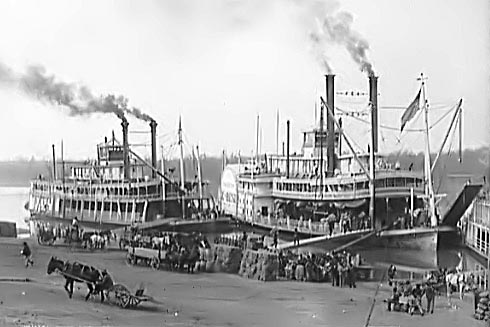
Steamboat trips up the scenic Mississippi are the fashion for Eastern tourists in the 1840s. By the mid-1850s steamboats, carrying supplies and immigrants as well as tourists, arrive in St. Paul at the rate of four or five a day during the summer months.*

Holy Spirit, will You journey with me through the steamboat era of the Mississippi? Will You allow me to bounce ideas off You, and alert me to any related subjects? Thanks that You are in, around and through all times and places! I love You for that!
Thanks for the gift of the steamboat! The idea of going effortlessly upstream must have been revolutionary in 1840. What would be an appropriate analogy to present Minnesotans’; skiing uphill at Afton or Wild Mountain? Maybe waterskiing without a rope or a boat?
I thank You for the relational benefits of this mode of transportation to our midwestern forefathers and foremothers. Technology is often viewed in terms of its innate capabilities, but not in terms of the relationships those capabilities may unlock. Transportation advancements seem to inherently effect relationships by changing how we view our geography.
For example, before the steamboat one imagines that it would be much easier for Northerners to travel south, downstream, on the Mississippi than Southerners to travel north. Is it a stretch to imagine that this creates a one-way relational path? If one can only passively receive visitors, products, news, from the north how would that impact one’s world-view.
Conversely, imagine what it would be like to only be a giver on this unidirectional path. A farmer works all season, loads up his crop, brings it to a river town, and sends it away. He feels the immediate reward of the sale of his harvest, but is largely isolated from any connections to those downstream.
Will You forgive any judgments between north and south based out of this one-way relational paradigm? Will You forgive any resentments based on an identity of being primarily a “giver” or a “receiver”? Will You forgive past judgments based on geographic isolation instead of real relationship?
Lord of Hesed, will You create in our generation a desire for real relationship, while aided by technology, not based on technology? Will You show us ways to reverse any symbolic or real curses resulting from one-way relationships? Will You make our mighty rivers flow upstream, and give us a future of blessed two-way, real relationships with our world and fellow man?

*Note – PrayThroughHistory uses the timeline located for several years at the Minnesota Historical Society Web site, at this URL: mnhs.org/about/dipity_timeline.htm .  The current URL is http://www.dipity.com/Minnesota/History/Minnesota-History/ and only works if typed, not pasted, in browser. It is worth the effort!


Standard