19th Century, Agriculture, Business, Dakota, Governors, History, Intercession, Judgment & Counter-Judgment Cycle, Minnesota, Native Americans, Ojibwe, omnipresent history, railroad, State Government, Treaties

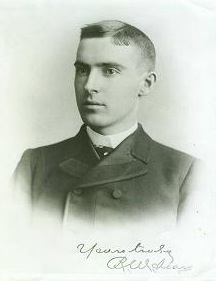
Nelson Becomes Governor 1893

unknown-1

January 4, 1893 to January 31, 1895

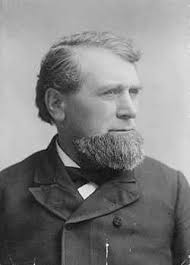
“Norwegian immigrant Knute Nelson becomes the state’s 12th governor in 1893, the first Scandinavian to hold the office. A fighter for farmers’ interests against the railroads and grain merchants, he resigned in 1895 to run successfully for the United States Senate, where he remained until 1923.” * 

Thank You for the life of Knute Nelson and his leadership in Minnesota. He became a prominent leader roughly 25 years after becoming a citizen. Negative attitudes about Scandinavians were tempered by his success.

Looking back at his career, the area of greatest contention were probably those issues concerning railroad interests. On one hand, the rails offered new markets to farmers and also supplied them with manufactured goods from the east. This relationship fueled western land development, and modernized communities along the way.

However, like all new technology, railroads were often the vehicle of economic bondage for immigrant settlers, and greedy for Native Americans’ land. Farmers became dependent on the rails to bring grain to market, but having a product with limited shelf life, were subject to the manipulations of the market and shipping costs charged by the railroad companies.

But how did the railways effect the Native Minnesotans? It is understandable that a sitting Governor wants to further the economic growth and standard of living in his state, but at what cost? These questions point to his writing of the Act cited below: 

“The Nelson Act of 1889 was a United States federal law intended to relocate all the Anishinaabe people in Minnesota to the White Earth Indian Reservation in the western part of the state, and to expropriate the vacated reservations for sale to European Americans. [1]

Approved by Congress on January 14, 1889, the Nelson Act was the equivalent for reservations in Minnesota to the Dawes Act of 1887, which had mandated allotting communal Indian lands to individual households in the Indian Territory, and selling the surplus. The goal of the Nelson Act was to consolidate Native Americans within the state of Minnesota on a western reservation, and, secondly, to encourage allotment of communal lands to individual households in order to encourage subsistence farming and assimilation. It reflected continuing tensions between whites and American Indians in the state. Especially after the Dakota Conflict of 1862, many Minnesota white residents were eager to consolidate the reservations, reduce the amount of land controlled by Indians and make the surplus available for sale and settlement by European Americans.

Minnesota congressmen Knute Nelson pushed for the allotment of Ojibway lands in Northern Minnesota and sale of “surplus” to non-Natives. He and others intended to force the Ojibway to relinquish most of their reservation lands. The intention was to relocate the peoples to the westernmost White Earth Reservation. All would receive individual allotments, with the remainder to be available for sale to European Americans. These actions were illegal and violated the treaties which the US had made with the tribes, but the government proceeded anyway. The Red Lake Band of the Ojibway were able to keep the southern portion of their Reservation.”**

Father, this story brings to mind the desire of King Ahab for his neighbor’s vineyard.

1 Kings 21:1-16

New International Version (NIV)

Naboth’s Vineyard

1 Some time later there was an incident involving a vineyard belonging to Naboth the Jezreelite. The vineyard was in Jezreel, close to the palace of Ahab king of Samaria. 2 Ahab said to Naboth, “Let me have your vineyard to use for a vegetable garden, since it is close to my palace. In exchange I will give you a better vineyard or, if you prefer, I will pay you whatever it is worth.”

3 But Naboth replied, “The Lord forbid that I should give you the inheritance of my ancestors.”

4 So Ahab went home, sullen and angry because Naboth the Jezreelite had said, “I will not give you the inheritance of my ancestors.” He lay on his bed sulking and refused to eat.

5 His wife Jezebel came in and asked him, “Why are you so sullen? Why won’t you eat?”

6 He answered her, “Because I said to Naboth the Jezreelite, ‘Sell me your vineyard; or if you prefer, I will give you another vineyard in its place.’ But he said, ‘I will not give you my vineyard.’”

7 Jezebel his wife said, “Is this how you act as king over Israel? Get up and eat! Cheer up. I’ll get you the vineyard of Naboth the Jezreelite.”

8 So she wrote letters in Ahab’s name, placed his seal on them, and sent them to the elders and nobles who lived in Naboth’s city with him. 9 In those letters she wrote:

“Proclaim a day of fasting and seat Naboth in a prominent place among the people. 10 But seat two scoundrels opposite him and have them bring charges that he has cursed both God and the king. Then take him out and stone him to death.”

11 So the elders and nobles who lived in Naboth’s city did as Jezebel directed in the letters she had written to them. 12 They proclaimed a fast and seated Naboth in a prominent place among the people. 13 Then two scoundrels came and sat opposite him and brought charges against Naboth before the people, saying, “Naboth has cursed both God and the king.” So they took him outside the city and stoned him to death. 14 Then they sent word to Jezebel: “Naboth has been stoned to death.”

15 As soon as Jezebel heard that Naboth had been stoned to death, she said to Ahab, “Get up and take possession of the vineyard of Naboth the Jezreelite that he refused to sell you. He is no longer alive, but dead.” 16 When Ahab heard that Naboth was dead, he got up and went down to take possession of Naboth’s vineyard.

These verses tell of an authority figure who is complicit in the annexation of his neighbor’s land. The part that stands out to me are the words of verse 3; “The Lord forbid that I should give you the inheritance of my ancestors.” Naboth did not want to sell away an inheritance.

Lord, there are many nuances that I do not know about this Act. I don’t know the Governor’s heart, his motivations, or the pressures on him. I simply see an action that is typically the breeding ground of bitterness and contention.

Will You forgive the injustice of this Act towards Native Minnesotans, their inheritance, property, and generations’? Will you release them from any binding counter-judgments that may hold them captive from receiving an inheritance from You? Will You reverse any curses on the lands specifically mentioned in this Act, and restore a right relationship between all Native Minnesotans and government?

Will You teach this state to have neither a tyranny of the majority or the minority? Will You enable us to neither feel the shame of asking for the help of our state, nor shame those who have graciously helped? Will You teach us about boundaries, property, lands, and inheritance?

Will You give honor to the just actions of Knute Nelson, his heritage, and generations? Will You forgive us in our judgments of the humanity and motive conflicts within our own natures’? Will You give us internal peace, contentment, and satisfaction in our hearts so we do not want another’s possession?

** http://en.wikipedia.org/wiki/Nelson_Act_of_1889

*** For more depth on Governor Knute Nelson see the “Biographical Directory of the United States Congress”. http://bioguide.congress.gov/scripts/biodisplay.pl?index=n000040

**** More on property rights of the ancient Middle East. https://tifwe.org/resource/ownership-and-property-in-the-old-testament-economy/


Standard
19th Century, Business, History, Intercession, Logging, Minnesota, omnipresent history

Lumber Giant 1891

pri060

1891

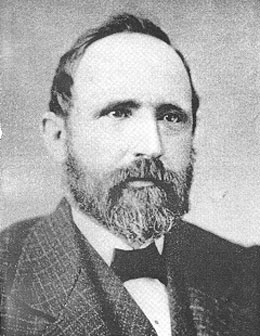
“German immigrant Frederick Weyerhaeuser, one of the most powerful men in American lumbering, moves his offices to St. Paul. Skilled at bringing competitors together in huge undertakings, he makes heavy investments in Minnesota timber and mills before moving on to the Pacific Northwest.” * 

Lord, I believe every person makes an impact on the future. Therefore, every Minnesotan has made an impact this state and it’s consciousness. I am a bit awed by the impact Weyerhauser made on St. Paul and Minnesota!

I can imagine the moxie it took to set up the processing of all the logs that were floated down the Mississippi. Or to have the courage to sign a land deed to purchase 900,000 acres. That’s an astronomical responsibility.

When a man or woman is so dedicated and effective in their field, they cultivate both admirers and critics. Will You forgive St. Paul and all areas that Mr. Weyerhauser impacted of our judgments’ towards him? Will You also forgive any injustices committed by him, or his company towards Minnesotans? We, too often, love the ideal of success, but are fearful and jealous of the successful in practice. Forgive us this foible! 

May You bless the heritage of Weyerhauser and all who partook in the logging industry on the Mississippi! May we learn from their mistakes, and have Your insights on how to better use our land, timber, and all wood by-products. Thank You for this precious resource! 

* http://www.mnhs.org/about/dipity_timeline.htm


Standard
19th Century, Business, History, Intercession, marketing, Minnesota, omnipresent history

Sears Starts Selling 1886

richardsears-young

1886

“Twenty-two-year-old Richard Sears starts selling pocket watches out of Redwood Falls. Encouraged by his quick success, he opens a mail-order company in Minneapolis. He then moves to Chicago, takes on a partner, and in 1893 forms Sears, Roebuck & Company. 

By the turn of the century, only the Bible has more readers than the Sears, Roebuck catalog. From its pages people order everyday items and oddities including clothing, harnesses, buggies, bicycles, guns, pianos, and parlor organs. 

1897 – Sears, Roebuck sends 318,000 catalogs across the Midwest. 

1908 – 3.6 million people receive Sears, Roebuck catalogs in a single mass mailing.” * 

God bless Richard Sears, and his embrace of the imagination you gave him. Thank you for fulfilling his vision to provide people with a new way to acquire needs, and wants irregardless of geography. Thank you that his catalog was a bridge builder between urban and rural, mountain and prairie, young and old, and many other stratifications of society!

Father You are generous with us. You allow us to express both needs and wants, and are infinitely able to provide for us. Your freedom allows our heart to be tested with what we have been given. Will we share our blessings? We will humble ourselves to make our needs known to others, or pridefully hide our lacking from the eyes of others?

Will you forgive the judgements cast on Richard Sears, his company, his employees, and his astounding success? He put possibilities in front of millions of eyes, and let them decide what was useful, or what was luxury. His business created heaps of jobs, and probably ended many smaller enterprises that could not, or would not, adapt to this new way of doing business. It is hard for us to admit when we have been outdone by another’s incredible effort. Have mercy! Will you forgive us this type of jealousy? Will you release us from the envy of another’s success in Minnesota? Will you give us hearts that rejoice at our brother or sister’s success?

In many ways, the mail order business predicated the modern world of advertising. Through it, we are tested daily to discern between our needs and wants, likes and dislikes. It is a good thing to have a choice! It is wonderful to have a plethora of options for nearly every item we desire.

However, the knowledge of many things often leaves us with a craving for many things. We often feel a lack by the simple knowledge of what we do not yet possess. Again, this option tests our mettle! Is it bad to know what we do not have? Sometimes it inspires us to new efforts. Sometimes a new tool gives us an inspiration for working a new way.

Lord, forgive us for choosing to focus on our discontent. Forgive the pining for something new that will bring us contentment! We too often love things, and use people! Will You break the roots of those cravings that came from the Sears catalog, and still bind us today? Will You help us in this struggle to want everything we see?

* http://www.mnhs.org/about/dipity_timeline.htm

**More about this extraordinary pioneer of marketing? https://www.britannica.com/biography/Richard-W-Sears


Standard
19th Century, Americana, Architecture, Business, Civics, Energy, History, Industry, Intercession, Minnesota, omnipresent history, Real Estate, Science, Technology

Industrial Exposition 1886

pf128164

1886

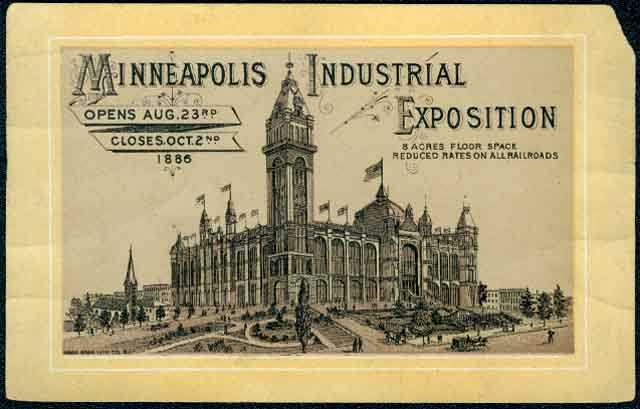
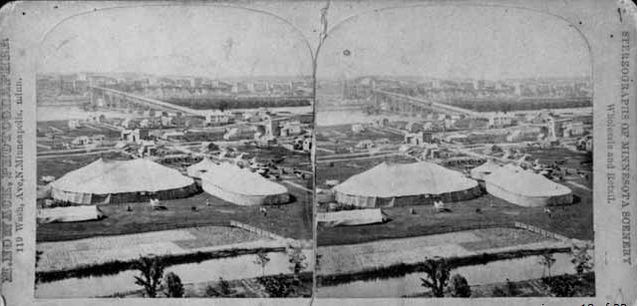
“The Mill City answers St. Paul’s State Fair with the Minneapolis Industrial Exposition. Despite elaborate attractions and the latest wares of 800 exhibitors, the exposition can’t compete with the fair and closes its doors in 1893.” * 

“The idea for an exposition in Minneapolis arose in August 1885, when it became known that St. Paul had secured the permanent home of the Minnesota State Fair. Prominent citizens of Minneapolis such as Minneapolis Tribune owner Alden Blethen felt slighted, and an open meeting was called to gauge public support for an annual Minneapolis industrial fair, or exposition, to rival St. Paul’s agricultural one.” **

 Lord, we are competitors. Competition is not a sin, but the envy or covetousness that often accompany it leads to disunity or complete breaks in relationship. What do You want to reveal in this moment of rivalry in 1886? 

The Twin Cities of Minneapolis and St. Paul have had friendly rivalries that go far into our history. Will You forgive, first, the jokes, speech, and written words that have been used to put down the ‘other’ Twin City? Will You forgive the heart it reveals, one of mockery and pride? 

How many actions have resulted in our heritage because one “prominent citizen” felt slighted? There is nothing wrong with a human being of any status in society taking leadership according to their conscience. However, if the attitude of civic pride, in this case personified by Alden Blethen was an offense to You, will You forgive us? Will You forgive us our pettiness over another’s blessing? Will you help us; “seek the peace and prosperity of the city to which I have carried you into exile. Pray to the LORD for it, because if it prospers, you too will prosper.” Jeremiah 29:7 ***

You have ideas for both of these places that we have not considered. What are they? Will You replace the rivalry of Minneapolis and St. Paul stemming from the Industrial Exposition of 1886 with blessing? Will You download into us a mindset that rejoices at the success of the other? Will You bless us with the kind of competition that brings virtue, excellence, and mutual respect?

* http://www.mnhs.org/about/dipity_timeline.htm

**Learn about the short life of this huge structure?

http://www.mnopedia.org/structure/industrial-exposition-building-minneapolis

***http://biblehub.com/jeremiah/29-7.htm


Standard
19th Century, Agriculture, Business, farming, History, Intercession, Minnesota, omnipresent history, State Government

Minnesota State Fair Finds a Home at Ramsey County Poor Farm’s Expense 1885

mn_state_fair_4

1885

“The Minnesota State Fair finds a permanent home in the Midway area of Saint Paul. (The 1885 fair was the 27th annual state fair.)” *

Lord, it does help to have more information when interceding; and most facets of life. Even with my limited research, I see a few things: 1. Establishing Fairgrounds was a priority by the city government of St. Paul, and the state government of Minnesota. 2. the Poor Farm and it’s people were clearly displaced. 3. There was a sense of rivalry between Minneapolis and St. Paul. 4. Care for the poor from the county, to the state, and to the Federal government.

To begin, I want to announce to the land formerly known as the Ramsey County Poor Farm the jubilee and blessing of the Lord Jesus Christ! Thank You for this example of caring for the the elderly and poor! I want to bless those generations attached to the Poor Farm whether as employees or residents, and ask that any bitterness on their part be forgiven and removed. 

  Lord, will You forgive our lack of relationship with those in need? Will You heal the rift over HOW we do charity, and WHAT it looks like? Each election, we still battle over WHO gets the credit for being charitable; the State or individuals!?! May this land that is now called the State Fairgrounds be a place where we iron out these differences! May we find Your way of blessing each other; rich to poor, in any state of health!

Also, will You forgive the political and business rivalry between Minneapolis and St. Paul? Will You set us free from the emotions of Alden Blethen? Jesus, will You make these “Twin Cities” live at peace with each other? Holy Spirit, will You inhabit this property now known as the State Fair and bring your life there? Will You dignify the poor and show them their potential to contribute for their loved ones and society, and most importantly, their eternal value to You?

More on how the poorhouse was transformed into the Minnesota State Fair:

**http://www.postcardy.com/msf.html

***http://www.mnopedia.org/structure/industrial-exposition-building-minneapolis

****https://en.wikipedia.org/wiki/Poorhouse


Standard
19th Century, African American, authors, Black History, Business, education, History, Intercession, Journalism, Minnesota, omnipresent history

Black Newspaper Begins Publishing 1885

unknown

June 6, 1885

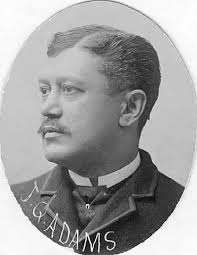
“Saint Paul’s ‘Western Appeal’ newspaper becomes a voice against discrimination and proscriptive legislation and an important advertising medium for black businessmen. 

Editor and owner John Q. Adams leads Saint Paul’s growing black community in its struggle for equality through the 1880s and ’90s. “No wrongs are ever righted,” he writes, “except by protest.” “ *

I thank You for the life and discipline of John Q. Adams. I thank You for giving him the desire to write and convey the ideas in his heart that brought a new awareness and significance to black Minnesotans. I thank you that he viewed himself as a man made in Your image and worthy of respect! 

O Father, will you forgive the city of St. Paul, and the State of Minnesota, its judgments of John Q. Adams, “The Western Appeal”, and black Minnesotans? Will you forgive any counter judgments by him, his paper, or the black community of St. Paul, and the State of Minnesota? We often fear other cultures and sub-cultures because we are afraid to know them and experience the vulnerability of allowing ourselves to be known! Christ have mercy on this fear! Past, present, and future! What blessings we have not received here, specifically for this geographic region known as Minnesota, because we have not honored the Christ within our brothers and sisters!

Today, because of Your grace and truth, I ask: “Will You bless the generations of John Q. Adams? Will You bless the black community of St. Paul? Will You bless all African-Americans in this state? Will You reverse the curses of the Enemy on this State of Minnesota? Bring out those who will write the stories of this generation of black Minnesotans! Bring out those who will write in Your image of grace and truth! May we learn to record OUR  history as those who have been betrayed, have betrayed others and ourselves, and most importantly, have betrayed You! May we remember how we have received mercy, have extended mercy to others and to ourselves, and received a perpetual inheritance of mercy from You! 

Lord, because John Q. Adams was an author, I also want to pray a blessing specifically on the impact of his words, and the awareness of his writings and newspaper to all Minnesotans. May they be rediscovered and be a source of continual edification to this state! Amen.

*P.T.H. cites timeline formerly at this URL: mnhs.org/about/dipity_timeline.htm 

The Minnesota Historical Society Web site, http://www.mnhs.org , is fantastic! Check it out! Images are from https://images.google.com/?gws_rd=ssl; again, an amazing resource!

**See an actual copy of the Western Appeal? http://chroniclingamerica.loc.gov/lccn/sn83016811/


Standard
19th Century, Business, Environment, History, Industry, Intercession, Mining, Minnesota

Merritts Discover Mesabi

unknown

1884

“The Merritt brothers find the largest deposit of iron ore in the world in the red earth of the Mesabi Range. Later they lose their mining company and a fortune to John D. Rockefeller.” *

As we interact with the Merritt brothers story, I ask of You, precious Spirit, to guide my thoughts and actions. Reveal the root issue. According to this snippet above, the Merritts’ were likely dealing with a profound sense of joy at their discovery, followed by the injustice of loss. 

As a fellow Minnesotan to the First Nations’, and the Merritts’, i want to acknowledge before You that this land is Your land! These treasures, whether found in the sky, on the earth, or below it are Yours! Lord, we claim ownership because we don’t know a better way to delegate responsibility for a parcel of land. But I ask You, “Is there a better way?” Forgive the Merritts’, their generations, and Minnesotans’ as a people for our trespass on Your land! 

Lord, You have given us laws, and a system through which we possess the land for a time, with rules and conditions that apply. You allow us to pass down these parcels of land to our progeny for their benefit. Will You bless the Merritts’ for the discovery, and subsequent loss of this treasure?

Oh God, the sadness, anger, and bitterness still in the air is nearly tangible! To be a ‘regular Joe’ and have this loss would be toxic for a man’s soul unless he believes that You are the faithful and true arbiter of the universe! Christ, if the Merritts’, their generations, and we as extant Minnesotans are still legally bound to offense through our bitterness, will You forgive it today? 

Will You be merciful to us as you were to King David so long ago? He was confronted by the prophet Nathan, and told the parable of the rich man with many flocks and herds, who stole the poor man’s sheep. He was, at first, enraged by this breech of justice, but then convicted of his sin of stealing Bathsheba and the murder of her husband. Is this applicable to this circumstance when thinking of the Rockefellers’ actions?

If so, and I am trusting that it is your heart, will You forgive the Merritts’, their generations, and us as Minnesotans our offense to you in judging this very  rich family? Will You bring conviction to their hearts, and a spirit of restitution? Will You bless all involved from the machinations of the enemy to divide and embitter us over this land? Will You bless the Mesabi range, and any other lands that have been held captive by this event of broken trust? Lord have mercy! Christ have mercy!

**Learn about the Merritt family? http://www.mnopedia.org/group/merritt-family-and-mesabi-iron-range

***Want a great read about the mischief on the Mesabi Range? https://www.upress.umn.edu/book-division/books/seven-iron-men


Standard
19th Century, Business, Environment, Geology, History, Industry, Intercession, Mining, Minnesota, omnipresent history

Iron Industry Launch 1884

unknown

1884

“With the state’s first shipment of ore from the Vermilion Range, Minnesota’s iron industry is launched. Within 20 years, new immigrants will mine from the region a great majority of the iron for the nation’s industrial boom.” *

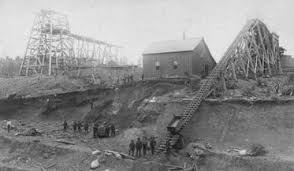
Ore is moved by train to ports like Duluth. From there giant ships carry it to the blast furnaces of Ohio and Pennsylvania where it is melted and processed by the heat of burning coal from mines in Pennsylvania, West Virginia, Kentucky, and Ohio. The result is steel, which goes to factories in cities such as Detroit to become the rails of railroads, the skeletons of skyscrapers, and the chassis of cars. 

The growth of iron mining brings tens of thousands of new people to northeastern Minnesota. They come from almost every country in Europe and elsewhere, bringing different languages and cultures from places like Canada, Wales, Ireland, Sweden, Finland, Belgium, Lithuania, Romania, Slovakia, Slovenia, Hungary, Italy, Greece, Syria, Russia, and China. 

Father, we adore You! You have given us an earth full of blessings! We thank You for the gift of iron ore. We thank You for the impact of this gift on our state and peoples!

Father, we are full of bitter roots and rusty hearts! This blessing has been corroded by our mis-dealings. We are guilty of judging the owners of the steel business: Carnegie, Morgan, Rockefeller, etc. We have stolen and tainted the land of the individual, the Indian nations, our neighbor’s business, our state, and our nation. 

We have judged our fellow workers on the basis of his race or culture: Canadian, Welsh, Irish, Swedish, Finnish, Belgian, Lithuanian, Romanian, Slovakian, Slovenian, Hungarian, Italian, Greek, Syrian, Russian, Chinese, and Native American! We have offenses based on interstate prejudices: Minnesota, Ohio, Pennsylvania, West Virginia, Kentucky, Michigan, Sioux, Dakota, Ojibway. 

Lord, will You have mercy on our humanity? Will You replace this heritage of curses with blessings for us? Will You reverse the curses against the land, and all the pathways it has travelled out this state through out the world? I want to pronounce the blessing of the Lord to every molecule of steel that has passed, is passing, or will pass from this state!  May You grant us humility, wisdom, and imagination to properly use the resources of this state! May the iron of Minnesota, regardless of its present use or form, ring with the unlimited, infinite blessings of its’ King! Hallelujah!

* http://www.mnhs.org/about/dipity_timeline.htm


Standard
19th Century, Agriculture, Business, farming, Food, History, Industry, Intercession, Minnesota, Mississippi River, omnipresent history

Minneapolis Nation’s Flour Milling Capital 1880

300px-west_side_milling_district-minneapolis-c1905

1880

“Minnesota wheat and the power of St. Anthony Falls make Minneapolis the nation’s capital of flour milling. A year later, Pillsbury’s new A Mill is the largest flour mill in the world.” * 

My first thought is, ”How do I pray for a flour mill, and why is it important?” Show me why Lord. Possible reasons:

1. The Washburn mill exploded, which was the biggest in the world, allowing Pillsbury a chance to take the lead. So, do I pray about the effects of professional pride and jealousy?

2. It could be a simple acknowledgement of a real accomplishment; an amazingly quick rebuild! Simply viewing it as a story of hope.

3. What did the flour industry do for the city of Minneapolis and the State?

Jesus, You know our inmost thoughts, and yet you love us. Lord, Washburn and Pillsbury were competitors in the milling business. There’s nothing wrong with competition between these companies, or any other for that matter. However, if there were underhanded or bitter motives between them, will You release us from  the burden of their jealousy, and or pride? Will You cleanse St. Anthony Falls from any guilt brought on by any unethical competition?  

If everything was on the up and up, and the Washburn mills explosion was purely accidental, will You also cleanse us from the bitterness and sense of loss of that incident? Will You cleanse us of the spirit of blame? Will You heal this rift between  companies then, and show our present-day business culture how to compete without hating their rivals? I thank you today for blessings of outstanding Minnesota companies in the grain and milling business: General Mills and Cargill to name a few! 

Thank you for leaders who face major setbacks, and rebuild something amazing; brick by brick. Will You forgive our judgments of business leaders in milling, as well as their peers in all major industries here? The average person knows nothing of the intensity, risk, and sheer loneliness of being on top. Will You inform our hearts’, minds’, and creativity in the context of leadership?

Will You show us new ways of doing business in Minnesota that honor You and the creation we are stewards of, and help us redeem the business culture of the world? May our progeny say with Isaiah,

“Because the Sovereign LORD helps me, I will not be disgraced. Therefore have I set my face like flint, and I know I will not be put to shame.” Isaiah 50:7 **

*P.T.H. cites timeline formerly at this URL: mnhs.org/about/dipity_timeline.htm 

The Minnesota Historical Society Web site, http://www.mnhs.org , is fantastic! Check it out! Images are from https://images.google.com/?gws_rd=ssl; again, an amazing resource!

** http://biblehub.com/isaiah/50-7.htm

*** A wonderful synopsis of the explosion of Washburn A Mill. https://www.mnopedia.org/event/washburn-mill-explosion-1878


Standard
19th Century, Business, Canada, Civics, Exploration, History, Industry, Intercession, Leadership, Minnesota, railroad, Transportation

Hill’s First Railroad 1879

00902018

1879

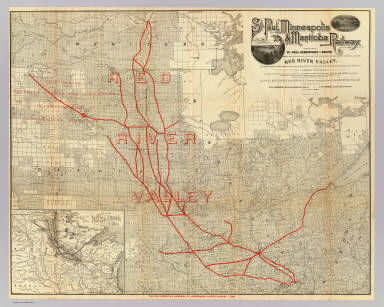
“James J. Hill and his Canadian partners buy the near-bankrupt St. Paul and Pacific Railroad and rename it the St. Paul, Minneapolis and Manitoba. This is the beginning of the railroad career that will earn Hill the title “Empire Builder” and cement the importance of the Twin Cities as a commercial center. 

Hill’s career didn’t begin with railroads. He came to Minnesota at age 18, convincing a steamboat man to hire him as a clerk. From making sure freight reached the right people, he expanded into handling freight by boat, stagecoach, and wagon. By the time his empire was built, he was one of the nation’s leading industrialists. 

In 1891 James J. Hill will crown his success by building a house at 240 Summit Avenue in St. Paul. As massive and well-built as its owner’s railroad empire, the mansion will take three years to build and cost $931,275.01, furnished.” * 

Lord, thanks that You deal with us so patiently. You allow us to learn from our errors and seek You for mercy and truth. Thank You for the blessings of James J. Hill and his railroads.

However, we still feel the weight of the blessing and curses in the wake of his empire building! He was alleged to be duplicitous in his business dealings. He allegedly manipulated land grants or sales from cities, tribes, states, and the nations of Canada and the United States. He may have wreaked havoc on the stock market in his battle with Harriman of the Union Pacific line. **

Hill proved to be cut from a different cloth than the Robber Barons of his age whose modus operandi included manipulation of the stock market, public institutions and opinions, or Federal or State governments. In many ways, he retained the common-sense lessons of his Scots-Irish upbringing in Manitoba, Canada and the Midwestern states. A few examples of his forthright tongue and blue-collar wisdom below.

“Give me snuff, whiskey, and Swedes, and I will build a railway to hell.”

“Work, hard work, intelligent work, and then more work.”

“The wealth of the country, its capital, its credit, must be saved from the predatory poor as well as the predatory rich, but above all from the predatory politician.” ***

Lord, You are the righteous ruler and justice of North America. Will You remove the curses we have laid on James J. Hill and the lines he laid? Will You forgive his debts to the people of North America and the Midwest? Will You forgive us our injustices and betrayals of Your trust?

Like Mr. Hill, we kill our competitors and covet and build empires in our hearts. We plunder our enemies in our thoughts, and do not see our brothers and sisters as precious lives that You died and rose for! Have mercy on us: the ambitious, the coward, the sluggard, and the average! Remove the curses brought on us, our generations, the land, the property, and our homes both now and until Your return! May the pathway of this railway become a track of blessing to both Manitoba and the Twin Cities! Amen!

*P.T.H. cites timeline formerly at this URL: mnhs.org/about/dipity_timeline.htm
The Minnesota Historical Society Web site, http://www.mnhs.org , is fantastic! Check it out! Images are from https://images.google.com/?gws_rd=ssl; again, an amazing resource!

** https://www.upress.umn.edu/book-division/books/harriman-vs-hill

*** https://www.azquotes.com/author/6703-James_J_Hill

Standard