19th Century, Culture, Emigration, farming, History, Immigration, Intercession, Minnesota

Swedish Immigration 1862

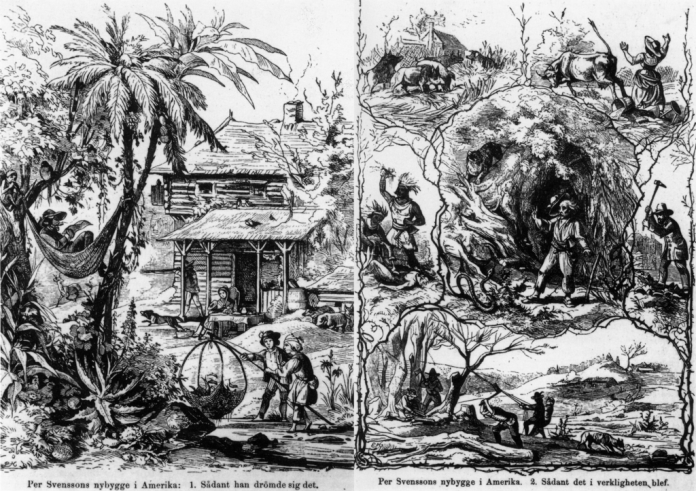
1024px-Anti-emigration.propaganda.1869

Left side: Dreams of America Right side: Realities of America

Over the next 30 years more than 350 families from the province of Dalarna in Sweden pick up and move to Isanti County. They recongregate around their parish churches.
This emigration represents a second wave from Sweden, driven by hunger during lean years (1863-1877) in their native land.*

There were many reasons Swedes were disenchanted with life in their homeland in this era. Norway and Sweden were ruled by a shared aristocracy and common people allegedly despised the arrogance of monarch Charles XV and his tone-deaf response to their plights. Uppsala graduate Gustaf Unonius left Sweden for the Midwest, and his writings in the Swedish newspaper “Aftonbladet” drew interest in places like Wisconsin and Minnesota.**

Though this wave came from Dalarna, many future Minnesotans came from Smaland (Southern Sweden) where the poor soil and small plots made it difficult to survive. Imagine their surprise when one could buy an acre of excellent land for $1.25?! The climate of Midwest was familiar and pleasant to these northern peoples.

Numerous other factors tipped the scales towards them in the eyes of their American neighbors. “They are not peddlers, nor organ grinders, nor beggars; they do not sell ready-made clothing nor keep pawn shops, they do not seek the shelter of the American flag merely to introduce and foster among us … socialism, nihilism, etc … they are more like Americans than are any other foreign peoples.” ***

Lord, thank you for the gift that Swedes have been to our state! Thank you that they could find this new place to begin again! Will You bless every Minnesotan of Swedish ancestry; them, their generations, and their dwellings by the authority of the Lord Jesus Christ?

Jesus, forgive our judgments of these immigrants. Forgive us when we do not remember the trials of their homeland. Most Minnesotans’ of today do not realize that our Swedish ancestors fought starvation, various forms of slavery, political disenfranchisement, and religious persecution.

Lord, will You forgive our bitter judgments of Swedish-Americans! Forgive any counter judgments that enslave them! May we be Your forgiving and free people! Ljuset skringrar varje morker! Gud valsigne Sverige!

*P.T.H. cites timeline formerly at this URL: mnhs.org/about/dipity_timeline.htm
The Minnesota Historical Society Web site, http://www.mnhs.org , is fantastic! Check it out!

 

Standard
19th Century, Agriculture, farming, History, Indian, Intercession, Minnesota, Native Americans

Homestead Act 1862

9-2

“Congress passes the Homestead Act, offering millions of acres of free land to settlers who stay on the land for five years. Lumber companies acquire valuable timber lands through fraudulent claims.

“A Homestead Bill Passed. Minnesota will derive great benefit from the passage of this act. Not only will it afford relief to thousands of settlers at present upon our public domain, but offer additional inducements for emigrants from the east and the old country to settle among us.” -Mankato Record, June 26, 1862

The act brings 75,000 people to Minnesota over 3 years. To qualify for 160 free acres, settlers have to live on it for five years, farm, and build a permanent dwelling. Those able to spend the money can buy the 160 acres at $1.25 an acre after living on it for six months.” *

I am a witness to this truth this morning: Minnesota is the property of the Lord Jesus Christ. Thank you for the heart of the Homestead Act to offer a place for the emigrant: “exile, expatriate, emigre, colonist, migrant, displaced person, D.P., traveler, foreigner, pilgrim, refugee, fugitive, wayfarer, wanderer, immigrant, alien, outcast, man without a country.” (p.136, “Webster’s New World Thesaurus” by Charlton Laird) This is an honorable motive, to be a place of refuge, consistent through Minnesota’s history.

However, there is a heritage of mixed fruit. Some land given away by the state was “acquired” or unjustly taken from Native Americans. We see the continuation of the root sins of greed for land by the fraudulent claims of special interests: lumber companies, railroads, land speculators, and corrupted government agencies. Lord will You be the arbiter of justice over these parties to mass theft, deception, or at least self-interest? Will You specifically restore the Native American to his land(s), or find a path to reasonable compensation? Will You meet this bitter root of land greed today?

Under the the authority of the Lord Jesus Christ, I announce to the spirit and attitude of land greed that your reign in Minnesota from the Homestead Act of 1862 through the present and into the eternal future is broken. Land and property, be reassigned according to the will of the Lord, to the stewards whom He may choose. O land of Minnesota, all below, and sky above, I declare a “Year of Jubilee”: a year of returning and rest, a year of the favor of the Lord!

*P.T.H. cites timeline formerly at this URL: mnhs.org/about/dipity_timeline.htm
The Minnesota Historical Society Web site, http://www.mnhs.org , is fantastic! Check it out!
Standard
19th Century, Agriculture, farming, Food, History, Intercession, Minnesota

King Wheat  

images-12

1859

“Minnesota’s first shipment of spring wheat is warmly received in Chicago–marking the start of an agricultural export that will become King in coming years. Production grows wildly as railroads connect farms to inland markets.” *

“Minnesota or that part of it known as Cottage Grove has gone to wheat. Men work in wheat all day when it does not rain, lounge round talking about wheat when it is wet, dream about wheat at night, and I fear go to meeting Sabbath Day to think about wheat.”
-Rev. George Biscoe, in a letter to his sister, August 21, 1862.*

Jesus, thank you for the blessing spring wheat has been to our state! Imagine how miraculous it felt to find a strain of grain that liked northern climes and short summers? Thank You for their generous yields, and the kind and rich soil that produced them! Thank you for ability of farmers, past and present, to focus on the work You have given them. Will You continue to bless the farmer of Minnesota, and everyone who works to bring our food to market?

Will You forgive the judgments the farmers of MInnesota have made against You? Will You forgive our grumblings about the weather, the length of the seasons, and any other rash words we have spoken against You? Will You forgive the judgments made between farmer and city-folk? Will You forgive us when we allow our passions to overtake us; even something as innocent as a desire for better grain?

*P.T.H. cites timeline formerly at this URL: mnhs.org/about/dipity_timeline.htm
The Minnesota Historical Society Web site, http://www.mnhs.org , is fantastic! Check it out!
 

Standard
19th Century, Agriculture, education, farming, Food, History, Minnesota

First Minnesota County Agricultural Society 

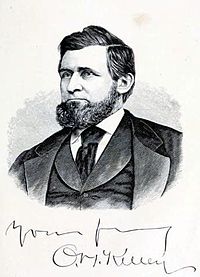
200px-Kelley_Oliver_Hudson_pic_sig-1

March 5, 1852
“Farmers in Benton County form the state’s first county agricultural society. Oliver H. Kelley, who would later found the National Grange, is one of ten charter members. County agricultural society members share information about stock, seeds, fruit, and farming practices.” *

Lord, thanks that You created the abundance of food in Minnesota! Thank You for the formation of this Society to better understand all things that grow. Will You bless the Kelley family and all who share his vision as expressed through the Grange? Will You bless Benton County, and cause those who live there to remember this important contribution to our state, and those far beyond Minnesota? Will You continually raise leaders in all aspects of farming from our ranks?
May You preserve healthy food, crops, and livestock for the people of Minnesota in perpetuity! May we receive Your blessings of our weather and environment through these and any other means: moderation of man-made pollutants or hyper-nutrients, sun cycles, lunar cycles, ultra low frequencies, and any other form of energy or wavelength! Truly You are the light! Truly in You we live, move, and have our being!

* http://www.mnhs.org/about/dipity_timeline.htm


Standard
19th Century, Agriculture, Emigration, Exploration, farming, Food, History, Immigration, Minnesota, Native Americans, State Government, trade, Treaties

Settlement in Minnesota 1849 to 1860

images-8

“The number of non-Indian people in Minnesota jumps from 3,814 in 1849 to 172,072 in 1860, a 4,500 percent increase! The newcomers break sod, start businesses, plot towns, look for jobs, and dream of getting rich.

Pent-up demand for good agricultural land is the primary reason. Iowa and Wisconsin had been heavily settled and had both passed from territorial to statehood status by 1848. It had been dangerous and illegal to settle on land in most of Minnesota before treaties with the Dakota and the Ojibwe were signed. But after several treaties were ratified in the 1850s, the floodgates of migration burst open.” *

When we move, we make assessments of our new neighbors and neighborhood. They, in return, watch us move into their neighborhood, and may ‘size us up’ by our friendliness, possessions, (or lack of possessions), our physical appearance, etc. These assessments, I believe, are instincts designed for our survival, but must be tempered or they can morph into prejudice.

Lord, what were the judgments of these ‘new neighbors’ in Minnesota? Will You forgive us the inheritance of those who knowingly moved into the state illegally? Will You forgive the betrayals committed between settler and tribe, and their counter-betrayals? Will You break the power of the derogatory words and names given among these groups? Will You break the vows made in anger, envy, revenge, arrogance, unforgiveness, fear, and unbelief of each group towards its real or supposed nemesis?

Thinking about the impact of these past separations on the present, will You forgive the heart behind the relocation of Native Americans? Will you free us from the bondages and entanglements within poorly made treaties? Will You bring Your heart of restoration to Minnesota? Will You bring to light a new kind of history in Minnesota? Will You write a history that remembers the good, the pleasing, the fair, the gracious, the restored relationship on our hearts? Will you give us Your eyes to see our neighbors’ inherent value?

*mnhs.org/about/dipity_timeline.htm

Standard
19th Century, Agriculture, Christian, education, farming, Fundamentalist, History, Minnesota, Native Americans, Technology

Missionaries at Lac qui Parle 1835

hane-and-herman-bigger

Presbyterian ministers Thomas Williamson and Jedediah Stevens establish a mission at Lac Qui Parle to the west. They bring a farmer along to teach the Dakota how to raise crops in the European manner.*

Lord, thanks for the benefits of European farming, and Native farming. Thank you for the benefits of this heritage: seldom have we lacked food as a state, often we have contributed food to others! Will You continue to bless the productivity  of all Minnesota farmland? Will You enhance the nutrition of our soil and food? Amen.

*Note – PrayThroughHistory uses the timeline located for several years at the Minnesota Historical Society Web site, at this URL: mnhs.org/about/dipity_timeline.htm .

Standard