19th Century, Agriculture, Business, Dakota, Governors, History, Intercession, Judgment & Counter-Judgment Cycle, Minnesota, Native Americans, Ojibwe, omnipresent history, railroad, State Government, Treaties

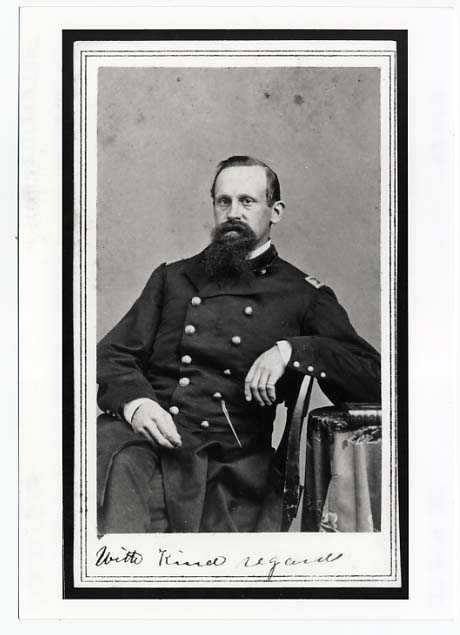
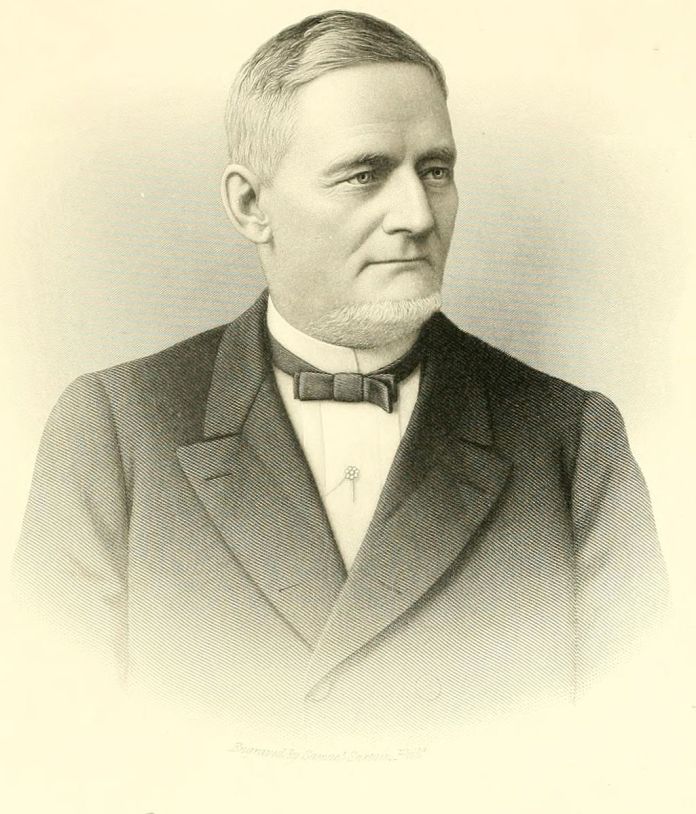
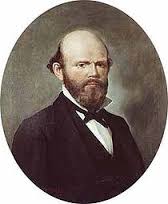
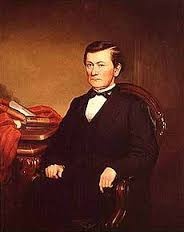
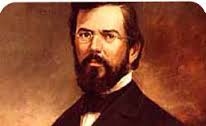
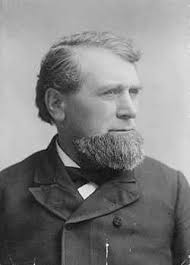
Nelson Becomes Governor 1893

unknown-1

January 4, 1893 to January 31, 1895

“Norwegian immigrant Knute Nelson becomes the state’s 12th governor in 1893, the first Scandinavian to hold the office. A fighter for farmers’ interests against the railroads and grain merchants, he resigned in 1895 to run successfully for the United States Senate, where he remained until 1923.” * 

Thank You for the life of Knute Nelson and his leadership in Minnesota. He became a prominent leader roughly 25 years after becoming a citizen. Negative attitudes about Scandinavians were tempered by his success.

Looking back at his career, the area of greatest contention were probably those issues concerning railroad interests. On one hand, the rails offered new markets to farmers and also supplied them with manufactured goods from the east. This relationship fueled western land development, and modernized communities along the way.

However, like all new technology, railroads were often the vehicle of economic bondage for immigrant settlers, and greedy for Native Americans’ land. Farmers became dependent on the rails to bring grain to market, but having a product with limited shelf life, were subject to the manipulations of the market and shipping costs charged by the railroad companies.

But how did the railways effect the Native Minnesotans? It is understandable that a sitting Governor wants to further the economic growth and standard of living in his state, but at what cost? These questions point to his writing of the Act cited below: 

“The Nelson Act of 1889 was a United States federal law intended to relocate all the Anishinaabe people in Minnesota to the White Earth Indian Reservation in the western part of the state, and to expropriate the vacated reservations for sale to European Americans. [1]

Approved by Congress on January 14, 1889, the Nelson Act was the equivalent for reservations in Minnesota to the Dawes Act of 1887, which had mandated allotting communal Indian lands to individual households in the Indian Territory, and selling the surplus. The goal of the Nelson Act was to consolidate Native Americans within the state of Minnesota on a western reservation, and, secondly, to encourage allotment of communal lands to individual households in order to encourage subsistence farming and assimilation. It reflected continuing tensions between whites and American Indians in the state. Especially after the Dakota Conflict of 1862, many Minnesota white residents were eager to consolidate the reservations, reduce the amount of land controlled by Indians and make the surplus available for sale and settlement by European Americans.

Minnesota congressmen Knute Nelson pushed for the allotment of Ojibway lands in Northern Minnesota and sale of “surplus” to non-Natives. He and others intended to force the Ojibway to relinquish most of their reservation lands. The intention was to relocate the peoples to the westernmost White Earth Reservation. All would receive individual allotments, with the remainder to be available for sale to European Americans. These actions were illegal and violated the treaties which the US had made with the tribes, but the government proceeded anyway. The Red Lake Band of the Ojibway were able to keep the southern portion of their Reservation.”**

Father, this story brings to mind the desire of King Ahab for his neighbor’s vineyard.

1 Kings 21:1-16

New International Version (NIV)

Naboth’s Vineyard

1 Some time later there was an incident involving a vineyard belonging to Naboth the Jezreelite. The vineyard was in Jezreel, close to the palace of Ahab king of Samaria. 2 Ahab said to Naboth, “Let me have your vineyard to use for a vegetable garden, since it is close to my palace. In exchange I will give you a better vineyard or, if you prefer, I will pay you whatever it is worth.”

3 But Naboth replied, “The Lord forbid that I should give you the inheritance of my ancestors.”

4 So Ahab went home, sullen and angry because Naboth the Jezreelite had said, “I will not give you the inheritance of my ancestors.” He lay on his bed sulking and refused to eat.

5 His wife Jezebel came in and asked him, “Why are you so sullen? Why won’t you eat?”

6 He answered her, “Because I said to Naboth the Jezreelite, ‘Sell me your vineyard; or if you prefer, I will give you another vineyard in its place.’ But he said, ‘I will not give you my vineyard.’”

7 Jezebel his wife said, “Is this how you act as king over Israel? Get up and eat! Cheer up. I’ll get you the vineyard of Naboth the Jezreelite.”

8 So she wrote letters in Ahab’s name, placed his seal on them, and sent them to the elders and nobles who lived in Naboth’s city with him. 9 In those letters she wrote:

“Proclaim a day of fasting and seat Naboth in a prominent place among the people. 10 But seat two scoundrels opposite him and have them bring charges that he has cursed both God and the king. Then take him out and stone him to death.”

11 So the elders and nobles who lived in Naboth’s city did as Jezebel directed in the letters she had written to them. 12 They proclaimed a fast and seated Naboth in a prominent place among the people. 13 Then two scoundrels came and sat opposite him and brought charges against Naboth before the people, saying, “Naboth has cursed both God and the king.” So they took him outside the city and stoned him to death. 14 Then they sent word to Jezebel: “Naboth has been stoned to death.”

15 As soon as Jezebel heard that Naboth had been stoned to death, she said to Ahab, “Get up and take possession of the vineyard of Naboth the Jezreelite that he refused to sell you. He is no longer alive, but dead.” 16 When Ahab heard that Naboth was dead, he got up and went down to take possession of Naboth’s vineyard.

These verses tell of an authority figure who is complicit in the annexation of his neighbor’s land. The part that stands out to me are the words of verse 3; “The Lord forbid that I should give you the inheritance of my ancestors.” Naboth did not want to sell away an inheritance.

Lord, there are many nuances that I do not know about this Act. I don’t know the Governor’s heart, his motivations, or the pressures on him. I simply see an action that is typically the breeding ground of bitterness and contention.

Will You forgive the injustice of this Act towards Native Minnesotans, their inheritance, property, and generations’? Will you release them from any binding counter-judgments that may hold them captive from receiving an inheritance from You? Will You reverse any curses on the lands specifically mentioned in this Act, and restore a right relationship between all Native Minnesotans and government?

Will You teach this state to have neither a tyranny of the majority or the minority? Will You enable us to neither feel the shame of asking for the help of our state, nor shame those who have graciously helped? Will You teach us about boundaries, property, lands, and inheritance?

Will You give honor to the just actions of Knute Nelson, his heritage, and generations? Will You forgive us in our judgments of the humanity and motive conflicts within our own natures’? Will You give us internal peace, contentment, and satisfaction in our hearts so we do not want another’s possession?

** http://en.wikipedia.org/wiki/Nelson_Act_of_1889

*** For more depth on Governor Knute Nelson see the “Biographical Directory of the United States Congress”. http://bioguide.congress.gov/scripts/biodisplay.pl?index=n000040

**** More on property rights of the ancient Middle East. https://tifwe.org/resource/ownership-and-property-in-the-old-testament-economy/


Standard
19th Century, Democrat, Governors, History, Intercession, Minnesota, Politics, State Government

Merriam Becomes Governor 1889

unknown

January 9, 1889 to January 4, 1893

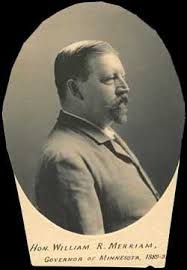
“William R. Merriam becomes the state’s 11th governor on January 9, 1889. As governor, Merriam was a thrifty executive who was more interested in limiting spending than in legislative reform. The most notable legacy of his administration was the adoption of the Australian ballot system, which allows citizens to vote in comparative privacy.” *

Thank You for the work Merriam did for the state of Minnesota. Thank You for a governor that limited spending, made voting private, and also helped establish the census.Remember the good done by this man and bless his memory!

Jesus, our election season is upon us. I dread the level of contempt and contention within my own party! I dread that we are so stratified that we tolerate a party system, I dread that we are so stratified that we tolerate a party system, or still believe it necessary to our liberties. Read John Adams’ quote below:

“There is nothing which I dread so much as a division of the republic into two great parties, each arranged under its leader, and concerting measures in opposition to each other. This, in my humble apprehension, is to be dreaded as the greatest political evil under our Constitution. This is, to my understanding, a major root of bitterness that unnecessarily divides our society.”* 

I concur with President Adams, this is a major root of bitterness that unnecessarily divides our society.

As your child, I acknowledge to You that we have judged our brother’s political and leadership choices. We argue without the intent of sharpening and testing ideas. We banter and bash each other into compliance, but  do not serve each other in submission. The strong win, and the weak lose. 

We have offended Your righteous order by choosing separation from our “naive”, “heartless”, “brainless”, “racist”, “sexist”, “classist”, “homophobic”, “Islamophobic”, neighbors. I ask that You choose to remember these words of judgment no more. Forgive our one word dismissals of our neighbors. Today I ask that we as a people will receive words from You to heal our personal relationships, and overflow to our state.

Most of the time, most of us would rather shout down our verbal opponent, shame him or her into compliance, than dare ask ‘Why’? Would it be so wrong to see it from an opponent’s view: “Why do you believe “X” will benefit our state? Please tell me about your views.” I ask You the “Why?” question Lord! Why are we so stubborn to cling to our own ideas, and fail to trust enough to allow them to be strengthened by scrutiny or testing?

We have hidden our hearts from each other Lord! We have held on to anger and fear and resentment. We have loved winning the argument through emotional manipulation! We have loved winning the argument through framing the meaning of facts! Will You free us from this heritage of division that comes through the channel of political party and elections?

  I thank You for the freedom of conscience that we inherit because Governor Merriam chose to introduce the Australian system of ballots cast in secret. We are protected, in the voting booth at least, from scorn and forces of external manipulation! We can anonymously reveal our inward thoughts! Again, bless this freedom, bless Australia, and the memory of William Merriam!

* http://www.mnhs.org/about/dipity_timeline.htm

**https://en.wikiquote.org/wiki/John_Adams


Standard
19th Century, Agriculture, Governors, History, Industry, Intercession, law, Minnesota, omnipresent history, Politics, Republican, State Government

McGill Becomes Governor

mcgill_andrew_ryan

January 5, 1887 to January 9, 1889

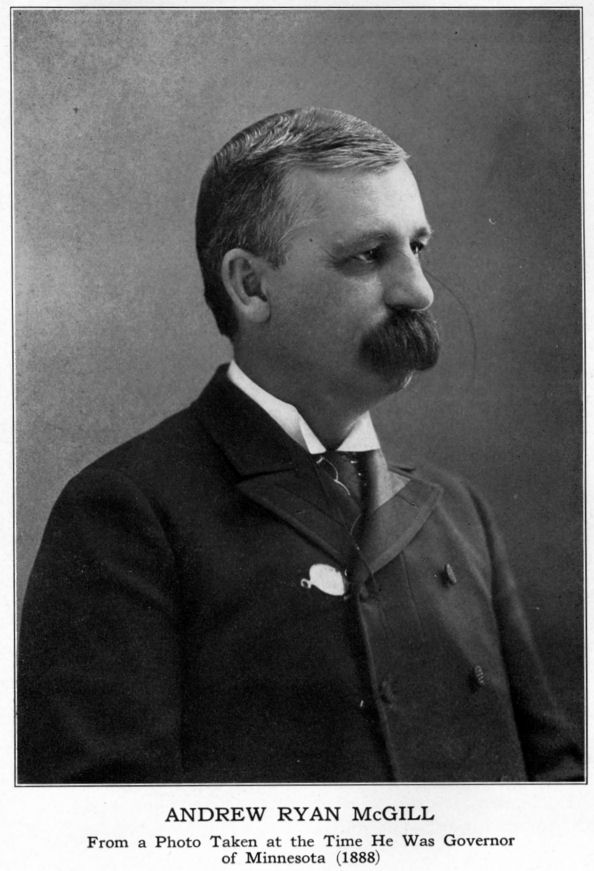
“A. R. McGill becomes the state’s 10th governor on January 5, 1887. During his term he recommends a revision of the railroad laws pertaining to transportation, storage, and grading of wheat; the watering of railroad stocks; a simplification of the tax laws; regulation of liquor; abolition of contract prison labor; establishment of a soldiers’ home; and creation of a Bureau of Labor Statistics.” *

“Transcript

Office of COUNTY AUDITOR, Marshall County Warren, Minn. March 16th 1887 Gov. A. R. McGill St. Paul, Minn. Honorable Sir: I enclose herewith Application from our County for Seed Grain, showing Number of Applicants and Amt of grain desired. We have allowed no one applicant to exceed the Maximum limit of $75.00 worth of grain, although many applied for much larger amounts. You will notice that the average am[oun]t we have allowed each applicant is only about $55.00 worth. We trust that you will allow our County a sufficient apportionment to cover the amount which we have asked for, as these applicants are certainly in needy circumstances. Trusting that our application is all correct and that there will be no delay in getting our apportionment, I am Sir Respectfully Yours, W. F. Powell Ch Bd. of Co. Commissioners Marshall County W. F. Powell. Co. Aud. 

(March. 16th 1887 Matters relating to applications for seed grain relief)” **

Lord, this doesn’t seem like a man whose governorship aroused much controversy at first glance. However, each change in law impacted a powerful coalition or group of Minnesotans. Changing law often seems to use an element of force to exert authority. But how do You view the elimination of law from an eternal perspective?

From what I gather about local perceptions of Governor McGill, he had a mixed reviews. On one hand, he had to mediate between the powerful lobby of the rails, yet gain concessions much needed by Minnesota interests’: farming, lumber, and mining. 

So what did he accomplish, and did he find a middle path?

“During his tenure, a state normal school was established in Moorhead; the improvement of state railroad laws was promoted; iron ore was discovered in the Mesabi Range; liquor regulations were supported; and a state school tax was sanctioned.” ***

Will You forgive our bitterness that comes with new laws whether local, state, or federal? Will You forgive us for the anger we have felt over the perceived loss of freedoms, liberties, and or benefits to us or our business? The state may attempt to take away rights that are not theirs, and give rights that they do not possess in the first place. 

Lord, help us find the middle ground! Will You forgive our usurpation of the other man’s inalienable rights, and teach us how to better protect them in the future? May our civic laws never surpass our privilege to love You, the Lord our G-d, our neighbor, and ourselves!

“And above all these put on love, which binds everything together in perfect harmony.” Colossians 3:14 ESV ****

* http://www.mnhs.org/about/dipity_timeline.htm

** http://reflections.mndigital.org/cdm/compoundobject/collection/mhs/id/624/rec/

*** https://www.nga.org/cms/home/governors/past-governors-bios/page_minnesota/col2-content/main-content-list/title_mcgill_andrew.default.html

****http://biblehub.com/colossians/3-14.htm


Standard
19th Century, Governors, History, Intercession, Minnesota, Politics, State Government

Hubbard Becomes Governor

fifth2

January 10, 1882 to January 5, 1887

“Lucius F. Hubbard becomes the state’s 9th governor on January 10, 1882.

Hubbard forcefully urges government intervention in public health, corrections, charities, railroads, agriculture, and commerce, and the legislature complies by increasing the state’s regulatory and licensing powers. His second term lasts three years, in accordance with a state constitutional amendment to have state, county, and federal biennial elections all coincide.” * 


Lord Jesus, what do You think of government force and intervention? Emotionally, I am grieved when I read of “government intervention”, but maybe I’m imbalanced in that skepticism. Intercession is also a form of intervention, and I’m not skeptical of that, or of Your example through Christ. “Therefore he is able to save completely those who come to God through him, because he always lives to intercede for them.” Hebrews 7:25 NIV ** Help me see what You see, gather more information, and guide my prayers.

First, I thank You for the blessings of the governorship of Lucius F. Hubbard. May You bless Him, his generations, dwellings, and property with grace and truth. Will You bless the real, the good, that he envisioned in guiding the state of Minnesota?  

Next, will You cover over any sins he may committed against You or our people through the extension of governmental authority? Lord, so often we try to manage our lives, our environments, and others through control. We take away the decision making power of others’ when it is deemed unwise, unjust,  or even simply unpleasing to us. We put up barriers, often unnecessarily, to even the expressions of others opinions before we clearly understand them. Lord have mercy on our impatience, and failure to clarify! Christ have mercy; we can be too quick to judge! 

Eternal Father, Eternal Mother, Eternal Savior, Eternal Counselor hear this petition: Forgive our lack of understanding that willful force quashes the good message, the life-giving message You have planted in our brothers’, our sisters’ , our mothers’, and our fathers’! We often centralize and streamline decision making because we are fearful, or do not want equal relationships with others. Make us a humble, respectful, honest, and understanding people. May our leaders reflect the graciousness and truthfulness of Your nature!

* http://www.mnhs.org/about/dipity_timeline.htm

** http://biblehub.com/hebrews/7-25.htm

Standard
19th Century, education, Governors, History, Intercession, Minnesota, Natural Disaster, Social Studies, State Government

Pillsbury Becomes Governor

george_alfred_pillsbury


January 7, 1876 to January 10, 1882

“John S. Pillsbury became the state’s 8th governor. As Minnesota’s eighth governor, Pillsbury was a practical and compassionate administrator, finally resolving a sensitive railroad bond issue and increasing aid to those ravaged by the grasshopper plague. He also encouraged legislators to create the office of public examiner to detect and purge corruption in public office.” * 

Lord, thanks that You have chosen to spread Your gifts out among us so we are aware of our need for each other! Thanks for John S. Pillsbury and the benefits of his governorship.  It appears that he was skilled in mediation and negotiation. Will You forgive the bitter roots that come from even his best negotiations? 

Will You again kindly watch between the railroad interests, ( or any major future economic power), and the people and Minnesota? Will You forgive  us when we expect the State to rescue us, and do not see the provision that You have for us? Will You sanctify the suffering caused by: the grasshopper plague, the corruption of the government, and the dominance of the railroads? Forgive us our flippant and well-forged assessments as we forgive our assessors!


Standard
19th Century, Agriculture, farming, Governors, History, Intercession, Jesus, Leadership, Minnesota, Natural Disaster, Politics, State Government

Cushman Becomes Governor

unknown

January 7, 1874 to January 7, 1876

“Cushman K. Davis takes office as the state’s seventh governor. During his single term as Minnesota’s seventh governor, Cushman K. Davis confronted a menace that threatened to ruin the state’s farm economy. A five-year-long grasshopper plague began in 1873, and Davis’s offer of aid to farmers whose crops had been devoured by invading locusts represented an early form of state-sponsored disaster relief.” * 

“The state, governed by three different men during the grasshopper plague years, also failed to provide adequate relief to affected farmers. Under governors Horace Austin and Cushman K. Davis, the state provided small sums of direct, state-funded relief, but the governors focused their efforts on encouraging charitable giving to the cause. Unlike his predecessors, Governor John S. Pillsbury did not call for any direct, state-funded relief for farmers. Elected in 1876, Pillsbury believed that poverty was a fact of life on the frontier and that providing relief would make farmers dependent on the state. Instead, Pillsbury focused on efforts to eradicate the grasshoppers. This included a controversial bounty measure that required every able-bodied man in affected counties to destroy grasshopper eggs for one day a week, for five straight weeks.

In the summer of 1877, the grasshoppers left just as quickly as they had arrived. An April snowstorm damaged many of their eggs, which encouraged farmers to redouble their efforts to destroy the grasshoppers. The surviving grasshopper eggs hatched, but by August, the grasshoppers had flown away. Many attributed the end of the grasshopper plague to divine intervention, since Governor Pillsbury had proclaimed April 26 a day of prayer, after receiving many requests to do so.” **

I’m first thunderstruck by two facts jumping off the page at me: that Cushman spearheaded state charity, and that a day of prayer is recorded as an action point. Will You guide me to ponder these notions? Will You give some insights as to how to intercede?

To the first point, it seems quite unusual for a Republican of this era to use state-funded relief. Cushman appears to be a man of principals, but not so rigid that he fails his constituents during such dire times of need. Will You bless him, and his commitment to the survival of his fellow man? Will You keep balance in this constant teeter-totter of public versus private charity within the souls of our leaders? If taxes were gifts, we would give them for Christmas. If charity is coerced, the heart disengages, and it no longer is charity but, perhaps, extortion. Have mercy on our “mercy”! 

It’s curious to me that politicians sometimes endorse prayer as an action point. Many leaders currently would see the endorsement of prayer as a failure to adequately separate “Church and State”. (Help me probe this a little longer!) Yet we condition our minds and spirits through repetitive thoughts daily; we listen to songs over and over, view movies again and again, and repeat instructions internally to project us past sales objections. (I know these are quite random, but perhaps they are also a form of prayer?)

I’m grateful to You, the masterful inventor of every grasshopper, for Your beautiful destruction of our security. Will You forgive our barriers to seeing the heart and mind conditioning, (aka “prayer”), as a legitimate response to the plagues of our lives? Will You make us flexibly rigid in our principals enough to love our neighbor as they experience heartache and misfortune?

** https://www.minnpost.com/mnopedia/2013/06/winged-menace-minnesota-grasshopper-plagues-1873-1877


Standard
19th Century, Civics, Democrat, Governors, History, Intercession, Leadership, Minnesota, Politics, Prayer, railroad, Republican, State Government

Austin Becomes Governor

candidate37119

January 9, 1870 to January 7, 1874
“Horace Austin takes office as the state’s sixth governor.

A reputation for clearheaded objectivity and disdain for contentious party politics enhanced the appeal of Judge Horace Austin as a gubernatorial candidate in 1869. Minnesota’s sixth governor was determined to bring legislative power to bear against the railroad barons. His advocacy of strictly regulated passenger and freight rates and his opposition to the wholesale allocation of state lands to railroad development earned him a second term. But he was unable to resolve completely the problems inherent in controlling a booming transportation industry and curbing the excesses of its owners.” *

Lord, thanks that You are our shield! To my knowledge, our people have suffered much through the over-reaching hands of the railroad. (Especially the farmers!) Thank You for providing a governor that would stand up to these barons; even if partially successful.

Will You forgive the judgements between us all: Minnesotans’, the railroad barons’, the U. S. Government, and our state government? We know that You have told us in Leviticus 19:35,36 to use “honest scales and honest weights”. Because You have forgiven us our debts, we forgive the numerous injustices perpetuated by all railroads, their employees, their owners, financiers, and any other party unnamed that have been bound in this unforgiveness.

Will You return us to a right relationships from where they skewed off in Austin’s term? Will You restore the lands that have been cursed through the contention between Indian Nations, citizens, and the railroad companies? There’s enough freedom for all in Your kingdom; help us to receive and give honor and freedom to our neighbor today! Thank You that Governor Horace Austin looked for solutions between the Democrats and Republicans! May we have more Governors and leaders like him who see and think in the areas of our common humanity. Amen!

* http://www.mnhs.org/about/dipity_timeline.htm


Standard
19th Century, Governors, History, Indian, Intercession, justice, Minnesota, Native Americans, omnipresent history, State Government, Transference, Treaties, U.S. Government, war

Marshall Becomes Governor

Unknown

January 8, 1866 to January 7, 1870
“William R. Marshall becomes the state’s fifth governor. Energy and ambition characterized the life of Minnesota’s fifth—and only southern-born—governor. During William Marshall’s administration, his adoptive state experienced a post-Civil-War surge of growth and development: its population doubled to 350,000, its railroad mileage quadrupled, and its commercial endeavors flourished.” *

Governor Marshall personified the spirit of his pioneering neighbors in the Midwest. His work experience included: dairy farming, livestock farming, reporting the news, and banking. He voluntarily fought in the Civil War, and the Dakota Wars. **

Some of us, living in the present, may stumble over Marshall’s support of the abolition of slavery, and then fighting to expel the Dakota Nation from Minnesota. Would modern scholars, educated in the doctrines of the Frankfurt School or Cultural Marxism, consider him a racist because he fought for African-Americans, but against Native Americans?

Perhaps we would do better to enter the worldview of his era, and see things through the lens of 19th Century Midwesterners? Maybe it’s consistent with his belief system to come to the rescue of slaves because they did not aggress against his country (United States)? What if he rationalized specifically fighting the Dakota Nation, (not all Native Americans), because a few hundred of them made war on Minnesota?

Lord, I simply do not know his heart. You are the Only Wise Justice of this world, so will You reason and wrestle with us in prayer? It is easy to applaud those who voluntarily gave their lives to fight in the Civil War, if it was out of a heart to end the institution of human slavery. It is less laudable, but still reasonable, to assume that some Minnesotans fought the South because of political rather than moral or spiritual reasons.

In the same fashion, we know little of Marshall’s rationalizations for his role in the Dakota Wars. Did he fight for the protection of his political state? Did he do battle because he was “just following orders”? Was Marshall a man given to ethnocentrism and racism towards “Indians”? Was he an amoral conqueror, only acting out his role in the drama of natural selection? Did he fight out of a sense of justice?

So we go to prayer, Eternal Father, beginning with gratitude that You are the Only One who can unravel the mixed motives of the human heart. We do good with a bad heart. We do bad things to others with good intentions. Will You forgive us our pride whether in doing justice, or in our failures to do so? Will You forgive us the pride of a glorious, self-righteous martyrdom; of “falling on the sword” for others with narcissistic hearts?

Regardless of his motives, we applaud the honorable actions of the governorship and life of William R. Marshall. We thank You that he took part in: freeing slaves, protecting settlers, and growing our economy? Where Marshall offended You in the displacement of the Dakota Nation; will You bring forgiveness and healing?

Holy Spirit, thank You for the encouragement of charity Marshall brought to the state of Minnesota. Forgive any judgments established from him or to him through the generations. Thanks for his heart of good will towards our most vulnerable neighbors shown by the following quote below.

“It is due to the State that an enlarged philanthropy should characterize its efforts for its helpless ones. These children of sorrow, the blind, the dumb, the insane, have a claim upon us that we cannot disregard. If speedy action for their relief is not taken it will be a reproach to our Christian civilization.”

Lord, may we be civil because we are Yours! May we love our enemies! May we be conduits of Your generosity for those in need! Amen!
http://www.mnhs.org/about/dipity_timeline.htm
** https://en.wikipedia.org/wiki/William_Rainey_Marshall
*** Minnesota Historical Society Collections. “The inaugural address of Governor Marshall, January 8, 1866, “Executive Documents for the state of Minnesota for the year 1865”, pages 31-38 (St. Paul, 1866).

Standard
19th Century, Governors, History, Intercession, Jesus, Minnesota, omnipresent history, Politics, State Government

Miller Becomes Governor

Unknown-18

January 11, 1864 to January 8, 1866
“Stephen Miller takes office as the state’s fourth governor. His military career during the Civil War and Ramsey’s support assured Miller of a gubernatorial victory in 1863. He was the first of several Civil War veterans to serve as governor of Minnesota. Although lacking a college degree himself, he valued higher education and advocated generous appropriations to state normal schools and the University of Minnesota. In his final address to the legislature, he strongly but unsuccessfully urged adoption of a black suffrage amendment to the state constitution. Miller chose not to run for re-election.” *

Today I will again resist the temptation to sum up Stephen Miller’s life based on his known accomplishments, and listen between the lines with You. There’s much to write about his life: as a flour inspector, as a war hero, as punisher of Indians, as Civil War hero, and as a great orator. Yet, You have me focus on this obscure fact:
“Miller’s interest in politics also led him to edit and publish a ‘leading organ’ of the Whig party, the “Pennsylvania Telegraph” for several years before moving to Minnesota in 1858.”

Lord, what is the spiritual heritage of the Whigs? What was in their heart and the heart of Gov. Miller?
“Historian Frank Towers has specified a deep ideological divide:
Democrats stood for the ‘sovereignty of the people’ as expressed in popular demonstrations, constitutional conventions, and majority rule as a general principle of governing, whereas Whigs advocated the rule of law, written and unchanging constitutions, and protections for minority interests against majority tyranny.” ***

Without doing major research, I see this; men like Miller wanted to see consistency and impartiality in government. The law for one is the law for all. No one is above the law, nor under the law.

Eternal Father, I ask You to bless this notion of equality of opportunity in Miller’s heart. I ask that You bless the notion that there should be neither a tyranny of the majority or of the minority. That we are humble and peaceable equals as citizens. Will you forgive how we have diminished our neighbor through political manipulations? How we may have offended Your Sovereignty by discounting our brothers’ and sisters’ beliefs and views?

Again, thank You for Governor Miller. May his successes be rewarded, and his misuse of authority be forgiven. Thank You for his heart to include Black Americans as functional citizens! May these works of justice be remembered more and more as Your return approaches!

*P.T.H. cites timeline formerly at this URL: mnhs.org/about/dipity_timeline.htm
The Minnesota Historical Society Web site, http://www.mnhs.org , is fantastic! Check it out!
** http://wjon.com/st-cloud-resident-stephen-miller-nominated-for-governor-on-this-date-in-central-minnesota-history/
*** https://en.wikipedia.org/wiki/Whig_Party_(United_States)
**** A life summary. http://www.nga.org/cms/home/governors/past-governors-bios/page_minnesota/col2-content/main-content-list/title_miller_stephen.html
***** For more specific information regarding Governor Miller, see link below:
https://www.leg.state.mn.us/legdb/fulldetail?ID=13988

Standard
19th Century, Civics, Governors, History, Intercession, Leadership, Minnesota, omnipresent history, Politics, Republican, State Government

Swift Becomes Governor

Unknown-17

July 10, 1863 to January 11, 1864

“Henry A. Swift takes office as the state’s third governor. Described by peers as gentle, self-effacing, and ambivalent toward politics, Henry Swift was Minnesota’s third governor for less than a year, completing the second term of Alexander Ramsey, who had been elected United States Senator. With little time or apparent inclination to effect major change, this un-elected governor concentrated on assuring the welfare of Civil War veterans.” *

It’s difficult to ascertain which information is critical to convey about any historical event, let alone a single human life. On this day, I chose to scan the data I could easily find about Governor Swift, but remain listening to what the Holy Spirit prompted me to underscore. 

This is what I’ve learned about him so far: he was very capable, he did his duty, and then he moved on. Below is an example, not unusual in party politics, where there is a hesitancy to take leadership. 

“Republican party leaders nominated Swift for Sibley County’s state Senate seat, after another candidate refused the offer.” **

G-d Almighty, thank for those, like Swift, who do their part and then get out of the way. Thank You for leaders uncorrupted by power and authority. Thank You for his example of humble governing. May his successes be amplified, his failures forgiven, and his generations be blessed by Jesus’ authority. Amen!

*P.T.H. cites timeline formerly at this URL: mnhs.org/about/dipity_timeline.htm 

The Minnesota Historical Society Web site, http://www.mnhs.org , is fantastic! Check it out!

** (Session Weekly, St. Paul: Minnesota House of Representatives Information Office, April 2, 1993, p. 16) Internet. https://www.leg.state.mn.us/legdb/fulldetail?ID=15034

*** For more specific information regarding Governor Swift, see the link below:

http://www2.mnhs.org/library/findaids/gov017.xml

Standard