19th Century, 20th Century, 21st Century, Faith, History, Indian, Intercession, Minnesota, Native Americans, Treaties

Treaty of Mendota

0_0_3236_5041

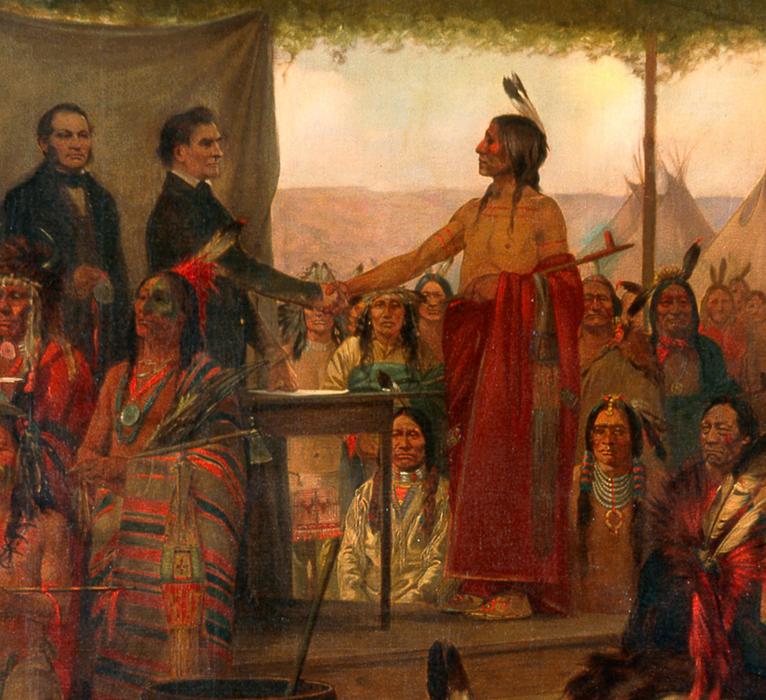
August 5, 1851
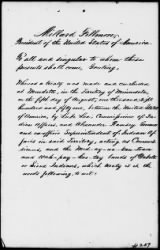
“In August the commissioners begin negotiations with the Lower Bands at Mendota. The Mdewakanton and Wahpekute are pressured into agreeing to terms similar to those forced on the Upper Bands, including $220,000 in upfront cash to the fur traders. Both treaties promise the Dakota new reservations along the Minnesota River “in perpetuity,” a pledge that will not be kept.” *
Lord, forgive the human desire to ‘work the system’ and pad our own nests! Will You forgive this heinous offense of the fur traders towards the Mdewakanton and Wahpekute within the Treaty of Mendota? Even greater, will You forgive this breech of justice committed against You through the deception of these two tribes?

Per contra, will You forgive the shame and anger of the Mdewakanton and Wahpekute towards: Lea, Sibley, Ramsey, Minnesota Territory, the U.S. Bureau of Indian Affairs, the U.S. Federal Government, and all unnamed parties participating in their deception? Sweet Jesus, it’s always so hard for the victims of injustice to let go of their righteous anger; will You give this gift to the Mdewakanton and Wahpekute Nations? Will You kindly and gently take this generational curse which has bound them to their historic offenders up, out, and onto the Cross of Christ? Will You restore what the enemy has taken from them, and bring Your Healing Presence to the peoples and lands involved? This land is Your property, may we view it as such both now and “in perpetuity”!

We, in the present, are angered by the deception of the Upper and Lower Dakota Bands at the hands of Luke Lea, and Alexander Ramsey through the trustful signing of the “Trader’ Papers”!!! The desire to disconnect ourselves from this event is powerful, yet Your Word gives us no escape when we offend You by accusing our neighbors. You do not yield the spirit of the law to comply with the letter of the law. You are both Grace and Truth! Help us remember this example spoken to self-righteous human accusers so many centuries ago?

“They said this to test Him, in order to have a basis for accusing Him. But Jesus bent down and began to write on the ground with His finger. When they continued to question Him, He straightened up and said to them, “Let him who is without sin among you be the first to cast a stone at her.” Berean Study Bible, John 8:6-7 **

Will You give us the merciful eyes of Christ today, and into the eternal future of Minnesota? Help us see the humanity within victim and victimizer, the accuser and the accused, and to stand humbly with You against evil and for the good? May we become agents of humanity against the division and deception of the Evil One; the Author of All Grudges. Amen!

http://www.mnhs.org/about/dipity_timeline.htm
** https://biblehub.com/john/8-7.htm
Standard
19th Century, cultural transference, Faith, History, Indian, Minnesota, Native Americans, Treaties

Treaty of Traverse des Sioux

6-34_0

July 23, 1851
“Suppose your Great Father wanted your lands and did not want a treaty for your good, he could come with 100,000 men and drive you off to the Rocky Mountains.” *

Luke Lea, U.S. Commissioner of Indian Affairs, at treaty signing

Facing mounting debts to fur traders and the pressure of settlers pouring into the newly established Minnesota Territory, the Dakota leaders reluctantly sign treaties, hoping that government promises of reservations and annuities will provide a secure future for their people. Powerful and influential fur traders coerce the Dakota into giving up their land in exchange for promises of cash, goods, annuities, and education. “The Indians are prepared to make a treaty when we tell them to do so,” said Henry Sibley. “No treaty can be made without our claims being first secured.”

Luke Lea, U.S. Commissioner of Indian Affairs, and Minnesota territorial governor Alexander Ramsey negotiate separate treaties with the Upper and Lower Dakota Bands. In July they meet with the Upper Bands (Sisseton and Wahpeton) at Traverse des Sioux. After several weeks of discussions and threats, the Upper Bands relinquish their claims to all Minnesota lands west of the Mississippi in exchange for an immediate cash payment of $305,000 and annuity payments in goods, food, education, and gold. The treaty also provides for a reservation along the upper Minnesota River. Thinking they are endorsing a third copy of the treaty, the Dakota leaders sign “Traders’ Papers,” illegal documents drafted by the traders themselves. The documents promise much of the $305,000 cash payment to the traders to fulfill “just obligations.”

In August the commissioners begin negotiations with the Lower Bands at Mendota. The Mdewakanton and Wahpekute are pressured into agreeing to terms similar to those forced on the Upper Bands, including $220,000 in upfront cash to the fur traders. Both treaties promise the Dakota new reservations along the Minnesota River “in perpetuity,” a pledge that will not be kept.

“But against any of the children of Israel shall not a dog move his tongue, against man or beast: that ye may know how that the Lord doth put a difference between the Egyptians and Israel.” Exodus 11:7

Sweet Holy Ghost, I really do not relish writing today, especially for such a time as this in our state’s memory. Will You lead me, perhaps give me insights, and the courage to pray for this moment of contention? Through Your amazing kindness for the brokeness of humankind, I invite You to come watch this treaty!

I do offer real thanks for the promise that the Treaty of Traverse des Sioux offered. There was a chance to make things clear, put things in writing, and have an agreement that honored both sides. Thanks for this chance to become better neighbors, even if it was squandered.

This what I see today, the Upper and Lower Dakota Bands were willing to concede land if the end result was a stable and secure future. I see them extending these concessions in good faith and a real sense of relationship. What is also clear is that Luke Lea, Sibley, Ramsey, and the fur traders’ lobby were used to getting their way. Their quotes suggest an attitude of dominance and willingness to exert power.

This is my confession to You today Wise Counselor: will You forgive these grievous sins made through Luke Lea, Henry Sibley, Alexander Ramsey, the Bureau of Indian Affairs towards these specific peoples, tribes, first nations; the Sisseton, the Wahpeton, Mdewakanton, and the Wahpekute? Will You lift the weight of this robbery from their shoulders, and restore their inheritance?

More specifically, will You forgive the spirit of deception behind the “Traders Papers”, and the damage it did both relationally and economically to these tribes?
Will You forgive the horror of our offense to You, done in the name of our state, it’s officers, and any other duplicitous parties? Have mercy on these “Traitors Papers”!

We also offend You, Great Spirit, when we answer offense with counter offense. Will You forgive the Sisseton, Wahpeton, Mdwakanton, and Wahpekute any counter-judgments against the same offending parties, whether named; Lea, Sibley, Ramsey, or the B.I.A., or unnamed, the authors of the “Traders Papers”? May these peoples receive mercy so they do not carry this offense generationally in their hearts, and become doubly wronged?

That said, will You make a difference between the righteous and the unrighteous? As Abraham asked of You, “Will you sweep away the righteous with the wicked?…Shall not the Judge of all the earth do right?” Of Course You Will!
I praise You that You allow each generation the fruits of their choices! You allow humans to be temporarily wronged by the short-sighted, but these ill-gotten gains will bring separation and destruction. May all such devious treaties ring hollow throughout the history of Minnesota!

http://www.mnhs.org/about/dipity_timeline.htm

Standard
19th Century, Culture, education, History, Minnesota, University

University of Minnesota Founded

images-1

1851
“Twenty students begin at the University of Minnesota. Beginning in a small building with only one teacher, the university won’t offer college-level instruction until 1869.” *

Great Teacher, thanks for the blessings we have today because of these small beginnings! What good things grow from small seeds? Will You lead my thoughts and prayer for the “U” today?
Here’s a basic summary of the founding of the school as given on it’s website:

“The University of Minnesota was founded as a preparatory school in 1851 seven years before the territory of Minnesota became a state. Financial problems forced the school to close during the Civil War, but with the help of Minneapolis entrepreneur John Sargent Pillsbury, it reopened in1867. Known as the father of the University, Pillsbury, who was a University regent, state senator, and governor, used his influence to establish the school as the official recipient of public support from the Morrill Land-Grant Act, designating it as Minnesota’s land-grant university.” **

Thank You for the opportunities this university created for students in its’ first decade! Thank You for the synergy of it’s re-opening: one part government, one part business, one part Pillsbury influence. How many students had a chance to learn because of the determination and will of J.S. Pillsbury? Today we thank You for these individuals, and the impact of the this school on their lives!

Truly, it would be difficult to summarize the impact of our University on our state, nation, and world over these past 150 years. Every discipline seems to exert a significant force and merit recognition in our nation. Students from the entire continent of North America gather here to learn. Our Mid-Western culture values and expects that most Minnesotans want a college degree.

Perhaps a limitation of education is that knowledge is not necessarily relational?
Counselor, will You have mercy on the roots of the false pride of knowledge that grew from this founding seed, both in teacher and pupil? Will You forgive us our judgments’ of our neighbor’s ignorance or our prejudices against formal education within the culture of Minnesota from this era forward? “…We know that we all possess knowledge. Knowledge puffs up, but love builds up. The man who thinks he knows something does not yet know as he ought to know. but the man who loves G-d is known by G-d.” 1Corinthians 8:1-3

*http://www.mnhs.org/about/dipity_timeline.htm

** https://r.umn.edu/node/511


Standard
19th Century, History, Intercession, Jesus, Minnesota, State Government

1st Territorial Legislature Meets Sep 3, 1849  

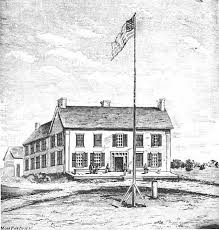
Central House, St. Paul, MN

The Minnesota Territorial Legislature met for the first time in the Central House in Saint Paul.*

Will You come today, Counselor, and offer Your teaching about this beginning? I find that the first territorial legislature was dominated by men from New England or of New England ancestry. http://en.wikipedia.org/wiki/Minnesota It was a legal business meeting first, but what other impacts may have occurred?

My first thought, Teacher, is that we carry our personal histories with us into each new venture no matter how tightly we hold our cards. That said, I’m wondering now the impact of these sons of New England on our state. What were their strengths, fears, dreams, or biases?

In any case, I commend to you this representative meeting. Christ, our Advocate, how You must smile when we seek to keep faith by simply meeting with each other! May we follow Your example of humble authority in the governance of this state. May these meetings be an eternal ray of blessing from September 3, 1849 forward!

Standard
19th Century, education, Faith, History, Intercession, Minnesota, omnipresent history

Minnesota Historical Society Created

Edward_Duffield_Neill_by_W&F_Langenheim_c1842

The territorial legislature convenes and, as one of its first acts, establishes the Minnesota Historical Society.
“Write your history as you go along, and you will confer a favor upon the future inhabitants of Minnesota, for which they will be ever grateful.” ~The Rev. Edward D. Neill at one of the Society’s first meetings.*

Jesus, I wonder if the Reverend had any inkling of the gravity his speech? I agree so strongly with him that we have been shown favor! Why do You allow us to access Your nature, (present at all times), to participate in Your work of healing Minnesota? You are so different from every object of worship and our human style of leadership! Even our best leaders can act out of pride; and the greatest out of a need for recognition.

Lord, will You acknowledge the present leaders of Minnesota so that they do not need the accolades of men? Lord, will You forgive all leaders past of seeking the approval of people rather than Your pleasure? And by this I don’t mean merely political leaders, chiefs of tribes, captains of industry, or spiritual leaders! I mean ALL who have had influence.

To the future generations of Minnesotans, “Speak and act as those who are going to be judged by the law that gives freedom, because judgment without mercy will be shown anyone who has not been merciful. Mercy triumphs over judgment!” James 2:12,13

*http://www.mnhs.org/about/dipity_timeline.htm


Standard
19th Century, History, Indian, Minnesota, Native Americans, omnipresent history, Politics, State Government

Ramsey Appointed Territorial Governor

Unknown-14

June 1, 1849
“As the first territorial governor and second governor of the state, Alexander Ramsey presides over the early days of Minnesota politics. A shrewd, practical politician, he acquires Indian lands and promotes growth. Later, he becomes a U.S. senator and secretary of war, and will live into the 20th century, a symbol of Minnesota’s pioneer past.” *

Lord, I want to bless the memory of Alexander Ramsey, and acknowledge to You his humanity. The ability of politicians’ to use their power for their own good rather than the benefit of the State is well recorded throughout human history. Unfortunately, our state is no exception to this rule.

For example, Ramsey is also noted for his stern statements calling for the killing or removal of specific Native Americans, chiefly the Sioux (Dakota) people that lived in the state of Minnesota. Ramsey declared on September 9, 1862: “The Sioux Indians of Minnesota must be exterminated or driven forever beyond the borders of the state.” **

Lord, I acknowledge the tangle of treaties in Minnesota, the likelihood of confusion, and unjust acquisitions of Indian land. Where Indians failed to maintain right relationship with the State and the Federal government; have mercy! Where Ramsey wronged Indians in the name of Minnesota in both word and deed, we acknowledge this sin. Will You give us a heart of repentance and restoration? Will You untangle our web of treaties?

* http://www.mnhs.org/about/dipity_timeline.htm
** http://en.wikipedia.org/wiki/Alexander_Ramsey

Standard
19th Century, Culture, History, Journalism, Media, Minnesota, News, Politics

First Newspaper Printed in Minnesota

Unknown-13

April 28, 1849
“Editor James Goodhue published the first issue of “The Minnesota Pioneer” on April 28, 1849.” *

Mr. Goodhue came to Minnesota Territory ca. April 18, 1849, and ten days later had: founded a newspaper, wrote, and published its first edition! Known as man with sharp wits and elbows, he had much to say and did not mince words. An avid Democrat, he unabashedly aired his views with vigor.

Inter alia, he debated a territorial judge so fiercely that the man stabbed him, but not before he left his challenger with a non-fatal gunshot wound!? His mixture of talk and tenacity ensure that “The Minnesota Pioneer” had enough forward momentum to survive. Currently the “(Saint Paul) Pioneer Press”, now the state’s eldest newspaper, traces its origins back to the efforts of Goodhue and the St. Paul Dispatch. ***

Lord we thank You for the gift of language and writing. We thank You for our human ability to speak. Will You help us divide this snapshot in the life of Minnesota and James Goodhue?

We thank You for the efforts and zeal of Goodhue to found a forum for public discourse in Minnesota Territory. We acknowledge the risks and personal costs paid by him for our benefit. We remember the tag line of his beloved paper to You; “Sound principles, safe men and moderate measures”.

We solemnly remember his zeal and the inherent weakness of this strength. We applaud Goodhue’s ability to articulate his heart-felt Democratic principles, but recognize that passion without self-control may yield division…or a stab wound.
Will You forgive the condemnation that came from his pen and mouth, and wounded his targets? Will You forgive the counter-judgment’s and condemnations of those who opposed him?

Presently, we find ourselves in the same position. We, at times, vigorously debate our neighbors until they become our foes. Will You give wisdom to all who pick up the pen, or tittle the keyboard in our newsrooms because they share the same heart to give voice to the times? Will You give our beloved reporters and newspapers a balance of forbearance and forthrightness, accuracy and mental acuity to enhance Minnesotan’s sense of current events? We love Your words, will You speak life to us so we can share it with others?

“With the tongue we bless our Lord and Father, and with it we curse men, who have been made in God’s likeness. Out of the same mouth come blessing and cursing. My brothers, this should not be! Can both fresh water and salt water flow from the same spring?” Berean Study Bible James 3:9-11

http://www.mnhs.org/about/dipity_timeline.htm
** http://www.mnhs.org/newspapers/hub/minnesota-pioneer
*** https://en.wikipedia.org/wiki/St._Paul_Pioneer_Press
**** https://biblehub.com/james/3-10.htm

Standard
19th Century, History, Minnesota, Politics, Prayer, State Government

Minnesota Territory Established

images-9

March 3, 1849

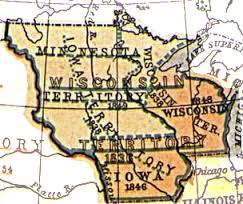
“Minnesota becomes an organized territory, an important step on the way to becoming a state. Minnesota Territory stretches west to the Missouri River in what will become North and South Dakota.” *

The name “Minnesota”comes from the Dakota word for “clear blue water.” Owing to its large number of lakes, the state is informally known as the “Land of 10,000 Lakes.” Its official motto is L’Étoile du Nord (French: Star of the North). **

Thanks that our ancestors decided to establish this Minnesota territory. There is power in naming or renaming. You renamed the people of Israel and Judah through the prophet Hosea saying, “So let your brothers be called “My People” and your sisters be called “Shown Mercy.” Hosea 2:1 Formerly, they had been called Lo-Ruhamah meaning “No Mercy” and Lo-Ammi meaning “Not My People.” Lord, will You continue to rename us throughout Minnesota territory from March 3, 1849 forward?

*Note – PrayThroughHistory uses the timeline located for several years at the Minnesota Historical Society Web site, at this URL: mnhs.org/about/dipity_timeline.htm .

**http://en.wikipedia.org/wiki/Minnesota


Standard
19th Century, Civics, education, government, History, law, Minnesota, Politics, Prayer, railroad, State Government

Bill for Minnesota Territory January 18, 1849  

Unknown-12

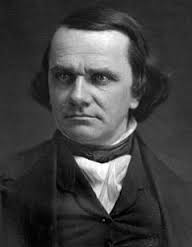
“Stephen Douglas proposes a bill for the creation of the Minnesota Territory.” *

Douglas was born in Vermont, and spent his early years there. When he was able, he migrated west and settled in Illinois. Within a year of moving west wrote is relatives back in Vermont saying,”I have become a Western man, have imbibed Western feelings principles and interests…” His political principles meshed nicely with the free-spirited populism of the west.**

Delegate to Congress from the soon-to-be “Western” Minnesota Territory, Henry H. Sibley worked with Senator Douglas to develop the nuts and bolts of this original proposal. Called the Organic Act, it provided organization of legal and legislative representation for the new territory. As an interesting sidebar, “an important provision of the Organic Act was the reservation of sections 16 and 36 of each township for school purposes.” ***

So we come to You to remember this event, Lord. We see, again, the spectacle of the mixed motives of Minnesota’s founders. On the one hand, they believe in organization, law, and education. On the other hand, the Territory soon enabled massive railroad land grants and corruption. In 1854, the Minnesota & Northwest Railroad, (eventually known as the Great Northern) committed so much fraud and bribery that their charter and land grants were revoked. Within three years, the same was granted five million acres and millions of dollars in bonds, yet they only built ten miles of railroad!? ****

We remember this dichotomy of purpose with You. Will You bless those, like Douglas and Sibley, who created the potential behind our state? We thank You for the aspirations of great men and women like them, who see the end from the beginning.

Conversely, we confess the dangers of living in a free society. Those who misuse their freedom can seek their own ends, and cause such devastation to their neighbors and the land. Will You have mercy on their selfishness, as well as the counter-judgment’s made by those most affected?

Minnesota is Your land. We are Your incomplete people. Come and help us live in right relationship with You and each other. Amen.

* http://www.mnhs.org/about/dipity_timeline.htm
** http://en.wikipedia.org/wiki/Stephen_A._Douglas
*** https://www.sos.state.mn.us/about-minnesota/minnesota-government/organic-act-of-1849/
**** http://www.landgrant.org/history.html

Standard
19th Century, Agriculture, Emigration, Exploration, farming, Food, History, Immigration, Minnesota, Native Americans, State Government, trade, Treaties

Settlement in Minnesota 1849 to 1860

images-8

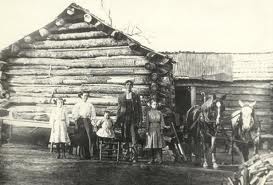
“The number of non-Indian people in Minnesota jumps from 3,814 in 1849 to 172,072 in 1860, a 4,500 percent increase! The newcomers break sod, start businesses, plot towns, look for jobs, and dream of getting rich.

Pent-up demand for good agricultural land is the primary reason. Iowa and Wisconsin had been heavily settled and had both passed from territorial to statehood status by 1848. It had been dangerous and illegal to settle on land in most of Minnesota before treaties with the Dakota and the Ojibwe were signed. But after several treaties were ratified in the 1850s, the floodgates of migration burst open.” *

When we move, we make assessments of our new neighbors and neighborhood. They, in return, watch us move into their neighborhood, and may ‘size us up’ by our friendliness, possessions, (or lack of possessions), our physical appearance, etc. These assessments, I believe, are instincts designed for our survival, but must be tempered or they can morph into prejudice.

Lord, what were the judgments of these ‘new neighbors’ in Minnesota? Will You forgive us the inheritance of those who knowingly moved into the state illegally? Will You forgive the betrayals committed between settler and tribe, and their counter-betrayals? Will You break the power of the derogatory words and names given among these groups? Will You break the vows made in anger, envy, revenge, arrogance, unforgiveness, fear, and unbelief of each group towards its real or supposed nemesis?

Thinking about the impact of these past separations on the present, will You forgive the heart behind the relocation of Native Americans? Will you free us from the bondages and entanglements within poorly made treaties? Will You bring Your heart of restoration to Minnesota? Will You bring to light a new kind of history in Minnesota? Will You write a history that remembers the good, the pleasing, the fair, the gracious, the restored relationship on our hearts? Will you give us Your eyes to see our neighbors’ inherent value?

*mnhs.org/about/dipity_timeline.htm

Standard