19th Century, Catholic, Christian, education, Faith, History, Immigration, Intercession, Jesus, justice, Minnesota, Prayer

Catholic Colonization Bureau 1876

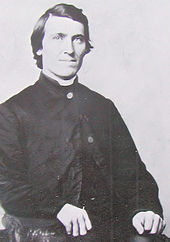
170px-bishop_john_ireland_of_minnesota_as_a_young_man

1876

“Bishop John Ireland forms the Catholic Colonization Bureau to attract Catholics, particularly from Ireland, to Minnesota. A railroad provides land, and by 1885, four thousand German, Irish, and Belgian Catholic families are living in southwestern and west-central Minnesota. 

The towns of De Graff and Clontarf in Swift County; Adrian in Nobles County; Avoca, Iona, and Fulda in Murray County; Graceville in Big Stone County; and Minneota and Ghent in Lyon County become the business centers for the bishop’s colonies.” * 

Holy Spirit, thanks for Bishop John! Thanks for his help assisting so many to find a new way here in Minnesota! Thank You for friends like Bishop Ireland that keep offering us relief and making a way of exodus where it appears that there is no way. Will You again bless these counties: Swift, Nobles, Murray, Big Stone, Lyon, and Ramsey? 

Lord, will You forgive us our bitter ways towards You and each other based on State  and Federal law; legal and illegal immigration? Will You cause Your Church to bless Your image within each other in this effort; Catholic, Protestant, and Orthodox? Our experience helps us see differing needs of those who migrate. Forgive us our favoritism, lawlessness, and placing unnecessary barriers in front of those who seek a safe haven and a bit of Your freedom here. Please forgive us this offense against You and Your Image within our neighbor!

Will You give favor to these Catholic generations of Bishop Ireland, in their homes, the property You allow them to reside, and in the practice of their love for You? We need You! May we see You in all who emigrate their beloved homelands to immigrate to our Land of 10,000 Lakes in good faith! Come Lord Jesus and be our guest in the state of Minnesota!


Standard
19th Century, Governors, History, Indian, Intercession, justice, Minnesota, Native Americans, omnipresent history, State Government, Transference, Treaties, U.S. Government, war

Marshall Becomes Governor

Unknown

January 8, 1866 to January 7, 1870
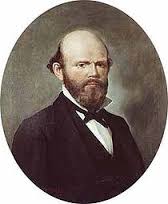
“William R. Marshall becomes the state’s fifth governor. Energy and ambition characterized the life of Minnesota’s fifth—and only southern-born—governor. During William Marshall’s administration, his adoptive state experienced a post-Civil-War surge of growth and development: its population doubled to 350,000, its railroad mileage quadrupled, and its commercial endeavors flourished.” *

Governor Marshall personified the spirit of his pioneering neighbors in the Midwest. His work experience included: dairy farming, livestock farming, reporting the news, and banking. He voluntarily fought in the Civil War, and the Dakota Wars. **

Some of us, living in the present, may stumble over Marshall’s support of the abolition of slavery, and then fighting to expel the Dakota Nation from Minnesota. Would modern scholars, educated in the doctrines of the Frankfurt School or Cultural Marxism, consider him a racist because he fought for African-Americans, but against Native Americans?

Perhaps we would do better to enter the worldview of his era, and see things through the lens of 19th Century Midwesterners? Maybe it’s consistent with his belief system to come to the rescue of slaves because they did not aggress against his country (United States)? What if he rationalized specifically fighting the Dakota Nation, (not all Native Americans), because a few hundred of them made war on Minnesota?

Lord, I simply do not know his heart. You are the Only Wise Justice of this world, so will You reason and wrestle with us in prayer? It is easy to applaud those who voluntarily gave their lives to fight in the Civil War, if it was out of a heart to end the institution of human slavery. It is less laudable, but still reasonable, to assume that some Minnesotans fought the South because of political rather than moral or spiritual reasons.

In the same fashion, we know little of Marshall’s rationalizations for his role in the Dakota Wars. Did he fight for the protection of his political state? Did he do battle because he was “just following orders”? Was Marshall a man given to ethnocentrism and racism towards “Indians”? Was he an amoral conqueror, only acting out his role in the drama of natural selection? Did he fight out of a sense of justice?

So we go to prayer, Eternal Father, beginning with gratitude that You are the Only One who can unravel the mixed motives of the human heart. We do good with a bad heart. We do bad things to others with good intentions. Will You forgive us our pride whether in doing justice, or in our failures to do so? Will You forgive us the pride of a glorious, self-righteous martyrdom; of “falling on the sword” for others with narcissistic hearts?

Regardless of his motives, we applaud the honorable actions of the governorship and life of William R. Marshall. We thank You that he took part in: freeing slaves, protecting settlers, and growing our economy? Where Marshall offended You in the displacement of the Dakota Nation; will You bring forgiveness and healing?

Holy Spirit, thank You for the encouragement of charity Marshall brought to the state of Minnesota. Forgive any judgments established from him or to him through the generations. Thanks for his heart of good will towards our most vulnerable neighbors shown by the following quote below.

“It is due to the State that an enlarged philanthropy should characterize its efforts for its helpless ones. These children of sorrow, the blind, the dumb, the insane, have a claim upon us that we cannot disregard. If speedy action for their relief is not taken it will be a reproach to our Christian civilization.”

Lord, may we be civil because we are Yours! May we love our enemies! May we be conduits of Your generosity for those in need! Amen!
http://www.mnhs.org/about/dipity_timeline.htm
** https://en.wikipedia.org/wiki/William_Rainey_Marshall
*** Minnesota Historical Society Collections. “The inaugural address of Governor Marshall, January 8, 1866, “Executive Documents for the state of Minnesota for the year 1865”, pages 31-38 (St. Paul, 1866).

Standard
19th Century, education, History, Intercession, justice, Minnesota, omnipresent history, State Government

Deaf School 1863

Fariba13

1863
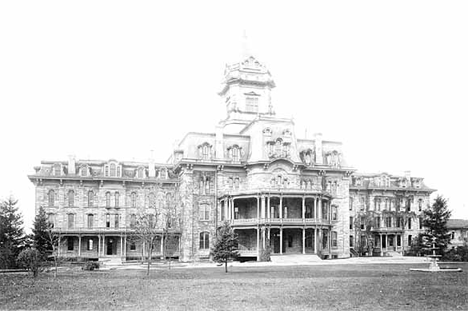
“A state-supported school for the deaf opens in Faribault. Instruction for blind students begins the next year. Classes are aimed at making students productive members of society: boys learn trades such as printing and girls learn homemaking.” *
“Bear in Mind!”
“I. This is not an asylum, but an Educational Institution, and is specially designed to give every deaf and dumb, and every blind child in the State a free education and a knowledge of a useful trade.”

“II. The Common Schools and the University are not looked upon as a public charity, neither should this Institution be so regarded. And education is even more important for these children than for those who can see, hear and speak. Without it they are doomed to a life of ignorance and dependence, but with it they may become intelligent, useful and independent citizens…”
-From Application, 1884. Minnesota School for the Deaf.
Minnesota State Archives Collection, 117.J.9.2

G-d, I’m proud of this moment in my state, and its choice to act in accordance with Your profound interest in every detail of every life! I relish that both our government and individuals saw the hope and promise in these sons and daughters! How good it is when we see through the eyes of our hearts, and commit to the work necessary to fulfill those visions!

Will You bless the city of Faribault for their faithfulness in donating the land for this school? Will You bless its time of waiting, five years, during the Civil War? Will You remember the individuals like Rodney A. Mott and Roswell H. Kinney who had both the vision and persistence required to actuate this delayed dream? **
Lord, we are Your creatures! We are Your people! We have sometimes assumed that because someone does not have a gift that we hold dear that they are limited and defective. Help our unbeliefs and misbeliefs! In You, truly, we are all perfected within our imperfections! Help us to view each other as fully worthy of love and respect!

Further, sweet Ruah Ha-Qodesh, because we are in covenant, I ask this day of that You bring glory to Yourself in bringing mass healings of deafness and blindness in Minnesota. Will You open the people of our state for mass healings or restorations of any kind whether: mental loss of hearing, emotional astigmatism, spiritual tinnitus, or historical cataracts? Will You forgive our shortsighted hearts? Will You forgive our deafness of soul to Your kind voice? Will You bring revelation to Minnesota in a way that only You can get the honor?

*http://www.mnhs.org/about/dipity_timeline.htm
** http://www.msad.state.mn.us/About/history/thebeginning.asp

Standard
19th Century, death, History, Indian, Intercession, Jesus, justice, Minnesota, Native Americans, State Government, U.S. Government, war

U.S.-Dakota War, Second Battle at Fort Ridgely

Unknown-15

August 22, 1862
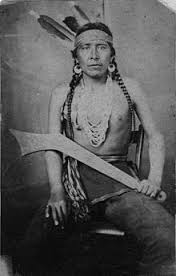
“‘We went down determined to take the fort,” said Wamditanka (Big Eagle). “If we could take it we would soon have the whole Minnesota valley.” The Dakota soldiers fight hard on this fourth day of the war, but the U.S. soldiers give as good as they get. The Dakota retreat and strategize: should they wage a third battle or attack New Ulm for plunder?” *

What shall I pray for this second day of battle, Lord? We, as human beings, have a long history of wanting “to take the fort.” We are discontent, we are offended, and we crave revenge. This day in history is an offense to Your majestic living masterpieces, whether of the Dakota tribe, or of the people of the state of Minnesota or the United States. Will You have mercy on our slaying precious lives You have created?

We have destroyed Your handiwork in another sense when we committed to this battle. We have desecrated Your lands also known as the Minnesota Valley and Fort Ridgely. We, human beings, are all squatters and temporary stewards of Your earth, but we continually claim it for ourselves?! Forgive our offenses against Your property, Lord of Minnesota. We harvest Your land, take our food, take Your game without price. Yet we want tribute from those who dare offend our kingdoms. Will You speak life and peace to every square foot of land defiled by our rebellion against You, and expressed in separation and bloodshed against our neighbors?

Under the authority of Jesus and as a co-inheritor of His mercy, Wamditanka, I announce His forgiveness to You and Your men for your attack on Minnesota and the United States. Will You forgive me and my forbearers’ our bloodguilt, sins and failures, bitter words and curses against you and your nation? Will you wipe away the memory of bitter vows and judgments we have made over you, and you over us? Holy Spirit, come and walk between us. Show the Dakotan and the Minnesotan how to be brothers. Will You change the atmosphere of our relationship! May You give us an heart to keep blessing each other until You return!

*P.T.H. cites timeline formerly at this URL: mnhs.org/about/dipity_timeline.htm
The Minnesota Historical Society Web site, http://www.mnhs.org , is fantastic! Check it out!

Standard
19th Century, Business, Civil War, Economics, Intercession, Jesus, justice, law, Minnesota, omnipresent history, Real Estate

Financial Panic Changes the Economic Climate July 1, 1857  

images-9

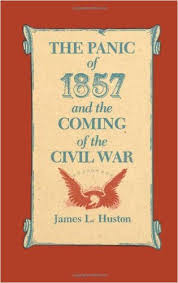
Fueled by wild speculation in land prices, the economy of Minnesota Territory became overheated. This speculative bubble burst in July when banking failures in the East began to spread panic in the West. The resulting crash in land values caused credit to dry up in Minnesota. Local banks closed and other business failed as well. The economy of Minnesota did not improve until the Civil War.*

Father, how often has this happened in our history as human beings? How often has money, property, or wealth been manipulated to bring an otherwise peaceful people to war? Lord, we seem immune to recognize the inner causes of these type of panics and economic downturns; we want what we do not have. Will You forgive us our desire for easy money? Will You forgive the greed of the banks involved: Eastern or Western or foreign?

Will You wipe out the painful judgments of our states’ debtors towards these banks, and their unforgiveness of debt? Will You forgive us for being seduced by the spirit of speculation to the detriment of our brothers and sisters? It seems there is a perpetual battle between those who value the land as a home that sustains life and those who view it only as a profitable commodity. Lord, will You give balance to our judgments of the land, and free our land of the curses we have committed against it?

*Note – PrayThroughHistory uses the timeline located for several years at the Minnesota Historical Society Web site, at this URL: mnhs.org/about/dipity_timeline.htm .

Standard
19th Century, Americana, History, justice, Minnesota, State Government

Saint Paul Keeps Capital Feb 27, 1857  

Joe Rolette

Joe Rolette

February 27, 1857
“Legislator Joe Rolette disappears with a scandalous bill that would transfer the territorial capital from Saint Paul to Saint Peter. For a week he drinks and plays poker with his friends, hiding in the attic of the Fuller House while the bill rests in the hotel’s safe. He reappears only after the legislature adjourns on March 7 and it is too late to get the bill signed into law.

Rolette is a councilor in the territorial legislature from northwest Pembina County. The questionable bill he hides is the work of government officials who bought land in Saint Peter and proposed the move to raise the value of their properties.

April 23, 1857 to May 24, 1858
Samuel Medary takes office as the territory’s 3rd, and last, governor.

When President James Buchanan appointed him governor in March, 1857, Minnesota was already in transition from a territory to a state. Medary was the recognized governor, although he spent most of his time outside the territory and conducted business through Charles L. Chase, the secretary of the territory. Some historians argue that Minnesota had three governors during this period: Henry H. Sibley, governor-elect, Charles L. Chase, acting governor, and Samuel Medary, de facto governor.” *

Father, thanks that You are just. No one can twist your Laws, or win the game by using parliamentary procedures. I acknowledge the temptation to win by changing the rules, or by trickery. Will You forgive Joe Rolette and all the parties he represents for this event in 1857? Will You free us from any judgments or counter-judgments that still affect Minnesotans’ today? Will You help us, and forgive us our frustrations with the governor of this state? Will You guide and preserve that office until You come, and work through the entire being of Governors past, present, and future?

* http://www.mnhs.org/about/dipity_timeline.htm

Standard
19th Century, cultural transference, Culture, History, Indian, Intercession, justice, Minnesota, Native Americans, Treaties

Leech Lake Reservation Created 

images-5

images-6

1855 to 1864
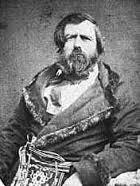
“1855: The Mississippi, Pillager, and Winibigoshish bands cede all of north-central Minnesota for reservations at Leech and Cass lakes, Winibigoshish, Mille Lacs, Sandy Lake, Rice Lake, Gull Lake, Rabbit Lake, and Lake Pokegama.

1863-4: The Pillager, Winibigoshish, and Mississippi bands are moved off of the reservations established by the 1855 treaty and are concentrated at Leech Lake.” *

As I ponder the creation of this reservation today, I’m struck by the names involved. Often, we live out our names, and what we call ourselves we become. Will You show me, kind Holy Spirit, how to pray for this moment 160 years ago?

I found a few clues about the place-names from Wikipedia.
“On early maps, Leech Lake is identified in French as “lac Sangsue” (Bloodsucker Lake), which was then translated into English to its current name; its French name was translated from the Ojibwe “Ozagaskwaajimekaag-zaaga’igan” (lake abundant with bloodsuckers).” **

Below are the names of the actual signees of this agreement

“George W. Manypenny, Commissioner
Tug-o-na-ke-shick, or Hole in the Day, his x mark
Que-we-sans-ish, or Bad Boy, his x mark
Waud-e-kaw, or Little Hill, his x mark
I-awe-showe-we-ke-shig, or Crossing Sky, his x mark
Petud-dunce, or Rat’s Liver, his x mark
Mun-o-min-e-kay-shein, or Rice Maker, his x mark
Aish-ke-bug-e-koshe, or Flat Mouth, his x mark
Be-sheck-kee, or Buffalo, his x mark
Nay-bun-a-caush; or Young Man’s Son, his x mark
Mah-yah-ge-way-we-durg, or The Chorister, his x mark
Kay-gwa-daush, or The Attempter, his x mark
Caw-cang-e-we-gwan, or Crow Feather, his x mark
Show-baush-king, or He that Passeth Under Everything, his x mark
Chief delegates of the Mississippi bands.
Maug-e-gaw-bow, or Stepping Ahead, his x mark
Mi-gi-si, or Eagle, his x mark
Kaw-be-mub-bee, or North Star, his x mark
Chiefs and delegates of the Pillager and Lake Winnibigoshish bands.
Executed in the presence of:
Henry M. Rice
Geo. Culver
D. B. Herriman, Indian Agent
J. E. Fletcher
John Dowling
T. A. Warren, United States Interpreter
Paul H. Beaulieu, Interpreter
Edward Ashman, Interpreter
C. H. Beaulieu, Interpreter
Peter Roy, Interpreter
Will P. Ross, Cherokee Nation
Riley Keys” ***

Jesus, will You forgive all the judgments and separations made in these events? United States representatives judged those from Minnesota, Minnesotan’s judged the Mississippi, Pillager, and Winibigoshish. Going the opposite direction, the Winibigoshish, Pillager, and Mississippi band judged Minnesotan’s, and the United States government; all are full of judgments and counter-judgments. Will You free the lands of Leech Lake, Cass Lake, Winibigoshish, Mille Lacs, Sandy Lake, Rice Lake, and Lake Pokegama?

Lord, this day, I ask You to co-sign this loan arrangement of Your property! I lift all these names to You. Where they were living in good faith, may they be blessed in perpetuity! Where they have defaulted on the use of Your property, or misused any descendants of these names, we ask for Your recognition of sin, repentance, and restoration of chesed.

You are the Host of this planet, and we often behave like its leeches; we only know how to live off the host! Will You add Your name to balance the deficits of our accounts today Infinite-One-Who-Gives-Blood-So-Others-May-Live? May You bring us to full restoration in these relationships, and fully reunite us with this portion of nature known as Minnesota!

http://www.mnhs.org/about/dipity_timeline.htm
** Upham, Warren (1920). Minnesota Geographic Names: Their Origin and Historic Significance. Minnesota Historical Society. p. 90
*** http://www.accessgenealogy.com/native/treaty-of-february-22-1855.htm

Standard
18th Century, 19th Century, 20th Century, 21st Century, African American, Anglican, Canada, Christian, education, Evangelism, Great Britain, History, Indian, Intercession, Jesus, justice, Lutheran, Minnesota, Native Americans

Church Missionary Society founded in Minnesota

images-2

August 25, 1851
“The Church Missionary Society for Minnesota was founded on August 25, 1851.

G-d, I’m not entirely sure which Church or who composed this society, but most likely it was the work of Josiah Pratt who dedicated his life to reach the ends of the earth with the Gospel. Minnesota Territory, in this context, qualified as the extremity and meeting place of Western civilization and North American Native cultures. The Society reached out to Canadian and Midwestern First Nations through a branch known as the North West America Mission. **

Please read and enjoy this brief summary of the Church Missionary Society and it’s profound impact on the 19th Century.

“Our story began more than 200 years ago with a group of Christians whose hearts were stirred to put their call into action.
This group included people like William Wilberforce, John Venn, and John Newton. Together they worked to abolish the slave trade, they fought for the rights of oppressed people at home and they launched out on dangerous seas to share Jesus with the world.
The effects of their efforts – as well as the work of thousands of men and women who have followed in their footsteps – are still seen and felt across the globe today.

A brief history of Church Mission Society
The Society was founded in Aldersgate Street in the City of London on 12 April 1799. Most of the founders were members of the Clapham Sect, a group of activist evangelical Christians. They included Henry Thornton MP and William Wilberforce MP. The founders of CMS were committed to three great enterprises: abolition of the slave trade, social reform at home and world evangelisation.

Wilberforce was asked to be the first president of the Society but he declined due to his workload but took on the office of vice president. Thornton became the first treasurer. The Rev Josiah Pratt, curate of St John, Bedford Row (London) soon emerged in a proto-chief executive role.

The spiritual background to the emergence of CMS was the great outpouring of energy in Western Europe now called The Great Awakening. John Wesley, an Anglican priest and failed missionary, became a key player in the UK version of the story. Not all those influenced by the revival left the Anglican Church to become Methodists. One such was John Venn, the saintly rector of Clapham.

Members of the second and third generation following the revival saw many opportunities to consolidate its effects. Alongside the main Clapham agenda they sponsored Sunday Schools for evangelism and education, founded Bible Societies and much more.

The Reformation and the abolition of monasteries and religious orders left the Church of England without vehicles for mission, especially for outreach to the non-Christian world. This new membership society agreed to be loyal to the leadership of bishops and an Anglican pattern of liturgy, but not dominated by clergy and emphasised the role of laymen and women. Much of what we call the Anglican Communion today traces its origins to CMS work. However CMS today is not confined just to Anglicanism, both in terms of people it sends out in mission or ally agencies and projects around the world.

It was expected that Church of England clergy would quickly come forward to be missionaries. When this didn’t materialise CMS turned towards mainland Europe and the earliest missionaries were German Lutherans. For over a century CMS enjoyed rich work relations with the Churches and seminaries of Western Europe. Sadly this was gradually eroded as the European superpowers vied with each other in the race for colonial expansion. Even so we can say the 20th-century quest for Christian unity began through the experience of mission.” **
G-d, regretfully I haven’t yet located primary sources for the founding of CMS in Minnesota Territory, but I thank you for it. May the full number of Minnesotans see You in all Your beauty, and know and fulfill the mission you have created for them! May we follow in their paths to abolish slavery, take just and practical actions to better our State, and give away the happy news of the Gospel; Jesus loves us, wants us, forgives us, and helps us practice living free! Forgive our purposeless living! Forgive our fears of chasing the Wild Goose! (An ancient Celtic image for the Holy Spirit.) May we be blessed to fly, and under Your authority serve to heal all nations!

http://www.mnhs.org/about/dipity_timeline.htm
** “The Church Missionary Atlas (Canada)”. Adam Matthew Digital. 1896. pp. 220–226. Retrieved 19 October 2015.
*** https://churchmissionsociety.org/about/our-history/

Standard
19th Century, government, History, Intercession, Jesus, justice, Minnesota, Native Americans, Politics

Taliaferro Becomes Indian Agent 1820  

pinterest

Lawrence Taliaferro

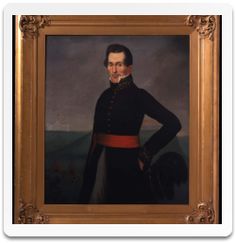
Virginian Lawrence Taliaferro (pronounced “Tolliver”) becomes the Indian agent at Fort Snelling. Respected by the Indians for never making promises he could not keep, he works hard for 20 years to rid the fur trade of whisky and cheating. At last, in poor health and tired of the government’s broken promises, he resigns.*

Lord, thank you for honest people! What pleasure it is to have someone return our phone, admit a mistake in our favor at the cash register, or actually put a lost item into the “lost and found” so we can reclaim it. As King Solomon wrote so many years ago, “An honest answer is like a kiss on the lips.” I simply wish to honor and remember the “honest people” of the world to You today, and commend to You their example.

Father of Honesty, Mother of Truth, today I wish to honor  and remember Lawrence Taliaferro, who crystallizes this type of character. Thank you that he wanted a square deal for Indians of Minnesota who came to him at Fort Snelling. There is such power in a person who is willing to let their yes mean “Yes”, and their no mean “No”.

We are no different than Lawrence. There are many times that we tire of doing good and quit. Often, there is more punishment and criticism for doing the right thing than sweeping the wrong thing under the rug!? Will You forgive our hearts to quit doing right and forgive Mr. Taliaferro!? Will you forgive any assessments he made, probably quite logically, of the Federal government’s failure to honor its promises? Will You bless these specific tribes of Indians in the specific areas that they have been wronged? Will You forgive any tribal counter-judgments or resentments of State or Federal government? Will You begin to heal these centuries-old heartaches today?

*Note – PrayThroughHistory uses the timeline located for several years at the Minnesota Historical Society Web site, at this URL: mnhs.org/about/dipity_timeline.htm .  The current URL is www.dipity.com/Minnesota/History/Minnesota-History/ and only works if typed, not pasted, in browser. It is worth the effort!

Standard