19th Century, Agriculture, Business, Dakota, Governors, History, Intercession, Judgment & Counter-Judgment Cycle, Minnesota, Native Americans, Ojibwe, omnipresent history, railroad, State Government, Treaties

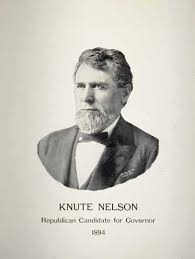
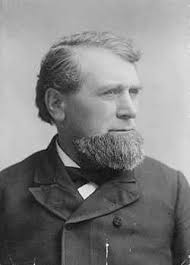
Nelson Becomes Governor 1893

unknown-1

January 4, 1893 to January 31, 1895

“Norwegian immigrant Knute Nelson becomes the state’s 12th governor in 1893, the first Scandinavian to hold the office. A fighter for farmers’ interests against the railroads and grain merchants, he resigned in 1895 to run successfully for the United States Senate, where he remained until 1923.” * 

Thank You for the life of Knute Nelson and his leadership in Minnesota. He became a prominent leader roughly 25 years after becoming a citizen. Negative attitudes about Scandinavians were tempered by his success.

Looking back at his career, the area of greatest contention were probably those issues concerning railroad interests. On one hand, the rails offered new markets to farmers and also supplied them with manufactured goods from the east. This relationship fueled western land development, and modernized communities along the way.

However, like all new technology, railroads were often the vehicle of economic bondage for immigrant settlers, and greedy for Native Americans’ land. Farmers became dependent on the rails to bring grain to market, but having a product with limited shelf life, were subject to the manipulations of the market and shipping costs charged by the railroad companies.

But how did the railways effect the Native Minnesotans? It is understandable that a sitting Governor wants to further the economic growth and standard of living in his state, but at what cost? These questions point to his writing of the Act cited below: 

“The Nelson Act of 1889 was a United States federal law intended to relocate all the Anishinaabe people in Minnesota to the White Earth Indian Reservation in the western part of the state, and to expropriate the vacated reservations for sale to European Americans. [1]

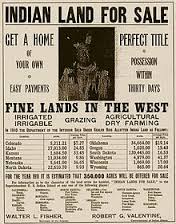
Approved by Congress on January 14, 1889, the Nelson Act was the equivalent for reservations in Minnesota to the Dawes Act of 1887, which had mandated allotting communal Indian lands to individual households in the Indian Territory, and selling the surplus. The goal of the Nelson Act was to consolidate Native Americans within the state of Minnesota on a western reservation, and, secondly, to encourage allotment of communal lands to individual households in order to encourage subsistence farming and assimilation. It reflected continuing tensions between whites and American Indians in the state. Especially after the Dakota Conflict of 1862, many Minnesota white residents were eager to consolidate the reservations, reduce the amount of land controlled by Indians and make the surplus available for sale and settlement by European Americans.

Minnesota congressmen Knute Nelson pushed for the allotment of Ojibway lands in Northern Minnesota and sale of “surplus” to non-Natives. He and others intended to force the Ojibway to relinquish most of their reservation lands. The intention was to relocate the peoples to the westernmost White Earth Reservation. All would receive individual allotments, with the remainder to be available for sale to European Americans. These actions were illegal and violated the treaties which the US had made with the tribes, but the government proceeded anyway. The Red Lake Band of the Ojibway were able to keep the southern portion of their Reservation.”**

Father, this story brings to mind the desire of King Ahab for his neighbor’s vineyard.

1 Kings 21:1-16

New International Version (NIV)

Naboth’s Vineyard

1 Some time later there was an incident involving a vineyard belonging to Naboth the Jezreelite. The vineyard was in Jezreel, close to the palace of Ahab king of Samaria. 2 Ahab said to Naboth, “Let me have your vineyard to use for a vegetable garden, since it is close to my palace. In exchange I will give you a better vineyard or, if you prefer, I will pay you whatever it is worth.”

3 But Naboth replied, “The Lord forbid that I should give you the inheritance of my ancestors.”

4 So Ahab went home, sullen and angry because Naboth the Jezreelite had said, “I will not give you the inheritance of my ancestors.” He lay on his bed sulking and refused to eat.

5 His wife Jezebel came in and asked him, “Why are you so sullen? Why won’t you eat?”

6 He answered her, “Because I said to Naboth the Jezreelite, ‘Sell me your vineyard; or if you prefer, I will give you another vineyard in its place.’ But he said, ‘I will not give you my vineyard.’”

7 Jezebel his wife said, “Is this how you act as king over Israel? Get up and eat! Cheer up. I’ll get you the vineyard of Naboth the Jezreelite.”

8 So she wrote letters in Ahab’s name, placed his seal on them, and sent them to the elders and nobles who lived in Naboth’s city with him. 9 In those letters she wrote:

“Proclaim a day of fasting and seat Naboth in a prominent place among the people. 10 But seat two scoundrels opposite him and have them bring charges that he has cursed both God and the king. Then take him out and stone him to death.”

11 So the elders and nobles who lived in Naboth’s city did as Jezebel directed in the letters she had written to them. 12 They proclaimed a fast and seated Naboth in a prominent place among the people. 13 Then two scoundrels came and sat opposite him and brought charges against Naboth before the people, saying, “Naboth has cursed both God and the king.” So they took him outside the city and stoned him to death. 14 Then they sent word to Jezebel: “Naboth has been stoned to death.”

15 As soon as Jezebel heard that Naboth had been stoned to death, she said to Ahab, “Get up and take possession of the vineyard of Naboth the Jezreelite that he refused to sell you. He is no longer alive, but dead.” 16 When Ahab heard that Naboth was dead, he got up and went down to take possession of Naboth’s vineyard.

These verses tell of an authority figure who is complicit in the annexation of his neighbor’s land. The part that stands out to me are the words of verse 3; “The Lord forbid that I should give you the inheritance of my ancestors.” Naboth did not want to sell away an inheritance.

Lord, there are many nuances that I do not know about this Act. I don’t know the Governor’s heart, his motivations, or the pressures on him. I simply see an action that is typically the breeding ground of bitterness and contention.

Will You forgive the injustice of this Act towards Native Minnesotans, their inheritance, property, and generations’? Will you release them from any binding counter-judgments that may hold them captive from receiving an inheritance from You? Will You reverse any curses on the lands specifically mentioned in this Act, and restore a right relationship between all Native Minnesotans and government?

Will You teach this state to have neither a tyranny of the majority or the minority? Will You enable us to neither feel the shame of asking for the help of our state, nor shame those who have graciously helped? Will You teach us about boundaries, property, lands, and inheritance?

Will You give honor to the just actions of Knute Nelson, his heritage, and generations? Will You forgive us in our judgments of the humanity and motive conflicts within our own natures’? Will You give us internal peace, contentment, and satisfaction in our hearts so we do not want another’s possession?

** http://en.wikipedia.org/wiki/Nelson_Act_of_1889

*** For more depth on Governor Knute Nelson see the “Biographical Directory of the United States Congress”. http://bioguide.congress.gov/scripts/biodisplay.pl?index=n000040

**** More on property rights of the ancient Middle East. https://tifwe.org/resource/ownership-and-property-in-the-old-testament-economy/


Standard
19th Century, History, Indian, Intercession, Minnesota, Native Americans

Farmers Flee Ojibwe 1891

unknown-1

1891

“Fearing an Indian uprising, throngs of people flee the Red River Valley. The sheriff of Kittson County requests rifles, the roads jam, and panic ensues. The gathering of Ojibwe turns out to be a peaceful annual ceremony.” * 

Lord this seems like a very human reaction: fearing the unknown neighbor. I acknowledge this fear, of this moment, as sin. This judgment of the Ojibwe celebration appears quite rash, and based on incomplete information. Will You forgive us our judgments then and bring blessing to all descendants of those who panicked or were simply preparing a party; a pow-wow? Will You rebuild to the trust, neighbor to neighbor in Kittson county?

Also, forgive us in the present! We often suspect those of a differing upbringing, thereby not giving them the benefit of the doubt we do to those who are more familiar. We make assumptions based on incomplete facts that unnecessarily alienate us from each other. Christ have mercy! Will You give us the grace to know each other in Minnesota? 

* http://www.mnhs.org/about/dipity_timeline.htm


Standard
19th Century, History, Intercession, Mining, Minnesota, Native Americans, omnipresent history

Duluth Boom 1890

unknown

1890

“Ore carriers at the Duluth docks take iron ore to the blast furnaces of Pennsylvania. Duluth is booming on the promise of lumber and iron ore. Its population is nearly 10 times what it was 10 years before.” * 

For those not acquainted with Minnesota, it is necessary to define the huge northeastern portion of state once so rich in iron ore. Folks here usually shorten it to “the Range” or if I use correct pronunciation of the local dialect; “Da Range”. Below is a nice snippet to give us some accuracy to pray through.

“The Iron Range is an informal and unofficially designated region that makes up the northeastern section of Minnesota in the United States. It is a region with multiple distinct bands of iron ore. The far eastern area, along the shore of Lake Superior, and the far northern area, along the Canadian border, of the region are not associated with iron ore mining. Due to its shape, the area is collectively referred to as the Arrowhead region of the state.” **

Thank you for the blessing our state with iron ore! Thank you for its discovery! Thank you for the roles both Native Minnesotans’ and eastern geologists played in finding rich sources of this useful metal!

Will You forgive the injustices, bitterness, and divisive competitiveness of this era? Will You replace the deficits of love that have created an inheritance of distrust in Duluth, its’ mining interests, and across the steel industry? Will you give grace to those whose water or land or air were tainted through ore mining? Christ have mercy on us! We are offended and honestly wronged by our neighbor. We form grudges. Then we become the prisoners of our own grudges! Will you show us how to let the other guy ‘off the hook’ so the we do not continue in hypocrisy? Will You give us trust that You will make things right, even though we see no signs of change no matter how hard we search for it?

Because You are “The Lord, the Lord, the compassionate and gracious God, slow to anger, abounding in love and faithfulness…” by faith, I announce Your blessing to the Arrowhead region. May your land, air, water, all above you, and all below you, continue into eternal space as a ray of blessing! May your peoples, of all races and creeds, see and feel and know that You are a GOOD FATHER! May this region be known in the present and the future as a people of forbearance who conduct their business and government with the same gemutichkeit (goodwill)! May the plans of the Enemy to turn our hearts hard as iron ore come to nothing! Please use this Arrowhead region to point and lead into a future of blessing for our state and all people!

* http://www.mnhs.org/about/dipity_timeline.htm

**http://en.wikipedia.org/wiki/Iron_Range


Standard
19th Century, government, History, Indian, Intercession, Minnesota, Native Americans, Ojibwe, omnipresent history, State Government, Treaties, U.S. Government

Nelson Act Allots Indian Lands

unknown

January 14, 1889

“Passed into law on January 14, 1889, the Nelson Act breaks up Ojibwe reservations into individual plots of land, leaving only Red Lake in tribal hands. Named for Knute Nelson, who from 1883 to 1889 served as representative to the U.S. Congress from Minnesota’s newly formed fifth district. It was during this time as a congressman that Nelson made one of the most significant moves of his political career when, as a member of the Committee on Indian Affairs, he drafts an act entitled “Relief and Civilization of the Chippewa Indians in Minnesota,” commonly known as the Nelson Act. The Act stipulates that Ojibwe families receive “allotments” of land on the White Earth Reservation. 

This attempt to consolidate all of Minnesota’s Ojibwe people on a small land base results in the loss of Indian lands beyond what had already been ceded to the United States through treaties as the government sells leftover land to lumber companies.” * 

Father, You have established order in this universe. You have said over and over to any who would listen, “ Pray for Your leaders, for those in authority. Your will be done!

As a human being, I acknowledge the fantasy we create when we have a self interest. Nelson may have genuinely believed that the sale of these lands were the path to reducing the conflict between Native Minnesotans’ and their new neighbors. Christ have mercy! However, it appears to be more probable that he thought he knew how to use their land better than the Ojibwe did. 

Will You forgive the heart of force in the Nelson Act? Will You forgive the pride of our government in these dealings with the Ojibwe? Will You forgive the heart judgments’ against the Ojibwe, Cherokee, or any other native Minnesotans? **

You do not abhor property in your word. You gave allotments of lands to specific tribes of Israel. (See Genesis 12:7, 13:15, 15:18, 26:4, Exodus 32:13, Deuteronomy 1:35-36) You teach us to be good stewards of the property You have given us to manage, yet You ultimately are its Sovereign and owner.

` Father, we have broken Your laws and have broken faith with Your Native Minnesotans! We have used the force of government to wrongly divide their land for OUR use. Lord, will You release us of this sin? Will You release Native Minnesotans of their counter-judgements’ stemming from the Nelson Act, and the accrued judgments since? 

Will You reveal to the Ojibwe that You alone are indeed the Sovereign of all land in Minnesota? Will You show Minnesotans how to disagree and maintain relationship on the issue of private property? Will You release the lands affected by this Act from their respective curses? Will You turn the Nelson Act into a blessing for ALL Minnesotans in perpetuity?

In faith, I send these offenses and counter-offenses to the Cross of Christ. I send these land-based curses to the Cross of Christ. I wish to bring the Nelson Act into Your eternal present, that You may give us life and blessing! Lord, forgive our unbelief and failure to evenly steward Your property in our charge! You alone are Sovereign of all property of all States and Nations, all Worlds, and the only  and honorable King of the Universe!

* http://www.mnhs.org/about/dipity_timeline.htm

** For more depth on the Bible and private property, see “Ownership and Property in the Old Testament Economy” by Dr. Walter Kaiser:  tifwe.org


Standard
19th Century, Agriculture, farming, History, Indian, Intercession, Minnesota, Native Americans, omnipresent history, State Government, Treaties

The Dawes Act 1887

unknown

February 8, 1887

“Congress enacts legislation that allots 160-acre tracts of land to heads of households of American Indian families. The rest of the reservation land is thrown open to non-Indian  homesteaders. Eventually, Native-held lands are reduced by more than two thirds.” *

The act “was the culmination of American attempts to destroy tribes and their governments and to open Indian lands to settlement by non-Indians and to development by railroads.” Land owned by Indians decreased from 138 million acres in 1887 to 48 million acres in 1934.

Senator Henry M Teller of Colorado was one of the most outspoken opponents of allotment. In 1881, he said that allotment was a policy “to despoil the Indians of their lands and to make them vagabonds on the face of the earth.” Teller also said, “the real aim [of allotment] was “to get at the Indian lands and open them up to settlement. The provisions for the apparent benefit of the Indians are but the pretext to get at his lands and occupy them….If this were done in the name of Greed, it would be bad enough; but to do it in the name of Humanity…is infinitely worse.” **

Messiah, there is such a gap between intent and actions. One the one hand, the Dawes Act points to a desire to respect the property of Native Americans. On the other hand, it ‘gives’ them title to land if they accept the conditions. Is this freedom, or fiefdom?

First, as a human being and fellow Minnesotan, I want to acknowledge our sin of envy. We are not content with what we have. Lord forgive us the envy contained in the Dawes Act of Native lands! Will You heal the whole inheritance of envy, and heal the lands that were annexed unjustly?

Second, I want to acknowledge the mixed motives of our hearts! I acknowledge the honest desire of many at this time that Native peoples assimilate and become one people with the United States, and with Minnesota. Many were motivated by a desire to share ‘common ground’ figuratively and literally with Indians. As in “I’m a simple Norwegian farmer who is trying to start a new life in America. What does my indian neighbor have against me? I used to hunt and fish with him. I’m not a land man for the railways, or a representative of the Department of the Interior, but their actions make me the bad guy to my Indian neighbors.”

Many Natives did not want to not feel the pains of being a foreign enclave in their homelands. While they resisted many aspects of Western Culture, they also admired and even craved some of its fruits: new technologies and techniques, trade for useful products, positive interactions with new neighbors, etc. They seemed to both admire and fear the new culture in their land. Some Natives willfully accepted new ways, and others did not.

Lord, have mercy on these hearts! Some on both sides of this divide, whether Immigrant or Indian, wanted to take a chance and embrace. Some were repelled by clashing with another culture. Lord forgive how we have feared our brother’s ways, and rejected what You have to teach us through him! Lord, forgive us our hesitancy to trust! Will you restore us to chesed? ***

Next, I want to acknowledge that both cultures succumbed to the “power men” within them. There were plenty of Minnesotans willing to capitalize on the imbalance of power the Dawes Act gave them! Too many tried to moralize the outright theft of property! They claimed desires to civilize native peoples to gain public approval for their land grab. Nothing changes. they are still among us. However, I mourn before you this day, and acknowledge this offense against my Native brothers! Have mercy! Will You reverse this curse? Will You restore these injustices?

Lastly, I want to acknowledge the counter judgments that some Native peoples made in response to these ‘land grabbers’. They chose to meet offense with counter offense. It is clear to see these fruits yielding a harvest of separation even today in our state. 

Will You have mercy on our natural desires for vengeance stemming from the Dawes Act? Will you give us a new common inheritance as Minnesotans? Will you take the bitter roots from our hands so that we can receive from You? When we must disagree, will You teach us to do it with understanding and respect? Amen.

* http://www.mnhs.org/about/dipity_timeline.htm

** https://en.wikipedia.org/wiki/Dawes_Act

***  https://en.wikipedia.org/wiki/Chesed


Standard
19th Century, History, Indian, Intercession, justice, Minnesota, Native Americans, omnipresent history, State Government, Treaties

Court of Indian Offenses 1884

unknown

1884

“The Court of Indian Offenses at Red Lake enforces rules forbidding plural marriages, dances, destruction of property following death, intoxication, liquor traffic, interference with the ‘civilizing program,’ and leaving the reservation without permission.” * 

Come Lord Jesus! Share Your heart and mind regarding the Court of Indian Offenses. Your wisdom is invited and needed  to observe this moment in history. Lord, so much of the problem in this relationship is based on sovereignty. What does a dependent sovereign nation within a sovereign nation look like? This appears to be the crux of the matter then and now.

First, as a Minnesotan and as a human brother to the First Nations of this state, I acknowledge that our judgments and counter-judgments are piled high before You! We as citizens of the United States and Minnesota and First Nations have offended Your Sovereignty because our laws are shifting sands. We waver between enforcing the “letter of the Law” and the “spirit of the Law”! We lack the mercy inherent in Your justice, and have often broken relationship with each other! 

Will You forgive the sins committed by the Court of Indian Offenses in Minnesota? Will You reverse the numerous breeches of justice that began in 1884 and taint our relations today? Will You overcome our offenses that make us the prisoner of each other, instead of being the co-beneficiaries of Your unmerited favor? 

By the authority of the Risen Messiah, I pronounce the grace of the Lord Jesus Christ, the Love of God the Father, and the fellowship of the Holy Spirit on all inheritors’ of these events! Teach us to live as humble sovereign nations serving under the King of the Universe!

* http://www.mnhs.org/about/dipity_timeline.htm


Standard
19th Century, Culture, History, Indian, Intercession, Minnesota, Native Americans, State Government, Treaties

Sisseton Wahpeton Reservations Established

Unknown-2

February 19, 1867
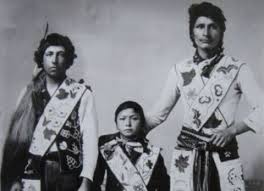
“The Sisseton (or Lake Traverse) Reservation in northeastern South Dakota and the Devil’s Lake Reservation in central North Dakota are established for the Sisseton and Wahpeton bands, originally from Minnesota. These two bands had argued for the restoration of their treaty rights on the grounds that they had not fully participated in the war of 1862.” *

Lord Jesus, I ask that You enter this negotiation of February 19 so long ago. Will You bring Your justice into this situation? Will You free the Minnesotan and tribal members from the sins of their generations? Will You bring a new peace between Sisseton Wahpeton and our State?

http://www.mnhs.org/about/dipity_timeline.htm

Standard
19th Century, Chippewa, Exploration, History, Intercession, Minnesota, Native Americans, Ojibwe, State Government

Beltrami County Formed

images

February 28, 1866
“Beltrami County was formed.” *

A seemingly simple note in history. A county is born, but what makes this place unique, Lord? Why is it special in the history of my state? It’s the headwaters of the great Mississippi, supplies drinking water for a quarter of Minnesota, supports hundreds of species of animals, and gives witness to approx. 10,000 years of human history.**

Some of the land Beltrami County sits upon was originally Ojibwe (Chippewa) land. “Home to the federally recognized Red Lake Band of Chippewa, it is unique as the only “closed reservation” in Minnesota. In a closed reservation, all land is held in common by the tribe and there is no private property.” *** Will You direct my thoughts and prayers today for this peoples’ influence on this event?


Unknown

This county is named after the Italian count Giacomo Beltrami. He explored the area ca. 1825 and claimed to have discovered the headwaters of the Mississippi. After more years of adventures and travels he wrote his memoirs, but could not get them published by the Church-led government of Italy. What, if any, prayer points does this bring to the fore? ****

First, I will give thanks for the gift of this river; the Mississippi. What would Minnesota be without it? It has given so much to so many: a 2300+ mile waterway, massive hunting and fishing grounds, thousands of years of drinking water, and immense beauty! May we forever remember this blessing from You, and be honorable stewards of it!

Next, I commend the Ojibwe-Chippewa Nation to You. I remember their choice to live in common, a huge commitment to trusting relationships most moderns will not dare undertake.You entrusted them with the gift of the Mississippi, and they did not withhold this treasure from Beltrami. *****

Lastly, I observe this lesson from this snippet of Minnesota history; the debt of gratitude is like a great river. Minnesota owes a debt of thanks to Italy, who owes a debt of gratitude to Giacomo Beltrami who owes a debt to the Ojibwe, who owe a debt to their forebearers, yet we all owe a perpetual debt of honor to the King of the Universe. As long as there is time, may this river of remembrance and honor never cease to flow and refresh! Amen!
http://www.mnhs.org/about/dipity_timeline.htm
** http://mississippiheadwaters.org/History.asp
*** Charles Brill (1992). Red Lake Nation: Portraits of Ojibway Life, University of Minnesota Press, p. 19.
**** https://en.wikipedia.org/wiki/Giacomo_Beltrami
***** http://www.sciencebuzz.org/blog/would-you-trust-your-life-red-umbrella


Standard
19th Century, Dakota, History, Indian, Intercession, Minnesota, Native Americans, omnipresent history, U.S. Government

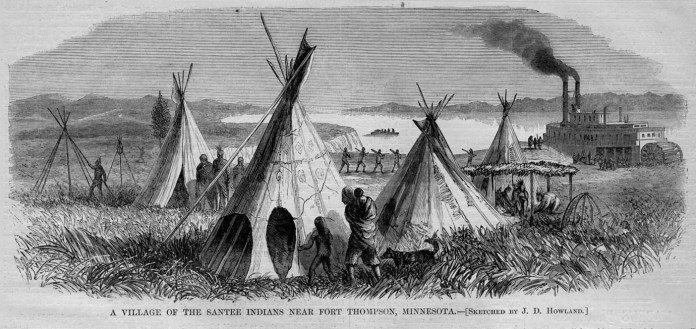
Santee Reservation Established

HW1867P629897

February 27, 1866
“The U.S. Indian Office establishes a reservation for the Santee Dakota—who are facing starvation at Crow Creek—at the mouth of the Niobrara River in Nebraska. Pardoned prisoners from the military prison in Davenport, Iowa, join the Crow Creek survivors in this new location.” *

Jesus, will You intervene in this event? Will You forgive any of the judgments offensive to You in this event, whether from: Santees, Dakotas, Minnesotans, South Dakotans, Iowans, or Nebraskans? All our opprobrious conduct was against You. Will You have mercy on these parties in this moment as You will forgive our contemptuous actions in the future? Will You transform these relationships? Will You bring chesed into our present?
* http://www.mnhs.org/about/dipity_timeline.htm

Standard
19th Century, Governors, History, Indian, Intercession, justice, Minnesota, Native Americans, omnipresent history, State Government, Transference, Treaties, U.S. Government, war

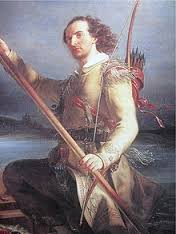
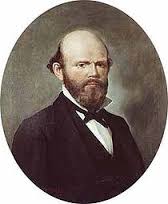
Marshall Becomes Governor

Unknown

January 8, 1866 to January 7, 1870
“William R. Marshall becomes the state’s fifth governor. Energy and ambition characterized the life of Minnesota’s fifth—and only southern-born—governor. During William Marshall’s administration, his adoptive state experienced a post-Civil-War surge of growth and development: its population doubled to 350,000, its railroad mileage quadrupled, and its commercial endeavors flourished.” *

Governor Marshall personified the spirit of his pioneering neighbors in the Midwest. His work experience included: dairy farming, livestock farming, reporting the news, and banking. He voluntarily fought in the Civil War, and the Dakota Wars. **

Some of us, living in the present, may stumble over Marshall’s support of the abolition of slavery, and then fighting to expel the Dakota Nation from Minnesota. Would modern scholars, educated in the doctrines of the Frankfurt School or Cultural Marxism, consider him a racist because he fought for African-Americans, but against Native Americans?

Perhaps we would do better to enter the worldview of his era, and see things through the lens of 19th Century Midwesterners? Maybe it’s consistent with his belief system to come to the rescue of slaves because they did not aggress against his country (United States)? What if he rationalized specifically fighting the Dakota Nation, (not all Native Americans), because a few hundred of them made war on Minnesota?

Lord, I simply do not know his heart. You are the Only Wise Justice of this world, so will You reason and wrestle with us in prayer? It is easy to applaud those who voluntarily gave their lives to fight in the Civil War, if it was out of a heart to end the institution of human slavery. It is less laudable, but still reasonable, to assume that some Minnesotans fought the South because of political rather than moral or spiritual reasons.

In the same fashion, we know little of Marshall’s rationalizations for his role in the Dakota Wars. Did he fight for the protection of his political state? Did he do battle because he was “just following orders”? Was Marshall a man given to ethnocentrism and racism towards “Indians”? Was he an amoral conqueror, only acting out his role in the drama of natural selection? Did he fight out of a sense of justice?

So we go to prayer, Eternal Father, beginning with gratitude that You are the Only One who can unravel the mixed motives of the human heart. We do good with a bad heart. We do bad things to others with good intentions. Will You forgive us our pride whether in doing justice, or in our failures to do so? Will You forgive us the pride of a glorious, self-righteous martyrdom; of “falling on the sword” for others with narcissistic hearts?

Regardless of his motives, we applaud the honorable actions of the governorship and life of William R. Marshall. We thank You that he took part in: freeing slaves, protecting settlers, and growing our economy? Where Marshall offended You in the displacement of the Dakota Nation; will You bring forgiveness and healing?

Holy Spirit, thank You for the encouragement of charity Marshall brought to the state of Minnesota. Forgive any judgments established from him or to him through the generations. Thanks for his heart of good will towards our most vulnerable neighbors shown by the following quote below.

“It is due to the State that an enlarged philanthropy should characterize its efforts for its helpless ones. These children of sorrow, the blind, the dumb, the insane, have a claim upon us that we cannot disregard. If speedy action for their relief is not taken it will be a reproach to our Christian civilization.”

Lord, may we be civil because we are Yours! May we love our enemies! May we be conduits of Your generosity for those in need! Amen!
http://www.mnhs.org/about/dipity_timeline.htm
** https://en.wikipedia.org/wiki/William_Rainey_Marshall
*** Minnesota Historical Society Collections. “The inaugural address of Governor Marshall, January 8, 1866, “Executive Documents for the state of Minnesota for the year 1865”, pages 31-38 (St. Paul, 1866).

Standard