19th Century, abolition, African American, History, Indian, Men, Minnesota, Native Americans, News, women

Abolitionist Newspaper 1857

Unknown-6

1857
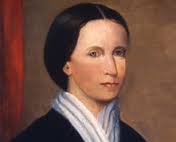
“Jane Grey Swisshelm, an outspoken critic of slavery and unequal treatment of women, moves to Minnesota in 1857 and publishes the St. Cloud Visiter newspaper. Mobs twice destroy her printing office, but she continues her courageous crusade for equal rights with the “St. Cloud Visiter” later renamed the “St. Cloud Democrat.” *

Jane G. Swisshelm was a pioneer in all senses of the word: in travel, in her passionate writings, and inwardly. She saw observed the cruelty of slavery when she lived in Kentucky. She lost her mother in Pennsylvania, and shortly afterwards, her husband lost his business. She moved to the Midwest to start over, joining her sister nearby. **

Already a established as a strong voice for abolition during her decade in Pittsburgh, she became the editor of a newspaper named the “St.Cloud Visiter”. Though owned by a Democrat, (who in those days were not usually abolitionists), she insisted on representing the paper as such. In effect, she offended local Democratic sensibilities resulting in the destruction of the “Visiter’s” offices and printing presses. ***

In the following decade, she aimed her pen at the Dakota Nation of Minnesota. Originally a supporter of Native Americans, the Dakota War of 1862 and their atrocities of unprovoked attacks on their neighbors changed her mind. Incensed by Native attacks, she even lobbied the Federal Government that more strident measures be taken against them. ***

Today, we thank You for voice of Jane Swisshelm, and her commitment to vigorously and forthrightly speak her mind. Her story is a cautionary tale that no individual, tribe, or nation gets it right all the time. Irregardless of passion, we all have an incomplete picture of the truth.

American politics of her day may shock modern ears; Republicans led the charge in the abolition of slavery, and the vast majority of slave states held to Democratic politics. Will You forgive us our over-identification with partisan politics in this era, and our failure to unite to oppose the evils of slavery? Will You forgive us our sins of partisan rhetoric, and more specifically to Swisshelm where her words unnecessarily broke relationship with our Southern brothers and sisters?

Next, we fail to understand much of the context of her era, and may draw some wrong conclusions from the women’s rights movement. Certainly, some 19th Century women suffered harsh abuses at the hands of men, often without hopes for a legal redress of their grievances. (We praise You that most of these legal issues are corrected, and that American women have known exceptionally high-status and equality when viewed through the lens of human history.)

Yet, our preset-day perspective may cause us to miss the ways that 19th Century male-female relationships were strong. Children trusted that their fathers’ were committed to provide for them. Wives trusted that their husbands’ love meant shelter and protection. Families busy with survival did not have lots of time to deal with legal or political issues, and often for them, it made sense to trust dad with that role.

Jesus, thanks that You have made us to be free. Will You forgive the city of St. Cloud and Minnesota any infringement of the freedom of Jane Swisshelm? Will You free us from her sinful judgment’s against those she opposed; broadbrushing all men, those who disagreed with her method of abolition, and promoting punishment against the Dakota? Thank You that Minnesota has raised awareness of the status of women and those in bondage through her voice! Thank You that even her words of judgment against the actions of a few hundred Dakota, as harsh as they may be, record the specifics of broken relationships. Will You enter into these rifts, bring humility, and restore to us a place in Your Land-Clear-Blue-Waters? Amen.

http://www.mnhs.org/about/dipity_timeline.htm
** Swisshelm, Jane Grey. Half a Century. Chicago: Jansen, McClurg, and Company, 1880.
*** Webster, Eric W. “Swisshelm, Jane Grey (1815–1884)”. Internet. https://www.mnopedia.org/person/swisshelm-jane-grey-1815-1884
Standard
19th Century, Art, authors, History, Indian, Intercession, Minnesota, Native Americans

“Song of Hiawatha” Published

images-8

November 10, 1855
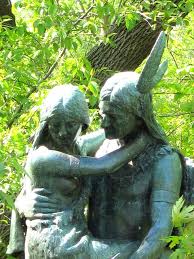
“Henry Wadsworth Longfellow never visited Minnesota, but his epic poem The Song of Hiawatha immortalized the Minnesota forests, prairies, and waters he saw only in his imagination. Longfellow began Hiawatha on June 25, 1854, he completed it on March 29, 1855, and it was published November 10, 1855.” *
The famous story still attracts tourists from around the country to see, in the words of the poem,
“Where the Falls of Minnehaha
Flash and gleam among the oak-trees,
Laugh and leap into the valley.”

This poem could be revelatory of the best and worst aspects of pop culture…even if it was popular 160 years ago. A cynical synopsis? A man who never visited Minnesota or lived with the Ojibwe whose language he borrowed, wrote a pop lyric that morphed and mutated their culture with the East Coast Iroquois to the tune of the “Kalevela” of Finland?! Of course it became a smash hit, and the listeners accepted it as the truth!

I’m not a cynic, Jesus. So today I wish to focus on that which gives life in this poem by Longfellow. I want to practice seeing the potential in historical works, rather than judging their limitations according to the standards of the present.

Longfellow sought to learn real Indian languages, and wasn’t afraid to interact with real Indians. He invited Kahge-ga-gah-bowh, an Ojibwe Chief, to his home, and took the time to meet Blackhawk, Sac, and Fox Indians in Boston.

If the poet saw a connection between tribes of the East Coast of North America with those of the Midwest, can we forgive him? Artists are allowed to make connections where others do not see them. We can find fault in their “improper” labeling of a small branch of a larger concept, and stubbornly miss their heart.

As a drummer and percussionist, I seek to learn each new ethnic music from the ground up with great respect for its traditions. However, there is new life in breaking the rules once one knows them. If one hears a connection between Celtic music and samba, then merging them into a new style is natural.

Perhaps that is the explanation for Longfellow merging the sound and rhythms of Indians with the heartbeat of Finland? Maybe he borrowed an interesting “drumbeat” from Suomi poems to express what he felt about Native Americans? In any case:
“The Song of Hiawatha was written in trochaic tetrameter, the same meter as Kalevala, the Finnish epic compiled by Elias Lönnrot from fragments of folk poetry. Longfellow had learned some of the Finnish language while spending a summer in Sweden in 1835.” **

Father, will You bless Longfellow, Kahnge-ga-gah-bowh, and each Indian who shared his story? Will You continue to bless those who reach out to know a culture very different than their own? Will You honor those who see Your unyielding imagination expressed through all the families of nations?

Thank You for Longfellow’s example that we can create beauty beyond the confining aspects of our culture. Show us ways to “include, but not be limited to” the legalism of our traditions. Thank You, First Poet, for drawing the romance from hearts of stone! Thank You for the possibility of fusing peoples together when living under grace! May we never tire of creating, merging, or reaching to describe Your beauty mirrored in the faces of fellow humans! With this heart and mind, will You bless our state?

http://www.mnhs.org/about/dipity_timeline.htm

** Calhoun, Charles C. (2004). Longfellow: A Rediscovered Life. Boston: Beacon Press.


Standard
19th Century, cultural transference, Culture, History, Indian, Intercession, justice, Minnesota, Native Americans, Treaties

Leech Lake Reservation Created 

images-5

images-6

1855 to 1864
“1855: The Mississippi, Pillager, and Winibigoshish bands cede all of north-central Minnesota for reservations at Leech and Cass lakes, Winibigoshish, Mille Lacs, Sandy Lake, Rice Lake, Gull Lake, Rabbit Lake, and Lake Pokegama.

1863-4: The Pillager, Winibigoshish, and Mississippi bands are moved off of the reservations established by the 1855 treaty and are concentrated at Leech Lake.” *

As I ponder the creation of this reservation today, I’m struck by the names involved. Often, we live out our names, and what we call ourselves we become. Will You show me, kind Holy Spirit, how to pray for this moment 160 years ago?

I found a few clues about the place-names from Wikipedia.
“On early maps, Leech Lake is identified in French as “lac Sangsue” (Bloodsucker Lake), which was then translated into English to its current name; its French name was translated from the Ojibwe “Ozagaskwaajimekaag-zaaga’igan” (lake abundant with bloodsuckers).” **

Below are the names of the actual signees of this agreement

“George W. Manypenny, Commissioner
Tug-o-na-ke-shick, or Hole in the Day, his x mark
Que-we-sans-ish, or Bad Boy, his x mark
Waud-e-kaw, or Little Hill, his x mark
I-awe-showe-we-ke-shig, or Crossing Sky, his x mark
Petud-dunce, or Rat’s Liver, his x mark
Mun-o-min-e-kay-shein, or Rice Maker, his x mark
Aish-ke-bug-e-koshe, or Flat Mouth, his x mark
Be-sheck-kee, or Buffalo, his x mark
Nay-bun-a-caush; or Young Man’s Son, his x mark
Mah-yah-ge-way-we-durg, or The Chorister, his x mark
Kay-gwa-daush, or The Attempter, his x mark
Caw-cang-e-we-gwan, or Crow Feather, his x mark
Show-baush-king, or He that Passeth Under Everything, his x mark
Chief delegates of the Mississippi bands.
Maug-e-gaw-bow, or Stepping Ahead, his x mark
Mi-gi-si, or Eagle, his x mark
Kaw-be-mub-bee, or North Star, his x mark
Chiefs and delegates of the Pillager and Lake Winnibigoshish bands.
Executed in the presence of:
Henry M. Rice
Geo. Culver
D. B. Herriman, Indian Agent
J. E. Fletcher
John Dowling
T. A. Warren, United States Interpreter
Paul H. Beaulieu, Interpreter
Edward Ashman, Interpreter
C. H. Beaulieu, Interpreter
Peter Roy, Interpreter
Will P. Ross, Cherokee Nation
Riley Keys” ***

Jesus, will You forgive all the judgments and separations made in these events? United States representatives judged those from Minnesota, Minnesotan’s judged the Mississippi, Pillager, and Winibigoshish. Going the opposite direction, the Winibigoshish, Pillager, and Mississippi band judged Minnesotan’s, and the United States government; all are full of judgments and counter-judgments. Will You free the lands of Leech Lake, Cass Lake, Winibigoshish, Mille Lacs, Sandy Lake, Rice Lake, and Lake Pokegama?

Lord, this day, I ask You to co-sign this loan arrangement of Your property! I lift all these names to You. Where they were living in good faith, may they be blessed in perpetuity! Where they have defaulted on the use of Your property, or misused any descendants of these names, we ask for Your recognition of sin, repentance, and restoration of chesed.

You are the Host of this planet, and we often behave like its leeches; we only know how to live off the host! Will You add Your name to balance the deficits of our accounts today Infinite-One-Who-Gives-Blood-So-Others-May-Live? May You bring us to full restoration in these relationships, and fully reunite us with this portion of nature known as Minnesota!

http://www.mnhs.org/about/dipity_timeline.htm
** Upham, Warren (1920). Minnesota Geographic Names: Their Origin and Historic Significance. Minnesota Historical Society. p. 90
*** http://www.accessgenealogy.com/native/treaty-of-february-22-1855.htm

Standard
19th Century, Culture, History, Intercession, Jesus, Minnesota, Native Americans, Treaties

Grand Portage, Fond du Lac, and Lake Vermillion Reservations Established in 1854 

images-4

The Mississippi and Lake Superior bands cede the Arrowhead Region of northeastern Minnesota and are put on the Grand Portage, Fond du Lac, and Lake Vermillion reservations.*

Jehovah, if my family was being force-moved to a reservation by the state of Minnesota; I would be furious! But faced with a hopelessly powerful opponent, I too, would concede! Will You forgive the judgments of the US and territorial governments towards the Mississippi and Lake Superior bands of Ojibwe, especially the necessity to cede this parcel of land from them?

The lumber and mining interests probably knew the value of this land, and would not be afraid to twist the arm of any politicians who stood in the way of this prize. Where there was greed in this moment, will You forgive us? This wood and this iron, from these woods and grounds, have filled the earth with benefits, but when viewed in human terms seems tainted. Will You reclaim Your natural resources? Wherever or whatever form they may take today?

Were there any counter-judgments these Native Americans may have made in their hearts towards our system? It would be only human to feel so. Imagine waking up to the announcement that the government needs your home more than you, and that you must evacuate the area as soon as possible? Lord forgive us this concession as a state, as well as our personal attempts to force our way on others.

Will you heal the reservation lands, what is below, what is above of Grand Portage (Gichi-onigamiing), Fond du Lac (Nah-Gah-Chi-Wa-Nong meaning “Where the current is blocked”), and Lake Vermillion (Onamanii-zaaga’iganiing, “At the Lake with Red ochre”) and continue to resolve this conflict? Will You give us one reservation where all are welcome?

*Note – PrayThroughHistory uses the timeline located for several years at the Minnesota Historical Society Web site, at this URL: mnhs.org/about/dipity_timeline.htm .


Standard
19th Century, government, History, Indian, Intercession, law, Leadership, Minnesota, Native Americans, omnipresent history, State Government

Gorman Becomes Territorial Governor

Willis Arnold Gorman

Willis Arnold Gorman

May 15, 1853 to April 27, 1857
“Willis Arnold Gorman takes office as the territory’s 2nd governor. As a U.S. Representative from Indiana, he supported Franklin Pierce in his successful bid for the presidency and was rewarded with the governorship of the Minnesota Territory.” *

“Democrat Franklin Pierce took office in March 1853 and replaced Ramsey with Willis as Minnesota territorial governor.” **

Today I told the Lord that this is a portion of our history that I don’t know much about. I don’t know about Gorman or why he was replaced. Some days I watch and pray and things flow easily. Others days it is difficult to see the significance of the event I’m meditating on.

After some research I found one plausible answer why the Governor Ramsey was replaced by Governor Gorman. The facts seem to indicate that he wrestled with balancing his interactions with the Ojibwe and with the powerful lumbering interests. Looks like he was caught in the middle; which master to serve? His waffling is documented below:
“This quagmire of incompetence and callousness went on for three years, while several hundred Indians died of starvation and disease.” ***

As to Governor Gorman’s temperament, he was a lifelong lawyer, and his character of self-restraint seemed better suited to the times. His legalistic disposition must have helped to find nuanced solutions for a government between a First Nation, and a booming timber industry. He was so dedicated to law that he returned to it after serving in the Civil War! There he remained, serving as St. Paul City attorney, for the rest of his life.

Thanks for Governor Gorman! In him, You brought a man who was even-keeled and suited to the issues of his days! Bless him and all leaders who calmly and deliberately serve their constituents!

As for Governor Ramsey, will You forgive his double-mindedness? We are humans just like him, and sometimes fail to be strong in our decisions. Irregardless of Your mercy, will You bring justice to all human suffering caused by his hesitancy? Will You bring restoration to the Ojibwe, both then, now, and into our future?
http://www.mnhs.org/about/dipity_timeline.htm
** Redix, Eric M., “The Murder of Joe White: Ojibwe Leadership and Colonialism in Wisconsin”.
*** Risjord, Norman K. “A Popular History of Minnesota”

Standard
19th Century, cultural transference, Culture, government, History, Indian, Intercession, law, Minnesota, Native Americans, Treaties

Lower and Upper Sioux Agencies

Unknown-3

Unknown-2

1853
“The government builds the Lower and Upper Sioux Agencies as it moves the Dakota onto the reservations created in the treaties of 1851.” *

Jesus, You are our agency. We must use human mechanisms to get back our share from the government that has taken from us. Have mercy!

Will You forgive the offense of the U.S. government, Minnesota Territory, their representatives and interests against the land of the Upper Sioux; the Pejuhutazizi Kapi? Will You forgive the offenses of these same representatives against any member of this Oyate whether Sisseton or Wahpeton? Will You, Fair Judge, create restoration and bring resolution to this conflict beginning in 1853?

Will You forgive the offense of the the U.S. government, Minnesota Territory, their representatives and interests against the land of the Lower Sioux: the Cansa’yapi (where they marked the trees red)? Will You forgive the offenses of these same representatives against any member of this Oyate whether Mdewakanton or Wahpekute? Will You, Fair Judge, create restoration and bring resolution to this conflict beginning in 1853?

You are the One who blessed and planted these indigenous nations here so long ago. We remember these offenses to the Dakota Oyate as offenses to You! Will You lift them up from the land, out of our hearts, and onto the cross of Christ? We cannot heal the sky above, or all that is below the original boundaries of the Dakota, but You can!
Will You bless our common future?
http://www.mnhs.org/about/dipity_timeline.htm
** More information on the Upper Sioux http://mn.gov/indianaffairs/tribes_uppersioux.html
*** More information on the Lower Sioux Agency http://mn.gov/indianaffairs/tribes_lowersioux.html


Standard
19th Century, Culture, government, History, Indian, Intercession, law, Minnesota, Native Americans, Politics, State Government, Treaties

Treaties Ratified by Senate without Land Guarantee  

7500156b

June 23, 1852
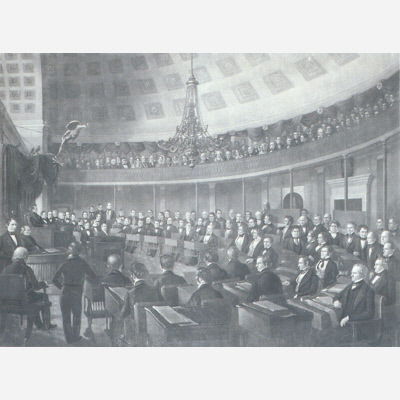
“The treaties of Traverse des Sioux and Mendota go to the U.S. Senate to be ratified, but become entangled in the battle over the balance of power between the slave and free states. Southern senators hope the Dakota will refuse because of a key change in wording: in reference to reservation lands, the Senate replaces “in perpetuity” with “at the discretion of the President.” Before final ratification, the Dakota must agree to changes in the treaty. Minnesota territorial governor Alexander Ramsey is charged with attaining the necessary signatures to finalize the treaties, which he accomplishes through a combination of negotiation, withholding of goods and food, and the threat of military force. The Dakota are left with little choice and begin moving to the new lands along the Minnesota River in 1853.” *

Lord, today may we acknowledge the sins and major points of separation of this treaty before You; the Merciful, yet Just Judge of the Universe?

-Ramsey’s willingness to withhold goods and food.
-Ramsey’s threat of military force.
-The US Senate’s willingness to betray the trust of the Dakota through rewording of the treaty.
-Any counter-judgments made by the Dakota.

Jesus, we all betray. We make betrayal worse by responding to offense with unforgiveness. We often make our own prisons when we harden our hearts. I acknowledge these things to You, and pronounce forgiveness based on the promise of Matthew 6:14 “For if you forgive men when they sin against you, your heavenly Father will also forgive you.”
May all parties be moved to show remorse, ask forgiveness, and be restored into right relationship! Amen!
http://www.mnhs.org/about/dipity_timeline.htm

Standard
18th Century, 19th Century, 20th Century, 21st Century, African American, Anglican, Canada, Christian, education, Evangelism, Great Britain, History, Indian, Intercession, Jesus, justice, Lutheran, Minnesota, Native Americans

Church Missionary Society founded in Minnesota

images-2

August 25, 1851
“The Church Missionary Society for Minnesota was founded on August 25, 1851.

G-d, I’m not entirely sure which Church or who composed this society, but most likely it was the work of Josiah Pratt who dedicated his life to reach the ends of the earth with the Gospel. Minnesota Territory, in this context, qualified as the extremity and meeting place of Western civilization and North American Native cultures. The Society reached out to Canadian and Midwestern First Nations through a branch known as the North West America Mission. **

Please read and enjoy this brief summary of the Church Missionary Society and it’s profound impact on the 19th Century.

“Our story began more than 200 years ago with a group of Christians whose hearts were stirred to put their call into action.
This group included people like William Wilberforce, John Venn, and John Newton. Together they worked to abolish the slave trade, they fought for the rights of oppressed people at home and they launched out on dangerous seas to share Jesus with the world.
The effects of their efforts – as well as the work of thousands of men and women who have followed in their footsteps – are still seen and felt across the globe today.

A brief history of Church Mission Society
The Society was founded in Aldersgate Street in the City of London on 12 April 1799. Most of the founders were members of the Clapham Sect, a group of activist evangelical Christians. They included Henry Thornton MP and William Wilberforce MP. The founders of CMS were committed to three great enterprises: abolition of the slave trade, social reform at home and world evangelisation.

Wilberforce was asked to be the first president of the Society but he declined due to his workload but took on the office of vice president. Thornton became the first treasurer. The Rev Josiah Pratt, curate of St John, Bedford Row (London) soon emerged in a proto-chief executive role.

The spiritual background to the emergence of CMS was the great outpouring of energy in Western Europe now called The Great Awakening. John Wesley, an Anglican priest and failed missionary, became a key player in the UK version of the story. Not all those influenced by the revival left the Anglican Church to become Methodists. One such was John Venn, the saintly rector of Clapham.

Members of the second and third generation following the revival saw many opportunities to consolidate its effects. Alongside the main Clapham agenda they sponsored Sunday Schools for evangelism and education, founded Bible Societies and much more.

The Reformation and the abolition of monasteries and religious orders left the Church of England without vehicles for mission, especially for outreach to the non-Christian world. This new membership society agreed to be loyal to the leadership of bishops and an Anglican pattern of liturgy, but not dominated by clergy and emphasised the role of laymen and women. Much of what we call the Anglican Communion today traces its origins to CMS work. However CMS today is not confined just to Anglicanism, both in terms of people it sends out in mission or ally agencies and projects around the world.

It was expected that Church of England clergy would quickly come forward to be missionaries. When this didn’t materialise CMS turned towards mainland Europe and the earliest missionaries were German Lutherans. For over a century CMS enjoyed rich work relations with the Churches and seminaries of Western Europe. Sadly this was gradually eroded as the European superpowers vied with each other in the race for colonial expansion. Even so we can say the 20th-century quest for Christian unity began through the experience of mission.” **
G-d, regretfully I haven’t yet located primary sources for the founding of CMS in Minnesota Territory, but I thank you for it. May the full number of Minnesotans see You in all Your beauty, and know and fulfill the mission you have created for them! May we follow in their paths to abolish slavery, take just and practical actions to better our State, and give away the happy news of the Gospel; Jesus loves us, wants us, forgives us, and helps us practice living free! Forgive our purposeless living! Forgive our fears of chasing the Wild Goose! (An ancient Celtic image for the Holy Spirit.) May we be blessed to fly, and under Your authority serve to heal all nations!

http://www.mnhs.org/about/dipity_timeline.htm
** “The Church Missionary Atlas (Canada)”. Adam Matthew Digital. 1896. pp. 220–226. Retrieved 19 October 2015.
*** https://churchmissionsociety.org/about/our-history/

Standard
19th Century, 20th Century, 21st Century, Faith, History, Indian, Intercession, Minnesota, Native Americans, Treaties

Treaty of Mendota

0_0_3236_5041

August 5, 1851
“In August the commissioners begin negotiations with the Lower Bands at Mendota. The Mdewakanton and Wahpekute are pressured into agreeing to terms similar to those forced on the Upper Bands, including $220,000 in upfront cash to the fur traders. Both treaties promise the Dakota new reservations along the Minnesota River “in perpetuity,” a pledge that will not be kept.” *
Lord, forgive the human desire to ‘work the system’ and pad our own nests! Will You forgive this heinous offense of the fur traders towards the Mdewakanton and Wahpekute within the Treaty of Mendota? Even greater, will You forgive this breech of justice committed against You through the deception of these two tribes?

Per contra, will You forgive the shame and anger of the Mdewakanton and Wahpekute towards: Lea, Sibley, Ramsey, Minnesota Territory, the U.S. Bureau of Indian Affairs, the U.S. Federal Government, and all unnamed parties participating in their deception? Sweet Jesus, it’s always so hard for the victims of injustice to let go of their righteous anger; will You give this gift to the Mdewakanton and Wahpekute Nations? Will You kindly and gently take this generational curse which has bound them to their historic offenders up, out, and onto the Cross of Christ? Will You restore what the enemy has taken from them, and bring Your Healing Presence to the peoples and lands involved? This land is Your property, may we view it as such both now and “in perpetuity”!

We, in the present, are angered by the deception of the Upper and Lower Dakota Bands at the hands of Luke Lea, and Alexander Ramsey through the trustful signing of the “Trader’ Papers”!!! The desire to disconnect ourselves from this event is powerful, yet Your Word gives us no escape when we offend You by accusing our neighbors. You do not yield the spirit of the law to comply with the letter of the law. You are both Grace and Truth! Help us remember this example spoken to self-righteous human accusers so many centuries ago?

“They said this to test Him, in order to have a basis for accusing Him. But Jesus bent down and began to write on the ground with His finger. When they continued to question Him, He straightened up and said to them, “Let him who is without sin among you be the first to cast a stone at her.” Berean Study Bible, John 8:6-7 **

Will You give us the merciful eyes of Christ today, and into the eternal future of Minnesota? Help us see the humanity within victim and victimizer, the accuser and the accused, and to stand humbly with You against evil and for the good? May we become agents of humanity against the division and deception of the Evil One; the Author of All Grudges. Amen!

http://www.mnhs.org/about/dipity_timeline.htm
** https://biblehub.com/john/8-7.htm

Standard
19th Century, cultural transference, Faith, History, Indian, Minnesota, Native Americans, Treaties

Treaty of Traverse des Sioux

6-34_0

July 23, 1851
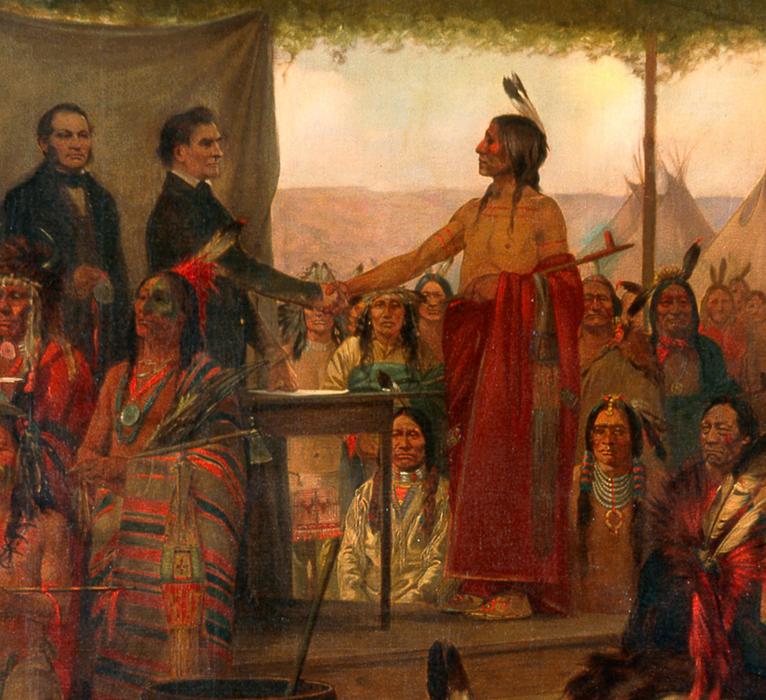
“Suppose your Great Father wanted your lands and did not want a treaty for your good, he could come with 100,000 men and drive you off to the Rocky Mountains.” *

Luke Lea, U.S. Commissioner of Indian Affairs, at treaty signing

Facing mounting debts to fur traders and the pressure of settlers pouring into the newly established Minnesota Territory, the Dakota leaders reluctantly sign treaties, hoping that government promises of reservations and annuities will provide a secure future for their people. Powerful and influential fur traders coerce the Dakota into giving up their land in exchange for promises of cash, goods, annuities, and education. “The Indians are prepared to make a treaty when we tell them to do so,” said Henry Sibley. “No treaty can be made without our claims being first secured.”

Luke Lea, U.S. Commissioner of Indian Affairs, and Minnesota territorial governor Alexander Ramsey negotiate separate treaties with the Upper and Lower Dakota Bands. In July they meet with the Upper Bands (Sisseton and Wahpeton) at Traverse des Sioux. After several weeks of discussions and threats, the Upper Bands relinquish their claims to all Minnesota lands west of the Mississippi in exchange for an immediate cash payment of $305,000 and annuity payments in goods, food, education, and gold. The treaty also provides for a reservation along the upper Minnesota River. Thinking they are endorsing a third copy of the treaty, the Dakota leaders sign “Traders’ Papers,” illegal documents drafted by the traders themselves. The documents promise much of the $305,000 cash payment to the traders to fulfill “just obligations.”

In August the commissioners begin negotiations with the Lower Bands at Mendota. The Mdewakanton and Wahpekute are pressured into agreeing to terms similar to those forced on the Upper Bands, including $220,000 in upfront cash to the fur traders. Both treaties promise the Dakota new reservations along the Minnesota River “in perpetuity,” a pledge that will not be kept.

“But against any of the children of Israel shall not a dog move his tongue, against man or beast: that ye may know how that the Lord doth put a difference between the Egyptians and Israel.” Exodus 11:7

Sweet Holy Ghost, I really do not relish writing today, especially for such a time as this in our state’s memory. Will You lead me, perhaps give me insights, and the courage to pray for this moment of contention? Through Your amazing kindness for the brokeness of humankind, I invite You to come watch this treaty!

I do offer real thanks for the promise that the Treaty of Traverse des Sioux offered. There was a chance to make things clear, put things in writing, and have an agreement that honored both sides. Thanks for this chance to become better neighbors, even if it was squandered.

This what I see today, the Upper and Lower Dakota Bands were willing to concede land if the end result was a stable and secure future. I see them extending these concessions in good faith and a real sense of relationship. What is also clear is that Luke Lea, Sibley, Ramsey, and the fur traders’ lobby were used to getting their way. Their quotes suggest an attitude of dominance and willingness to exert power.

This is my confession to You today Wise Counselor: will You forgive these grievous sins made through Luke Lea, Henry Sibley, Alexander Ramsey, the Bureau of Indian Affairs towards these specific peoples, tribes, first nations; the Sisseton, the Wahpeton, Mdewakanton, and the Wahpekute? Will You lift the weight of this robbery from their shoulders, and restore their inheritance?

More specifically, will You forgive the spirit of deception behind the “Traders Papers”, and the damage it did both relationally and economically to these tribes?
Will You forgive the horror of our offense to You, done in the name of our state, it’s officers, and any other duplicitous parties? Have mercy on these “Traitors Papers”!

We also offend You, Great Spirit, when we answer offense with counter offense. Will You forgive the Sisseton, Wahpeton, Mdwakanton, and Wahpekute any counter-judgments against the same offending parties, whether named; Lea, Sibley, Ramsey, or the B.I.A., or unnamed, the authors of the “Traders Papers”? May these peoples receive mercy so they do not carry this offense generationally in their hearts, and become doubly wronged?

That said, will You make a difference between the righteous and the unrighteous? As Abraham asked of You, “Will you sweep away the righteous with the wicked?…Shall not the Judge of all the earth do right?” Of Course You Will!
I praise You that You allow each generation the fruits of their choices! You allow humans to be temporarily wronged by the short-sighted, but these ill-gotten gains will bring separation and destruction. May all such devious treaties ring hollow throughout the history of Minnesota!

http://www.mnhs.org/about/dipity_timeline.htm

Standard