19th Century, Americana, History, Immigration, Intercession, Minnesota, omnipresent history, Real Estate, State Government

Nininger City Fails

unknown-2

1869
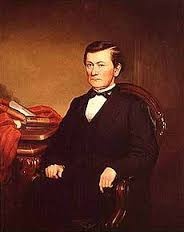
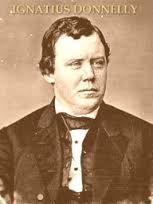
“The Panic of 1857 and the decision of the steamboats to use Hastings instead of Nininger as a river port doom Nininger City, the dream town of Ignatius Donnelly.

Nininger declines steadily after the financial panic of 1857 that causes banks across the country to call in loans. Donnelly tries to put a positive spin on the eastern bank failures by issuing a handbill entitled “Cure for the Panic. Emigrate to Minnesota! Where no Banks exist.

People move away anyway. By the 8th U.S. census in 1860, only 469 remain. Buildings disappear and by 1869 no other buildings remain besides Ignatius Donnelly’s house. The town eventually disappears from the map.” *

Have mercy on us! We make our dreams into idols, and are heartbroken and bitter when they fail us! Thank you for Donnelly and bless Your heart within his dreams! How bitter for him it must have been to see Hastings thrive?!

Lord, will You forgive any judgments that Donnelly had against Hastings, and vice versa? Will you make us free in the present from this bitter root? Will You bless the river and the lands involved? Will You preserve Nininger and Hastings in the season of flooding? Will You cause us to bless the town next door as much as our own?

http://www.mnhs.org/about/dipity_timeline.htm

Standard
19th Century, Agriculture, Business, education, farming, Food, History, horses, Intercession, Minnesota, omnipresent history, Science, trade

Kelley on the Grange

Unknown-1


1867
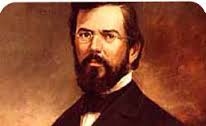
“Elk River homesteader Oliver H. Kelley, claiming to be “as full of public spirit as a dog is full of fleas,” leads the founding of the Patrons of Husbandry, or Grange.
The organization, which includes women as equal members, sweeps across rural America, promoting scientific agriculture and enriching the social and cultural life of farm families.” *

What was Mr. Kelley like as a human, Jesus? What desires did You put into his nature for his fellow farmers?
“Encourage them to read and think; to plant fruits and flowers,—beautify their homes; elevate them; make them progressive,” he wrote in a letter to a friend. “I long to see the great army of producers in our country, turn their eyes up from their work; stir up those brains, now mere machines … set them to think,—let them feel that they are human beings, the strength of the nation, their labor honorable, and farming the highest calling on earth.” **

His zeal reminds me of the heart of the Benedictines, whom are renowned for “ora et labora”; prayer and work. Dear Father, how we need that balance between heart and head! Kelley, sort of, reminds me of those with a prophetic calling who operate in the spirit of encouragement. ***

Lord, make more like Kelley, who want to lift up humanity! Lord, may those of us who have this call remain humble, and not cross over in judgment of our neighbor! Will You grow the Grange, and dignify our labor today?
http://www.mnhs.org/about/dipity_timeline.htm
** http://www.mnopedia.org/person/kelley-oliver-hudson-1826-1913
*** http://www.religious-vocation.com/differences_religious_orders.html
**** Images are from https://images.google.com/?gws_rd=ssl; again, an amazing resource!


Standard
19th Century, Business, Geology, History, Industry, Intercession, Minnesota, omnipresent history, State Government

Falling Falls

Unknown

1866 to 1880
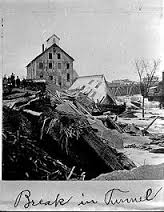
“Construction begins on a wooden apron to protect St. Anthony Falls. Mills depend on the falls for industrial power, and their owners hope the apron will stop its erosion and collapse. Floodwaters destroy this first attempt the following year. Collapses follow. It’s 1880 before a useful apron is completed.” *

The Eastman Tunnel once ran below the St. Anthony Falls, connecting Nicollet island with Hennepin Island. It’s collapse almost destroyed the utility of the falls for the milling industry. Congress gave the Army Corps of Engineers $50,000 to fix the falls by basically filling in the tunnel with concrete, and making a wooden apron. This attempt failed also, and it wouldn’t be until 1874 when a lasting apron would be built.**

Jesus, our life is a series of attempts, successes, and failures. Help us view failures as You do; teachable moments. Thanks that this failure to build an apron eventually led to a successful preservation of the utility of St. Anthony Falls and the milling industry, but at the cost of destroying its’ natural beauty.

Will You bless us again through the Falls and the Mississippi? Will You gift us to persevere today when our work is totally destroyed by forces beyond our control? Will You help us work in harmony with beauty and nature?
http://www.mnhs.org/about/dipity_timeline.htm
** https://www.esci.umn.edu/courses/1001/1001_kirkby/SAFL/WEBSITEPAGES/5.html

Standard
19th Century, Dakota, History, Indian, Intercession, Minnesota, Native Americans, omnipresent history, U.S. Government

Santee Reservation Established

HW1867P629897

February 27, 1866
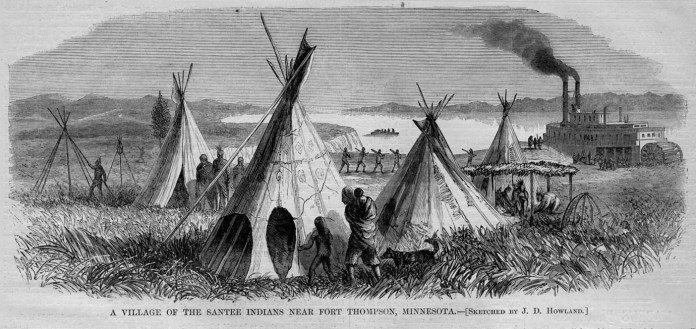
“The U.S. Indian Office establishes a reservation for the Santee Dakota—who are facing starvation at Crow Creek—at the mouth of the Niobrara River in Nebraska. Pardoned prisoners from the military prison in Davenport, Iowa, join the Crow Creek survivors in this new location.” *

Jesus, will You intervene in this event? Will You forgive any of the judgments offensive to You in this event, whether from: Santees, Dakotas, Minnesotans, South Dakotans, Iowans, or Nebraskans? All our opprobrious conduct was against You. Will You have mercy on these parties in this moment as You will forgive our contemptuous actions in the future? Will You transform these relationships? Will You bring chesed into our present?
* http://www.mnhs.org/about/dipity_timeline.htm

Standard
19th Century, Governors, History, Indian, Intercession, justice, Minnesota, Native Americans, omnipresent history, State Government, Transference, Treaties, U.S. Government, war

Marshall Becomes Governor

Unknown

January 8, 1866 to January 7, 1870
“William R. Marshall becomes the state’s fifth governor. Energy and ambition characterized the life of Minnesota’s fifth—and only southern-born—governor. During William Marshall’s administration, his adoptive state experienced a post-Civil-War surge of growth and development: its population doubled to 350,000, its railroad mileage quadrupled, and its commercial endeavors flourished.” *

Governor Marshall personified the spirit of his pioneering neighbors in the Midwest. His work experience included: dairy farming, livestock farming, reporting the news, and banking. He voluntarily fought in the Civil War, and the Dakota Wars. **

Some of us, living in the present, may stumble over Marshall’s support of the abolition of slavery, and then fighting to expel the Dakota Nation from Minnesota. Would modern scholars, educated in the doctrines of the Frankfurt School or Cultural Marxism, consider him a racist because he fought for African-Americans, but against Native Americans?

Perhaps we would do better to enter the worldview of his era, and see things through the lens of 19th Century Midwesterners? Maybe it’s consistent with his belief system to come to the rescue of slaves because they did not aggress against his country (United States)? What if he rationalized specifically fighting the Dakota Nation, (not all Native Americans), because a few hundred of them made war on Minnesota?

Lord, I simply do not know his heart. You are the Only Wise Justice of this world, so will You reason and wrestle with us in prayer? It is easy to applaud those who voluntarily gave their lives to fight in the Civil War, if it was out of a heart to end the institution of human slavery. It is less laudable, but still reasonable, to assume that some Minnesotans fought the South because of political rather than moral or spiritual reasons.

In the same fashion, we know little of Marshall’s rationalizations for his role in the Dakota Wars. Did he fight for the protection of his political state? Did he do battle because he was “just following orders”? Was Marshall a man given to ethnocentrism and racism towards “Indians”? Was he an amoral conqueror, only acting out his role in the drama of natural selection? Did he fight out of a sense of justice?

So we go to prayer, Eternal Father, beginning with gratitude that You are the Only One who can unravel the mixed motives of the human heart. We do good with a bad heart. We do bad things to others with good intentions. Will You forgive us our pride whether in doing justice, or in our failures to do so? Will You forgive us the pride of a glorious, self-righteous martyrdom; of “falling on the sword” for others with narcissistic hearts?

Regardless of his motives, we applaud the honorable actions of the governorship and life of William R. Marshall. We thank You that he took part in: freeing slaves, protecting settlers, and growing our economy? Where Marshall offended You in the displacement of the Dakota Nation; will You bring forgiveness and healing?

Holy Spirit, thank You for the encouragement of charity Marshall brought to the state of Minnesota. Forgive any judgments established from him or to him through the generations. Thanks for his heart of good will towards our most vulnerable neighbors shown by the following quote below.

“It is due to the State that an enlarged philanthropy should characterize its efforts for its helpless ones. These children of sorrow, the blind, the dumb, the insane, have a claim upon us that we cannot disregard. If speedy action for their relief is not taken it will be a reproach to our Christian civilization.”

Lord, may we be civil because we are Yours! May we love our enemies! May we be conduits of Your generosity for those in need! Amen!
http://www.mnhs.org/about/dipity_timeline.htm
** https://en.wikipedia.org/wiki/William_Rainey_Marshall
*** Minnesota Historical Society Collections. “The inaugural address of Governor Marshall, January 8, 1866, “Executive Documents for the state of Minnesota for the year 1865”, pages 31-38 (St. Paul, 1866).

Standard
19th Century, African American, Black History, Civil War, cultural transference, History, Intercession, Minnesota, omnipresent history, Politics, Social Studies, State Government, war

Civil War Ends

Unknown-20

April 26, 1865
“The Civil War ends after four bloody years. Minnesota has sent 25,000 men, about half the state’s eligible male population, to fight the South. More than 600 are killed in battle; twice that number die of disease. At bloody Gettysburg, the First Minnesota Regiment makes one of the most heroic charges of the war. Close to half the regiment is killed or wounded.” *

Lord, You alone know the heart. Thanks that our state had so many who identify with the cause of freedom and overturning slavery. Thanks for the 25,000 who stood up to injustice. Will You bless them, their generations, dwellings, and property this day in the name of the Lord Jesus Christ?

All wars have judgments. Most war propaganda seeks to dehumanize the enemy. As a Minnesotan and a son of a U.S. soldier, I acknowledge to You both the pure and the impure motives of the Civil War. There were political motives to establish the power of the Federal government over the states. There were economic motives that the industrial northeast desired to keep the south dependent its manufactured goods and banking prowess. These are just a few, Holy Spirit, that I can think of today. Will You forgive the bitter-root judgments of pride, views regarding states’ rights, and the economic fears between the Northern and Southern ‘kingdoms’ of the United States during the Civil War?

Then, as now, we are often the toughest on the beloved enemies of our own house. These wounds are so painful because they are mixed with a profound breaking of trust; those we have fully “let into” our lives. May we receive Your grace for all beloved disagreements. Will You give us wisdom to resolve these conflicts before permanent schisms result? You understand the betrayal of a friend; Judas was Your disciple and friend, yet he sold You down the river for about $30 worth of silver!?! Will You replace the character assassinations of our American brothers and sisters with the fruit of Your spirit? Will You restore our memories of our brothers and sisters, and erase our recollections of “beloved enemies”?
* http://www.mnhs.org/about/dipity_timeline.htm


Standard
19th Century, History, Indian, Intercession, Minnesota, Native Americans, omnipresent history, Politics, State Government, war

Sakpe and Medicine Bottle Kidnapped and Executed

Shakopee_0

July 1, 1864
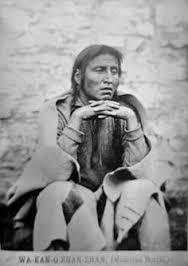
“Dakota Leaders Sakpe (Shakopee) and Medicine Bottle are drugged and kidnapped near the Canadian border. They are brought to Fort Snelling to be tried for war crimes; they wait almost a year for their trials. Witnesses called by the U.S. government provide only hearsay evidence. The two Dakota leaders have no witnesses to summon on their behalf, nor can they cross-examine U.S. government witnesses. Sakpe and Medicine Bottle are sentenced to death by hanging. On November 10th, the Saint Paul Pioneer Press states that “no serious injustice will be done by the execution tomorrow, but it would have been more creditable if some tangible evidence of their guilt had been obtained.” “ *

Sakpe and Medicine Bottle met the one of the two ends that are common to warriors; execution or glory. ** Their motives to start a war seem understandable under their circumstances. Our state and local government seems to have made life extremely difficult for them and their people. However, it was their choice to reciprocate injustice by starting a war. (Medicine Bottle below)

Unknown-19

Holy Spirit, You are perfect in justice. Will You visit the broken relationships between the nations of Sakpe and Medicine bottle and the nations of Minnesota? Our collective nations have broken faith with each other and greatly offended Your righteousness! You made us to be neighbors, but we have broken the blessing You meant for us, have cursed and killed each other, and have stained Your land!

We forget that all land belongs to You, and that we are only temporary stewards of this state of Minnesota! Forgive us Lord! Heal us! Heal the land, the skies, all that is above and below!
* http://www.mnhs.org/about/dipity_timeline.htm
** https://en.wikipedia.org/wiki/List_of_people_who_were_executed
*** http://biblehub.com/hebrews/6-8.htm


Standard
19th Century, Governors, History, Intercession, Jesus, Minnesota, omnipresent history, Politics, State Government

Miller Becomes Governor

Unknown-18

January 11, 1864 to January 8, 1866
“Stephen Miller takes office as the state’s fourth governor. His military career during the Civil War and Ramsey’s support assured Miller of a gubernatorial victory in 1863. He was the first of several Civil War veterans to serve as governor of Minnesota. Although lacking a college degree himself, he valued higher education and advocated generous appropriations to state normal schools and the University of Minnesota. In his final address to the legislature, he strongly but unsuccessfully urged adoption of a black suffrage amendment to the state constitution. Miller chose not to run for re-election.” *

Today I will again resist the temptation to sum up Stephen Miller’s life based on his known accomplishments, and listen between the lines with You. There’s much to write about his life: as a flour inspector, as a war hero, as punisher of Indians, as Civil War hero, and as a great orator. Yet, You have me focus on this obscure fact:
“Miller’s interest in politics also led him to edit and publish a ‘leading organ’ of the Whig party, the “Pennsylvania Telegraph” for several years before moving to Minnesota in 1858.”

Lord, what is the spiritual heritage of the Whigs? What was in their heart and the heart of Gov. Miller?
“Historian Frank Towers has specified a deep ideological divide:
Democrats stood for the ‘sovereignty of the people’ as expressed in popular demonstrations, constitutional conventions, and majority rule as a general principle of governing, whereas Whigs advocated the rule of law, written and unchanging constitutions, and protections for minority interests against majority tyranny.” ***

Without doing major research, I see this; men like Miller wanted to see consistency and impartiality in government. The law for one is the law for all. No one is above the law, nor under the law.

Eternal Father, I ask You to bless this notion of equality of opportunity in Miller’s heart. I ask that You bless the notion that there should be neither a tyranny of the majority or of the minority. That we are humble and peaceable equals as citizens. Will you forgive how we have diminished our neighbor through political manipulations? How we may have offended Your Sovereignty by discounting our brothers’ and sisters’ beliefs and views?

Again, thank You for Governor Miller. May his successes be rewarded, and his misuse of authority be forgiven. Thank You for his heart to include Black Americans as functional citizens! May these works of justice be remembered more and more as Your return approaches!

*P.T.H. cites timeline formerly at this URL: mnhs.org/about/dipity_timeline.htm
The Minnesota Historical Society Web site, http://www.mnhs.org , is fantastic! Check it out!
** http://wjon.com/st-cloud-resident-stephen-miller-nominated-for-governor-on-this-date-in-central-minnesota-history/
*** https://en.wikipedia.org/wiki/Whig_Party_(United_States)
**** A life summary. http://www.nga.org/cms/home/governors/past-governors-bios/page_minnesota/col2-content/main-content-list/title_miller_stephen.html
***** For more specific information regarding Governor Miller, see link below:
https://www.leg.state.mn.us/legdb/fulldetail?ID=13988

Standard
19th Century, Civics, Governors, History, Intercession, Leadership, Minnesota, omnipresent history, Politics, Republican, State Government

Swift Becomes Governor

Unknown-17

July 10, 1863 to January 11, 1864

“Henry A. Swift takes office as the state’s third governor. Described by peers as gentle, self-effacing, and ambivalent toward politics, Henry Swift was Minnesota’s third governor for less than a year, completing the second term of Alexander Ramsey, who had been elected United States Senator. With little time or apparent inclination to effect major change, this un-elected governor concentrated on assuring the welfare of Civil War veterans.” *

It’s difficult to ascertain which information is critical to convey about any historical event, let alone a single human life. On this day, I chose to scan the data I could easily find about Governor Swift, but remain listening to what the Holy Spirit prompted me to underscore. 

This is what I’ve learned about him so far: he was very capable, he did his duty, and then he moved on. Below is an example, not unusual in party politics, where there is a hesitancy to take leadership. 

“Republican party leaders nominated Swift for Sibley County’s state Senate seat, after another candidate refused the offer.” **

G-d Almighty, thank for those, like Swift, who do their part and then get out of the way. Thank You for leaders uncorrupted by power and authority. Thank You for his example of humble governing. May his successes be amplified, his failures forgiven, and his generations be blessed by Jesus’ authority. Amen!

*P.T.H. cites timeline formerly at this URL: mnhs.org/about/dipity_timeline.htm 

The Minnesota Historical Society Web site, http://www.mnhs.org , is fantastic! Check it out!

** (Session Weekly, St. Paul: Minnesota House of Representatives Information Office, April 2, 1993, p. 16) Internet. https://www.leg.state.mn.us/legdb/fulldetail?ID=15034

*** For more specific information regarding Governor Swift, see the link below:

http://www2.mnhs.org/library/findaids/gov017.xml

Standard
19th Century, death, History, Indian, Intercession, Minnesota, Native Americans, omnipresent history, State Government, war

Taoyateduta (Little Crow) Killed

Unknown-16

http://www.usdakotawar.org

July 3, 1863

“Dakota leader Taoyateduta, who fled to Canada after the battle of Wood Lake, is shot and killed by Nathan Lamson near Hutchinson, Minnesota. Taoyateduta’s son Wowinape later described his death: “He was shot the second time when he was firing his own gun. The ball struck the stock of his gun, and then hit him in the side near the shoulders. That was the shot that killed him. He told me that he was killed, and asked for water, which I gave him. He died immediately after that.” Lamson is awarded a $500 bounty by the state of Minnesota.” *

What a strange story! The man who shoots Little Çrow is willing to give him a drink of water. What a strange people we are! We pursue our enemies to the death, and then have honor when we know he is dying!?! We are broken people. Taoyateduta fulfilled Your words “for all who draw the sword will die by the sword.” Matthew 26:52 

Lord Jesus, You are the only faithful and true judge. Will You visit this event, remove its curse on the ancestries of Little Crow and Minnesota, and bless this broken relationship? Will You curb our actions to today: of patting on the head those we’ve economically killed or slain through the law? 

* http://www.mnhs.org/about/dipity_timeline.htm

** For more details on Taoyateduta (Little Crow) please read this excellent site. www.usdakotawar.org

*** http://biblehub.com/1_john/4-18.htm


Standard