19th Century, Business, Canada, Civics, Exploration, History, Industry, Intercession, Leadership, Minnesota, railroad, Transportation

Hill’s First Railroad 1879

00902018

1879

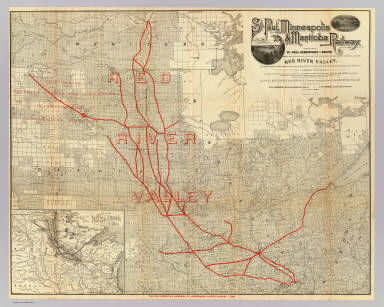
“James J. Hill and his Canadian partners buy the near-bankrupt St. Paul and Pacific Railroad and rename it the St. Paul, Minneapolis and Manitoba. This is the beginning of the railroad career that will earn Hill the title “Empire Builder” and cement the importance of the Twin Cities as a commercial center. 

Hill’s career didn’t begin with railroads. He came to Minnesota at age 18, convincing a steamboat man to hire him as a clerk. From making sure freight reached the right people, he expanded into handling freight by boat, stagecoach, and wagon. By the time his empire was built, he was one of the nation’s leading industrialists. 

In 1891 James J. Hill will crown his success by building a house at 240 Summit Avenue in St. Paul. As massive and well-built as its owner’s railroad empire, the mansion will take three years to build and cost $931,275.01, furnished.” * 

Lord, thanks that You deal with us so patiently. You allow us to learn from our errors and seek You for mercy and truth. Thank You for the blessings of James J. Hill and his railroads.

However, we still feel the weight of the blessing and curses in the wake of his empire building! He was alleged to be duplicitous in his business dealings. He allegedly manipulated land grants or sales from cities, tribes, states, and the nations of Canada and the United States. He may have wreaked havoc on the stock market in his battle with Harriman of the Union Pacific line. **

Hill proved to be cut from a different cloth than the Robber Barons of his age whose modus operandi included manipulation of the stock market, public institutions and opinions, or Federal or State governments. In many ways, he retained the common-sense lessons of his Scots-Irish upbringing in Manitoba, Canada and the Midwestern states. A few examples of his forthright tongue and blue-collar wisdom below.

“Give me snuff, whiskey, and Swedes, and I will build a railway to hell.”

“Work, hard work, intelligent work, and then more work.”

“The wealth of the country, its capital, its credit, must be saved from the predatory poor as well as the predatory rich, but above all from the predatory politician.” ***

Lord, You are the righteous ruler and justice of North America. Will You remove the curses we have laid on James J. Hill and the lines he laid? Will You forgive his debts to the people of North America and the Midwest? Will You forgive us our injustices and betrayals of Your trust?

Like Mr. Hill, we kill our competitors and covet and build empires in our hearts. We plunder our enemies in our thoughts, and do not see our brothers and sisters as precious lives that You died and rose for! Have mercy on us: the ambitious, the coward, the sluggard, and the average! Remove the curses brought on us, our generations, the land, the property, and our homes both now and until Your return! May the pathway of this railway become a track of blessing to both Manitoba and the Twin Cities! Amen!

*P.T.H. cites timeline formerly at this URL: mnhs.org/about/dipity_timeline.htm
The Minnesota Historical Society Web site, http://www.mnhs.org , is fantastic! Check it out! Images are from https://images.google.com/?gws_rd=ssl; again, an amazing resource!

** https://www.upress.umn.edu/book-division/books/harriman-vs-hill

*** https://www.azquotes.com/author/6703-James_J_Hill

Standard
19th Century, Agriculture, Business, Current Events, Energy, farming, Food, History, horses, Intercession, Medicine, Minnesota, Natural Disaster, Transportation

Energy Crisis 1872

unknown

1872

“Epizootic fever strikes horses throughout the Midwest. The three-month sickness plunges horse-powered Minnesota into its first energy crisis.” *

I need to let this one simmer for a bit; “the three-month sickness plunges horse-powered Minnesota into its first energy crisis.” It’s hard to relate to this not-so-distant past when “horse-power” really meant the labor of a workhorse. I believe it was as late as W. W. II  when the majority of Minnesotans still lived on farms, and felt this connection to living “horse-power. (I still need to let this steep.)

There’s something good about the connection between human and horse. Your draft animal as a precious commodity, means of production, and even friend?! A car with a face? A tractor with a face? A companion who saw the same sights, and explored the same paths as its master?

Below is some documentation of the breadth and width of this epizootic fever.

“Beginning in Toronto, Canada, in the late summer of 1872, in only three days the disease hit nearly all the livery stables and the horses used to pull streetcars in that city. By mid-October, horses in all of Canada, Michigan and the New England states were infected. By the beginning of November the disease had spread to Illinois, Ohio and South Carolina. By the end of the month, Florida and Louisiana reported cases.” **

Holy Spirit, today I remember the I remember this equine flu epidemic of 1872. I accede to You in the relationship between the suffering of animals and the people of this state. I acknowledge the contribution of veterinarians to the well-being of these individual animals, and indirectly to our state.  

Will You forgive us any judgments made against Your goodness or holiness because of this chapter of epizootic fever?  You care about each detail of our lives, and of each creature in Your world. We give You thanks for these horses past, and sincerely thank You for Minnesota’s present stock. We ask Your blessings on each colt, filly, mare, stallion, bronco, foal, and gelding that will walk the North Star state in perpetuity!

** http://www.heritagebarns.com/the-great-epizootic-of-1872/#.V9s-fmPSfVo


Standard
19th Century, Business, History, Minnesota, railroad, Transportation

Railroad Introduction

images-15

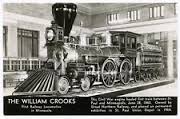
“Minnesota’s first railroad line begins operation when the William Crooks travels ten miles from St. Paul to the village of St. Anthony (present-day Minneapolis). Within ten years the state is laced with railroad lines, opening up vast inland regions to farming and lumber.

To get here, the William Crooks rode on tracks to LaCrosse, Wisconsin then was shipped by steamboat to St. Paul. Until the railroads, steamboats and the rivers they ride are the most efficient way to move goods in and grain and logs out.” *

Thanks for the innovations that led to the railways in MInnesota! We have been blessed with excellent passenger and freight transportation here for about 150 years! I bless the changes the William Crooks brought to this generation by the authority of Jesus. May these rails continue to be a blessing to this state in perpetuity!

Good Dad, as I meditate today with You on the subject of trains, I feel a bit of melancholy. Like any good father, You relish the growth, achievements, and inventions of Your kids as they play. You “play trains” with us, and relish as we delight in building, connecting, and traveling.

While this snapshot of time, the coming of the William Crooks, was born peaceably, our methodology and timing in building many future rail lines left much to be desired. What would a dad say to a kid, who when playing with his siblings, demanded that they sign numerous deeds or legal contracts that gave him dominance of their shared playroom or basement? What would a dad say to a daughter who demanded that her brother be permanently removed from the premises because she needed more room for her elaborate train set?

Granted, the real-life complexities of building these lines in 1862 were much more severe than the basement scenario. How does one negotiate a deal between two parties that share little commonality in their definitions of property and ownership? How does one reach resolution when each parties’ land needs or transportation needs are so different?

Lord, forgive and heal Minnesota of every bad fruit and judgment that sprung from the dissonance of these deals. Will You forgive railway companies, their land agents, or any other parties in authority their sins against Native Americans stemming from the land granted them by the federal, state, or local government? We still bear their burden of having sinned against You when we take land or property from one, and give it to another without price! Will You forgive tribes, though often truly wronged, the maintenance of this offense into the present era? (May they receive justice, but be free from transference in their hearts.) How will You heal these broken hearts? Bind us up, Lord!

Hear my prayer, may all forms of coercive redistribution of wealth and property cease in the state of Minnesota! May your Holy Spirit so move on our state and people that we would give and share our land and property, our selves, and our time according to Your pleasure! In many ways, we have lost the joy of giving because our much of our charity is routed through faceless government institutions rather than through human relationships. Help us solve this problem too.

Holy Spirit, will You enable us to give the unlimited resources of heaven to our fellow man through prayer and fasting! May You fill internal chasms of heart that sometimes drive our reckless consumption and fuel our frenetic needs for doing, and cut us off from being. Change what we desire; what we want! In the words of David in Psalms 23:1, “The Lord is my shepherd, I shall not be in want.”

*P.T.H. cites timeline formerly at this URL: mnhs.org/about/dipity_timeline.htm
The Minnesota Historical Society Web site, http://www.mnhs.org , is fantastic! Check it out!


Standard
19th Century, Culture, Economics, History, Minnesota, riverboat, Technology, trade, Transportation

Steamboats 1840 to 1870  

mississippi-riverboat

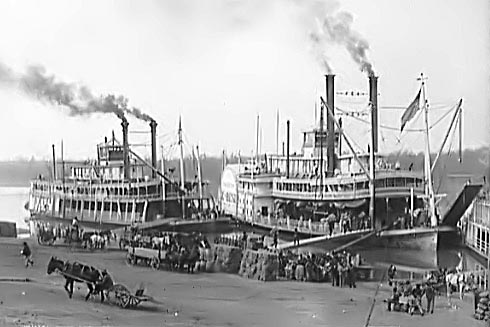
Steamboat trips up the scenic Mississippi are the fashion for Eastern tourists in the 1840s. By the mid-1850s steamboats, carrying supplies and immigrants as well as tourists, arrive in St. Paul at the rate of four or five a day during the summer months.*

Holy Spirit, will You journey with me through the steamboat era of the Mississippi? Will You allow me to bounce ideas off You, and alert me to any related subjects? Thanks that You are in, around and through all times and places! I love You for that!
Thanks for the gift of the steamboat! The idea of going effortlessly upstream must have been revolutionary in 1840. What would be an appropriate analogy to present Minnesotans’; skiing uphill at Afton or Wild Mountain? Maybe waterskiing without a rope or a boat?
I thank You for the relational benefits of this mode of transportation to our midwestern forefathers and foremothers. Technology is often viewed in terms of its innate capabilities, but not in terms of the relationships those capabilities may unlock. Transportation advancements seem to inherently effect relationships by changing how we view our geography.
For example, before the steamboat one imagines that it would be much easier for Northerners to travel south, downstream, on the Mississippi than Southerners to travel north. Is it a stretch to imagine that this creates a one-way relational path? If one can only passively receive visitors, products, news, from the north how would that impact one’s world-view.
Conversely, imagine what it would be like to only be a giver on this unidirectional path. A farmer works all season, loads up his crop, brings it to a river town, and sends it away. He feels the immediate reward of the sale of his harvest, but is largely isolated from any connections to those downstream.
Will You forgive any judgments between north and south based out of this one-way relational paradigm? Will You forgive any resentments based on an identity of being primarily a “giver” or a “receiver”? Will You forgive past judgments based on geographic isolation instead of real relationship?
Lord of Hesed, will You create in our generation a desire for real relationship, while aided by technology, not based on technology? Will You show us ways to reverse any symbolic or real curses resulting from one-way relationships? Will You make our mighty rivers flow upstream, and give us a future of blessed two-way, real relationships with our world and fellow man?

*Note – PrayThroughHistory uses the timeline located for several years at the Minnesota Historical Society Web site, at this URL: mnhs.org/about/dipity_timeline.htm .  The current URL is http://www.dipity.com/Minnesota/History/Minnesota-History/ and only works if typed, not pasted, in browser. It is worth the effort!


Standard
19th Century, Business, Culture, History, livestock, maps, Minnesota, Native Americans, trade, Transportation

Red River Oxcart Trade 1840 to 1850

Unknown-11

Métis families (formed by marriages between whites and Indians) take their furs from the Red River Valley to St. Paul in oxcarts. Long caravans of up to 200 carts travel from as far away as Winnipeg, Canada, making St. Paul one of the leading fur markets in the country from the 1840s to the 1860s.*

My first question, Lord, is who are the Metis people? Doing what any modern American would do when faced with something they haven’t encountered before I went straight to wikipedia, and found the following excerpt below.

“The Métis are the descendants of Indigenous Cree or Anishinaabe women who married French or Scottish fur traders during the early colonial period. They have a specific, unique culture. Most are found among the Michif-speaking peoples of the Red River region in modern ManitobaNorth Dakota, and Minnesota.[1] The Red River peoples are part of the same ethnic group as many of the Canadian Métis peoples. There is also a broader but limited use of the term to describe any people who descend from the united culture created by the intermarriage of various French and British fur traders and various Algonquian, Cree and other Native American groups intermarrying during the 17th, 18th and 19th centuries. This use would exclude from Métis people-hood those whose ancestries became mixed between these different ethnic groups in other settings or more recently than about 1870.” **

So now I have a place to begin my prayer; with at least an inkling of a back story of the Metis. God, I don’t really feel too prayerful tonight, but I’m willing to wait with You and see where it goes. Ok?

To begin, thank You that the Metis are Your people, and included in Your family. Thanks that You have watched over and led them for generations before their participation in the fur trade took place. Today I give your gratitude for the this era of the oxcart trail!

Next, I thank You that Metis marriages became an intersection between Scotch, Irish, French, Cree, Anishinaabe, and perhaps more nations of people! My late aunt, Ingrid Trobisch, an author and marriage counselor once told me, “Interracial marriages may be doubly difficult, but they are also doubly blessed.” I  commend  and honor these marriages that forged a new and unique culture from their culture of origin to You Good Father! Will you bless the Metis and all their future generations with the same forbearing spirit?

How interesting that, again, a people group becomes synonymous with a form of transportation: the Sami people of Finland the reindeer, the Arabs the horse, the Peruvians the llama, and the Metis the oxcart. All through history You have given us gifts and innovative thoughts that improve our lives. Thank You for these gifts. Will You bless those who rode these caravans, and continue to provide for their needs in the present and future? Will You cause us to pause as we drive I-94 west of Minneapolis, and remember who those who first blazed this road; the Metis?

Lord, I ponder what those in the future will think about us when the car is an antiquated beast. Will our interstates lead them somewhere, or will they cease to have purpose ? Will we be associated with our vehicles? In any case, I ask that You bless the future forms of transportation that may be discovered here in Minnesota, and that they would be inhabited by people who drive them to intersect with their neighbors as the Metis did.

*Note – PrayThroughHistory uses the timeline located for several years at the Minnesota Historical Society Web site, at this URL: mnhs.org/about/dipity_timeline.htm .  The current URL is www.dipity.com/Minnesota/History/Minnesota-History/ and only works if typed, not pasted, in browser. It is worth the effort!

** https://en.wikipedia.org/wiki/Métis


Standard
19th Century, Business, Economics, Exploration, Health, History, Minnesota, riverboat, Technology, Transportation

First Steamboat at Ft. Snelling 1823

images-3

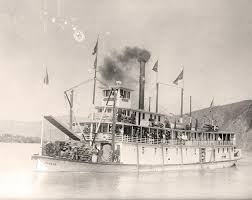
The “Virginia” is the first steamboat to reach Fort Snelling. Needed supplies are missing from the cargo, though the boat does carry the umbrella-wielding Italian count Giacomo Beltrami.*

Today’s meditation is on the relevance of the arrival of steamboats in the state of Minnesota. For the author, the practical is spiritual, and often the super-normal is the basis of the super-natural. Therefore, if I want to hear what my Good Father is saying to me today, I may have to slow my thoughts to the speed of a paddle-wheeler headed upstream. That said, below is a succinct general history to amplify this event:

“As early as the 17th Century a handful of explorers, hardy French voyageurs, and missionaries had ventured into the environs of the Upper Mississippi River Valley. Through a variety of relationships that included cooperation, intermingling, and competition with the native inhabitants of the region, several temporary encampments and forts had been established to support the lucrative fur trade. But most historians agree that nothing changed the frontier as quickly as steam transportation.

In April, 1823 the small steam packet Virginia backed out into the channel of the Mississippi from the St. Louis levee to become the first boat to ascend the Father of Waters into what would later become the Minnesota Territory. This remarkable journey was chronicled by Giacomo Constantine Beltrami, the Italian explorer who went on to play an important role in Minnesota history.  A Kentucky family en route to the lead mines of southern Wisconsin on board the 118-foot vessel represented the first trickle of what would soon become a deluge of immigration. Also on board the Virginia for this historic trip was Captain William Clark of the famed Lewis and Clark Expedition of 1805.

Imagine the contrast of traveling in the relative ease and comfort of this sturdy little boat given his experience of just a few years earlier.” **

There is much here to ponder: the new technology of the steamboat, how this technology changed history, and what timeless truths can we grasp from it? Lord of Mighty Rivers hear my simple thoughts and prayers.

Strong Creator, thank You for the scientific properties of water. It’s truly amazing! It’s like Your character, it can appear as ice, liquid, or steam, yet it is always the same substance. You put it into Your creative children to harness this transitional power for the betterment of humankind. Which of their ancestors would imagine that one day their boiling tea kettle would power massive loads upstream against the might of the Mississippi?

Here is my first confession and petition. Lord forgive our lack of imagination, both for ourselves, and for the dreams of others. May we practice to spur this generation to dream, and to the enjoyable discipline necessary to their fulfillment. May we be a voice of encouragement that pushes others to defy the current! Thank You for the symbolic value of the lonely Virginia moving slowly to its destination!

Next, new technology often makes the impossible possible, and the impractical practical. Again, who in the 18th century would think that their steaming iron maple syrup pot could actually become a boiler? And that that boiler would have the power to move unthinkable payloads up and downstream? And that those payloads would enable trade and previously unimaginable lifestyle for the average American?

We, in the 21st century, have the luxury to throw away old socks and t-shirts. Cotton products have become so accessible they are practically disposable. We do not know or remember that our ancestors may have experienced the incredible comfort of cotton articles from the South for the first time because of this steamboat’s success. Conversely, those in the South were likely amazed at the beautiful white flour Minnesota could send them so affordably.

Lord, we don’t often pause to remember what it’s like to do without. We do not see the masterful design of a plain white cotton t-shirt, or ponder that in past generations, it was a garment fit for a king. Or that the greatest chefs of Paris were astounded at the silky wheat flour from some unknown place called Minnesota. It was “Incroyable”!

Incredible Dreamer, thanks that You are not offended by our inventions! Thanks that this steamboat enabled Beltrami to better share his discoveries with a much wider audience. Ultimately, thanks that You take pleasure in our discoveries! May this river valley yield new discoveries and discoverers who make the impossible possible! (Just like You!)

*Note – PrayThroughHistory uses the timeline located for several years at the Minnesota Historical Society Web site, at this URL: mnhs.org/about/dipity_timeline.htm .  The current URL is www.dipity.com/Minnesota/History/Minnesota-History/ and only works if typed, not pasted, in browser. It is worth the effort!

** http://www.winonahistory.org/sesqui/steam/


Standard
18th Century, Culture, History, Intercession, Jesus, Minnesota, Native Americans, Transportation

Horses Arrive 1740 to 1760

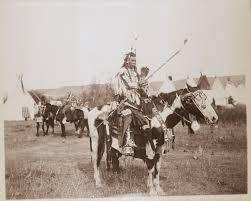
“By the mid-1700s, thUnknown-1e Dakota are riding horses, obtained in trade with other tribes, on their buffalo hunts on the prairie. They can now follow the herds farther west on the plains.
Horses had been extinct in the Americas for about 8,000 years. Columbus reintroduced them when he carried European breeds to the continent in 1493. Nearly 200 years later, horses were abundant on the plains, where they transformed the lives of the region’s inhabitants.” *

Master, thank You for the creation that You allow us to live and thrive in! Thank You that horses have blessed the lives of the Dakota and immigrant alike! Thank You for the gift of the buffalo to our forbearers! Thank You for reintroducing the horse to North America, and for it’s profound impact on Dakotans’ survival!

Why did You use Europeans to bless North America with the horse? It is good to remember that European explorers were not solely the “exploiters”  of North America as some revisionists may hold. In this case, will You remember those who brought the horse as “contributors?” Thank you, Father, that all cultures are free to choose to contribute and be blessed by those they may not yet know!

Will You bless both horse and rider in Minnesota forever? Will You make us better as a people in our treatment of all horses? Will You give us insight into Your masterpiece; the horse?

*Note – PrayThroughHistory uses the timeline located for several years at the Minnesota Historical Society Web site, at this URL: mnhs.org/about/dipity_timeline.htm .  The current URL is http://www.dipity.com/Minnesota/History/Minnesota-History/ and only works if typed, not pasted, in browser. It is worth the effort!


Standard
18th Century, Catholic, Culture, Exploration, History, Intercession, Jesus, Minnesota, Native Americans, Transportation

La Vérendrye & Grand Portage Trail 1731

Google Images

Google Images


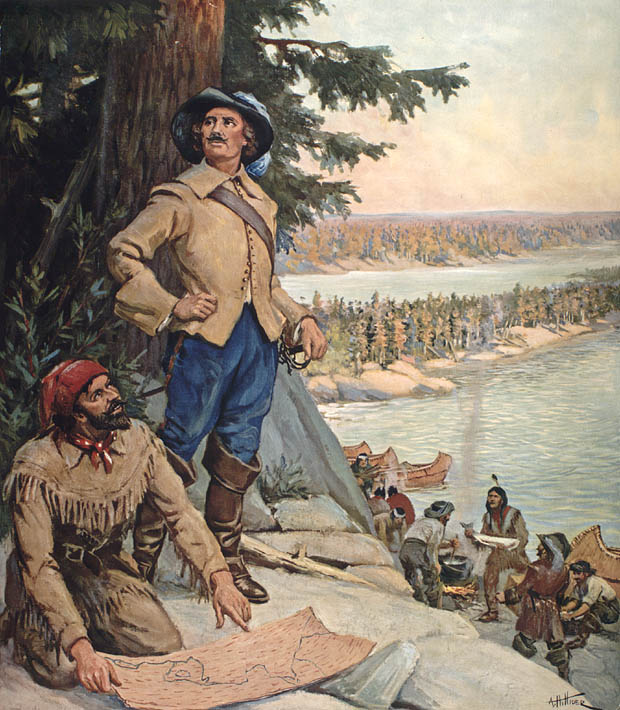
“Using a map made on birch bark by Assiniboin guide Ochagach, Pierre La Vérendrye follows the Grand Portage trail from Lake Superior to Lake of the Woods. It is not a way to the western sea, as he has hoped, but fur traders will follow this trail for the next 100 years.” *

Sometimes the easy way is the hard way. A portage is an overland pathway that avoids dangerous rapids or falls for those traveling by river. Ochagach likely thought that the “western sea” that La Verendrye sought was Lake Winnipeg. Regardless of his disappointment, La Verendrye and the voyageurs respected and appreciated the wisdom in taking this 8.5mile trail past the dangers of the Pigeon River.

We often balk at the delays of modern life, even though we have such incredible technologies that serve our whims and convenience. Will You make us like Ochagach, so that we can see the dangers of convenience in our lives? Will You make us like La Verendrye, that we may heed the warnings of our friends to not try to foolishly “shoot the rapids?”

Father, thanks that You lead us on our way. Thanks that You delight in sharing your mysteries with us. Bless the Assiniboin people, Ochagach, and P. La Verendrye for the gift of this trail. Thank you that these two men showed trust to each other! Thanks for the lessons of the portage!

**Note – PrayThroughHistory uses the timeline located for several years at the Minnesota Historical Society Web site, at this URL: mnhs.org/about/dipity_timeline.htm .  Currently the timeline seems to be unavailable.

Standard