18th Century, 19th Century, African American, Canada, Economics, government, Great Britain, Great Lakes, History, law, Minnesota, Politics, State Government, Treaties

Webster-Ashburton Treaty Signed Aug 9, 1842


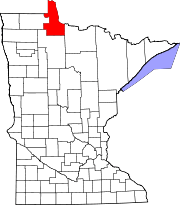
180px-Map_of_Minnesota_highlighting_Lake_of_the_Woods_County.svg

The Webster-Ashburton Treaty, which established the boundary between the United States and Canada, was signed by the United States and Great Britain. Minnesota’s “Northwest Angle” was a result of this treaty.*

It is hard to imagine a time where our most pressing and trying foreign policy questions concerned Great Britain or Canada. The hot button issues of the slave trade, impressment of United States sailors, or resolving the unrest due to the Canadian Rebellion of 1837 needed resolution.

Webster-Ashburton, though months in the making, resolved disputes that went back to the Revolutionary War. Lack of clarity in the Treaty of Paris of 1783 seeded conflict on our Northern Border. Lord Ashburton and Secretary of State Daniel Webster made clear land boundaries with open navigation on key portions of the Great Lakes. **

Jesus, thanks that You respect our boundaries. Thanks for the generations of peaceful relationships we have enjoyed with Canada and Great Britain since this agreement. Will You watch over this national border, all Minnesota state borders, and our personal borders? Will You be the Keeper of our Peace?

*mnhs.org/about/dipity_timeline.htm

** https://history.state.gov/milestones/1830-1860/webster-treaty


Standard
19th Century, Culture, government, History, Intercession, Jesus, law, Minnesota, Native Americans, State Government, Treaties

Doty Treaty July 31, 1841

Unknown-2


images

James Doty, the governor of Wisconsin Territory, fashions a treaty intended to provide a permanent home west of the Mississippi River for the Dakota, the Ho Chunk, and other tribes. Tracts of land are to be set aside for each band on the left bank of the Mississippi; each tribe is to have a school, agent, blacksmith, gristmill, and sawmill. The initial treaty is negotiated with the Sisseton, Wahpeton, and Wahpekute bands; negotiations with the Mdewakanton collapse. The United States does not ratify the treaty.*

Another treaty I know too little about. Help me, Jesus! Help me, wikipedia! Help me, Library of Congress! Help me tribal websites!

Lord, may I sit and watch this treaty in the making with You? Where do you wish to go? What can You teach about Governor Doty, and the Sisseton, Wahpeton, Wahpekute, and Mdewakaton nations? You are unlimited by time; what does this day of July 31, 1841 look like from the Eternal Now?

It was difficult to find a succinct summary of the Doty Treaty, but these are the pieces I see so far. Governor Doty was a Democrat who befriended Whigs. He seems less interested in party than principle. His intention for these permanent homelands may have come from within or from external motives to assuage land speculators. This is not clear to me yet.

In any case, Good Father, I bring these petitions to You who know each heart. Will You remember the benevolent intentions of Doty’s treaty to supply each nation with permanent claims to land, schools, agents, and the practical industries of his day? Will You bless his efforts to ratify this treaty at the Federal level, in spite of its failure?

I know even less about the responses of the Sisseton, Wahpeton, Wahpekute, and Mdwakaton towards Governor Doty, or how much information they were privy to. As a fellow human, empathetic to these people at this time, may I bring my heart for them to You?

I begin with a general idea; trust. Will You remember the effect on these specific tribes, who have known great fluctuations in spirit from the United States? Will you remember those who negotiated with them in good faith? Will You recall those who broke their trust in the name of our states and nation?

I especially pray for their reactions to times of broken trust much like I would pray for an individual who has undergone a great trauma, neglect, or abuse. We cannot escape some horrors of life, but we can choose our response. Will You break any response of fear, bad faith, or hatred for those that may have chosen such?

Honest One, our innermost lives are in Your plain view. We have offended Your diplomacy when we betray our brother in false negotiations. We have offended You when we break another’s faith. We, too often, think of ourselves as able to make good judgments although we have such an incomplete handle on the truth, or the pain another has lived through. Will you forgive, then and today, these offenses?

Slow us down! May we embrace the pain of choosing to love; to show mercy on our enemies! Will You write “Mercy Over Judgment” over the left bank of the Mississippi, and “Love Your Enemy” over the right bank?

Was this part of Your response, Lord?

“Treaty of October 13, 1846 — A treaty of cessions, and intended acquisition of lands west of the Mississippi River for a new homeland, concluded in the City of Washington. [Proclamation, February 4, 1847; 9 Stat., 878]. James K. Polk, President.”http://www.ho-chunknation.com/available-services/heritage-preservation/cultural-resources/history-of-ho-chunk-nation/treaties-of-the-ho-chunk-nation.aspx

Standard
19th Century, Culture, Economics, History, Minnesota, riverboat, Technology, trade, Transportation

Steamboats 1840 to 1870  

mississippi-riverboat

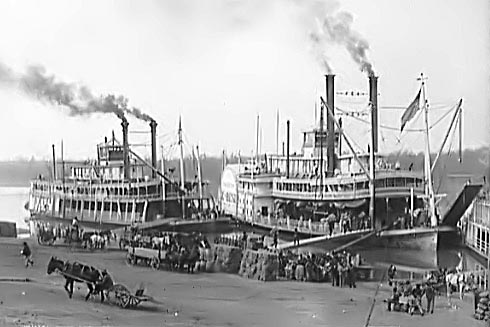
Steamboat trips up the scenic Mississippi are the fashion for Eastern tourists in the 1840s. By the mid-1850s steamboats, carrying supplies and immigrants as well as tourists, arrive in St. Paul at the rate of four or five a day during the summer months.*

Holy Spirit, will You journey with me through the steamboat era of the Mississippi? Will You allow me to bounce ideas off You, and alert me to any related subjects? Thanks that You are in, around and through all times and places! I love You for that!
Thanks for the gift of the steamboat! The idea of going effortlessly upstream must have been revolutionary in 1840. What would be an appropriate analogy to present Minnesotans’; skiing uphill at Afton or Wild Mountain? Maybe waterskiing without a rope or a boat?
I thank You for the relational benefits of this mode of transportation to our midwestern forefathers and foremothers. Technology is often viewed in terms of its innate capabilities, but not in terms of the relationships those capabilities may unlock. Transportation advancements seem to inherently effect relationships by changing how we view our geography.
For example, before the steamboat one imagines that it would be much easier for Northerners to travel south, downstream, on the Mississippi than Southerners to travel north. Is it a stretch to imagine that this creates a one-way relational path? If one can only passively receive visitors, products, news, from the north how would that impact one’s world-view.
Conversely, imagine what it would be like to only be a giver on this unidirectional path. A farmer works all season, loads up his crop, brings it to a river town, and sends it away. He feels the immediate reward of the sale of his harvest, but is largely isolated from any connections to those downstream.
Will You forgive any judgments between north and south based out of this one-way relational paradigm? Will You forgive any resentments based on an identity of being primarily a “giver” or a “receiver”? Will You forgive past judgments based on geographic isolation instead of real relationship?
Lord of Hesed, will You create in our generation a desire for real relationship, while aided by technology, not based on technology? Will You show us ways to reverse any symbolic or real curses resulting from one-way relationships? Will You make our mighty rivers flow upstream, and give us a future of blessed two-way, real relationships with our world and fellow man?

*Note – PrayThroughHistory uses the timeline located for several years at the Minnesota Historical Society Web site, at this URL: mnhs.org/about/dipity_timeline.htm .  The current URL is http://www.dipity.com/Minnesota/History/Minnesota-History/ and only works if typed, not pasted, in browser. It is worth the effort!


Standard
19th Century, Business, Culture, History, livestock, maps, Minnesota, Native Americans, trade, Transportation

Red River Oxcart Trade 1840 to 1850

Unknown-11

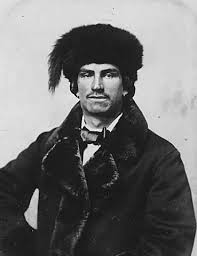
Métis families (formed by marriages between whites and Indians) take their furs from the Red River Valley to St. Paul in oxcarts. Long caravans of up to 200 carts travel from as far away as Winnipeg, Canada, making St. Paul one of the leading fur markets in the country from the 1840s to the 1860s.*

My first question, Lord, is who are the Metis people? Doing what any modern American would do when faced with something they haven’t encountered before I went straight to wikipedia, and found the following excerpt below.

“The Métis are the descendants of Indigenous Cree or Anishinaabe women who married French or Scottish fur traders during the early colonial period. They have a specific, unique culture. Most are found among the Michif-speaking peoples of the Red River region in modern ManitobaNorth Dakota, and Minnesota.[1] The Red River peoples are part of the same ethnic group as many of the Canadian Métis peoples. There is also a broader but limited use of the term to describe any people who descend from the united culture created by the intermarriage of various French and British fur traders and various Algonquian, Cree and other Native American groups intermarrying during the 17th, 18th and 19th centuries. This use would exclude from Métis people-hood those whose ancestries became mixed between these different ethnic groups in other settings or more recently than about 1870.” **

So now I have a place to begin my prayer; with at least an inkling of a back story of the Metis. God, I don’t really feel too prayerful tonight, but I’m willing to wait with You and see where it goes. Ok?

To begin, thank You that the Metis are Your people, and included in Your family. Thanks that You have watched over and led them for generations before their participation in the fur trade took place. Today I give your gratitude for the this era of the oxcart trail!

Next, I thank You that Metis marriages became an intersection between Scotch, Irish, French, Cree, Anishinaabe, and perhaps more nations of people! My late aunt, Ingrid Trobisch, an author and marriage counselor once told me, “Interracial marriages may be doubly difficult, but they are also doubly blessed.” I  commend  and honor these marriages that forged a new and unique culture from their culture of origin to You Good Father! Will you bless the Metis and all their future generations with the same forbearing spirit?

How interesting that, again, a people group becomes synonymous with a form of transportation: the Sami people of Finland the reindeer, the Arabs the horse, the Peruvians the llama, and the Metis the oxcart. All through history You have given us gifts and innovative thoughts that improve our lives. Thank You for these gifts. Will You bless those who rode these caravans, and continue to provide for their needs in the present and future? Will You cause us to pause as we drive I-94 west of Minneapolis, and remember who those who first blazed this road; the Metis?

Lord, I ponder what those in the future will think about us when the car is an antiquated beast. Will our interstates lead them somewhere, or will they cease to have purpose ? Will we be associated with our vehicles? In any case, I ask that You bless the future forms of transportation that may be discovered here in Minnesota, and that they would be inhabited by people who drive them to intersect with their neighbors as the Metis did.

*Note – PrayThroughHistory uses the timeline located for several years at the Minnesota Historical Society Web site, at this URL: mnhs.org/about/dipity_timeline.htm .  The current URL is www.dipity.com/Minnesota/History/Minnesota-History/ and only works if typed, not pasted, in browser. It is worth the effort!

** https://en.wikipedia.org/wiki/Métis


Standard
19th Century, Culture, Faith, History, Intercession, Jesus, Minnesota, Native Americans

Ezekiel Gear Arrives at Fort Snelling Apr 28, 1839

Unknown-10

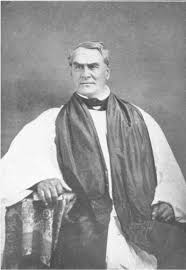
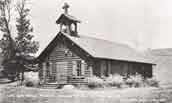
Episcopal priest arrives at Fort Snelling. He is chaplain at Fort Snelling from 1839-1858. He remains in Minnesota until his death in 1875.*

Thank you for Gear, and his commitment to Minnesota. Thank you for the blessing his presence had on early Minnesota and especially Fort Snelling. Thank you for his example to future generations here: we are free to reach across cultural boundaries when motivated by Your love!

It is my belief that we have a limited view of our history. We know in part, and we often project our vantage point onto the characters of the past. Perhaps we need a new lens to view the history of Native Minnesotans and its European settlers? May we equally remembers those that built relational bridges in this meeting of peoples as those who tore them down.

The following excerpt demonstrates where the heart of Priest Gear:

“Ezekiel Gilbert Gear was horn in Middletown, Connecticut, September 13th, 1793. He was ordained deacon by Bishop Griswold in the same church in which he was baptized, and his diaconate was passed in that diocese. He was ordained priest by Bishop Hobart, and was appointed missionary in the western part of New York state. There he labored at Onondaga Hill, Avon, Manlius, Ithaca, Syracuse, Binghamton and Brownsville. He also worked among the Oneida and Onondaga Indians, baptizing, marrying, and admitting many to the communion of the Church. He was present at the confirmation by Bishop Hobart of ninety-seven Indians, presented by Eleazar Williams. We can well imagine that this previous connection with Indian work led him to take an especial interest in advocating, as he did, the beginning of work among the Sioux and Ojibways of Minnesota.”

http://anglicanhistory.org/usa/mn/edsall_gear.html

*Note – PrayThroughHistory uses the timeline located for several years at the Minnesota Historical Society Web site, at this URL: mnhs.org/about/dipity_timeline.htm .  The current URL is www.dipity.com/Minnesota/History/Minnesota-History/ and only works if typed, not pasted, in browser. It is worth the effort!

Standard
19th Century, Business, Economics, History, Industry, Intercession, Jesus, Minnesota

Timber industry begins in Minnesota 1839

6-11_0

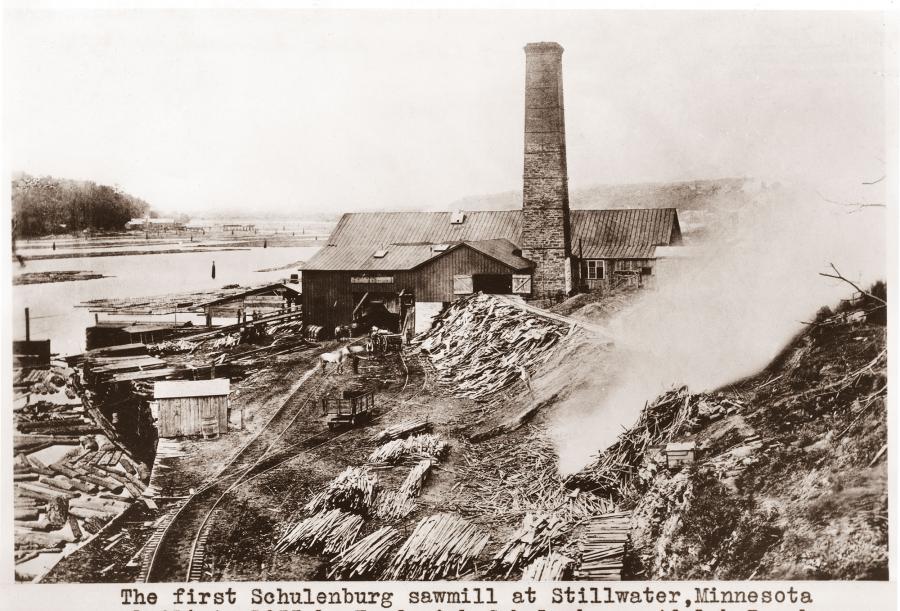
More than two-thirds of Minnesota is covered with trees when Minnesota’s first commercial sawmill is constructed at Marine on St. Croix–the beginning of Minnesota’s first industry.

On the east side of the Mississippi, a vast forest of pine and other evergreens stretches to the Canadian border. Many white pine along the St. Croix River are 200 feet tall and five feet in diameter.*

Jesus, thanks for our timber resources in Minnesota. Thank you for all who have, who are at present, or who will work in our forests in the future! Will You send your blessing into every place where Your Minnesota forests have gone: furniture, homes, barns, fences, etc.? Will You bless every recipient of Minnesota wood as You chop the roots of blame, and judgment, grudge and jealousy, envy and anger?

As you said in Romans 11:16b “…if the root is holy; so are the branches.” At present, will You forgive any worship of nature itself, and the lack of acknowledgement of to the Creator of the Woods? I’m guilty Lord too: we love stuff and use people instead of loving people and using stuff! Have mercy!

*Note – PrayThroughHistory uses the timeline located for several years at the Minnesota Historical Society Web site, at this URL: mnhs.org/about/dipity_timeline.htm .  The current URL is www.dipity.com/Minnesota/History/Minnesota-History/ and only works if typed, not pasted, in browser. It is worth the effort!

Standard
19th Century, education, Exploration, Geology, History, Intercession, Jesus, Minnesota, Native Americans, Natural Science

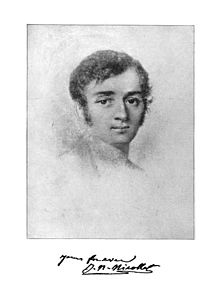
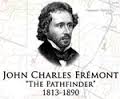
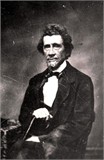
Nicollet and Fremont visit Pipestone quarries 1838

Nicollet

Nicollet

Fremont

Fremont

While on expedition, Nicollet and John Fremont camp at the Pipestone quarries (in what is now Pipestone National Monument in Pipestone County) and engrave their initials near the Winnewissa Falls, leaving a lasting record of their presence there.*

God, since when did graffiti become history? It seems we are unaware of our actions today on future generations. Yet historians and achaeologists surely appreciate these moments of civil disobedience. What is literally scrawled on the walls of the present gives us a much more colorful picture of what happened in the past. Thanks for graffiti artists!

More specifically, thank You for moving Nicollet and Fremont to explore and physically record their attendance to Your pipestone quarry. All on earth belongs to You, but You move some of us to wonder, to travel, to seek out the wonders You have made. It is only my opinion, but I sense a smile on Your eternal face when our curiosity moves us outward, beyond, and into the the unknown!

Thanks for the blessings of pipestone and its amazing uses. Its physical properties made it a natural treasure for past and present minnesotans. Will You bless the quarries at Pipestone! May we continually discover incredible uses for this resource, and use it wisely. Will You free the quarries from the bitter judgments between all relevant parties over its use/misuse?

*Note – PrayThroughHistory uses the timeline located for several years at the Minnesota Historical Society Web site, at this URL: mnhs.org/about/dipity_timeline.htm .  The current URL is www.dipity.com/Minnesota/History/Minnesota-History/ and only works if typed, not pasted, in browser. It is worth the effort!

Standard
19th Century, Culture, government, History, Intercession, Jesus, Minnesota, Native Americans, Treaties

1837 Treaties

c6c38485-2901-4201-bc7e-2aa4468ba134

The United States negotiates treaties with the Ojibwe and the Dakota for the wedge of land between the St. Croix and Mississippi Rivers—land that will later become part of Minnesota. Ratification of the treaties opens the land for settlement by non-Indians. The Ojibwe will receive payments in money, goods, and provisions for 20 years; they also reserve the right to hunt, fish, and gather wild rice within the ceded area. The Dakota do not reserve their hunting or fishing rights, but their annuities are to be perpetual. Indian Agent Lawrence Taliaferro boasts that he made the better bargain for the Dakota.*

Lord, this wedge of land is quite valuable real estate in the present. It contains parts  of St. Paul, Oakdale, Stillwater, Lake Elmo, Woodbury, Cottage Grove, and Hastings which are all fast growing parts of the metro area. This is surely a challenge for our present-day lawmakers; how do you give hunting rights in a suburban develop ment?

We need Your wisdom for all such cases. First, we need to accurately understand the meanings of past treaties which is no simple matter. Next, how does one interpret the spirit of this meaning into a present-day context that preserves the spirit and the heart of the treaty? Will You enable our government to honor these treaties in the present and future, as well as make restitution as specific and meaningful as possible?

By Your mercy, will You free all parties in the past of dissension and bitter assessments: the U.S. government and its agents , the Dakota, and the Ojibwa? Will You make us free from the fruit of this event in the present, and create the proper honor and respect between all parties?

*Note – PrayThroughHistory uses the timeline located for several years at the Minnesota Historical Society Web site, at this URL: mnhs.org/about/dipity_timeline.htm .  The current URL is www.dipity.com/Minnesota/History/Minnesota-History/ and only works if typed, not pasted, in browser. It is worth the effort!

Standard
19th Century, Culture, education, Faith, History, Intercession, Jesus, Minnesota, Native Americans

Lake Harriet Mission School July 19, 1836  

lac_qui_parle1

Six students attend the opening of the Lake Harriet Mission School for the Dakota, founded by the Reverend Jedediah D. Stevens. An early example of education within the boundaries of present-day Minnesota, the school was sponsored by the Presbyterian Missions Board and taught by the founder’s niece, Lucy C. Stevens, in a cabin built by Gideon H. and Samuel W. Pond.*

Good Teacher, thank you for the benefits of the Lake Harriet Mission School for the Dakota. Thank you for the heart of providing education to all! It’s so good to share what we know and have it received.

It is not easy to be the first. It takes boldness to reach out across cultural lines. On one side of this picture we have Dakota students who are reaching out to Stevens. Conversely, he is stepping out of his comfort zone to meet and teach members of an unfamiliar culture. Will You bless both sides of this exchange? Will You remember their boldness and trust to know each other? Each group is an exploratory party of sorts. May we never forget what its like to be an alien!

Lord, I also want to acknowledge our separations that may begin as academic pride. We assume our knowledge will change our ‘underprivileged’. We often fail to pass on wisdom (good judgment), and even foster an academic culture that hesitates to recognize the merits of wisdom. As moderns, we cringe at even the word ‘judgement’, although one could argue that good judgment is the root of justice?!

I feel prompted to acknowledge the potential judgments of Stevens and Williamson against the Pond brothers, and perhaps a spirit of competitiveness. Lord, will you forgive any heritage of academic  or religious pride stemming from  them forward to us if this is the case? Will you forgive the stinging pain of criticism towards or counter-judgments from the Ponds, the Dakotas, these first six students, or any other pertinent unaddressed party? Will You free the land  of Minnesota from these judgments, and bring the blessing of humility that we all have betrayed You, Your peoples, and our selves? Will You make us humble teachers and students of the “knowledge” You have revealed to us? Amen.

*The current URL is www.dipity.com/Minnesota/History/Minnesota-History/ and only works if typed, not pasted, in browser. It is worth the effort!

Standard
19th Century, Agriculture, Christian, education, farming, Fundamentalist, History, Minnesota, Native Americans, Technology

Missionaries at Lac qui Parle 1835

hane-and-herman-bigger

Presbyterian ministers Thomas Williamson and Jedediah Stevens establish a mission at Lac Qui Parle to the west. They bring a farmer along to teach the Dakota how to raise crops in the European manner.*

Lord, thanks for the benefits of European farming, and Native farming. Thank you for the benefits of this heritage: seldom have we lacked food as a state, often we have contributed food to others! Will You continue to bless the productivity  of all Minnesota farmland? Will You enhance the nutrition of our soil and food? Amen.

*Note – PrayThroughHistory uses the timeline located for several years at the Minnesota Historical Society Web site, at this URL: mnhs.org/about/dipity_timeline.htm .

Standard