19th Century, Business, Canada, Civics, Exploration, History, Industry, Intercession, Leadership, Minnesota, railroad, Transportation

Hill’s First Railroad 1879

00902018

1879

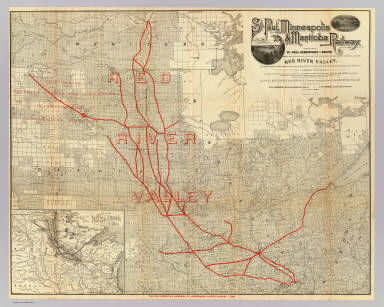
“James J. Hill and his Canadian partners buy the near-bankrupt St. Paul and Pacific Railroad and rename it the St. Paul, Minneapolis and Manitoba. This is the beginning of the railroad career that will earn Hill the title “Empire Builder” and cement the importance of the Twin Cities as a commercial center. 

Hill’s career didn’t begin with railroads. He came to Minnesota at age 18, convincing a steamboat man to hire him as a clerk. From making sure freight reached the right people, he expanded into handling freight by boat, stagecoach, and wagon. By the time his empire was built, he was one of the nation’s leading industrialists. 

In 1891 James J. Hill will crown his success by building a house at 240 Summit Avenue in St. Paul. As massive and well-built as its owner’s railroad empire, the mansion will take three years to build and cost $931,275.01, furnished.” * 

Lord, thanks that You deal with us so patiently. You allow us to learn from our errors and seek You for mercy and truth. Thank You for the blessings of James J. Hill and his railroads.

However, we still feel the weight of the blessing and curses in the wake of his empire building! He was alleged to be duplicitous in his business dealings. He allegedly manipulated land grants or sales from cities, tribes, states, and the nations of Canada and the United States. He may have wreaked havoc on the stock market in his battle with Harriman of the Union Pacific line. **

Hill proved to be cut from a different cloth than the Robber Barons of his age whose modus operandi included manipulation of the stock market, public institutions and opinions, or Federal or State governments. In many ways, he retained the common-sense lessons of his Scots-Irish upbringing in Manitoba, Canada and the Midwestern states. A few examples of his forthright tongue and blue-collar wisdom below.

“Give me snuff, whiskey, and Swedes, and I will build a railway to hell.”

“Work, hard work, intelligent work, and then more work.”

“The wealth of the country, its capital, its credit, must be saved from the predatory poor as well as the predatory rich, but above all from the predatory politician.” ***

Lord, You are the righteous ruler and justice of North America. Will You remove the curses we have laid on James J. Hill and the lines he laid? Will You forgive his debts to the people of North America and the Midwest? Will You forgive us our injustices and betrayals of Your trust?

Like Mr. Hill, we kill our competitors and covet and build empires in our hearts. We plunder our enemies in our thoughts, and do not see our brothers and sisters as precious lives that You died and rose for! Have mercy on us: the ambitious, the coward, the sluggard, and the average! Remove the curses brought on us, our generations, the land, the property, and our homes both now and until Your return! May the pathway of this railway become a track of blessing to both Manitoba and the Twin Cities! Amen!

*P.T.H. cites timeline formerly at this URL: mnhs.org/about/dipity_timeline.htm
The Minnesota Historical Society Web site, http://www.mnhs.org , is fantastic! Check it out! Images are from https://images.google.com/?gws_rd=ssl; again, an amazing resource!

** https://www.upress.umn.edu/book-division/books/harriman-vs-hill
*** https://www.azquotes.com/author/6703-James_J_Hill

Standard
19th Century, Art, Awe, Culture, History, Intercession, Minnesota

First Public Art Gallery in Northwest 1879

walker_salon1

1879

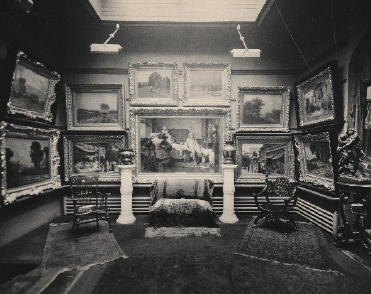
“Lumberman Thomas B. Walker attaches an art gallery to his house and opens it to the people of Minneapolis the first public art gallery in the Northwest.

He later deeds his collection and a building to house it to the city, thus laying the groundwork for the famous Walker Art Center.” *

Thank You, Lord, that You created beauty for all to enjoy! Additonally, You have gifted the human race with senses to perceive and receive the exquisite aesthetics of Your Creativity! Thanks for the receptivity to resplendence that Thomas B. Walker practiced throughout his life.

Again, thank You for giving him a generous heart to share his collection with the state of Minnesota. I’m still surprised to learn that the present Walker Art Center was started by a lumberman!?  In this era of our North Star past, most “self-made men” were astonishingly practical and concrete-thinkers. It is a pleasure to find Mr. Walker the exception to the prejudices of Minneapolitans!

Like my own my false assessments of him, our collective normalcy bias would not allow a “doer” the grace to also be an observer. It’s curious that Walker’s generosity seemed to be blocked or otherwise doomed to failure from his contemporaries; precisely those he intended to bless. The city of Minneapolis even refused the gift of his art, and donated land to build a public gallery?! **

Lord, will You soothe the pain of this rejection past, and make opportunities to give publicly smoother and easier in the present and the future? You’ve given authority to city and county government, but forgive our leaders their short sighted choices, and failures of pride. We, too often, have loved things, and used people. Have mercy!

Will You forgive the false assessments made of artists, and artistic movements in Minnesota through the years. Lord, I invite You to re-open the Walker. Holy Spirit will You reside there and make it a praise to You? Will You lead our minds higher and to more reality through visual art?

**You can quickly read a few more of Walker’s rejections at the following link: https://en.wikipedia.org/wiki/T._B._Walker

Standard
19th Century, Agriculture, Business, History, Intercession, Minnesota, Mississippi River

Washburn ‘A’ Mill Explodes

mh5-9-mp3-1w-r58

May 2, 1878

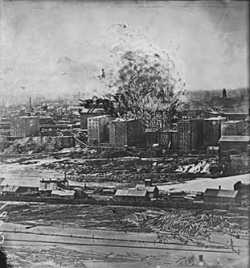
“The mill explodes when flour dust in the air inside it ignites. The explosion kills 18 workers, destroys five other mills, and decimates the surrounding area. Debris lands in Saint Paul, and the shock is felt in Stillwater. The event brings instant notoriety to Minneapolis.

The tragic explosion leads to reforms in the milling industry. Ventilation systems and other precautionary devices will be devised in order to prevent further tragedy.” *

Lord, this explosion truly impacted our state and city for decades. Will You forgive us our bitter root judgements of this event? Will You forgive any rash words and thoughts spoken by the rivals of the houses of Pillsbury and Washburn that may still be with us today? Will You cleanse the land, and the river from the bifurcations of this blast?

If the root sin of pride is an issue, (because of its largesse), will You forgive and release all the inheritors of this separation? We need You to provide our food! We welcome You to Minnesota, to the Falls of St. Anthony! Come and ‘be present at our table Lord!’

*P.T.H. cites timeline formerly at this URL: mnhs.org/about/dipity_timeline.htm
The Minnesota Historical Society Web site, http://www.mnhs.org , is fantastic! Check it out! Images are from https://images.google.com/?gws_rd=ssl; again, an amazing resource!

Standard
19th Century, Agriculture, farming, Food, History, Intercession, Minnesota, Natural Disaster, omnipresent history, Science

Rust Plagues Crops 1878

unknown

1878

“Rust, a parasite growing on barberry bushes brought west by settlers, severely damages wheat crops. Later epidemics of wheat rust lead to the outlawing of barberry bushes in 1918.

Epidemics occur again in 1904 and 1916 before the state outlaws the culprit carriers. The problem is eradicated over the next decades through the efforts of “Barberry Bees,” organized to dig up bushes, “Rust Busters Clubs” in schools, and bounties paid for reporting barberry in the 1940s.” *

Some days it is burdensome to read chapters of history like the Rust Plague. It feels like human perception of reality, myself included of course, is a one-trick pony. We fail over and over to see cause and effect relationships though surrounded with personal and practical examples.
When confronted with the tragic, we react with externalizing our pain. “It must be someone else’s fault that I have this problem”, we say to ourselves. Moreover, You are a convenient target for our misuse or overuse of natural resources.
Creator of All Nature, this is the ray of light I see in this Rust Plague; eventually the curious among us found a relationship. We found that transporting plants, namely berberis vulgaris, from their origins resulted in creating an undesired effect when they reached our desired destinations.** We loved progress, but lacked the knowledge and wisdom to enact it in this case.

Lord, was there something to this parasite outbreak other than nature? I believe that You are far more merciful to us than our sins deserve, but simultaneously maintain justice and enact wise judgments. You remain in perfect balance; neither favoring grace or truth. Our separation from You and our fellow man has its consequences. I can think of several events that happened in this time frame that caused massive unrest:
the creation of the Federal Reserve -1913
the negation of the Nicaragua Canal
the first foray into US nation-building that created the nation of Panama
the opening of the Panama Canal – 1914
sinking of the Lusitania – May 7, 1915
Poncho Villa raids US – 1916
President Wilson commits our troops to WWI, in spite of his campaign promise; “He kept us out of the war.” – 1917
Wilson “14 Point of Peace” – 1918
and extensive upheavals between labor and the industrialists.
Lord Jesus, will You enter into this chapter of our history again? Will You, by Your kind Holy Spirit, point out offenses that we may have made towards You? Did we curse the ground, or more specifically the wheat crops of Minnesota? Were You just maturing us to trust You in difficult times? Was a disease necessary to place nature in proper balance?

Jesus, please forgive us any root judgments that contributed to the rust epidemic. Will You heal our land and our hearts, to receive You where our ancestors may have missed You? Will You make us capable of self-examination, observant of our surroundings, and shield us from the temptation to only look for external targets of our wrath and blame rather than responsibility, reason, and relationship?

*P.T.H. cites timeline formerly at this URL: mnhs.org/about/dipity_timeline.htm
The Minnesota Historical Society Web site, http://www.mnhs.org , is fantastic! Check it out! Images are from https://images.google.com/?gws_rd=ssl; again, an amazing resource!

**https://www.ars.usda.gov/midwest-area/st-paul-mn/cereal-disease-lab/docs/barberry/barberry-situation-past-present-future/


Standard
19th Century, Crime, History, Intercession, justice, Minnesota, omnipresent history

Northfield Raid & James-Younger Gang

firstnationalbankpostcard

September 7, 1876

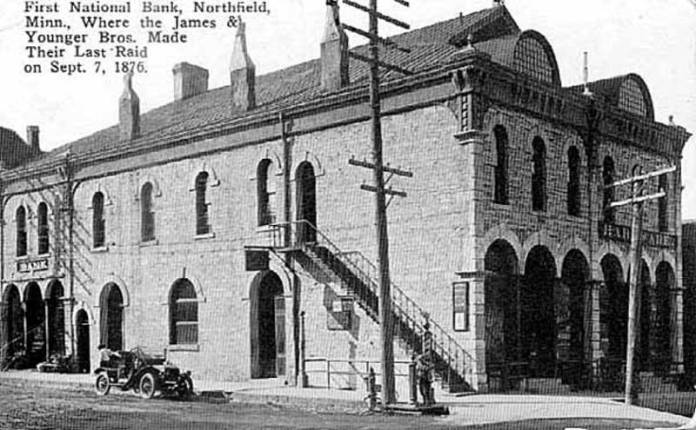
“The notorious Jesse James gang sticks up the First National Bank in Northfield, but leaves town without the money. Three outlaws are killed, three are captured, only Jesse and his brother Frank escape.

Cole Younger, along with his brothers Bob and Jim, had been robbing banks and trains with Frank and Jesse James and other members of the James-Younger Gang since the Civil War. After more than a decade of life as an outlaw, Cole’s exploits were halted by that fateful attempt to rob the First National Bank of Northfield. The Northfield Raid, as the robbery attempt has come to be known, has inspired endless speculation and multiple theories of the sequence of events and who actually participated.” *

Lord, have mercy on those of us who sin by the filling of banks. Lord, have mercy on us who sin by emptying banks. Lord, will You forgive this offense against You, and the myriad of offenses caused by both our love of, or envy of others’ money? Will You set us free today from the bitter roots Minnesotans have towards banks, and those who commit economic crimes? Will You move us to a proper relationship with money? As individual’s, town’s, counties’, states’, and nations’?

*P.T.H. cites timeline formerly at this URL: mnhs.org/about/dipity_timeline.htm
The Minnesota Historical Society Web site, http://www.mnhs.org , is fantastic! Check it out! Images are from https://images.google.com/?gws_rd=ssl; again, an amazing resource!

Standard
19th Century, education, Governors, History, Intercession, Minnesota, Natural Disaster, Social Studies, State Government

Pillsbury Becomes Governor

george_alfred_pillsbury


January 7, 1876 to January 10, 1882

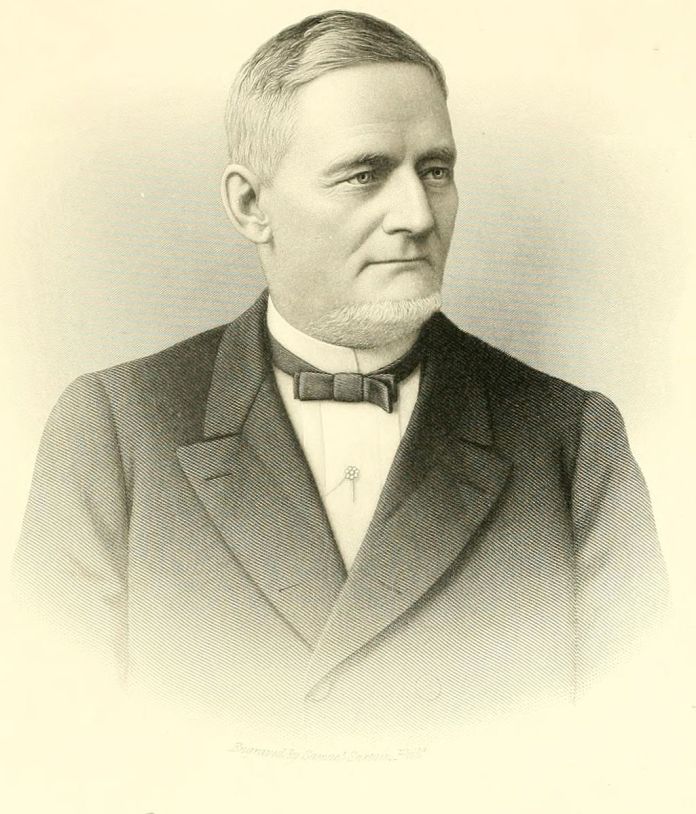
“John S. Pillsbury became the state’s 8th governor. As Minnesota’s eighth governor, Pillsbury was a practical and compassionate administrator, finally resolving a sensitive railroad bond issue and increasing aid to those ravaged by the grasshopper plague. He also encouraged legislators to create the office of public examiner to detect and purge corruption in public office.” * 

Lord, thanks that You have chosen to spread Your gifts out among us so we are aware of our need for each other! Thanks for John S. Pillsbury and the benefits of his governorship.  It appears that he was skilled in mediation and negotiation. Will You forgive the bitter roots that come from even his best negotiations? 

Will You again kindly watch between the railroad interests, ( or any major future economic power), and the people and Minnesota? Will You forgive  us when we expect the State to rescue us, and do not see the provision that You have for us? Will You sanctify the suffering caused by: the grasshopper plague, the corruption of the government, and the dominance of the railroads? Forgive us our flippant and well-forged assessments as we forgive our assessors!


Standard
19th Century, Catholic, Christian, education, Faith, History, Immigration, Intercession, Jesus, justice, Minnesota, Prayer

Catholic Colonization Bureau 1876

170px-bishop_john_ireland_of_minnesota_as_a_young_man

1876

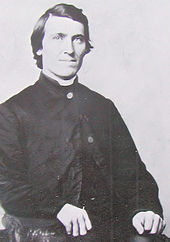
“Bishop John Ireland forms the Catholic Colonization Bureau to attract Catholics, particularly from Ireland, to Minnesota. A railroad provides land, and by 1885, four thousand German, Irish, and Belgian Catholic families are living in southwestern and west-central Minnesota. 

The towns of De Graff and Clontarf in Swift County; Adrian in Nobles County; Avoca, Iona, and Fulda in Murray County; Graceville in Big Stone County; and Minneota and Ghent in Lyon County become the business centers for the bishop’s colonies.” * 

Holy Spirit, thanks for Bishop John! Thanks for his help assisting so many to find a new way here in Minnesota! Thank You for friends like Bishop Ireland that keep offering us relief and making a way of exodus where it appears that there is no way. Will You again bless these counties: Swift, Nobles, Murray, Big Stone, Lyon, and Ramsey? 

Lord, will You forgive us our bitter ways towards You and each other based on State  and Federal law; legal and illegal immigration? Will You cause Your Church to bless Your image within each other in this effort; Catholic, Protestant, and Orthodox? Our experience helps us see differing needs of those who migrate. Forgive us our favoritism, lawlessness, and placing unnecessary barriers in front of those who seek a safe haven and a bit of Your freedom here. Please forgive us this offense against You and Your Image within our neighbor!

Will You give favor to these Catholic generations of Bishop Ireland, in their homes, the property You allow them to reside, and in the practice of their love for You? We need You! May we see You in all who emigrate their beloved homelands to immigrate to our Land of 10,000 Lakes in good faith! Come Lord Jesus and be our guest in the state of Minnesota!


Standard
19th Century, authors, Culture, Exploration, History, Immigration, Intercession, Journalism, Minnesota

Icelandic Colony 1875

unknown-3

1875
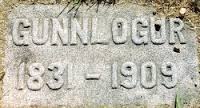
“Icelander Gunnlogur Petursson relocates to Lyon County, laying the foundation for the second largest Icelandic colony in the United States. Its residents acquire land in surrounding Lincoln and Yellow Medicine counties, but Minnesota becomes the center of the Icelandic colony’s business, social, and cultural activities.

Many of the Minnesota Icelanders’ are highly literate farmers who love to read and who fill their modest homes with books they brought with them across the Atlantic Ocean. Icelanders establish the Lestrarfjelag (Reading Society) and publish Vinland, a monthly Icelandic-language newspaper with a literary focus.” *

Thanks for Gunnlogur Petursson and the Icelandic peoples of Minnesota! I am so happy to hear that over a century ago, they were common farmers with an enjoyment for learning and reading. Thank You, Lord, that You do not limit us the way our societies sometimes do. You give us a curiosity to know, and reward our searching. Why do we fritter away so much time on entertainment and other amusements; You have something even better to teach us each day if we can focus and listen!?

I want to bless the heritage of this Icelandic colony, their generations, their dwellings, and property in the name of the Lord Jesus Christ! May Lyon County and all Icelandic descendants know You in all Your beauty in the present, and experience Your Majesty throughout their future! Amen.

http://www.mnhs.org/about/dipity_timeline.htm


Standard
19th Century, Agriculture, Business, farming, Food, History, Intercession, Minnesota, State Government

Bonanza Farms 1875

423478855

1875
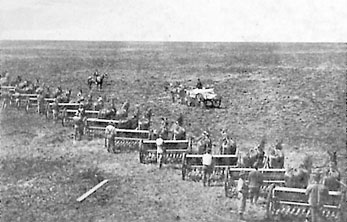
“Investors grow wheat on a grand scale in the Red River Valley. Their “bonanza farms” cover thousands of acres and are harvested by huge crews and the latest machinery.
A financial panic in 1873 stopped the construction of the Northern Pacific Railroad to the Red River Valley. In order to pay back its Eastern investors, the bankrupt company allowed its investors to exchange their bonds for land. As a result, large urban investors immediately became owners of thousands of acres of land (unlike homesteaders who had to live on the land for five years to get 160 acres). The new owners turn the land into large-scale commercial farms run by hired managers with cheap labor and expensive machinery.” *

Lord, You hate corruption of any sort in any relationship. “The LORD detests dishonest scales, but accurate weights find favor with him.” Proverbs 11:1** This Panic of 1873, again at the hands of the railroads under federal authority, really stole land from the homesteaders. (The principle of sowing and reaping? The homesteaders just years before may have been party to land being swindled from the Dakota.) Anyway, we are people capable of both sharing and defrauding land from our neighbors.

Will You forgive us this debt? Will You cause restoration and repentance to grow in the heart of this State and Nation? Will You forgive Minnesotans’ resentments against the Federal Government? Will You forgive the Railroads for manipulating the Panic of 1873 to their benefit? Will You remove this curse from our land, skies, waters, and hearts? Thank you that You deal with us in such a generous manner!

http://www.mnhs.org/about/dipity_timeline.htm
**http://biblehub.com/proverbs/11-1.htm


Standard
19th Century, authors, Culture, farming, History, Intercession, Minnesota, Natural Disaster

Laura Ingalls in Minnesota May 1874 to Jul 1876

2aff6dc1997b9813e7a8180cdf4a5037

May 1874 to July 1876

“Seven-year-old Laura Ingalls and her family settle 1.5 miles north of Walnut Grove along the banks of Plum Creek. Charles and Caroline Ingalls settle on the property in May 1874, declaring their intent to homestead it. After three consecutive years of crop failures they decide not to complete the homestead process and instead purchase the land in July 1876 from the U.S. government and immediately sell it and move to Iowa.” * 

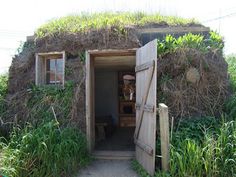
In 1932 Laura Ingalls Wilder writes the story of the time that she, Pa, Ma, and sister Mary spent in their dugout house at Plum Creek. **

It may strange to say, Eternal Father, but almost nothing helps me see You more than the story of another human being. How many readers have had their minds opened to this era because an ordinary girl recorded the stories of herself, her family, and their everyday life!?! To me, Ms. Ingalls-Wilder demonstrates that every life is an adventure, each day is a universe, and that You are there profoundly in the simple moments. ***

I praise You for Laura Ingalls; both the author and her story! Will You bless our writers in each generation to see the value of their lives, and to tell their tales with such similar and stark honesty as she? Thank You for shaping her Minnesota experience, and blessing her with a heart to share her story! 

** “On the Banks of Plum Creek”; Newly illustrated, uniform ed. LC Online Catalog. Retrieved 2015-09-18.

*** https://en.wikipedia.org/wiki/On_the_Banks_of_Plum_Creek


Standard