19th Century, Agriculture, History, Intercession, Judgment & Counter-Judgment Cycle, mail, Minnesota, State Government

Rural Free Delivery 1896

Unknown

1896

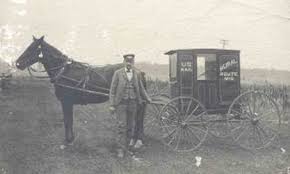
“Rural Free Delivery brings the mail directly to Minnesota farms. Service develops slowly, but within five years, 134 routes are serving 67,000 people. A 1900 U.S. postmaster general report shows that RFD increases correspondence, postal receipts, and the circulation of newspapers and periodical literature; it also stimulates road improvement. 

There is a downside, however. Rural Free Delivery threatens some merchants and several small towns who are used to having farmers come in occasionally just to get their mail (making local post offices centers of social and political life). In the coming years RFD contributes to the closing of many fourth-class post offices and the disappearance of some small villages.” *

The introduction of Rural Free Delivery in Minnesota is such a perfect example of    how change, even well-intentioned, can wreak havoc on human relationships. We are capable of adjusting to change, but the period of adjustment is often messy. Here we see how the reasonable and good desire to receive mail directly becomes a point of contention perhaps because it breaks the flow of relationships. 

Lord, will You forgive us for offenses taken during this period of change? Will You bless all those past, present, future who live on those 134 mail routes? Will You temper our perceived need for more information, served more securely, making us even more independent? Will You bless the mailmen, past, present, and future, and continue to make them a connecting point in Minnesota?

P.S. Will You also protect them from dogs, and protect the dogs from them?

* http://www.mnhs.org/about/dipity_timeline.htm

**Check out “Behind the Badge” of Smithsonian National Postal Museum on RFD?

https://postalmuseum.si.edu/behindthebadge/rural-free-delivery.html


Standard
19th Century, Agriculture, Business, Dakota, Governors, History, Intercession, Judgment & Counter-Judgment Cycle, Minnesota, Native Americans, Ojibwe, omnipresent history, railroad, State Government, Treaties

Nelson Becomes Governor 1893

unknown-1

January 4, 1893 to January 31, 1895

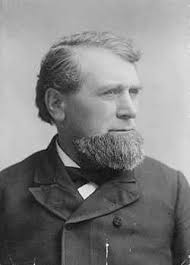
“Norwegian immigrant Knute Nelson becomes the state’s 12th governor in 1893, the first Scandinavian to hold the office. A fighter for farmers’ interests against the railroads and grain merchants, he resigned in 1895 to run successfully for the United States Senate, where he remained until 1923.” * 

Thank You for the life of Knute Nelson and his leadership in Minnesota. He became a prominent leader roughly 25 years after becoming a citizen. Negative attitudes about Scandinavians were tempered by his success.

Looking back at his career, the area of greatest contention were probably those issues concerning railroad interests. On one hand, the rails offered new markets to farmers and also supplied them with manufactured goods from the east. This relationship fueled western land development, and modernized communities along the way.

However, like all new technology, railroads were often the vehicle of economic bondage for immigrant settlers, and greedy for Native Americans’ land. Farmers became dependent on the rails to bring grain to market, but having a product with limited shelf life, were subject to the manipulations of the market and shipping costs charged by the railroad companies.

But how did the railways effect the Native Minnesotans? It is understandable that a sitting Governor wants to further the economic growth and standard of living in his state, but at what cost? These questions point to his writing of the Act cited below: 

“The Nelson Act of 1889 was a United States federal law intended to relocate all the Anishinaabe people in Minnesota to the White Earth Indian Reservation in the western part of the state, and to expropriate the vacated reservations for sale to European Americans. [1]

Approved by Congress on January 14, 1889, the Nelson Act was the equivalent for reservations in Minnesota to the Dawes Act of 1887, which had mandated allotting communal Indian lands to individual households in the Indian Territory, and selling the surplus. The goal of the Nelson Act was to consolidate Native Americans within the state of Minnesota on a western reservation, and, secondly, to encourage allotment of communal lands to individual households in order to encourage subsistence farming and assimilation. It reflected continuing tensions between whites and American Indians in the state. Especially after the Dakota Conflict of 1862, many Minnesota white residents were eager to consolidate the reservations, reduce the amount of land controlled by Indians and make the surplus available for sale and settlement by European Americans.

Minnesota congressmen Knute Nelson pushed for the allotment of Ojibway lands in Northern Minnesota and sale of “surplus” to non-Natives. He and others intended to force the Ojibway to relinquish most of their reservation lands. The intention was to relocate the peoples to the westernmost White Earth Reservation. All would receive individual allotments, with the remainder to be available for sale to European Americans. These actions were illegal and violated the treaties which the US had made with the tribes, but the government proceeded anyway. The Red Lake Band of the Ojibway were able to keep the southern portion of their Reservation.”**

Father, this story brings to mind the desire of King Ahab for his neighbor’s vineyard.

1 Kings 21:1-16

New International Version (NIV)

Naboth’s Vineyard

1 Some time later there was an incident involving a vineyard belonging to Naboth the Jezreelite. The vineyard was in Jezreel, close to the palace of Ahab king of Samaria. 2 Ahab said to Naboth, “Let me have your vineyard to use for a vegetable garden, since it is close to my palace. In exchange I will give you a better vineyard or, if you prefer, I will pay you whatever it is worth.”

3 But Naboth replied, “The Lord forbid that I should give you the inheritance of my ancestors.”

4 So Ahab went home, sullen and angry because Naboth the Jezreelite had said, “I will not give you the inheritance of my ancestors.” He lay on his bed sulking and refused to eat.

5 His wife Jezebel came in and asked him, “Why are you so sullen? Why won’t you eat?”

6 He answered her, “Because I said to Naboth the Jezreelite, ‘Sell me your vineyard; or if you prefer, I will give you another vineyard in its place.’ But he said, ‘I will not give you my vineyard.’”

7 Jezebel his wife said, “Is this how you act as king over Israel? Get up and eat! Cheer up. I’ll get you the vineyard of Naboth the Jezreelite.”

8 So she wrote letters in Ahab’s name, placed his seal on them, and sent them to the elders and nobles who lived in Naboth’s city with him. 9 In those letters she wrote:

“Proclaim a day of fasting and seat Naboth in a prominent place among the people. 10 But seat two scoundrels opposite him and have them bring charges that he has cursed both God and the king. Then take him out and stone him to death.”

11 So the elders and nobles who lived in Naboth’s city did as Jezebel directed in the letters she had written to them. 12 They proclaimed a fast and seated Naboth in a prominent place among the people. 13 Then two scoundrels came and sat opposite him and brought charges against Naboth before the people, saying, “Naboth has cursed both God and the king.” So they took him outside the city and stoned him to death. 14 Then they sent word to Jezebel: “Naboth has been stoned to death.”

15 As soon as Jezebel heard that Naboth had been stoned to death, she said to Ahab, “Get up and take possession of the vineyard of Naboth the Jezreelite that he refused to sell you. He is no longer alive, but dead.” 16 When Ahab heard that Naboth was dead, he got up and went down to take possession of Naboth’s vineyard.

These verses tell of an authority figure who is complicit in the annexation of his neighbor’s land. The part that stands out to me are the words of verse 3; “The Lord forbid that I should give you the inheritance of my ancestors.” Naboth did not want to sell away an inheritance.

Lord, there are many nuances that I do not know about this Act. I don’t know the Governor’s heart, his motivations, or the pressures on him. I simply see an action that is typically the breeding ground of bitterness and contention.

Will You forgive the injustice of this Act towards Native Minnesotans, their inheritance, property, and generations’? Will you release them from any binding counter-judgments that may hold them captive from receiving an inheritance from You? Will You reverse any curses on the lands specifically mentioned in this Act, and restore a right relationship between all Native Minnesotans and government?

Will You teach this state to have neither a tyranny of the majority or the minority? Will You enable us to neither feel the shame of asking for the help of our state, nor shame those who have graciously helped? Will You teach us about boundaries, property, lands, and inheritance?

Will You give honor to the just actions of Knute Nelson, his heritage, and generations? Will You forgive us in our judgments of the humanity and motive conflicts within our own natures’? Will You give us internal peace, contentment, and satisfaction in our hearts so we do not want another’s possession?

** http://en.wikipedia.org/wiki/Nelson_Act_of_1889

*** For more depth on Governor Knute Nelson see the “Biographical Directory of the United States Congress”. http://bioguide.congress.gov/scripts/biodisplay.pl?index=n000040

**** More on property rights of the ancient Middle East. https://tifwe.org/resource/ownership-and-property-in-the-old-testament-economy/



Standard
19th Century, Agriculture, farming, History, Indian, Intercession, Minnesota, Native Americans, omnipresent history, State Government, Treaties

The Dawes Act 1887

unknown

February 8, 1887

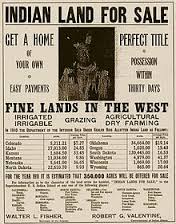
“Congress enacts legislation that allots 160-acre tracts of land to heads of households of American Indian families. The rest of the reservation land is thrown open to non-Indian  homesteaders. Eventually, Native-held lands are reduced by more than two thirds.” *

The act “was the culmination of American attempts to destroy tribes and their governments and to open Indian lands to settlement by non-Indians and to development by railroads.” Land owned by Indians decreased from 138 million acres in 1887 to 48 million acres in 1934.

Senator Henry M Teller of Colorado was one of the most outspoken opponents of allotment. In 1881, he said that allotment was a policy “to despoil the Indians of their lands and to make them vagabonds on the face of the earth.” Teller also said, “the real aim [of allotment] was “to get at the Indian lands and open them up to settlement. The provisions for the apparent benefit of the Indians are but the pretext to get at his lands and occupy them….If this were done in the name of Greed, it would be bad enough; but to do it in the name of Humanity…is infinitely worse.” **

Messiah, there is such a gap between intent and actions. One the one hand, the Dawes Act points to a desire to respect the property of Native Americans. On the other hand, it ‘gives’ them title to land if they accept the conditions. Is this freedom, or fiefdom?

First, as a human being and fellow Minnesotan, I want to acknowledge our sin of envy. We are not content with what we have. Lord forgive us the envy contained in the Dawes Act of Native lands! Will You heal the whole inheritance of envy, and heal the lands that were annexed unjustly?

Second, I want to acknowledge the mixed motives of our hearts! I acknowledge the honest desire of many at this time that Native peoples assimilate and become one people with the United States, and with Minnesota. Many were motivated by a desire to share ‘common ground’ figuratively and literally with Indians. As in “I’m a simple Norwegian farmer who is trying to start a new life in America. What does my indian neighbor have against me? I used to hunt and fish with him. I’m not a land man for the railways, or a representative of the Department of the Interior, but their actions make me the bad guy to my Indian neighbors.”

Many Natives did not want to not feel the pains of being a foreign enclave in their homelands. While they resisted many aspects of Western Culture, they also admired and even craved some of its fruits: new technologies and techniques, trade for useful products, positive interactions with new neighbors, etc. They seemed to both admire and fear the new culture in their land. Some Natives willfully accepted new ways, and others did not.

Lord, have mercy on these hearts! Some on both sides of this divide, whether Immigrant or Indian, wanted to take a chance and embrace. Some were repelled by clashing with another culture. Lord forgive how we have feared our brother’s ways, and rejected what You have to teach us through him! Lord, forgive us our hesitancy to trust! Will you restore us to chesed? ***

Next, I want to acknowledge that both cultures succumbed to the “power men” within them. There were plenty of Minnesotans willing to capitalize on the imbalance of power the Dawes Act gave them! Too many tried to moralize the outright theft of property! They claimed desires to civilize native peoples to gain public approval for their land grab. Nothing changes. they are still among us. However, I mourn before you this day, and acknowledge this offense against my Native brothers! Have mercy! Will You reverse this curse? Will You restore these injustices?

Lastly, I want to acknowledge the counter judgments that some Native peoples made in response to these ‘land grabbers’. They chose to meet offense with counter offense. It is clear to see these fruits yielding a harvest of separation even today in our state. 

Will You have mercy on our natural desires for vengeance stemming from the Dawes Act? Will you give us a new common inheritance as Minnesotans? Will you take the bitter roots from our hands so that we can receive from You? When we must disagree, will You teach us to do it with understanding and respect? Amen.

* http://www.mnhs.org/about/dipity_timeline.htm

** https://en.wikipedia.org/wiki/Dawes_Act

***  https://en.wikipedia.org/wiki/Chesed


Standard
19th Century, Agriculture, Governors, History, Industry, Intercession, law, Minnesota, omnipresent history, Politics, Republican, State Government

McGill Becomes Governor

mcgill_andrew_ryan

January 5, 1887 to January 9, 1889

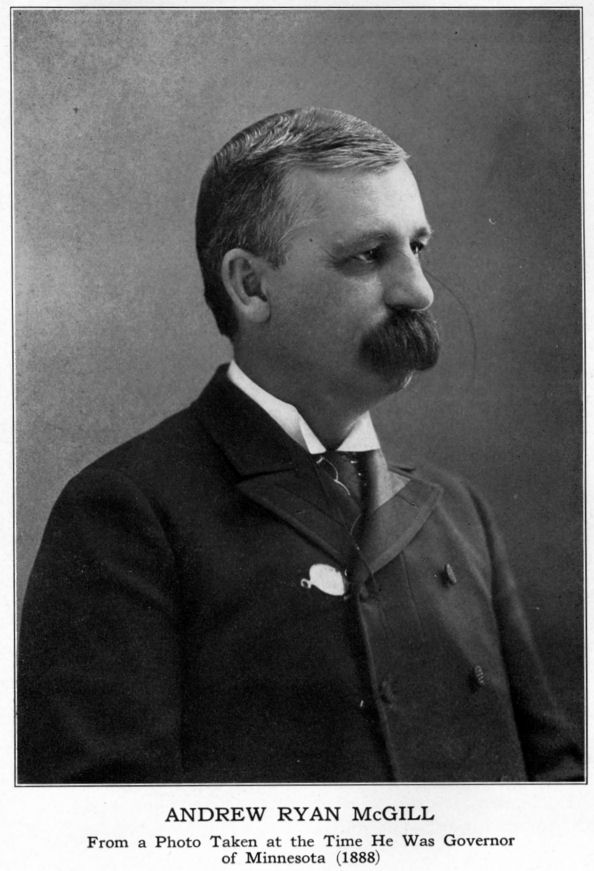
“A. R. McGill becomes the state’s 10th governor on January 5, 1887. During his term he recommends a revision of the railroad laws pertaining to transportation, storage, and grading of wheat; the watering of railroad stocks; a simplification of the tax laws; regulation of liquor; abolition of contract prison labor; establishment of a soldiers’ home; and creation of a Bureau of Labor Statistics.” *

“Transcript

Office of COUNTY AUDITOR, Marshall County Warren, Minn. March 16th 1887 Gov. A. R. McGill St. Paul, Minn. Honorable Sir: I enclose herewith Application from our County for Seed Grain, showing Number of Applicants and Amt of grain desired. We have allowed no one applicant to exceed the Maximum limit of $75.00 worth of grain, although many applied for much larger amounts. You will notice that the average am[oun]t we have allowed each applicant is only about $55.00 worth. We trust that you will allow our County a sufficient apportionment to cover the amount which we have asked for, as these applicants are certainly in needy circumstances. Trusting that our application is all correct and that there will be no delay in getting our apportionment, I am Sir Respectfully Yours, W. F. Powell Ch Bd. of Co. Commissioners Marshall County W. F. Powell. Co. Aud. 

(March. 16th 1887 Matters relating to applications for seed grain relief)” **

Lord, this doesn’t seem like a man whose governorship aroused much controversy at first glance. However, each change in law impacted a powerful coalition or group of Minnesotans. Changing law often seems to use an element of force to exert authority. But how do You view the elimination of law from an eternal perspective?

From what I gather about local perceptions of Governor McGill, he had a mixed reviews. On one hand, he had to mediate between the powerful lobby of the rails, yet gain concessions much needed by Minnesota interests’: farming, lumber, and mining. 

So what did he accomplish, and did he find a middle path?

“During his tenure, a state normal school was established in Moorhead; the improvement of state railroad laws was promoted; iron ore was discovered in the Mesabi Range; liquor regulations were supported; and a state school tax was sanctioned.” ***

Will You forgive our bitterness that comes with new laws whether local, state, or federal? Will You forgive us for the anger we have felt over the perceived loss of freedoms, liberties, and or benefits to us or our business? The state may attempt to take away rights that are not theirs, and give rights that they do not possess in the first place. 

Lord, help us find the middle ground! Will You forgive our usurpation of the other man’s inalienable rights, and teach us how to better protect them in the future? May our civic laws never surpass our privilege to love You, the Lord our G-d, our neighbor, and ourselves!

“And above all these put on love, which binds everything together in perfect harmony.” Colossians 3:14 ESV ****

* http://www.mnhs.org/about/dipity_timeline.htm

** http://reflections.mndigital.org/cdm/compoundobject/collection/mhs/id/624/rec/

*** https://www.nga.org/cms/home/governors/past-governors-bios/page_minnesota/col2-content/main-content-list/title_mcgill_andrew.default.html

****http://biblehub.com/colossians/3-14.htm


Standard
19th Century, Agriculture, Business, farming, History, Intercession, Minnesota, omnipresent history, State Government

Minnesota State Fair Finds a Home at Ramsey County Poor Farm’s Expense 1885

mn_state_fair_4

1885

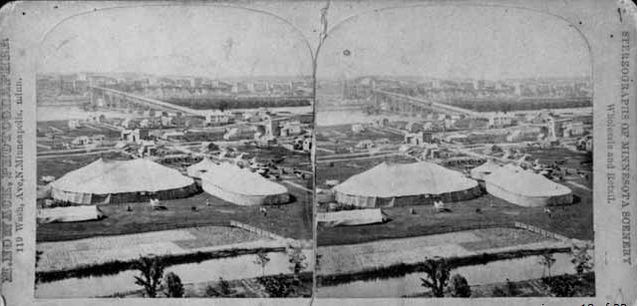
“The Minnesota State Fair finds a permanent home in the Midway area of Saint Paul. (The 1885 fair was the 27th annual state fair.)” *

Lord, it does help to have more information when interceding; and most facets of life. Even with my limited research, I see a few things: 1. Establishing Fairgrounds was a priority by the city government of St. Paul, and the state government of Minnesota. 2. the Poor Farm and it’s people were clearly displaced. 3. There was a sense of rivalry between Minneapolis and St. Paul. 4. Care for the poor from the county, to the state, and to the Federal government.

To begin, I want to announce to the land formerly known as the Ramsey County Poor Farm the jubilee and blessing of the Lord Jesus Christ! Thank You for this example of caring for the the elderly and poor! I want to bless those generations attached to the Poor Farm whether as employees or residents, and ask that any bitterness on their part be forgiven and removed. 

  Lord, will You forgive our lack of relationship with those in need? Will You heal the rift over HOW we do charity, and WHAT it looks like? Each election, we still battle over WHO gets the credit for being charitable; the State or individuals!?! May this land that is now called the State Fairgrounds be a place where we iron out these differences! May we find Your way of blessing each other; rich to poor, in any state of health!

Also, will You forgive the political and business rivalry between Minneapolis and St. Paul? Will You set us free from the emotions of Alden Blethen? Jesus, will You make these “Twin Cities” live at peace with each other? Holy Spirit, will You inhabit this property now known as the State Fair and bring your life there? Will You dignify the poor and show them their potential to contribute for their loved ones and society, and most importantly, their eternal value to You?

More on how the poorhouse was transformed into the Minnesota State Fair:

**http://www.postcardy.com/msf.html

***http://www.mnopedia.org/structure/industrial-exposition-building-minneapolis

****https://en.wikipedia.org/wiki/Poorhouse


Standard
19th Century, Agriculture, farming, Food, Health, History, Intercession, Minnesota

Butter and Cheese Organizes 1882

s-l225

March 17, 1882

“The Minnesota State Butter and Cheese Association organizes to promote dairy farming in the state.” *

Lord, thanks for blessing the dairy business in this state and throughout the midwest! To a present-day native Minnesotan, it is strange to think that diary farming would need promotion. Lord, will you do your best for this essential business? Will You bless the farms, farmers, their animals, and generations in the name of Jesus?

*P.T.H. cites timeline formerly at this URL: mnhs.org/about/dipity_timeline.htm
The Minnesota Historical Society Web site, http://www.mnhs.org , is fantastic! Check it out! Images are from https://images.google.com/?gws_rd=ssl; again, an amazing resource!

Learn more about the dairy industry? http://www.umdia.org/about.html


Standard
19th Century, Agriculture, Business, farming, Food, History, Industry, Intercession, Minnesota, Mississippi River, omnipresent history

Minneapolis Nation’s Flour Milling Capital 1880

300px-west_side_milling_district-minneapolis-c1905

1880

“Minnesota wheat and the power of St. Anthony Falls make Minneapolis the nation’s capital of flour milling. A year later, Pillsbury’s new A Mill is the largest flour mill in the world.” * 

My first thought is, ”How do I pray for a flour mill, and why is it important?” Show me why Lord. Possible reasons:

1. The Washburn mill exploded, which was the biggest in the world, allowing Pillsbury a chance to take the lead. So, do I pray about the effects of professional pride and jealousy?

2. It could be a simple acknowledgement of a real accomplishment; an amazingly quick rebuild! Simply viewing it as a story of hope.

3. What did the flour industry do for the city of Minneapolis and the State?

Jesus, You know our inmost thoughts, and yet you love us. Lord, Washburn and Pillsbury were competitors in the milling business. There’s nothing wrong with competition between these companies, or any other for that matter. However, if there were underhanded or bitter motives between them, will You release us from  the burden of their jealousy, and or pride? Will You cleanse St. Anthony Falls from any guilt brought on by any unethical competition?  

If everything was on the up and up, and the Washburn mills explosion was purely accidental, will You also cleanse us from the bitterness and sense of loss of that incident? Will You cleanse us of the spirit of blame? Will You heal this rift between  companies then, and show our present-day business culture how to compete without hating their rivals? I thank you today for blessings of outstanding Minnesota companies in the grain and milling business: General Mills and Cargill to name a few! 

Thank you for leaders who face major setbacks, and rebuild something amazing; brick by brick. Will You forgive our judgments of business leaders in milling, as well as their peers in all major industries here? The average person knows nothing of the intensity, risk, and sheer loneliness of being on top. Will You inform our hearts’, minds’, and creativity in the context of leadership?

Will You show us new ways of doing business in Minnesota that honor You and the creation we are stewards of, and help us redeem the business culture of the world? May our progeny say with Isaiah,

“Because the Sovereign LORD helps me, I will not be disgraced. Therefore have I set my face like flint, and I know I will not be put to shame.” Isaiah 50:7 **

*P.T.H. cites timeline formerly at this URL: mnhs.org/about/dipity_timeline.htm 

The Minnesota Historical Society Web site, http://www.mnhs.org , is fantastic! Check it out! Images are from https://images.google.com/?gws_rd=ssl; again, an amazing resource!

** http://biblehub.com/isaiah/50-7.htm

*** A wonderful synopsis of the explosion of Washburn A Mill. https://www.mnopedia.org/event/washburn-mill-explosion-1878


Standard
19th Century, Agriculture, Business, History, Intercession, Minnesota, Mississippi River

Washburn ‘A’ Mill Explodes

mh5-9-mp3-1w-r58

May 2, 1878

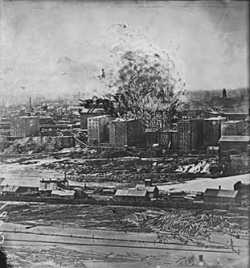
“The mill explodes when flour dust in the air inside it ignites. The explosion kills 18 workers, destroys five other mills, and decimates the surrounding area. Debris lands in Saint Paul, and the shock is felt in Stillwater. The event brings instant notoriety to Minneapolis.

The tragic explosion leads to reforms in the milling industry. Ventilation systems and other precautionary devices will be devised in order to prevent further tragedy.” *

Lord, this explosion truly impacted our state and city for decades. Will You forgive us our bitter root judgements of this event? Will You forgive any rash words and thoughts spoken by the rivals of the houses of Pillsbury and Washburn that may still be with us today? Will You cleanse the land, and the river from the bifurcations of this blast?

If the root sin of pride is an issue, (because of its largesse), will You forgive and release all the inheritors of this separation? We need You to provide our food! We welcome You to Minnesota, to the Falls of St. Anthony! Come and ‘be present at our table Lord!’

*P.T.H. cites timeline formerly at this URL: mnhs.org/about/dipity_timeline.htm
The Minnesota Historical Society Web site, http://www.mnhs.org , is fantastic! Check it out! Images are from https://images.google.com/?gws_rd=ssl; again, an amazing resource!

Standard
19th Century, Agriculture, farming, Food, History, Intercession, Minnesota, Natural Disaster, omnipresent history, Science

Rust Plagues Crops 1878

unknown

1878

“Rust, a parasite growing on barberry bushes brought west by settlers, severely damages wheat crops. Later epidemics of wheat rust lead to the outlawing of barberry bushes in 1918.

Epidemics occur again in 1904 and 1916 before the state outlaws the culprit carriers. The problem is eradicated over the next decades through the efforts of “Barberry Bees,” organized to dig up bushes, “Rust Busters Clubs” in schools, and bounties paid for reporting barberry in the 1940s.” *

Some days it is burdensome to read chapters of history like the Rust Plague. It feels like human perception of reality, myself included of course, is a one-trick pony. We fail over and over to see cause and effect relationships though surrounded with personal and practical examples.
When confronted with the tragic, we react with externalizing our pain. “It must be someone else’s fault that I have this problem”, we say to ourselves. Moreover, You are a convenient target for our misuse or overuse of natural resources.
Creator of All Nature, this is the ray of light I see in this Rust Plague; eventually the curious among us found a relationship. We found that transporting plants, namely berberis vulgaris, from their origins resulted in creating an undesired effect when they reached our desired destinations.** We loved progress, but lacked the knowledge and wisdom to enact it in this case.

Lord, was there something to this parasite outbreak other than nature? I believe that You are far more merciful to us than our sins deserve, but simultaneously maintain justice and enact wise judgments. You remain in perfect balance; neither favoring grace or truth. Our separation from You and our fellow man has its consequences. I can think of several events that happened in this time frame that caused massive unrest:
the creation of the Federal Reserve -1913
the negation of the Nicaragua Canal
the first foray into US nation-building that created the nation of Panama
the opening of the Panama Canal – 1914
sinking of the Lusitania – May 7, 1915
Poncho Villa raids US – 1916
President Wilson commits our troops to WWI, in spite of his campaign promise; “He kept us out of the war.” – 1917
Wilson “14 Point of Peace” – 1918
and extensive upheavals between labor and the industrialists.
Lord Jesus, will You enter into this chapter of our history again? Will You, by Your kind Holy Spirit, point out offenses that we may have made towards You? Did we curse the ground, or more specifically the wheat crops of Minnesota? Were You just maturing us to trust You in difficult times? Was a disease necessary to place nature in proper balance?

Jesus, please forgive us any root judgments that contributed to the rust epidemic. Will You heal our land and our hearts, to receive You where our ancestors may have missed You? Will You make us capable of self-examination, observant of our surroundings, and shield us from the temptation to only look for external targets of our wrath and blame rather than responsibility, reason, and relationship?

*P.T.H. cites timeline formerly at this URL: mnhs.org/about/dipity_timeline.htm
The Minnesota Historical Society Web site, http://www.mnhs.org , is fantastic! Check it out! Images are from https://images.google.com/?gws_rd=ssl; again, an amazing resource!

**https://www.ars.usda.gov/midwest-area/st-paul-mn/cereal-disease-lab/docs/barberry/barberry-situation-past-present-future/


Standard
19th Century, Agriculture, Business, farming, Food, History, Intercession, Minnesota, State Government

Bonanza Farms 1875

423478855

1875
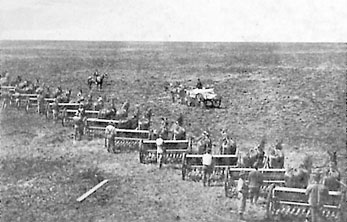
“Investors grow wheat on a grand scale in the Red River Valley. Their “bonanza farms” cover thousands of acres and are harvested by huge crews and the latest machinery.
A financial panic in 1873 stopped the construction of the Northern Pacific Railroad to the Red River Valley. In order to pay back its Eastern investors, the bankrupt company allowed its investors to exchange their bonds for land. As a result, large urban investors immediately became owners of thousands of acres of land (unlike homesteaders who had to live on the land for five years to get 160 acres). The new owners turn the land into large-scale commercial farms run by hired managers with cheap labor and expensive machinery.” *

Lord, You hate corruption of any sort in any relationship. “The LORD detests dishonest scales, but accurate weights find favor with him.” Proverbs 11:1** This Panic of 1873, again at the hands of the railroads under federal authority, really stole land from the homesteaders. (The principle of sowing and reaping? The homesteaders just years before may have been party to land being swindled from the Dakota.) Anyway, we are people capable of both sharing and defrauding land from our neighbors.

Will You forgive us this debt? Will You cause restoration and repentance to grow in the heart of this State and Nation? Will You forgive Minnesotans’ resentments against the Federal Government? Will You forgive the Railroads for manipulating the Panic of 1873 to their benefit? Will You remove this curse from our land, skies, waters, and hearts? Thank you that You deal with us in such a generous manner!

http://www.mnhs.org/about/dipity_timeline.htm
**http://biblehub.com/proverbs/11-1.htm


Standard