19th Century, Agriculture, farming, Governors, History, Intercession, Jesus, Leadership, Minnesota, Natural Disaster, Politics, State Government

Cushman Becomes Governor

unknown

January 7, 1874 to January 7, 1876

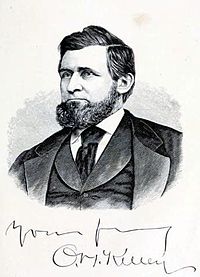
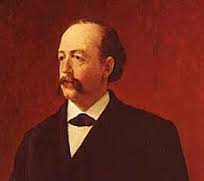
“Cushman K. Davis takes office as the state’s seventh governor. During his single term as Minnesota’s seventh governor, Cushman K. Davis confronted a menace that threatened to ruin the state’s farm economy. A five-year-long grasshopper plague began in 1873, and Davis’s offer of aid to farmers whose crops had been devoured by invading locusts represented an early form of state-sponsored disaster relief.” * 

“The state, governed by three different men during the grasshopper plague years, also failed to provide adequate relief to affected farmers. Under governors Horace Austin and Cushman K. Davis, the state provided small sums of direct, state-funded relief, but the governors focused their efforts on encouraging charitable giving to the cause. Unlike his predecessors, Governor John S. Pillsbury did not call for any direct, state-funded relief for farmers. Elected in 1876, Pillsbury believed that poverty was a fact of life on the frontier and that providing relief would make farmers dependent on the state. Instead, Pillsbury focused on efforts to eradicate the grasshoppers. This included a controversial bounty measure that required every able-bodied man in affected counties to destroy grasshopper eggs for one day a week, for five straight weeks.

In the summer of 1877, the grasshoppers left just as quickly as they had arrived. An April snowstorm damaged many of their eggs, which encouraged farmers to redouble their efforts to destroy the grasshoppers. The surviving grasshopper eggs hatched, but by August, the grasshoppers had flown away. Many attributed the end of the grasshopper plague to divine intervention, since Governor Pillsbury had proclaimed April 26 a day of prayer, after receiving many requests to do so.” **

I’m first thunderstruck by two facts jumping off the page at me: that Cushman spearheaded state charity, and that a day of prayer is recorded as an action point. Will You guide me to ponder these notions? Will You give some insights as to how to intercede?

To the first point, it seems quite unusual for a Republican of this era to use state-funded relief. Cushman appears to be a man of principals, but not so rigid that he fails his constituents during such dire times of need. Will You bless him, and his commitment to the survival of his fellow man? Will You keep balance in this constant teeter-totter of public versus private charity within the souls of our leaders? If taxes were gifts, we would give them for Christmas. If charity is coerced, the heart disengages, and it no longer is charity but, perhaps, extortion. Have mercy on our “mercy”! 

It’s curious to me that politicians sometimes endorse prayer as an action point. Many leaders currently would see the endorsement of prayer as a failure to adequately separate “Church and State”. (Help me probe this a little longer!) Yet we condition our minds and spirits through repetitive thoughts daily; we listen to songs over and over, view movies again and again, and repeat instructions internally to project us past sales objections. (I know these are quite random, but perhaps they are also a form of prayer?)

I’m grateful to You, the masterful inventor of every grasshopper, for Your beautiful destruction of our security. Will You forgive our barriers to seeing the heart and mind conditioning, (aka “prayer”), as a legitimate response to the plagues of our lives? Will You make us flexibly rigid in our principals enough to love our neighbor as they experience heartache and misfortune?

** https://www.minnpost.com/mnopedia/2013/06/winged-menace-minnesota-grasshopper-plagues-1873-1877


Standard
19th Century, Agriculture, Current Events, farming, History, Intercession, Minnesota, Natural Disaster, Suffering

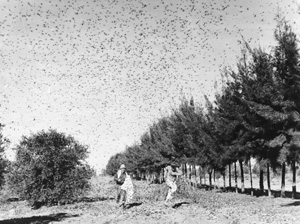
Grasshopper Plague 1873

grasshoppers1939

June 12, 1873

“Grasshoppers darken the skies of southwestern Minnesota. For the next five summers they strip the land bare. Charities and the state provide some relief, but many farmers lose everything.” * 

“’The wheat!’ Pa shouted. He dashed out the back door and ran toward the wheat-field. 

The grasshoppers were eating. You could not hear one grasshopper eat, unless you listened very carefully while you held him and fed him grass. Millions and millions of grasshoppers were eating now. You could hear the millions of jaws biting and chewing. 

Pa came running back to the stable. Through the window Laura saw him hitching Sam and David to the wagon. He began pitching old dirty hay from the manure-pile into the wagon, as fast as he could. Ma ran out, took the other pitchfork and helped him. Then he drove away to the wheat-field and Ma followed the wagon. 

Pa drove around the field, throwing out little piles of stuff as he went. Ma stooped over one, then a thread of smoke rose from it and spread. Ma lighted pile after pile. Laura watched till a smudge of smoke hid the field and Ma and Pa and the wagon. 

Grasshoppers were still falling from the sky. The light was still dim because grasshoppers covered the sun.” Excerpt from “On the Banks of Plum Creek” by Laura Ingalls Wilder **

Holy Spirit, we don’t know why You allow tragedy, but we thank You that You somehow reverse every curse! 

“And we know that all things work together for good to them that love God, to them who are the called according to his purpose.”  Romans 8:28 King James Version ** In recent memory, You’ve allowed Japan to be struck a fantastic blow: an earthquake, tsunami, and nuclear reactor instability. ***  

Many would find this a ‘proof’ that You are not God. They fail to see beyond the immediate to the fact that You’ve given us a will to choose You, or our own way. As a fallible human being, I may fail to see that in the depths of pain the potential for greatness of character arises. Nearly every Bible story contains a main character who suffers unjustly. 

Lord, I do not want to judge my state in their response to this plague. I do want to ask forgiveness for responses of anger or bitterness and unforgiveness towards You. Whether You allowed us to be tested, or whether the grasshoppers came because of curses on the land; You are righteous in Your judgments. Lord, forgive us our lack of trust that You bring life to the land. You truly are King of the Universe! May we bless You and not forget the days of life and health You also have given. 

We are fickle. We think You serve us instead of the truth that we are Your people the sheep of Your pasture. Father help Your Church to not cower in fear in the face of this accusation of the enemy, but answer with confidence in Your love. May we believe as David, “Though He slay me, yet will I trust him.” 

*http://www.mnhs.org/about/dipity_timeline.htm

** “On the Banks of Plum Creek”; Newly illustrated, uniform ed. LC Online Catalog. Retrieved 2015-09-18.

*** https://biblehub.com/romans/8-28.htm

**** Fukushima Daiichi Accident, March 11, 2011. Internet. https://world-nuclear.org/information-library/safety-and-security/safety-of-plants/fukushima-daiichi-accident.aspx

Standard
19th Century, Agriculture, Architecture, Business, Civics, Energy, History, Industry, Intercession, Labor, Minnesota, Mississippi River

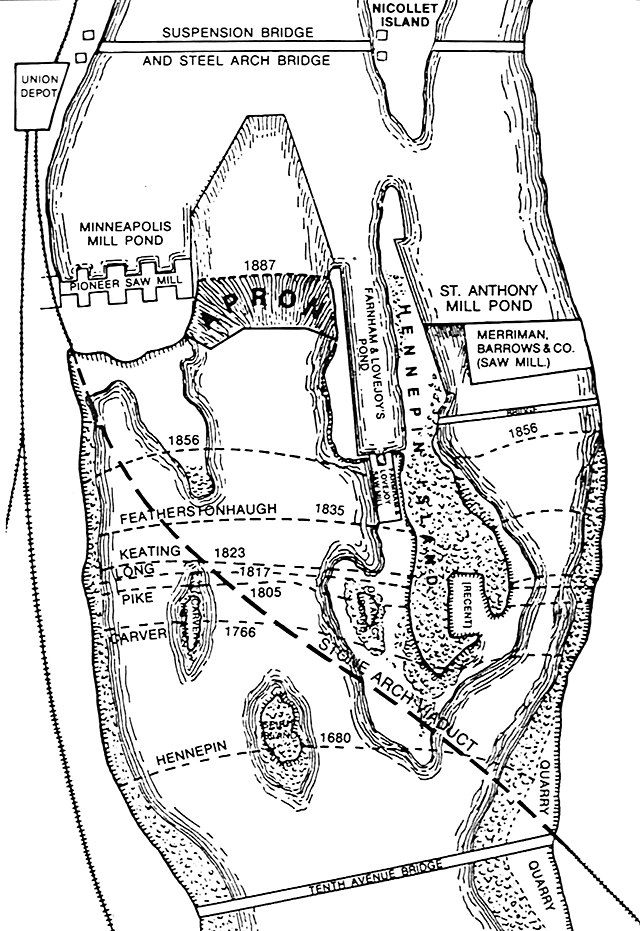
Industry at St. Anthony Falls 1872

640px-Stanthonyrecession.jpg

1872

Minneapolis industries cluster around the power of St. Anthony Falls. The Minneapolis Board of Trade estimates that the 95 waterwheels at the falls produce 6,000 horsepower.*

Lord, thank You for the gift of the Mississippi and those who harnessed its power. Thank You for the individuals and groups that contributed to its’ planning and investment? You work through those who skillfully manage money! Will You bless the entrepreneur? You work through those who take major risks to create business?

Too often we are guilty of failing to properly acknowledge the reflection of Your glory through the wonderful skills of tradesmen and women! Do You enjoy watching your people build? Will You bless these and their generations’: the cement worker, the engineer, the steel worker, the electrician, the riggers, the teamsters, and any other who labored on these projects?

Lord forgive us the sin of loving ‘science’ while simultaneously negating your creation. You had a plan for this city far before we began to envision what was possible. You created many electrical systems as well as the principals of hydraulics and physics in nature long before we were alerted to their existence.

How many more mysteries do You have to reveal to us? Forgive this root of ‘scientific pride’ in Minnesota. Will You replace it with humility and eternal curiosity that makes us better stewards of Your creation, technological advancement, and more receptivity to Your ideas?

*P.T.H. cites timeline formerly at this URL: mnhs.org/about/dipity_timeline.htm
The Minnesota Historical Society Web site, http://www.mnhs.org , is fantastic! Check it out! Images are from https://images.google.com/?gws_rd=ssl; again, an amazing resource!

Standard
19th Century, Agriculture, Business, Current Events, Energy, farming, Food, History, horses, Intercession, Medicine, Minnesota, Natural Disaster, Transportation

Energy Crisis 1872

unknown

1872

“Epizootic fever strikes horses throughout the Midwest. The three-month sickness plunges horse-powered Minnesota into its first energy crisis.” *

I need to let this one simmer for a bit; “the three-month sickness plunges horse-powered Minnesota into its first energy crisis.” It’s hard to relate to this not-so-distant past when “horse-power” really meant the labor of a workhorse. I believe it was as late as W. W. II  when the majority of Minnesotans still lived on farms, and felt this connection to living “horse-power. (I still need to let this steep.)

There’s something good about the connection between human and horse. Your draft animal as a precious commodity, means of production, and even friend?! A car with a face? A tractor with a face? A companion who saw the same sights, and explored the same paths as its master?

Below is some documentation of the breadth and width of this epizootic fever.

“Beginning in Toronto, Canada, in the late summer of 1872, in only three days the disease hit nearly all the livery stables and the horses used to pull streetcars in that city. By mid-October, horses in all of Canada, Michigan and the New England states were infected. By the beginning of November the disease had spread to Illinois, Ohio and South Carolina. By the end of the month, Florida and Louisiana reported cases.” **

Holy Spirit, today I remember the I remember this equine flu epidemic of 1872. I accede to You in the relationship between the suffering of animals and the people of this state. I acknowledge the contribution of veterinarians to the well-being of these individual animals, and indirectly to our state.  

Will You forgive us any judgments made against Your goodness or holiness because of this chapter of epizootic fever?  You care about each detail of our lives, and of each creature in Your world. We give You thanks for these horses past, and sincerely thank You for Minnesota’s present stock. We ask Your blessings on each colt, filly, mare, stallion, bronco, foal, and gelding that will walk the North Star state in perpetuity!

** http://www.heritagebarns.com/the-great-epizootic-of-1872/#.V9s-fmPSfVo


Standard
19th Century, Agriculture, Business, education, farming, Food, History, horses, Intercession, Minnesota, omnipresent history, Science, trade

Kelley on the Grange

Unknown-1


1867
“Elk River homesteader Oliver H. Kelley, claiming to be “as full of public spirit as a dog is full of fleas,” leads the founding of the Patrons of Husbandry, or Grange.
The organization, which includes women as equal members, sweeps across rural America, promoting scientific agriculture and enriching the social and cultural life of farm families.” *

What was Mr. Kelley like as a human, Jesus? What desires did You put into his nature for his fellow farmers?
“Encourage them to read and think; to plant fruits and flowers,—beautify their homes; elevate them; make them progressive,” he wrote in a letter to a friend. “I long to see the great army of producers in our country, turn their eyes up from their work; stir up those brains, now mere machines … set them to think,—let them feel that they are human beings, the strength of the nation, their labor honorable, and farming the highest calling on earth.” **

His zeal reminds me of the heart of the Benedictines, whom are renowned for “ora et labora”; prayer and work. Dear Father, how we need that balance between heart and head! Kelley, sort of, reminds me of those with a prophetic calling who operate in the spirit of encouragement. ***

Lord, make more like Kelley, who want to lift up humanity! Lord, may those of us who have this call remain humble, and not cross over in judgment of our neighbor! Will You grow the Grange, and dignify our labor today?
http://www.mnhs.org/about/dipity_timeline.htm
** http://www.mnopedia.org/person/kelley-oliver-hudson-1826-1913
*** http://www.religious-vocation.com/differences_religious_orders.html
**** Images are from https://images.google.com/?gws_rd=ssl; again, an amazing resource!


Standard
19th Century, Agriculture, farming, History, Indian, Intercession, Minnesota, Native Americans

Homestead Act 1862

9-2

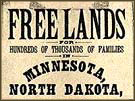
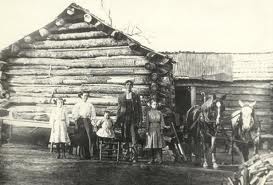
“Congress passes the Homestead Act, offering millions of acres of free land to settlers who stay on the land for five years. Lumber companies acquire valuable timber lands through fraudulent claims.

“A Homestead Bill Passed. Minnesota will derive great benefit from the passage of this act. Not only will it afford relief to thousands of settlers at present upon our public domain, but offer additional inducements for emigrants from the east and the old country to settle among us.” -Mankato Record, June 26, 1862

The act brings 75,000 people to Minnesota over 3 years. To qualify for 160 free acres, settlers have to live on it for five years, farm, and build a permanent dwelling. Those able to spend the money can buy the 160 acres at $1.25 an acre after living on it for six months.” *

I am a witness to this truth this morning: Minnesota is the property of the Lord Jesus Christ. Thank you for the heart of the Homestead Act to offer a place for the emigrant: “exile, expatriate, emigre, colonist, migrant, displaced person, D.P., traveler, foreigner, pilgrim, refugee, fugitive, wayfarer, wanderer, immigrant, alien, outcast, man without a country.” (p.136, “Webster’s New World Thesaurus” by Charlton Laird) This is an honorable motive, to be a place of refuge, consistent through Minnesota’s history.

However, there is a heritage of mixed fruit. Some land given away by the state was “acquired” or unjustly taken from Native Americans. We see the continuation of the root sins of greed for land by the fraudulent claims of special interests: lumber companies, railroads, land speculators, and corrupted government agencies. Lord will You be the arbiter of justice over these parties to mass theft, deception, or at least self-interest? Will You specifically restore the Native American to his land(s), or find a path to reasonable compensation? Will You meet this bitter root of land greed today?

Under the the authority of the Lord Jesus Christ, I announce to the spirit and attitude of land greed that your reign in Minnesota from the Homestead Act of 1862 through the present and into the eternal future is broken. Land and property, be reassigned according to the will of the Lord, to the stewards whom He may choose. O land of Minnesota, all below, and sky above, I declare a “Year of Jubilee”: a year of returning and rest, a year of the favor of the Lord!

*P.T.H. cites timeline formerly at this URL: mnhs.org/about/dipity_timeline.htm
The Minnesota Historical Society Web site, http://www.mnhs.org , is fantastic! Check it out!

Standard
19th Century, Agriculture, farming, Food, History, Intercession, Minnesota

King Wheat  

images-12

1859

“Minnesota’s first shipment of spring wheat is warmly received in Chicago–marking the start of an agricultural export that will become King in coming years. Production grows wildly as railroads connect farms to inland markets.” *

“Minnesota or that part of it known as Cottage Grove has gone to wheat. Men work in wheat all day when it does not rain, lounge round talking about wheat when it is wet, dream about wheat at night, and I fear go to meeting Sabbath Day to think about wheat.”
-Rev. George Biscoe, in a letter to his sister, August 21, 1862.*

Jesus, thank you for the blessing spring wheat has been to our state! Imagine how miraculous it felt to find a strain of grain that liked northern climes and short summers? Thank You for their generous yields, and the kind and rich soil that produced them! Thank you for ability of farmers, past and present, to focus on the work You have given them. Will You continue to bless the farmer of Minnesota, and everyone who works to bring our food to market?

Will You forgive the judgments the farmers of MInnesota have made against You? Will You forgive our grumblings about the weather, the length of the seasons, and any other rash words we have spoken against You? Will You forgive the judgments made between farmer and city-folk? Will You forgive us when we allow our passions to overtake us; even something as innocent as a desire for better grain?

*P.T.H. cites timeline formerly at this URL: mnhs.org/about/dipity_timeline.htm
The Minnesota Historical Society Web site, http://www.mnhs.org , is fantastic! Check it out!


Standard
19th Century, Agriculture, education, farming, Food, History, Minnesota

First Minnesota County Agricultural Society 

200px-Kelley_Oliver_Hudson_pic_sig-1

March 5, 1852
“Farmers in Benton County form the state’s first county agricultural society. Oliver H. Kelley, who would later found the National Grange, is one of ten charter members. County agricultural society members share information about stock, seeds, fruit, and farming practices.” *

Lord, thanks that You created the abundance of food in Minnesota! Thank You for the formation of this Society to better understand all things that grow. Will You bless the Kelley family and all who share his vision as expressed through the Grange? Will You bless Benton County, and cause those who live there to remember this important contribution to our state, and those far beyond Minnesota? Will You continually raise leaders in all aspects of farming from our ranks?
May You preserve healthy food, crops, and livestock for the people of Minnesota in perpetuity! May we receive Your blessings of our weather and environment through these and any other means: moderation of man-made pollutants or hyper-nutrients, sun cycles, lunar cycles, ultra low frequencies, and any other form of energy or wavelength! Truly You are the light! Truly in You we live, move, and have our being!

* http://www.mnhs.org/about/dipity_timeline.htm


Standard
19th Century, Agriculture, Emigration, Exploration, farming, Food, History, Immigration, Minnesota, Native Americans, State Government, trade, Treaties

Settlement in Minnesota 1849 to 1860

images-8

“The number of non-Indian people in Minnesota jumps from 3,814 in 1849 to 172,072 in 1860, a 4,500 percent increase! The newcomers break sod, start businesses, plot towns, look for jobs, and dream of getting rich.

Pent-up demand for good agricultural land is the primary reason. Iowa and Wisconsin had been heavily settled and had both passed from territorial to statehood status by 1848. It had been dangerous and illegal to settle on land in most of Minnesota before treaties with the Dakota and the Ojibwe were signed. But after several treaties were ratified in the 1850s, the floodgates of migration burst open.” *

When we move, we make assessments of our new neighbors and neighborhood. They, in return, watch us move into their neighborhood, and may ‘size us up’ by our friendliness, possessions, (or lack of possessions), our physical appearance, etc. These assessments, I believe, are instincts designed for our survival, but must be tempered or they can morph into prejudice.

Lord, what were the judgments of these ‘new neighbors’ in Minnesota? Will You forgive us the inheritance of those who knowingly moved into the state illegally? Will You forgive the betrayals committed between settler and tribe, and their counter-betrayals? Will You break the power of the derogatory words and names given among these groups? Will You break the vows made in anger, envy, revenge, arrogance, unforgiveness, fear, and unbelief of each group towards its real or supposed nemesis?

Thinking about the impact of these past separations on the present, will You forgive the heart behind the relocation of Native Americans? Will you free us from the bondages and entanglements within poorly made treaties? Will You bring Your heart of restoration to Minnesota? Will You bring to light a new kind of history in Minnesota? Will You write a history that remembers the good, the pleasing, the fair, the gracious, the restored relationship on our hearts? Will you give us Your eyes to see our neighbors’ inherent value?

*mnhs.org/about/dipity_timeline.htm

Standard
19th Century, Agriculture, Christian, education, farming, Fundamentalist, History, Minnesota, Native Americans, Technology

Missionaries at Lac qui Parle 1835

hane-and-herman-bigger

Presbyterian ministers Thomas Williamson and Jedediah Stevens establish a mission at Lac Qui Parle to the west. They bring a farmer along to teach the Dakota how to raise crops in the European manner.*

Lord, thanks for the benefits of European farming, and Native farming. Thank you for the benefits of this heritage: seldom have we lacked food as a state, often we have contributed food to others! Will You continue to bless the productivity  of all Minnesota farmland? Will You enhance the nutrition of our soil and food? Amen.

*Note – PrayThroughHistory uses the timeline located for several years at the Minnesota Historical Society Web site, at this URL: mnhs.org/about/dipity_timeline.htm .

Standard