19th Century, Agriculture, Business, education, farming, Food, History, horses, Intercession, Minnesota, omnipresent history, Science, trade

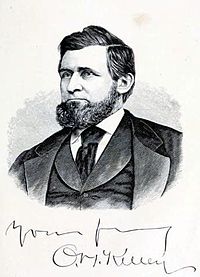
Kelley on the Grange

Unknown-1


1867
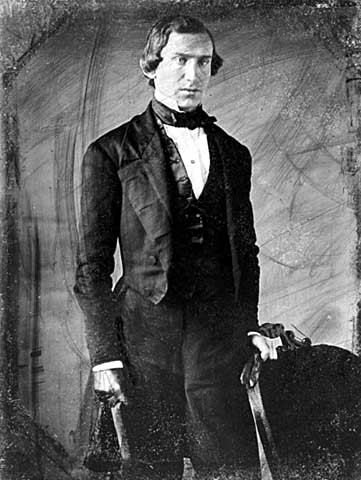
“Elk River homesteader Oliver H. Kelley, claiming to be “as full of public spirit as a dog is full of fleas,” leads the founding of the Patrons of Husbandry, or Grange.
The organization, which includes women as equal members, sweeps across rural America, promoting scientific agriculture and enriching the social and cultural life of farm families.” *

What was Mr. Kelley like as a human, Jesus? What desires did You put into his nature for his fellow farmers?
“Encourage them to read and think; to plant fruits and flowers,—beautify their homes; elevate them; make them progressive,” he wrote in a letter to a friend. “I long to see the great army of producers in our country, turn their eyes up from their work; stir up those brains, now mere machines … set them to think,—let them feel that they are human beings, the strength of the nation, their labor honorable, and farming the highest calling on earth.” **

His zeal reminds me of the heart of the Benedictines, whom are renowned for “ora et labora”; prayer and work. Dear Father, how we need that balance between heart and head! Kelley, sort of, reminds me of those with a prophetic calling who operate in the spirit of encouragement. ***

Lord, make more like Kelley, who want to lift up humanity! Lord, may those of us who have this call remain humble, and not cross over in judgment of our neighbor! Will You grow the Grange, and dignify our labor today?
http://www.mnhs.org/about/dipity_timeline.htm
** http://www.mnopedia.org/person/kelley-oliver-hudson-1826-1913
*** http://www.religious-vocation.com/differences_religious_orders.html
**** Images are from https://images.google.com/?gws_rd=ssl; again, an amazing resource!


Standard
19th Century, education, History, Intercession, justice, Minnesota, omnipresent history, State Government

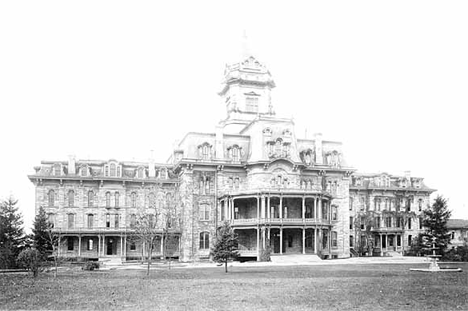
Deaf School 1863

Fariba13

1863
“A state-supported school for the deaf opens in Faribault. Instruction for blind students begins the next year. Classes are aimed at making students productive members of society: boys learn trades such as printing and girls learn homemaking.” *
“Bear in Mind!”
“I. This is not an asylum, but an Educational Institution, and is specially designed to give every deaf and dumb, and every blind child in the State a free education and a knowledge of a useful trade.”

“II. The Common Schools and the University are not looked upon as a public charity, neither should this Institution be so regarded. And education is even more important for these children than for those who can see, hear and speak. Without it they are doomed to a life of ignorance and dependence, but with it they may become intelligent, useful and independent citizens…”
-From Application, 1884. Minnesota School for the Deaf.
Minnesota State Archives Collection, 117.J.9.2

G-d, I’m proud of this moment in my state, and its choice to act in accordance with Your profound interest in every detail of every life! I relish that both our government and individuals saw the hope and promise in these sons and daughters! How good it is when we see through the eyes of our hearts, and commit to the work necessary to fulfill those visions!

Will You bless the city of Faribault for their faithfulness in donating the land for this school? Will You bless its time of waiting, five years, during the Civil War? Will You remember the individuals like Rodney A. Mott and Roswell H. Kinney who had both the vision and persistence required to actuate this delayed dream? **
Lord, we are Your creatures! We are Your people! We have sometimes assumed that because someone does not have a gift that we hold dear that they are limited and defective. Help our unbeliefs and misbeliefs! In You, truly, we are all perfected within our imperfections! Help us to view each other as fully worthy of love and respect!

Further, sweet Ruah Ha-Qodesh, because we are in covenant, I ask this day of that You bring glory to Yourself in bringing mass healings of deafness and blindness in Minnesota. Will You open the people of our state for mass healings or restorations of any kind whether: mental loss of hearing, emotional astigmatism, spiritual tinnitus, or historical cataracts? Will You forgive our shortsighted hearts? Will You forgive our deafness of soul to Your kind voice? Will You bring revelation to Minnesota in a way that only You can get the honor?

*http://www.mnhs.org/about/dipity_timeline.htm
** http://www.msad.state.mn.us/About/history/thebeginning.asp

Standard
19th Century, authors, Books, Culture, education, Environment, History, Intercession, Minnesota, omnipresent history

Thoreau Visits 1861  

images-14

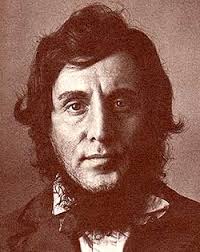
Henry David Thoreau

1861

“Hoping western air will cure his consumption, Henry David Thoreau makes a trip to Minnesota. But the author of Walden is so sick that he returns to Massachusetts far earlier than planned.”*

Thank You for Thoreau and his desire to learn what living means. His book touched so many lives with the idea of being content and living simply. Sometimes, learning what we don’t need is the best gift we receive.

Jesus, will You remember him in this sickness? Jesus, will You dissolve any bitter root thoughts that may have formed from the disappointment of this visit and leave a blessing for Thoreau’s lineage and philosophical heritage? G-d, it’s a hard lesson when one goes from self-help to becoming dependent. Will You teach us to help dependents in our lives, and remember what its like to be humbled like Henry today?

*P.T.H. cites timeline formerly at this URL: mnhs.org/about/dipity_timeline.htm
The Minnesota Historical Society Web site, http://www.mnhs.org , is fantastic! Check it out!


Standard
19th Century, abolition, African American, Black History, education, Governors, History, Indian, Intercession, Minnesota, Native Americans, omnipresent history, State Government

Ramsey Becomes Governor

Unknown-12

January 2, 1860 to Juyl 10, 1863
Alexander Ramsey takes office as the state’s second governor. He was the only man to be both appointed as governor of the territory and then elected as governor of the state.

Ramsey was re-elected in 1861. In January 1863 he was elected by the state legislature to the U.S. Senate. He resigned the governorship at the end of June 1863, after the legislative session was over.

His administration was marked by sound economic management-particularly of the state’s school lands-and by two crises: the Civil War and the Dakota Uprising. Ramsey was in Washington, D.C., in 1861 at the time the Civil War began, and as governor offered the first volunteer regiment for the Union Army.

Jesus thank you for Alexander Ramsey. Thank you for the leadership through two of the most trying events our state has faced; The Dakota Uprising, and the Civil War. Holy Spirit, I invite You to move and direct my thoughts and prayers. That said, today I feel You are taking me on a tangent.
“There is neither Jew nor Greek, slave nor free, male nor female, for you are all one in Christ Jesus.” Galatians 3:28

Master, What can one add that hasn’t been said about the Dakota Uprising? Scholars from many backgrounds have analyzed the information regarding this scar in Minnesotan history, and yet there is a gnawing sense of brokeness between Native and non-Native Minnesotans. How to proceed? How do you want to connect the head to the heart of this issue?
As a human being, I can see that there usually aren’t uprisings without provocation. These promptings could be active; i.e. land concessions pushed by rail backed by the power of the State or Federal government. These promptings could be passive; a neglect to uphold ones end of the bargain. What human would respond well if they were told to “eat grass” when they asked for provisions that were rightfully theirs?

Does an offense give us the right to commit atrocities of counter offense? To commit the sin of transference by literally nailing innocent parties to the doors of their homes? I posit to You, Good One, that although we are made in Your image, we have marred it by quashing our offender, our enemy. Who will save us from this cycle of offense and counter-offense, come “come close” and “stay away”?

Many of us have viewed the Native American human as lesser. It was Your pleasure to create all Indians! You made them of many tribes, languages, and nations in Your image and a reflection of Your glory! Will You forgive all non- Native Minnesotans:
1. All our unrighteous thoughts towards First Nations?
2. All our words of judgment, and verbal expressions of contempt of Native Americans?
3. Any legal expressions of contempt towards Indians?
4. Our judgment of Your handiwork; the Native American human being?

In the same light, we have wrongly grouped Non-Natives as having a singular viewpoint. We have, at times, monolithically condemned those of European descent as “racist” and “invaders”. Are You not the Creator of the Americans of European descent?
Will You forgive all Native Minnesotans:
1. All our unrighteous thoughts towards European Americans?
2. All our words of judgment, and verbal expressions of contempt of Non-Native Americans?
3. Any legal expressions of contempt towards European Immigrants?
4. Our judgment of Your handiwork; the Non-Native American human being?

In a similar vein, will You forgive this State our offenses to You by the judgments foisted on Governor Ramsey, and any political leaders since who have wrestled such weighty conflicts? They have to make difficult choices based on incomplete information, and yet we, as their constituents, often show no mercy on their human frailties! Christ have mercy on our judgments of our leaders for not fixing OUR broken hearts, and their divisive and untrusting attitudes! Can new laws make people show respect and love towards each other?

Taking another huge bite, I’m sure the enemy wreaked havoc in the state through the Civil War. I’m sure many were conflicted about trying to establish peace between the North and the South, slave and free, through warfare. Help me sort out the things to pray over this event.

First, forgive the audacity and judgments of the Church towards slavery. Granted, there was not one monolithic point of view, but there were many that named the name of Jesus, and still saw fit to hold slaves. Will You forgive us this view as a state? As a nation? As the Church of America?

Many of us have viewed the African human as lesser. It was Your pleasure to create all Africans! You made them of many tribes, languages, and nations in Your image and a reflection of Your glory! Will You forgive all non- African Minnesotans:
1. All our unrighteous thoughts towards Africans!
2. All our words of judgment, and verbal expressions of slavery of Africans.
3. Any legal expressions of slavery towards Africans.
4. Our judgment of Your handiwork; the African human being!

Second, will You forgive African Minnesotans, and any of the ancestors of American enslavement:
1. All our unrighteous thoughts towards non-Africans!
2. All our words of judgment of non-Africans.
3. Any legal expressions of revenge towards non-Africans.
4. Our judgment of Your handiwork; the non-African human being!

Being from a military family, in a sense I’m proud that our forefathers were among the first to voluntarily to die in battle opposing slavery. The righteousness of slavery had been a bone of contention and internal conflict in our psyche when were still Charters from England. Thank You that many in our State have consistently supported the rights of life and liberty for all through the ages.
Would things have been different if the Church had risen in prayer and fasting over the injustices of slavery? The Church has followed culture into physical war so often, instead of engaging the enemy inwardly. We have tried to change the heart of our nation towards the black African slave through external battle. We try to bring peace to the world around us without first doing the work of making peace with You and your children in our hearts. Christ have mercy on us!

http://www.mnhs.org/about/dipity_timeline.htm

Standard
19th Century, Agriculture, education, farming, Food, History, Minnesota

First Minnesota County Agricultural Society 

200px-Kelley_Oliver_Hudson_pic_sig-1

March 5, 1852
“Farmers in Benton County form the state’s first county agricultural society. Oliver H. Kelley, who would later found the National Grange, is one of ten charter members. County agricultural society members share information about stock, seeds, fruit, and farming practices.” *

Lord, thanks that You created the abundance of food in Minnesota! Thank You for the formation of this Society to better understand all things that grow. Will You bless the Kelley family and all who share his vision as expressed through the Grange? Will You bless Benton County, and cause those who live there to remember this important contribution to our state, and those far beyond Minnesota? Will You continually raise leaders in all aspects of farming from our ranks?
May You preserve healthy food, crops, and livestock for the people of Minnesota in perpetuity! May we receive Your blessings of our weather and environment through these and any other means: moderation of man-made pollutants or hyper-nutrients, sun cycles, lunar cycles, ultra low frequencies, and any other form of energy or wavelength! Truly You are the light! Truly in You we live, move, and have our being!

* http://www.mnhs.org/about/dipity_timeline.htm


Standard
18th Century, 19th Century, 20th Century, 21st Century, African American, Anglican, Canada, Christian, education, Evangelism, Great Britain, History, Indian, Intercession, Jesus, justice, Lutheran, Minnesota, Native Americans

Church Missionary Society founded in Minnesota

images-2

August 25, 1851
“The Church Missionary Society for Minnesota was founded on August 25, 1851.

G-d, I’m not entirely sure which Church or who composed this society, but most likely it was the work of Josiah Pratt who dedicated his life to reach the ends of the earth with the Gospel. Minnesota Territory, in this context, qualified as the extremity and meeting place of Western civilization and North American Native cultures. The Society reached out to Canadian and Midwestern First Nations through a branch known as the North West America Mission. **

Please read and enjoy this brief summary of the Church Missionary Society and it’s profound impact on the 19th Century.

“Our story began more than 200 years ago with a group of Christians whose hearts were stirred to put their call into action.
This group included people like William Wilberforce, John Venn, and John Newton. Together they worked to abolish the slave trade, they fought for the rights of oppressed people at home and they launched out on dangerous seas to share Jesus with the world.
The effects of their efforts – as well as the work of thousands of men and women who have followed in their footsteps – are still seen and felt across the globe today.

A brief history of Church Mission Society
The Society was founded in Aldersgate Street in the City of London on 12 April 1799. Most of the founders were members of the Clapham Sect, a group of activist evangelical Christians. They included Henry Thornton MP and William Wilberforce MP. The founders of CMS were committed to three great enterprises: abolition of the slave trade, social reform at home and world evangelisation.

Wilberforce was asked to be the first president of the Society but he declined due to his workload but took on the office of vice president. Thornton became the first treasurer. The Rev Josiah Pratt, curate of St John, Bedford Row (London) soon emerged in a proto-chief executive role.

The spiritual background to the emergence of CMS was the great outpouring of energy in Western Europe now called The Great Awakening. John Wesley, an Anglican priest and failed missionary, became a key player in the UK version of the story. Not all those influenced by the revival left the Anglican Church to become Methodists. One such was John Venn, the saintly rector of Clapham.

Members of the second and third generation following the revival saw many opportunities to consolidate its effects. Alongside the main Clapham agenda they sponsored Sunday Schools for evangelism and education, founded Bible Societies and much more.

The Reformation and the abolition of monasteries and religious orders left the Church of England without vehicles for mission, especially for outreach to the non-Christian world. This new membership society agreed to be loyal to the leadership of bishops and an Anglican pattern of liturgy, but not dominated by clergy and emphasised the role of laymen and women. Much of what we call the Anglican Communion today traces its origins to CMS work. However CMS today is not confined just to Anglicanism, both in terms of people it sends out in mission or ally agencies and projects around the world.

It was expected that Church of England clergy would quickly come forward to be missionaries. When this didn’t materialise CMS turned towards mainland Europe and the earliest missionaries were German Lutherans. For over a century CMS enjoyed rich work relations with the Churches and seminaries of Western Europe. Sadly this was gradually eroded as the European superpowers vied with each other in the race for colonial expansion. Even so we can say the 20th-century quest for Christian unity began through the experience of mission.” **
G-d, regretfully I haven’t yet located primary sources for the founding of CMS in Minnesota Territory, but I thank you for it. May the full number of Minnesotans see You in all Your beauty, and know and fulfill the mission you have created for them! May we follow in their paths to abolish slavery, take just and practical actions to better our State, and give away the happy news of the Gospel; Jesus loves us, wants us, forgives us, and helps us practice living free! Forgive our purposeless living! Forgive our fears of chasing the Wild Goose! (An ancient Celtic image for the Holy Spirit.) May we be blessed to fly, and under Your authority serve to heal all nations!

http://www.mnhs.org/about/dipity_timeline.htm
** “The Church Missionary Atlas (Canada)”. Adam Matthew Digital. 1896. pp. 220–226. Retrieved 19 October 2015.
*** https://churchmissionsociety.org/about/our-history/

Standard
19th Century, Culture, education, History, Minnesota, University

University of Minnesota Founded

images-1

1851
“Twenty students begin at the University of Minnesota. Beginning in a small building with only one teacher, the university won’t offer college-level instruction until 1869.” *

Great Teacher, thanks for the blessings we have today because of these small beginnings! What good things grow from small seeds? Will You lead my thoughts and prayer for the “U” today?
Here’s a basic summary of the founding of the school as given on it’s website:

“The University of Minnesota was founded as a preparatory school in 1851 seven years before the territory of Minnesota became a state. Financial problems forced the school to close during the Civil War, but with the help of Minneapolis entrepreneur John Sargent Pillsbury, it reopened in1867. Known as the father of the University, Pillsbury, who was a University regent, state senator, and governor, used his influence to establish the school as the official recipient of public support from the Morrill Land-Grant Act, designating it as Minnesota’s land-grant university.” **

Thank You for the opportunities this university created for students in its’ first decade! Thank You for the synergy of it’s re-opening: one part government, one part business, one part Pillsbury influence. How many students had a chance to learn because of the determination and will of J.S. Pillsbury? Today we thank You for these individuals, and the impact of the this school on their lives!

Truly, it would be difficult to summarize the impact of our University on our state, nation, and world over these past 150 years. Every discipline seems to exert a significant force and merit recognition in our nation. Students from the entire continent of North America gather here to learn. Our Mid-Western culture values and expects that most Minnesotans want a college degree.

Perhaps a limitation of education is that knowledge is not necessarily relational?
Counselor, will You have mercy on the roots of the false pride of knowledge that grew from this founding seed, both in teacher and pupil? Will You forgive us our judgments’ of our neighbor’s ignorance or our prejudices against formal education within the culture of Minnesota from this era forward? “…We know that we all possess knowledge. Knowledge puffs up, but love builds up. The man who thinks he knows something does not yet know as he ought to know. but the man who loves G-d is known by G-d.” 1Corinthians 8:1-3

*http://www.mnhs.org/about/dipity_timeline.htm
** https://r.umn.edu/node/511


Standard
19th Century, education, Faith, History, Intercession, Minnesota, omnipresent history

Minnesota Historical Society Created

Edward_Duffield_Neill_by_W&F_Langenheim_c1842

The territorial legislature convenes and, as one of its first acts, establishes the Minnesota Historical Society.
“Write your history as you go along, and you will confer a favor upon the future inhabitants of Minnesota, for which they will be ever grateful.” ~The Rev. Edward D. Neill at one of the Society’s first meetings.*

Jesus, I wonder if the Reverend had any inkling of the gravity his speech? I agree so strongly with him that we have been shown favor! Why do You allow us to access Your nature, (present at all times), to participate in Your work of healing Minnesota? You are so different from every object of worship and our human style of leadership! Even our best leaders can act out of pride; and the greatest out of a need for recognition.

Lord, will You acknowledge the present leaders of Minnesota so that they do not need the accolades of men? Lord, will You forgive all leaders past of seeking the approval of people rather than Your pleasure? And by this I don’t mean merely political leaders, chiefs of tribes, captains of industry, or spiritual leaders! I mean ALL who have had influence.

To the future generations of Minnesotans, “Speak and act as those who are going to be judged by the law that gives freedom, because judgment without mercy will be shown anyone who has not been merciful. Mercy triumphs over judgment!” James 2:12,13

*http://www.mnhs.org/about/dipity_timeline.htm


Standard
19th Century, Civics, education, government, History, law, Minnesota, Politics, Prayer, railroad, State Government

Bill for Minnesota Territory January 18, 1849  

Unknown-12

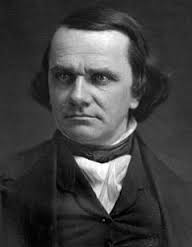
“Stephen Douglas proposes a bill for the creation of the Minnesota Territory.” *

Douglas was born in Vermont, and spent his early years there. When he was able, he migrated west and settled in Illinois. Within a year of moving west wrote is relatives back in Vermont saying,”I have become a Western man, have imbibed Western feelings principles and interests…” His political principles meshed nicely with the free-spirited populism of the west.**

Delegate to Congress from the soon-to-be “Western” Minnesota Territory, Henry H. Sibley worked with Senator Douglas to develop the nuts and bolts of this original proposal. Called the Organic Act, it provided organization of legal and legislative representation for the new territory. As an interesting sidebar, “an important provision of the Organic Act was the reservation of sections 16 and 36 of each township for school purposes.” ***

So we come to You to remember this event, Lord. We see, again, the spectacle of the mixed motives of Minnesota’s founders. On the one hand, they believe in organization, law, and education. On the other hand, the Territory soon enabled massive railroad land grants and corruption. In 1854, the Minnesota & Northwest Railroad, (eventually known as the Great Northern) committed so much fraud and bribery that their charter and land grants were revoked. Within three years, the same was granted five million acres and millions of dollars in bonds, yet they only built ten miles of railroad!? ****

We remember this dichotomy of purpose with You. Will You bless those, like Douglas and Sibley, who created the potential behind our state? We thank You for the aspirations of great men and women like them, who see the end from the beginning.

Conversely, we confess the dangers of living in a free society. Those who misuse their freedom can seek their own ends, and cause such devastation to their neighbors and the land. Will You have mercy on their selfishness, as well as the counter-judgment’s made by those most affected?

Minnesota is Your land. We are Your incomplete people. Come and help us live in right relationship with You and each other. Amen.

* http://www.mnhs.org/about/dipity_timeline.htm
** http://en.wikipedia.org/wiki/Stephen_A._Douglas
*** https://www.sos.state.mn.us/about-minnesota/minnesota-government/organic-act-of-1849/
**** http://www.landgrant.org/history.html

Standard
19th Century, education, History, law, Minnesota, Native Americans, women

Saint Paul’s 1st Public School 1847

bishoporig

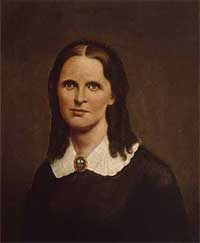
New Englander Harriet Bishop arrives in St. Paul and opens the town’s first public school. In a log cabin that had once been a blacksmith’s shop, students sit on wooden benches while chickens wander in and out.*

Thanks for Harriet Bishop and her desire to make education ‘public’. There were few opportunities for female teachers in New England, and she relished the adventure of moving west into unfamiliar territory.  She credits Harriet Newell and Ann Bishop, missionaries to Burma, as her inspiration.

The first school house, which she opened in a former blacksmith shop on July 19, 1847, was a “mud walled log hovel… covered with bark and chinked with mud” at what is now St. Peter Street and Kellogg Boulevard in the relatively isolated fur trading post of Saint Paul. Of the seven students in her first class, only two were caucasian. She had to rely on a student who was fluent in French, Dakota, and English to translate for her classes (which she taught in English). http://en.wikipedia.org/wiki/Harriet_Bishop

It’s astounding to think that most schools in our nation were private or parochial at the time. Public schools were often for the benefit of Protestants and the poor, whose communities did not have the resources or organizational structure to support them. How far we have come from this log cabin filled with students and wandering chickens!

However, presently we fail future generations because learning is disconnected from the Omniscient One. We have generations leading lives filled with facts, technology, and the benefits of science, but detached from meaning or a reason for being. This state was made by our Loving God, but even Your presence in school is an affront to the humanistic underpinnings of our current system of education! Will you forgive us this offense? Will You forgive our education system, legal system, and hearts where we have blocked You, and therefore any real sense of Divine Purpose, from our lives!

Today I remember the risk of Harriet Bishop, and her heart to see all children learn! Perhaps her home culture did not value her, but we thank You for incredible contributions to our state! Will You bless her, and all like her, who bravely risk the frontiers of our educational system?

Will You forgive any arrogance and academic pride of our forbearers, as You forgive us those same separations in the present? Will You bless future schools of Minnesota with wonder and awe of knowledge beyond our reach? May we remember the Infinite One who perceives the oceans of information beyond our drop in the bucket! May we receive Your forbearing spirit for each other, and a willingness to honor each other in Minnesota’s classrooms regardless of our faith in God or man?

Standard