19th Century, abolition, African American, Black History, education, Governors, History, Indian, Intercession, Minnesota, Native Americans, omnipresent history, State Government

Ramsey Becomes Governor

Unknown-12

January 2, 1860 to Juyl 10, 1863
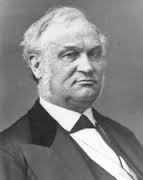
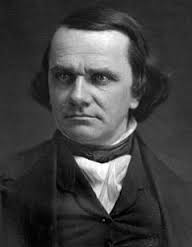
Alexander Ramsey takes office as the state’s second governor. He was the only man to be both appointed as governor of the territory and then elected as governor of the state.

Ramsey was re-elected in 1861. In January 1863 he was elected by the state legislature to the U.S. Senate. He resigned the governorship at the end of June 1863, after the legislative session was over.

His administration was marked by sound economic management-particularly of the state’s school lands-and by two crises: the Civil War and the Dakota Uprising. Ramsey was in Washington, D.C., in 1861 at the time the Civil War began, and as governor offered the first volunteer regiment for the Union Army.

Jesus thank you for Alexander Ramsey. Thank you for the leadership through two of the most trying events our state has faced; The Dakota Uprising, and the Civil War. Holy Spirit, I invite You to move and direct my thoughts and prayers. That said, today I feel You are taking me on a tangent.
“There is neither Jew nor Greek, slave nor free, male nor female, for you are all one in Christ Jesus.” Galatians 3:28

Master, What can one add that hasn’t been said about the Dakota Uprising? Scholars from many backgrounds have analyzed the information regarding this scar in Minnesotan history, and yet there is a gnawing sense of brokeness between Native and non-Native Minnesotans. How to proceed? How do you want to connect the head to the heart of this issue?
As a human being, I can see that there usually aren’t uprisings without provocation. These promptings could be active; i.e. land concessions pushed by rail backed by the power of the State or Federal government. These promptings could be passive; a neglect to uphold ones end of the bargain. What human would respond well if they were told to “eat grass” when they asked for provisions that were rightfully theirs?

Does an offense give us the right to commit atrocities of counter offense? To commit the sin of transference by literally nailing innocent parties to the doors of their homes? I posit to You, Good One, that although we are made in Your image, we have marred it by quashing our offender, our enemy. Who will save us from this cycle of offense and counter-offense, come “come close” and “stay away”?

Many of us have viewed the Native American human as lesser. It was Your pleasure to create all Indians! You made them of many tribes, languages, and nations in Your image and a reflection of Your glory! Will You forgive all non- Native Minnesotans:
1. All our unrighteous thoughts towards First Nations?
2. All our words of judgment, and verbal expressions of contempt of Native Americans?
3. Any legal expressions of contempt towards Indians?
4. Our judgment of Your handiwork; the Native American human being?

In the same light, we have wrongly grouped Non-Natives as having a singular viewpoint. We have, at times, monolithically condemned those of European descent as “racist” and “invaders”. Are You not the Creator of the Americans of European descent?
Will You forgive all Native Minnesotans:
1. All our unrighteous thoughts towards European Americans?
2. All our words of judgment, and verbal expressions of contempt of Non-Native Americans?
3. Any legal expressions of contempt towards European Immigrants?
4. Our judgment of Your handiwork; the Non-Native American human being?

In a similar vein, will You forgive this State our offenses to You by the judgments foisted on Governor Ramsey, and any political leaders since who have wrestled such weighty conflicts? They have to make difficult choices based on incomplete information, and yet we, as their constituents, often show no mercy on their human frailties! Christ have mercy on our judgments of our leaders for not fixing OUR broken hearts, and their divisive and untrusting attitudes! Can new laws make people show respect and love towards each other?

Taking another huge bite, I’m sure the enemy wreaked havoc in the state through the Civil War. I’m sure many were conflicted about trying to establish peace between the North and the South, slave and free, through warfare. Help me sort out the things to pray over this event.

First, forgive the audacity and judgments of the Church towards slavery. Granted, there was not one monolithic point of view, but there were many that named the name of Jesus, and still saw fit to hold slaves. Will You forgive us this view as a state? As a nation? As the Church of America?

Many of us have viewed the African human as lesser. It was Your pleasure to create all Africans! You made them of many tribes, languages, and nations in Your image and a reflection of Your glory! Will You forgive all non- African Minnesotans:
1. All our unrighteous thoughts towards Africans!
2. All our words of judgment, and verbal expressions of slavery of Africans.
3. Any legal expressions of slavery towards Africans.
4. Our judgment of Your handiwork; the African human being!

Second, will You forgive African Minnesotans, and any of the ancestors of American enslavement:
1. All our unrighteous thoughts towards non-Africans!
2. All our words of judgment of non-Africans.
3. Any legal expressions of revenge towards non-Africans.
4. Our judgment of Your handiwork; the non-African human being!

Being from a military family, in a sense I’m proud that our forefathers were among the first to voluntarily to die in battle opposing slavery. The righteousness of slavery had been a bone of contention and internal conflict in our psyche when were still Charters from England. Thank You that many in our State have consistently supported the rights of life and liberty for all through the ages.
Would things have been different if the Church had risen in prayer and fasting over the injustices of slavery? The Church has followed culture into physical war so often, instead of engaging the enemy inwardly. We have tried to change the heart of our nation towards the black African slave through external battle. We try to bring peace to the world around us without first doing the work of making peace with You and your children in our hearts. Christ have mercy on us!

http://www.mnhs.org/about/dipity_timeline.htm

Standard
19th Century, History, Indian, Intercession, Minnesota, Native Americans, State Government, war

Bishop Whipple

Rev. Henry Whipple

Rev. Henry Whipple

1859

“Episcopal bishop Henry Whipple comes to Minnesota to “civilize” the Indians, but he also protests their mistreatment by the government.

When more than 300 Dakota are sentenced to death after the war of 1862, Whipple convinces President Lincoln to cut the number to 38.” *

Great Holy Spirit, thank you for Bishop Whipple and his heart to know and minister to Indians. There are so many trigger points between Native Americans and our society that seem apparent to us now: ethnocentrism, casinos, property rights, and hunting rights to name a few. Perhaps these same flash points may not have been so obvious then?

For example, the Bishop wants to “civilize” the Indians. Only You know what this meant to Whipple. He could have meant to Anglicize the Indians by teaching them about his culture, and underscoring the importance of a written language and education. He could have meant that we are civilized when we meet Jesus, and cease our rebellion against Him, ourselves, and others. He could have meant to turn them into good Anglo-American citizens.

Whatever his motive Lord, I simply am aware of these judgments and counter-judgments that cloud the relationship between Your Native peoples and the rest of Minnesotas’ inhabitants. Will You forgive ALL Minnesotans’ our judgments? Will You hack any bitter roots that were planted by Henry Whipple, the Episcopal church, or other believers in 1859? Will You create a new relationship between Dakota and Your bride, the Church?

Thank You for the mercy that was extended to the Dakotas by President Lincoln due to Whipple’s intervention. He stuck his neck out to save Native necks!  May we continue to honor the lives You have given us, and even love the lives of those who oppose us! We are so far from Your tolerance and forebearance! We so easily forget that we once were rebels and enemies of Your kingdom of kindness, but You loved us while we were still sinners. May we imitate Your mercy and justice in the state of Minnesota! May You cause us and uphold us to be just! Will You “civilize” our hearts, and intervene for us in our deepest sorrows?

*P.T.H. cites timeline formerly at this URL: mnhs.org/about/dipity_timeline.htm
The Minnesota Historical Society Web site, http://www.mnhs.org , is fantastic! Check it out!


Standard
19th Century, Americana, History, justice, Minnesota, State Government

Saint Paul Keeps Capital Feb 27, 1857  

Joe Rolette

Joe Rolette

February 27, 1857
“Legislator Joe Rolette disappears with a scandalous bill that would transfer the territorial capital from Saint Paul to Saint Peter. For a week he drinks and plays poker with his friends, hiding in the attic of the Fuller House while the bill rests in the hotel’s safe. He reappears only after the legislature adjourns on March 7 and it is too late to get the bill signed into law.

Rolette is a councilor in the territorial legislature from northwest Pembina County. The questionable bill he hides is the work of government officials who bought land in Saint Peter and proposed the move to raise the value of their properties.

April 23, 1857 to May 24, 1858
Samuel Medary takes office as the territory’s 3rd, and last, governor.

When President James Buchanan appointed him governor in March, 1857, Minnesota was already in transition from a territory to a state. Medary was the recognized governor, although he spent most of his time outside the territory and conducted business through Charles L. Chase, the secretary of the territory. Some historians argue that Minnesota had three governors during this period: Henry H. Sibley, governor-elect, Charles L. Chase, acting governor, and Samuel Medary, de facto governor.” *

Father, thanks that You are just. No one can twist your Laws, or win the game by using parliamentary procedures. I acknowledge the temptation to win by changing the rules, or by trickery. Will You forgive Joe Rolette and all the parties he represents for this event in 1857? Will You free us from any judgments or counter-judgments that still affect Minnesotans’ today? Will You help us, and forgive us our frustrations with the governor of this state? Will You guide and preserve that office until You come, and work through the entire being of Governors past, present, and future?

* http://www.mnhs.org/about/dipity_timeline.htm

Standard
19th Century, government, History, Indian, Intercession, law, Leadership, Minnesota, Native Americans, omnipresent history, State Government

Gorman Becomes Territorial Governor

Willis Arnold Gorman

Willis Arnold Gorman

May 15, 1853 to April 27, 1857
“Willis Arnold Gorman takes office as the territory’s 2nd governor. As a U.S. Representative from Indiana, he supported Franklin Pierce in his successful bid for the presidency and was rewarded with the governorship of the Minnesota Territory.” *

“Democrat Franklin Pierce took office in March 1853 and replaced Ramsey with Willis as Minnesota territorial governor.” **

Today I told the Lord that this is a portion of our history that I don’t know much about. I don’t know about Gorman or why he was replaced. Some days I watch and pray and things flow easily. Others days it is difficult to see the significance of the event I’m meditating on.

After some research I found one plausible answer why the Governor Ramsey was replaced by Governor Gorman. The facts seem to indicate that he wrestled with balancing his interactions with the Ojibwe and with the powerful lumbering interests. Looks like he was caught in the middle; which master to serve? His waffling is documented below:
“This quagmire of incompetence and callousness went on for three years, while several hundred Indians died of starvation and disease.” ***

As to Governor Gorman’s temperament, he was a lifelong lawyer, and his character of self-restraint seemed better suited to the times. His legalistic disposition must have helped to find nuanced solutions for a government between a First Nation, and a booming timber industry. He was so dedicated to law that he returned to it after serving in the Civil War! There he remained, serving as St. Paul City attorney, for the rest of his life.

Thanks for Governor Gorman! In him, You brought a man who was even-keeled and suited to the issues of his days! Bless him and all leaders who calmly and deliberately serve their constituents!

As for Governor Ramsey, will You forgive his double-mindedness? We are humans just like him, and sometimes fail to be strong in our decisions. Irregardless of Your mercy, will You bring justice to all human suffering caused by his hesitancy? Will You bring restoration to the Ojibwe, both then, now, and into our future?
http://www.mnhs.org/about/dipity_timeline.htm
** Redix, Eric M., “The Murder of Joe White: Ojibwe Leadership and Colonialism in Wisconsin”.
*** Risjord, Norman K. “A Popular History of Minnesota”

Standard
19th Century, Culture, government, History, Indian, Intercession, law, Minnesota, Native Americans, Politics, State Government, Treaties

Treaties Ratified by Senate without Land Guarantee  

7500156b

June 23, 1852
“The treaties of Traverse des Sioux and Mendota go to the U.S. Senate to be ratified, but become entangled in the battle over the balance of power between the slave and free states. Southern senators hope the Dakota will refuse because of a key change in wording: in reference to reservation lands, the Senate replaces “in perpetuity” with “at the discretion of the President.” Before final ratification, the Dakota must agree to changes in the treaty. Minnesota territorial governor Alexander Ramsey is charged with attaining the necessary signatures to finalize the treaties, which he accomplishes through a combination of negotiation, withholding of goods and food, and the threat of military force. The Dakota are left with little choice and begin moving to the new lands along the Minnesota River in 1853.” *

Lord, today may we acknowledge the sins and major points of separation of this treaty before You; the Merciful, yet Just Judge of the Universe?

-Ramsey’s willingness to withhold goods and food.
-Ramsey’s threat of military force.
-The US Senate’s willingness to betray the trust of the Dakota through rewording of the treaty.
-Any counter-judgments made by the Dakota.

Jesus, we all betray. We make betrayal worse by responding to offense with unforgiveness. We often make our own prisons when we harden our hearts. I acknowledge these things to You, and pronounce forgiveness based on the promise of Matthew 6:14 “For if you forgive men when they sin against you, your heavenly Father will also forgive you.”
May all parties be moved to show remorse, ask forgiveness, and be restored into right relationship! Amen!
http://www.mnhs.org/about/dipity_timeline.htm

Standard
19th Century, History, Intercession, Jesus, Minnesota, State Government

1st Territorial Legislature Meets Sep 3, 1849  

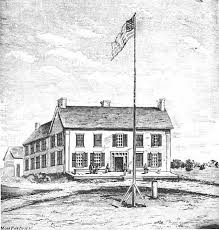
Central House, St. Paul, MN

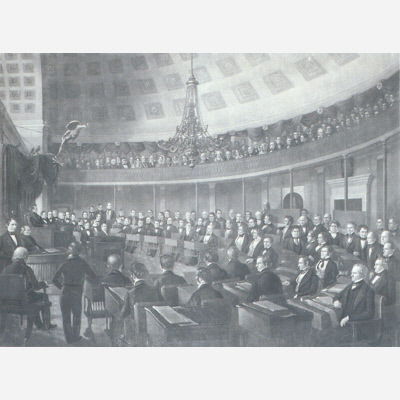
The Minnesota Territorial Legislature met for the first time in the Central House in Saint Paul.*

Will You come today, Counselor, and offer Your teaching about this beginning? I find that the first territorial legislature was dominated by men from New England or of New England ancestry. http://en.wikipedia.org/wiki/Minnesota It was a legal business meeting first, but what other impacts may have occurred?

My first thought, Teacher, is that we carry our personal histories with us into each new venture no matter how tightly we hold our cards. That said, I’m wondering now the impact of these sons of New England on our state. What were their strengths, fears, dreams, or biases?

In any case, I commend to you this representative meeting. Christ, our Advocate, how You must smile when we seek to keep faith by simply meeting with each other! May we follow Your example of humble authority in the governance of this state. May these meetings be an eternal ray of blessing from September 3, 1849 forward!

Standard
19th Century, History, Indian, Minnesota, Native Americans, omnipresent history, Politics, State Government

Ramsey Appointed Territorial Governor

Unknown-14

June 1, 1849
“As the first territorial governor and second governor of the state, Alexander Ramsey presides over the early days of Minnesota politics. A shrewd, practical politician, he acquires Indian lands and promotes growth. Later, he becomes a U.S. senator and secretary of war, and will live into the 20th century, a symbol of Minnesota’s pioneer past.” *

Lord, I want to bless the memory of Alexander Ramsey, and acknowledge to You his humanity. The ability of politicians’ to use their power for their own good rather than the benefit of the State is well recorded throughout human history. Unfortunately, our state is no exception to this rule.

For example, Ramsey is also noted for his stern statements calling for the killing or removal of specific Native Americans, chiefly the Sioux (Dakota) people that lived in the state of Minnesota. Ramsey declared on September 9, 1862: “The Sioux Indians of Minnesota must be exterminated or driven forever beyond the borders of the state.” **

Lord, I acknowledge the tangle of treaties in Minnesota, the likelihood of confusion, and unjust acquisitions of Indian land. Where Indians failed to maintain right relationship with the State and the Federal government; have mercy! Where Ramsey wronged Indians in the name of Minnesota in both word and deed, we acknowledge this sin. Will You give us a heart of repentance and restoration? Will You untangle our web of treaties?

* http://www.mnhs.org/about/dipity_timeline.htm
** http://en.wikipedia.org/wiki/Alexander_Ramsey

Standard
19th Century, History, Minnesota, Politics, Prayer, State Government

Minnesota Territory Established

images-9

March 3, 1849

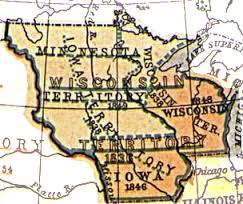
“Minnesota becomes an organized territory, an important step on the way to becoming a state. Minnesota Territory stretches west to the Missouri River in what will become North and South Dakota.” *

The name “Minnesota”comes from the Dakota word for “clear blue water.” Owing to its large number of lakes, the state is informally known as the “Land of 10,000 Lakes.” Its official motto is L’Étoile du Nord (French: Star of the North). **

Thanks that our ancestors decided to establish this Minnesota territory. There is power in naming or renaming. You renamed the people of Israel and Judah through the prophet Hosea saying, “So let your brothers be called “My People” and your sisters be called “Shown Mercy.” Hosea 2:1 Formerly, they had been called Lo-Ruhamah meaning “No Mercy” and Lo-Ammi meaning “Not My People.” Lord, will You continue to rename us throughout Minnesota territory from March 3, 1849 forward?

*Note – PrayThroughHistory uses the timeline located for several years at the Minnesota Historical Society Web site, at this URL: mnhs.org/about/dipity_timeline.htm .

**http://en.wikipedia.org/wiki/Minnesota


Standard
19th Century, Civics, education, government, History, law, Minnesota, Politics, Prayer, railroad, State Government

Bill for Minnesota Territory January 18, 1849  

Unknown-12

“Stephen Douglas proposes a bill for the creation of the Minnesota Territory.” *

Douglas was born in Vermont, and spent his early years there. When he was able, he migrated west and settled in Illinois. Within a year of moving west wrote is relatives back in Vermont saying,”I have become a Western man, have imbibed Western feelings principles and interests…” His political principles meshed nicely with the free-spirited populism of the west.**

Delegate to Congress from the soon-to-be “Western” Minnesota Territory, Henry H. Sibley worked with Senator Douglas to develop the nuts and bolts of this original proposal. Called the Organic Act, it provided organization of legal and legislative representation for the new territory. As an interesting sidebar, “an important provision of the Organic Act was the reservation of sections 16 and 36 of each township for school purposes.” ***

So we come to You to remember this event, Lord. We see, again, the spectacle of the mixed motives of Minnesota’s founders. On the one hand, they believe in organization, law, and education. On the other hand, the Territory soon enabled massive railroad land grants and corruption. In 1854, the Minnesota & Northwest Railroad, (eventually known as the Great Northern) committed so much fraud and bribery that their charter and land grants were revoked. Within three years, the same was granted five million acres and millions of dollars in bonds, yet they only built ten miles of railroad!? ****

We remember this dichotomy of purpose with You. Will You bless those, like Douglas and Sibley, who created the potential behind our state? We thank You for the aspirations of great men and women like them, who see the end from the beginning.

Conversely, we confess the dangers of living in a free society. Those who misuse their freedom can seek their own ends, and cause such devastation to their neighbors and the land. Will You have mercy on their selfishness, as well as the counter-judgment’s made by those most affected?

Minnesota is Your land. We are Your incomplete people. Come and help us live in right relationship with You and each other. Amen.

* http://www.mnhs.org/about/dipity_timeline.htm
** http://en.wikipedia.org/wiki/Stephen_A._Douglas
*** https://www.sos.state.mn.us/about-minnesota/minnesota-government/organic-act-of-1849/
**** http://www.landgrant.org/history.html

Standard
19th Century, Agriculture, Emigration, Exploration, farming, Food, History, Immigration, Minnesota, Native Americans, State Government, trade, Treaties

Settlement in Minnesota 1849 to 1860

images-8

“The number of non-Indian people in Minnesota jumps from 3,814 in 1849 to 172,072 in 1860, a 4,500 percent increase! The newcomers break sod, start businesses, plot towns, look for jobs, and dream of getting rich.

Pent-up demand for good agricultural land is the primary reason. Iowa and Wisconsin had been heavily settled and had both passed from territorial to statehood status by 1848. It had been dangerous and illegal to settle on land in most of Minnesota before treaties with the Dakota and the Ojibwe were signed. But after several treaties were ratified in the 1850s, the floodgates of migration burst open.” *

When we move, we make assessments of our new neighbors and neighborhood. They, in return, watch us move into their neighborhood, and may ‘size us up’ by our friendliness, possessions, (or lack of possessions), our physical appearance, etc. These assessments, I believe, are instincts designed for our survival, but must be tempered or they can morph into prejudice.

Lord, what were the judgments of these ‘new neighbors’ in Minnesota? Will You forgive us the inheritance of those who knowingly moved into the state illegally? Will You forgive the betrayals committed between settler and tribe, and their counter-betrayals? Will You break the power of the derogatory words and names given among these groups? Will You break the vows made in anger, envy, revenge, arrogance, unforgiveness, fear, and unbelief of each group towards its real or supposed nemesis?

Thinking about the impact of these past separations on the present, will You forgive the heart behind the relocation of Native Americans? Will you free us from the bondages and entanglements within poorly made treaties? Will You bring Your heart of restoration to Minnesota? Will You bring to light a new kind of history in Minnesota? Will You write a history that remembers the good, the pleasing, the fair, the gracious, the restored relationship on our hearts? Will you give us Your eyes to see our neighbors’ inherent value?

*mnhs.org/about/dipity_timeline.htm

Standard