19th Century, Agriculture, Business, History, Intercession, Minnesota, Mississippi River

Washburn ‘A’ Mill Explodes

mh5-9-mp3-1w-r58

May 2, 1878

“The mill explodes when flour dust in the air inside it ignites. The explosion kills 18 workers, destroys five other mills, and decimates the surrounding area. Debris lands in Saint Paul, and the shock is felt in Stillwater. The event brings instant notoriety to Minneapolis.

The tragic explosion leads to reforms in the milling industry. Ventilation systems and other precautionary devices will be devised in order to prevent further tragedy.” *

Lord, this explosion truly impacted our state and city for decades. Will You forgive us our bitter root judgements of this event? Will You forgive any rash words and thoughts spoken by the rivals of the houses of Pillsbury and Washburn that may still be with us today? Will You cleanse the land, and the river from the bifurcations of this blast?

If the root sin of pride is an issue, (because of its largesse), will You forgive and release all the inheritors of this separation? We need You to provide our food! We welcome You to Minnesota, to the Falls of St. Anthony! Come and ‘be present at our table Lord!’

*P.T.H. cites timeline formerly at this URL: mnhs.org/about/dipity_timeline.htm
The Minnesota Historical Society Web site, http://www.mnhs.org , is fantastic! Check it out! Images are from https://images.google.com/?gws_rd=ssl; again, an amazing resource!

Standard
19th Century, Agriculture, Business, farming, Food, History, Intercession, Minnesota, State Government

Bonanza Farms 1875

423478855

1875
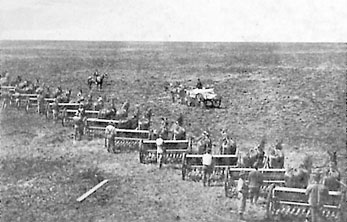
“Investors grow wheat on a grand scale in the Red River Valley. Their “bonanza farms” cover thousands of acres and are harvested by huge crews and the latest machinery.
A financial panic in 1873 stopped the construction of the Northern Pacific Railroad to the Red River Valley. In order to pay back its Eastern investors, the bankrupt company allowed its investors to exchange their bonds for land. As a result, large urban investors immediately became owners of thousands of acres of land (unlike homesteaders who had to live on the land for five years to get 160 acres). The new owners turn the land into large-scale commercial farms run by hired managers with cheap labor and expensive machinery.” *

Lord, You hate corruption of any sort in any relationship. “The LORD detests dishonest scales, but accurate weights find favor with him.” Proverbs 11:1** This Panic of 1873, again at the hands of the railroads under federal authority, really stole land from the homesteaders. (The principle of sowing and reaping? The homesteaders just years before may have been party to land being swindled from the Dakota.) Anyway, we are people capable of both sharing and defrauding land from our neighbors.

Will You forgive us this debt? Will You cause restoration and repentance to grow in the heart of this State and Nation? Will You forgive Minnesotans’ resentments against the Federal Government? Will You forgive the Railroads for manipulating the Panic of 1873 to their benefit? Will You remove this curse from our land, skies, waters, and hearts? Thank you that You deal with us in such a generous manner!

http://www.mnhs.org/about/dipity_timeline.htm
**http://biblehub.com/proverbs/11-1.htm


Standard
19th Century, Agriculture, Architecture, Business, Civics, Energy, History, Industry, Intercession, Labor, Minnesota, Mississippi River

Industry at St. Anthony Falls 1872

640px-Stanthonyrecession.jpg

1872

Minneapolis industries cluster around the power of St. Anthony Falls. The Minneapolis Board of Trade estimates that the 95 waterwheels at the falls produce 6,000 horsepower.*

Lord, thank You for the gift of the Mississippi and those who harnessed its power. Thank You for the individuals and groups that contributed to its’ planning and investment? You work through those who skillfully manage money! Will You bless the entrepreneur? You work through those who take major risks to create business?

Too often we are guilty of failing to properly acknowledge the reflection of Your glory through the wonderful skills of tradesmen and women! Do You enjoy watching your people build? Will You bless these and their generations’: the cement worker, the engineer, the steel worker, the electrician, the riggers, the teamsters, and any other who labored on these projects?

Lord forgive us the sin of loving ‘science’ while simultaneously negating your creation. You had a plan for this city far before we began to envision what was possible. You created many electrical systems as well as the principals of hydraulics and physics in nature long before we were alerted to their existence.

How many more mysteries do You have to reveal to us? Forgive this root of ‘scientific pride’ in Minnesota. Will You replace it with humility and eternal curiosity that makes us better stewards of Your creation, technological advancement, and more receptivity to Your ideas?

*P.T.H. cites timeline formerly at this URL: mnhs.org/about/dipity_timeline.htm
The Minnesota Historical Society Web site, http://www.mnhs.org , is fantastic! Check it out! Images are from https://images.google.com/?gws_rd=ssl; again, an amazing resource!

Standard
19th Century, Agriculture, Business, Current Events, Energy, farming, Food, History, horses, Intercession, Medicine, Minnesota, Natural Disaster, Transportation

Energy Crisis 1872

unknown

1872

“Epizootic fever strikes horses throughout the Midwest. The three-month sickness plunges horse-powered Minnesota into its first energy crisis.” *

I need to let this one simmer for a bit; “the three-month sickness plunges horse-powered Minnesota into its first energy crisis.” It’s hard to relate to this not-so-distant past when “horse-power” really meant the labor of a workhorse. I believe it was as late as W. W. II  when the majority of Minnesotans still lived on farms, and felt this connection to living “horse-power. (I still need to let this steep.)

There’s something good about the connection between human and horse. Your draft animal as a precious commodity, means of production, and even friend?! A car with a face? A tractor with a face? A companion who saw the same sights, and explored the same paths as its master?

Below is some documentation of the breadth and width of this epizootic fever.

“Beginning in Toronto, Canada, in the late summer of 1872, in only three days the disease hit nearly all the livery stables and the horses used to pull streetcars in that city. By mid-October, horses in all of Canada, Michigan and the New England states were infected. By the beginning of November the disease had spread to Illinois, Ohio and South Carolina. By the end of the month, Florida and Louisiana reported cases.” **

Holy Spirit, today I remember the I remember this equine flu epidemic of 1872. I accede to You in the relationship between the suffering of animals and the people of this state. I acknowledge the contribution of veterinarians to the well-being of these individual animals, and indirectly to our state.  

Will You forgive us any judgments made against Your goodness or holiness because of this chapter of epizootic fever?  You care about each detail of our lives, and of each creature in Your world. We give You thanks for these horses past, and sincerely thank You for Minnesota’s present stock. We ask Your blessings on each colt, filly, mare, stallion, bronco, foal, and gelding that will walk the North Star state in perpetuity!

** http://www.heritagebarns.com/the-great-epizootic-of-1872/#.V9s-fmPSfVo


Standard
19th Century, Agriculture, Business, education, farming, Food, History, horses, Intercession, Minnesota, omnipresent history, Science, trade

Kelley on the Grange

Unknown-1


1867
“Elk River homesteader Oliver H. Kelley, claiming to be “as full of public spirit as a dog is full of fleas,” leads the founding of the Patrons of Husbandry, or Grange.
The organization, which includes women as equal members, sweeps across rural America, promoting scientific agriculture and enriching the social and cultural life of farm families.” *

What was Mr. Kelley like as a human, Jesus? What desires did You put into his nature for his fellow farmers?
“Encourage them to read and think; to plant fruits and flowers,—beautify their homes; elevate them; make them progressive,” he wrote in a letter to a friend. “I long to see the great army of producers in our country, turn their eyes up from their work; stir up those brains, now mere machines … set them to think,—let them feel that they are human beings, the strength of the nation, their labor honorable, and farming the highest calling on earth.” **

His zeal reminds me of the heart of the Benedictines, whom are renowned for “ora et labora”; prayer and work. Dear Father, how we need that balance between heart and head! Kelley, sort of, reminds me of those with a prophetic calling who operate in the spirit of encouragement. ***

Lord, make more like Kelley, who want to lift up humanity! Lord, may those of us who have this call remain humble, and not cross over in judgment of our neighbor! Will You grow the Grange, and dignify our labor today?
http://www.mnhs.org/about/dipity_timeline.htm
** http://www.mnopedia.org/person/kelley-oliver-hudson-1826-1913
*** http://www.religious-vocation.com/differences_religious_orders.html
**** Images are from https://images.google.com/?gws_rd=ssl; again, an amazing resource!


Standard
19th Century, Business, Geology, History, Industry, Intercession, Minnesota, omnipresent history, State Government

Falling Falls

Unknown

1866 to 1880
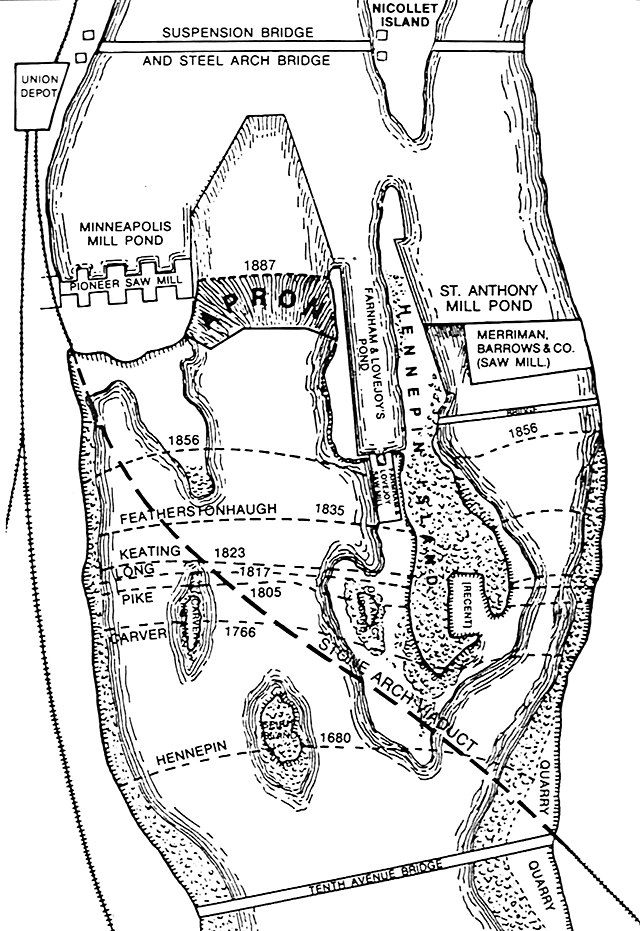
“Construction begins on a wooden apron to protect St. Anthony Falls. Mills depend on the falls for industrial power, and their owners hope the apron will stop its erosion and collapse. Floodwaters destroy this first attempt the following year. Collapses follow. It’s 1880 before a useful apron is completed.” *

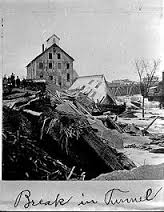
The Eastman Tunnel once ran below the St. Anthony Falls, connecting Nicollet island with Hennepin Island. It’s collapse almost destroyed the utility of the falls for the milling industry. Congress gave the Army Corps of Engineers $50,000 to fix the falls by basically filling in the tunnel with concrete, and making a wooden apron. This attempt failed also, and it wouldn’t be until 1874 when a lasting apron would be built.**

Jesus, our life is a series of attempts, successes, and failures. Help us view failures as You do; teachable moments. Thanks that this failure to build an apron eventually led to a successful preservation of the utility of St. Anthony Falls and the milling industry, but at the cost of destroying its’ natural beauty.

Will You bless us again through the Falls and the Mississippi? Will You gift us to persevere today when our work is totally destroyed by forces beyond our control? Will You help us work in harmony with beauty and nature?
http://www.mnhs.org/about/dipity_timeline.htm
** https://www.esci.umn.edu/courses/1001/1001_kirkby/SAFL/WEBSITEPAGES/5.html

Standard
19th Century, Business, History, Minnesota, railroad, Transportation

Railroad Introduction

images-15

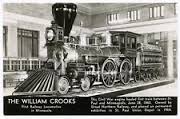
“Minnesota’s first railroad line begins operation when the William Crooks travels ten miles from St. Paul to the village of St. Anthony (present-day Minneapolis). Within ten years the state is laced with railroad lines, opening up vast inland regions to farming and lumber.

To get here, the William Crooks rode on tracks to LaCrosse, Wisconsin then was shipped by steamboat to St. Paul. Until the railroads, steamboats and the rivers they ride are the most efficient way to move goods in and grain and logs out.” *

Thanks for the innovations that led to the railways in MInnesota! We have been blessed with excellent passenger and freight transportation here for about 150 years! I bless the changes the William Crooks brought to this generation by the authority of Jesus. May these rails continue to be a blessing to this state in perpetuity!

Good Dad, as I meditate today with You on the subject of trains, I feel a bit of melancholy. Like any good father, You relish the growth, achievements, and inventions of Your kids as they play. You “play trains” with us, and relish as we delight in building, connecting, and traveling.

While this snapshot of time, the coming of the William Crooks, was born peaceably, our methodology and timing in building many future rail lines left much to be desired. What would a dad say to a kid, who when playing with his siblings, demanded that they sign numerous deeds or legal contracts that gave him dominance of their shared playroom or basement? What would a dad say to a daughter who demanded that her brother be permanently removed from the premises because she needed more room for her elaborate train set?

Granted, the real-life complexities of building these lines in 1862 were much more severe than the basement scenario. How does one negotiate a deal between two parties that share little commonality in their definitions of property and ownership? How does one reach resolution when each parties’ land needs or transportation needs are so different?

Lord, forgive and heal Minnesota of every bad fruit and judgment that sprung from the dissonance of these deals. Will You forgive railway companies, their land agents, or any other parties in authority their sins against Native Americans stemming from the land granted them by the federal, state, or local government? We still bear their burden of having sinned against You when we take land or property from one, and give it to another without price! Will You forgive tribes, though often truly wronged, the maintenance of this offense into the present era? (May they receive justice, but be free from transference in their hearts.) How will You heal these broken hearts? Bind us up, Lord!

Hear my prayer, may all forms of coercive redistribution of wealth and property cease in the state of Minnesota! May your Holy Spirit so move on our state and people that we would give and share our land and property, our selves, and our time according to Your pleasure! In many ways, we have lost the joy of giving because our much of our charity is routed through faceless government institutions rather than through human relationships. Help us solve this problem too.

Holy Spirit, will You enable us to give the unlimited resources of heaven to our fellow man through prayer and fasting! May You fill internal chasms of heart that sometimes drive our reckless consumption and fuel our frenetic needs for doing, and cut us off from being. Change what we desire; what we want! In the words of David in Psalms 23:1, “The Lord is my shepherd, I shall not be in want.”

*P.T.H. cites timeline formerly at this URL: mnhs.org/about/dipity_timeline.htm
The Minnesota Historical Society Web site, http://www.mnhs.org , is fantastic! Check it out!

 

Standard
19th Century, Business, Civil War, Economics, Intercession, Jesus, justice, law, Minnesota, omnipresent history, Real Estate

Financial Panic Changes the Economic Climate July 1, 1857  

images-9

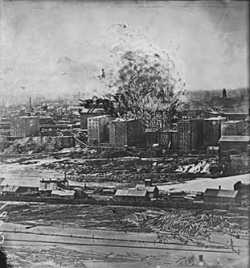
Fueled by wild speculation in land prices, the economy of Minnesota Territory became overheated. This speculative bubble burst in July when banking failures in the East began to spread panic in the West. The resulting crash in land values caused credit to dry up in Minnesota. Local banks closed and other business failed as well. The economy of Minnesota did not improve until the Civil War.*

Father, how often has this happened in our history as human beings? How often has money, property, or wealth been manipulated to bring an otherwise peaceful people to war? Lord, we seem immune to recognize the inner causes of these type of panics and economic downturns; we want what we do not have. Will You forgive us our desire for easy money? Will You forgive the greed of the banks involved: Eastern or Western or foreign?

Will You wipe out the painful judgments of our states’ debtors towards these banks, and their unforgiveness of debt? Will You forgive us for being seduced by the spirit of speculation to the detriment of our brothers and sisters? It seems there is a perpetual battle between those who value the land as a home that sustains life and those who view it only as a profitable commodity. Lord, will You give balance to our judgments of the land, and free our land of the curses we have committed against it?

*Note – PrayThroughHistory uses the timeline located for several years at the Minnesota Historical Society Web site, at this URL: mnhs.org/about/dipity_timeline.htm .

Standard
19th Century, Americana, Business, Civics, History, Intercession, Minnesota, Real Estate

Nininger Founded

220px-Nininger

October 1, 1856
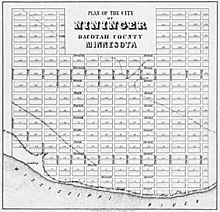
“Minnesota is booming with grandiose plans and get-rich-quick schemes. John Nininger and Ignatius Donnelly establish the town of Nininger—on the south bank of the Mississippi River, five miles up river from Hastings—in the summer of 1856. Their town exists only on paper, but in their dreams it is a great metropolis, a center of commerce and culture, a rival of Chicago. Active sale of land and building operations begin about October 1, 1856.” *
Donnelly promotes Nininger across the nation. In February 1858 the legislature grants a charter to the town, and the town has shops, churches, a dance hall, a poor house, a school, and a population of perhaps as many as 1,000 persons. The dream town of Nininger declines steadily after the financial panic of 1857 that causes banks across the country to call in loans. People move away. Buildings disappear. The town eventually disappears from the map.

Lord, we are looking for heaven… but usually the one of our own design. You have given us imagination to organize society and solve civic problems. We often lack the humility to remain in relationship when we are hurt, or to forgive and resolve problems. Forgive any judgments of Donnelly and Nininger towards the residents of Nininger and each other. Forgive any counter judgments of the people of Nininger. Will You continue this process until full restoration?
Also, I acknowledge the financial judgments made in the panic of 1857: Eastern banks judged Western farmers, small business judged large business, etc. Lord, we have sinned against You by the judgments of the panic of 1857! Many have paid debts unfairly placed on them, and made counter judgments towards banks, businessmen, lawyers, city, county, and state officials etc.

Unfortunately, we are bound by our judgments of banks, as well as state and federal laws! Free us as a people in the North Star state! Heal our economy and our hearts that easily are swayed into discontent! We have coveted our neighbor’s property! We have coveted our neighbors’ real and imagined legal freedoms! We often submit to debt out of envy! Hear our prayer! Heal our land past, free us in the present, and blesser relationships to it in the future!

*http://www.mnhs.org/about/dipity_timeline.htm

Standard
19th Century, Business, History, Minnesota, omnipresent history

Saint Paul Mutual Insurance Company Incorporated

Alexander Wilkin

Alexander Wilkin

March 5, 1853
“The legislature incorporates the St. Paul Mutual Insurance Company, forerunner of the insurance giant St. Paul Companies, the state’s oldest business corporation.” *

Lord, thanks for the conception of corporations, and the good intended through their creation. Our culture has taken a bitter view of business entities such as the “corporation” because of the publicized abuses of some business leaders. This is like tossing away the idea of going to a court for justice on the basis that there are some mistrials. It’s like tossing the Bible because we read it as a punishment instead of Your love letter to humanity.

I commend the three men who founded this company today to You; dear Founder of the Universe. I thank You for the life of Alexander Wilkin, and his impetus to create an insurance company for Minnesotans’! I thank You for George and John Farrington, his partners and investors! I observe that these men, going “all-in”, could barely raise the $50,000 necessary to start their business. Yet, You have allowed it to grow to $20.68 billion in four generations?!

Jesus, I acknowledge the failures of corporations in Minnesota to honor Your standards of integrity. Even the best businesses operate on the basis of mutually beneficial self-interest, but are not expected to exhibit love. Forgive the judgments of our society towards its corporations and vice versa from March 5, 1853 forward.

Likewise, forgive the believers of Minnesota for our judgments of its corporate body, the Church. Forgive the bitter judgments and lack of love towards its parts, and failure to recognize that a rejection in part is a rejection of its corporateness. On the basis of this confession, I want to pronounce the Lord’s forgiveness to the businesses of Minnesota both past and present, and invite Your favor on our states’ corporations and all Church business. Make us one, Jesus!

http://www.mnhs.org/about/dipity_timeline.htm
** More on St. Paul Companies http://www.fundinguniverse.com/company-histories/the-st-paul-companies-inc-history/

Standard