19th Century, Business, Economics, History, Industry, Minnesota, Native Americans, Politics, trade

1st Lumber Mills in MN 1848

history_franklinSteele

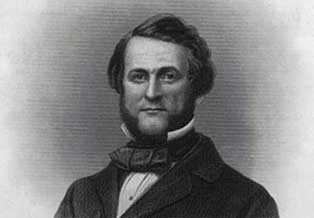
Pioneer businessman Franklin Steele builds a sawmill at the falls of Saint Anthony. By 1856, there are eight mills at the falls.*

May I sit with You and observe this chapter of life in my state? Mr. Steele came here through the invitation of the man who would become his brother-in-law; Henry Hastings Sibley, a prominent Minnesotan. He staked an advantageous claim on the east bank of the St. Anthony Falls. Soon, he established a partial dam, sawmills, and a crew upriver to supply him logs, and commence a successful business. **

Digging further, this is what I found:
“But Steele surreptitiously staked the first claim on the choicest land before sunrise on the first day of legal settlement.” *** Is there nothing new under the sun? Once again, a man becomes successful through an inside scoop, and bending the rules to his advantage. We, indeed, are people of mixed motives, bearing both good and bad fruit!

Will You forgive his offense to You in making an illegal claim? Will You forgive his offense to all parties affected in his day whether Native, immigrant, loggers, and sawyers? Will You restore the losses of Steele’s contemporaries?

Yet, we too sometimes exhibit the same heart as Steele; we try to grow beautiful things from ugly roots! We often esteem the shrewd, and shun those led by conscience. We are so in love with success stories that we brush past those whom our heroes stepped on and over in the process. Will You forgive us our “illegal claims” today?

Precisely because I am a man with a mixed up heart like Franklin, I am drawn to Your mercy! Through Your kindness, I can offer honest thanks for the accomplishments of others with on-again/off-again hearts. Thanks for providing ample waterpower in Minnesota! Thanks for the resources of wood! Thanks for Franklin Steele who put together an enterprise to use both for the betterment of Minnesota!

http://www.mnhs.org/about/dipity_timeline.htm
** http://en.wikipedia.org/wiki/Franklin_Steele
*** http://www.nps.gov/miss/learn/historyculture/upload/River_Ch_6.pdf

Standard
19th Century, Culture, History, Minnesota, Native Americans, Politics, Treaties

Winnebago Moved to Reservation 1847  

xa-hochun

A treaty with the U.S. government moves the Winnebago (Ho-Chunk) from northeastern Iowa and southeastern Minnesota to a reservation in Todd County. With the Ojibwe to the north and the Dakota to the south, government officials hope the Winnebago reservation will serve as a buffer zone between Minnesota’s two larger Indian nations.

The Winnebago prefer the terrain of the prairie to this wooded area, and in 1855, they relocate to a smaller tract of land in Blue Earth County. They remain there until after the U.S.-Dakota Conflict, when the government forces them to move with the Dakota to the Crow Creek reservation in South Dakota.*

Jesus, thanks for the peoples of Minnesota. Thanks that You made us Your people whether of Winnebago, Ojibwe, Dakota, English, German, French, or Swedish descent. It’s wonderful that we are uniquely made, distinct families conveying some reflection of Your light!
Will You illuminate and forgive the bitter root judgments of the US government towards the Winnebago and vice versa? Will You forgive the government’s desire to use this people as a “buffer” between Ojibwe and Dakota, and the implications that they needed help maintaining peace between their peoples? Will You fill hearts and lands with the gift of restoration here in Minnesota, South Dakota, Iowa, and replace the curses from the hearts of all parties in this event?

*www.dipity.com/Minnesota/History/Minnesota-History/

Standard
19th Century, education, Exploration, France, government, History, maps, Minnesota, Native Americans, Science, State Government

Nicollet Maps of Upper Mississippi River 1843

220px-Joseph_Nicollet_001

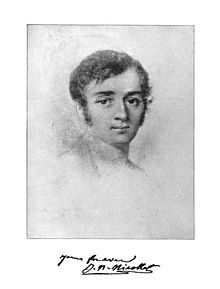
French astronomer Joseph Nicollet’s accurate maps of the upper Mississippi region, made over the course of several visits to Fort Snelling, are published by the U.S. Senate in 1843.*

Thanks for the blessing of accurate maps. Thanks that You give us a real assessment of the situations of our lives. Thank you that good maps help define land uses and indirectly, land disputes!

As I ponder Messr. Nicollet’s involvement in the life of this state, I quickly come to the question, “Why is an astronomer mapping terra firma so far from home?” Although I know so little about astronomy, I can easily imagine that he was trained to map the vastness of space. Perhaps working on such a small scale was a new challenge to him, or no challenge at all. His motives in this work are unknown to me, but would be an interesting campfire story.

However, I am practicing thinking about history as the Eternal Now. This is where Your Spirit leads me. I thank You that You led this man outside his discipline. I thank You that he was taken far beyond his home into the wilderness of North America. I thank You that he shared his gift, even if it was second place to astronomy! Will You bless us as his progeny to embrace the moments in life we are taken out of our expertise, and into the woods?

*www.dipity.com/Minnesota/History/Minnesota-History/

Standard
19th Century, Business, Culture, History, livestock, maps, Minnesota, Native Americans, trade, Transportation

Red River Oxcart Trade 1840 to 1850

Unknown-11

Métis families (formed by marriages between whites and Indians) take their furs from the Red River Valley to St. Paul in oxcarts. Long caravans of up to 200 carts travel from as far away as Winnipeg, Canada, making St. Paul one of the leading fur markets in the country from the 1840s to the 1860s.*

My first question, Lord, is who are the Metis people? Doing what any modern American would do when faced with something they haven’t encountered before I went straight to wikipedia, and found the following excerpt below.

“The Métis are the descendants of Indigenous Cree or Anishinaabe women who married French or Scottish fur traders during the early colonial period. They have a specific, unique culture. Most are found among the Michif-speaking peoples of the Red River region in modern ManitobaNorth Dakota, and Minnesota.[1] The Red River peoples are part of the same ethnic group as many of the Canadian Métis peoples. There is also a broader but limited use of the term to describe any people who descend from the united culture created by the intermarriage of various French and British fur traders and various Algonquian, Cree and other Native American groups intermarrying during the 17th, 18th and 19th centuries. This use would exclude from Métis people-hood those whose ancestries became mixed between these different ethnic groups in other settings or more recently than about 1870.” **

So now I have a place to begin my prayer; with at least an inkling of a back story of the Metis. God, I don’t really feel too prayerful tonight, but I’m willing to wait with You and see where it goes. Ok?

To begin, thank You that the Metis are Your people, and included in Your family. Thanks that You have watched over and led them for generations before their participation in the fur trade took place. Today I give your gratitude for the this era of the oxcart trail!

Next, I thank You that Metis marriages became an intersection between Scotch, Irish, French, Cree, Anishinaabe, and perhaps more nations of people! My late aunt, Ingrid Trobisch, an author and marriage counselor once told me, “Interracial marriages may be doubly difficult, but they are also doubly blessed.” I  commend  and honor these marriages that forged a new and unique culture from their culture of origin to You Good Father! Will you bless the Metis and all their future generations with the same forbearing spirit?

How interesting that, again, a people group becomes synonymous with a form of transportation: the Sami people of Finland the reindeer, the Arabs the horse, the Peruvians the llama, and the Metis the oxcart. All through history You have given us gifts and innovative thoughts that improve our lives. Thank You for these gifts. Will You bless those who rode these caravans, and continue to provide for their needs in the present and future? Will You cause us to pause as we drive I-94 west of Minneapolis, and remember who those who first blazed this road; the Metis?

Lord, I ponder what those in the future will think about us when the car is an antiquated beast. Will our interstates lead them somewhere, or will they cease to have purpose ? Will we be associated with our vehicles? In any case, I ask that You bless the future forms of transportation that may be discovered here in Minnesota, and that they would be inhabited by people who drive them to intersect with their neighbors as the Metis did.

*Note – PrayThroughHistory uses the timeline located for several years at the Minnesota Historical Society Web site, at this URL: mnhs.org/about/dipity_timeline.htm .  The current URL is www.dipity.com/Minnesota/History/Minnesota-History/ and only works if typed, not pasted, in browser. It is worth the effort!

** https://en.wikipedia.org/wiki/Métis


Standard
19th Century, Culture, Faith, History, Intercession, Jesus, Minnesota, Native Americans

Ezekiel Gear Arrives at Fort Snelling Apr 28, 1839

Unknown-10

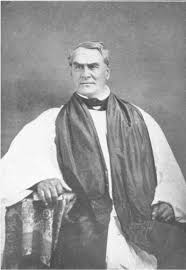
Episcopal priest arrives at Fort Snelling. He is chaplain at Fort Snelling from 1839-1858. He remains in Minnesota until his death in 1875.*

Thank you for Gear, and his commitment to Minnesota. Thank you for the blessing his presence had on early Minnesota and especially Fort Snelling. Thank you for his example to future generations here: we are free to reach across cultural boundaries when motivated by Your love!

It is my belief that we have a limited view of our history. We know in part, and we often project our vantage point onto the characters of the past. Perhaps we need a new lens to view the history of Native Minnesotans and its European settlers? May we equally remembers those that built relational bridges in this meeting of peoples as those who tore them down.

The following excerpt demonstrates where the heart of Priest Gear:

“Ezekiel Gilbert Gear was horn in Middletown, Connecticut, September 13th, 1793. He was ordained deacon by Bishop Griswold in the same church in which he was baptized, and his diaconate was passed in that diocese. He was ordained priest by Bishop Hobart, and was appointed missionary in the western part of New York state. There he labored at Onondaga Hill, Avon, Manlius, Ithaca, Syracuse, Binghamton and Brownsville. He also worked among the Oneida and Onondaga Indians, baptizing, marrying, and admitting many to the communion of the Church. He was present at the confirmation by Bishop Hobart of ninety-seven Indians, presented by Eleazar Williams. We can well imagine that this previous connection with Indian work led him to take an especial interest in advocating, as he did, the beginning of work among the Sioux and Ojibways of Minnesota.”

http://anglicanhistory.org/usa/mn/edsall_gear.html

*Note – PrayThroughHistory uses the timeline located for several years at the Minnesota Historical Society Web site, at this URL: mnhs.org/about/dipity_timeline.htm .  The current URL is www.dipity.com/Minnesota/History/Minnesota-History/ and only works if typed, not pasted, in browser. It is worth the effort!

Standard
19th Century, Culture, education, Faith, History, Intercession, Jesus, Minnesota, Native Americans

Lake Harriet Mission School July 19, 1836  

lac_qui_parle1

Six students attend the opening of the Lake Harriet Mission School for the Dakota, founded by the Reverend Jedediah D. Stevens. An early example of education within the boundaries of present-day Minnesota, the school was sponsored by the Presbyterian Missions Board and taught by the founder’s niece, Lucy C. Stevens, in a cabin built by Gideon H. and Samuel W. Pond.*

Good Teacher, thank you for the benefits of the Lake Harriet Mission School for the Dakota. Thank you for the heart of providing education to all! It’s so good to share what we know and have it received.

It is not easy to be the first. It takes boldness to reach out across cultural lines. On one side of this picture we have Dakota students who are reaching out to Stevens. Conversely, he is stepping out of his comfort zone to meet and teach members of an unfamiliar culture. Will You bless both sides of this exchange? Will You remember their boldness and trust to know each other? Each group is an exploratory party of sorts. May we never forget what its like to be an alien!

Lord, I also want to acknowledge our separations that may begin as academic pride. We assume our knowledge will change our ‘underprivileged’. We often fail to pass on wisdom (good judgment), and even foster an academic culture that hesitates to recognize the merits of wisdom. As moderns, we cringe at even the word ‘judgement’, although one could argue that good judgment is the root of justice?!

I feel prompted to acknowledge the potential judgments of Stevens and Williamson against the Pond brothers, and perhaps a spirit of competitiveness. Lord, will you forgive any heritage of academic  or religious pride stemming from  them forward to us if this is the case? Will you forgive the stinging pain of criticism towards or counter-judgments from the Ponds, the Dakotas, these first six students, or any other pertinent unaddressed party? Will You free the land  of Minnesota from these judgments, and bring the blessing of humility that we all have betrayed You, Your peoples, and our selves? Will You make us humble teachers and students of the “knowledge” You have revealed to us? Amen.

*The current URL is www.dipity.com/Minnesota/History/Minnesota-History/ and only works if typed, not pasted, in browser. It is worth the effort!

Standard
17th Century, Culture, Economics, History, Intercession, Minnesota, Native Americans

Dakota & Ojibwe Treaty 1679


“Tensions mount between the Dakota and the Ojibwe newcomers. At a meeting arranged by Daniel du Luth, a European trader interested in keeping the peace, they strike a bargain. The Dakota agree to let the Ojibwe hunt in their territory, and the Ojibwe will let traders cross Lake Superior to trade with the Dakota.” *

Lord, thanks for being a good dad! Thanks that You know how to deal with the pettiness of children…and adults. I want to acknowledge the tensions that have risen in my own heart through the judgments of others, and the property that You have entrusted them with. I am just like du Luth, the Dakota, and the Ojibwe!

Will You forgive the fears of these groups towards one another? Will You forgive any envy of these groups? Will You release both victim and victimizer from the judgements of this event? Will You release us in the present from any heritage of bitterness or self-righteousness as it pertains to trade and commerce on Lake Superior? May You bless all, like du Luth, who seek to establish chesed (right relationship) rather than conflict?

*Note – PrayThroughHistory uses the timeline located for several years at the Minnesota Historical Society Web site, at this URL: mnhs.org/about/dipity_timeline.htm .  Currently the timeline seems to be unavailable. I am hopeful that it will be back up in the future, as it was a valuable, user-friendly tool for anyone wishing to explore Minnesota history.


Standard