19th Century, Civics, education, government, History, law, Minnesota, Politics, Prayer, railroad, State Government

Bill for Minnesota Territory January 18, 1849  

Unknown-12

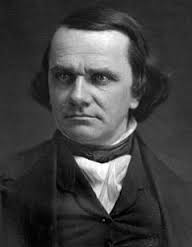
“Stephen Douglas proposes a bill for the creation of the Minnesota Territory.” *

Douglas was born in Vermont, and spent his early years there. When he was able, he migrated west and settled in Illinois. Within a year of moving west wrote is relatives back in Vermont saying,”I have become a Western man, have imbibed Western feelings principles and interests…” His political principles meshed nicely with the free-spirited populism of the west.**

Delegate to Congress from the soon-to-be “Western” Minnesota Territory, Henry H. Sibley worked with Senator Douglas to develop the nuts and bolts of this original proposal. Called the Organic Act, it provided organization of legal and legislative representation for the new territory. As an interesting sidebar, “an important provision of the Organic Act was the reservation of sections 16 and 36 of each township for school purposes.” ***

So we come to You to remember this event, Lord. We see, again, the spectacle of the mixed motives of Minnesota’s founders. On the one hand, they believe in organization, law, and education. On the other hand, the Territory soon enabled massive railroad land grants and corruption. In 1854, the Minnesota & Northwest Railroad, (eventually known as the Great Northern) committed so much fraud and bribery that their charter and land grants were revoked. Within three years, the same was granted five million acres and millions of dollars in bonds, yet they only built ten miles of railroad!? ****

We remember this dichotomy of purpose with You. Will You bless those, like Douglas and Sibley, who created the potential behind our state? We thank You for the aspirations of great men and women like them, who see the end from the beginning.

Conversely, we confess the dangers of living in a free society. Those who misuse their freedom can seek their own ends, and cause such devastation to their neighbors and the land. Will You have mercy on their selfishness, as well as the counter-judgment’s made by those most affected?

Minnesota is Your land. We are Your incomplete people. Come and help us live in right relationship with You and each other. Amen.

* http://www.mnhs.org/about/dipity_timeline.htm
** http://en.wikipedia.org/wiki/Stephen_A._Douglas
*** https://www.sos.state.mn.us/about-minnesota/minnesota-government/organic-act-of-1849/
**** http://www.landgrant.org/history.html
Standard
19th Century, Agriculture, Emigration, Exploration, farming, Food, History, Immigration, Minnesota, Native Americans, State Government, trade, Treaties

Settlement in Minnesota 1849 to 1860

images-8

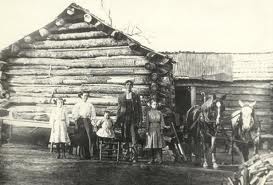
“The number of non-Indian people in Minnesota jumps from 3,814 in 1849 to 172,072 in 1860, a 4,500 percent increase! The newcomers break sod, start businesses, plot towns, look for jobs, and dream of getting rich.

Pent-up demand for good agricultural land is the primary reason. Iowa and Wisconsin had been heavily settled and had both passed from territorial to statehood status by 1848. It had been dangerous and illegal to settle on land in most of Minnesota before treaties with the Dakota and the Ojibwe were signed. But after several treaties were ratified in the 1850s, the floodgates of migration burst open.” *

When we move, we make assessments of our new neighbors and neighborhood. They, in return, watch us move into their neighborhood, and may ‘size us up’ by our friendliness, possessions, (or lack of possessions), our physical appearance, etc. These assessments, I believe, are instincts designed for our survival, but must be tempered or they can morph into prejudice.

Lord, what were the judgments of these ‘new neighbors’ in Minnesota? Will You forgive us the inheritance of those who knowingly moved into the state illegally? Will You forgive the betrayals committed between settler and tribe, and their counter-betrayals? Will You break the power of the derogatory words and names given among these groups? Will You break the vows made in anger, envy, revenge, arrogance, unforgiveness, fear, and unbelief of each group towards its real or supposed nemesis?

Thinking about the impact of these past separations on the present, will You forgive the heart behind the relocation of Native Americans? Will you free us from the bondages and entanglements within poorly made treaties? Will You bring Your heart of restoration to Minnesota? Will You bring to light a new kind of history in Minnesota? Will You write a history that remembers the good, the pleasing, the fair, the gracious, the restored relationship on our hearts? Will you give us Your eyes to see our neighbors’ inherent value?

*mnhs.org/about/dipity_timeline.htm

Standard
18th Century, 19th Century, African American, Canada, Economics, government, Great Britain, Great Lakes, History, law, Minnesota, Politics, State Government, Treaties

Webster-Ashburton Treaty Signed Aug 9, 1842


180px-Map_of_Minnesota_highlighting_Lake_of_the_Woods_County.svg

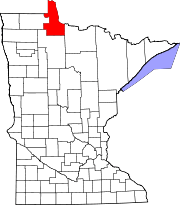
The Webster-Ashburton Treaty, which established the boundary between the United States and Canada, was signed by the United States and Great Britain. Minnesota’s “Northwest Angle” was a result of this treaty.*

It is hard to imagine a time where our most pressing and trying foreign policy questions concerned Great Britain or Canada. The hot button issues of the slave trade, impressment of United States sailors, or resolving the unrest due to the Canadian Rebellion of 1837 needed resolution.

Webster-Ashburton, though months in the making, resolved disputes that went back to the Revolutionary War. Lack of clarity in the Treaty of Paris of 1783 seeded conflict on our Northern Border. Lord Ashburton and Secretary of State Daniel Webster made clear land boundaries with open navigation on key portions of the Great Lakes. **

Jesus, thanks that You respect our boundaries. Thanks for the generations of peaceful relationships we have enjoyed with Canada and Great Britain since this agreement. Will You watch over this national border, all Minnesota state borders, and our personal borders? Will You be the Keeper of our Peace?

*mnhs.org/about/dipity_timeline.htm

** https://history.state.gov/milestones/1830-1860/webster-treaty


Standard
19th Century, Culture, Economics, History, Minnesota, riverboat, Technology, trade, Transportation

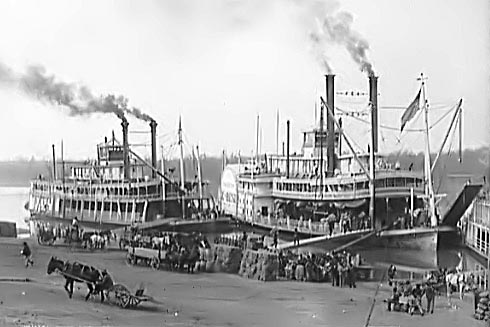
Steamboats 1840 to 1870  

mississippi-riverboat

Steamboat trips up the scenic Mississippi are the fashion for Eastern tourists in the 1840s. By the mid-1850s steamboats, carrying supplies and immigrants as well as tourists, arrive in St. Paul at the rate of four or five a day during the summer months.*

Holy Spirit, will You journey with me through the steamboat era of the Mississippi? Will You allow me to bounce ideas off You, and alert me to any related subjects? Thanks that You are in, around and through all times and places! I love You for that!
Thanks for the gift of the steamboat! The idea of going effortlessly upstream must have been revolutionary in 1840. What would be an appropriate analogy to present Minnesotans’; skiing uphill at Afton or Wild Mountain? Maybe waterskiing without a rope or a boat?
I thank You for the relational benefits of this mode of transportation to our midwestern forefathers and foremothers. Technology is often viewed in terms of its innate capabilities, but not in terms of the relationships those capabilities may unlock. Transportation advancements seem to inherently effect relationships by changing how we view our geography.
For example, before the steamboat one imagines that it would be much easier for Northerners to travel south, downstream, on the Mississippi than Southerners to travel north. Is it a stretch to imagine that this creates a one-way relational path? If one can only passively receive visitors, products, news, from the north how would that impact one’s world-view.
Conversely, imagine what it would be like to only be a giver on this unidirectional path. A farmer works all season, loads up his crop, brings it to a river town, and sends it away. He feels the immediate reward of the sale of his harvest, but is largely isolated from any connections to those downstream.
Will You forgive any judgments between north and south based out of this one-way relational paradigm? Will You forgive any resentments based on an identity of being primarily a “giver” or a “receiver”? Will You forgive past judgments based on geographic isolation instead of real relationship?
Lord of Hesed, will You create in our generation a desire for real relationship, while aided by technology, not based on technology? Will You show us ways to reverse any symbolic or real curses resulting from one-way relationships? Will You make our mighty rivers flow upstream, and give us a future of blessed two-way, real relationships with our world and fellow man?

*Note – PrayThroughHistory uses the timeline located for several years at the Minnesota Historical Society Web site, at this URL: mnhs.org/about/dipity_timeline.htm .  The current URL is http://www.dipity.com/Minnesota/History/Minnesota-History/ and only works if typed, not pasted, in browser. It is worth the effort!


Standard
19th Century, Business, Culture, History, livestock, maps, Minnesota, Native Americans, trade, Transportation

Red River Oxcart Trade 1840 to 1850

Unknown-11

Métis families (formed by marriages between whites and Indians) take their furs from the Red River Valley to St. Paul in oxcarts. Long caravans of up to 200 carts travel from as far away as Winnipeg, Canada, making St. Paul one of the leading fur markets in the country from the 1840s to the 1860s.*

My first question, Lord, is who are the Metis people? Doing what any modern American would do when faced with something they haven’t encountered before I went straight to wikipedia, and found the following excerpt below.

“The Métis are the descendants of Indigenous Cree or Anishinaabe women who married French or Scottish fur traders during the early colonial period. They have a specific, unique culture. Most are found among the Michif-speaking peoples of the Red River region in modern ManitobaNorth Dakota, and Minnesota.[1] The Red River peoples are part of the same ethnic group as many of the Canadian Métis peoples. There is also a broader but limited use of the term to describe any people who descend from the united culture created by the intermarriage of various French and British fur traders and various Algonquian, Cree and other Native American groups intermarrying during the 17th, 18th and 19th centuries. This use would exclude from Métis people-hood those whose ancestries became mixed between these different ethnic groups in other settings or more recently than about 1870.” **

So now I have a place to begin my prayer; with at least an inkling of a back story of the Metis. God, I don’t really feel too prayerful tonight, but I’m willing to wait with You and see where it goes. Ok?

To begin, thank You that the Metis are Your people, and included in Your family. Thanks that You have watched over and led them for generations before their participation in the fur trade took place. Today I give your gratitude for the this era of the oxcart trail!

Next, I thank You that Metis marriages became an intersection between Scotch, Irish, French, Cree, Anishinaabe, and perhaps more nations of people! My late aunt, Ingrid Trobisch, an author and marriage counselor once told me, “Interracial marriages may be doubly difficult, but they are also doubly blessed.” I  commend  and honor these marriages that forged a new and unique culture from their culture of origin to You Good Father! Will you bless the Metis and all their future generations with the same forbearing spirit?

How interesting that, again, a people group becomes synonymous with a form of transportation: the Sami people of Finland the reindeer, the Arabs the horse, the Peruvians the llama, and the Metis the oxcart. All through history You have given us gifts and innovative thoughts that improve our lives. Thank You for these gifts. Will You bless those who rode these caravans, and continue to provide for their needs in the present and future? Will You cause us to pause as we drive I-94 west of Minneapolis, and remember who those who first blazed this road; the Metis?

Lord, I ponder what those in the future will think about us when the car is an antiquated beast. Will our interstates lead them somewhere, or will they cease to have purpose ? Will we be associated with our vehicles? In any case, I ask that You bless the future forms of transportation that may be discovered here in Minnesota, and that they would be inhabited by people who drive them to intersect with their neighbors as the Metis did.

*Note – PrayThroughHistory uses the timeline located for several years at the Minnesota Historical Society Web site, at this URL: mnhs.org/about/dipity_timeline.htm .  The current URL is www.dipity.com/Minnesota/History/Minnesota-History/ and only works if typed, not pasted, in browser. It is worth the effort!

** https://en.wikipedia.org/wiki/Métis


Standard
19th Century, Business, Economics, History, Industry, Intercession, Jesus, Minnesota

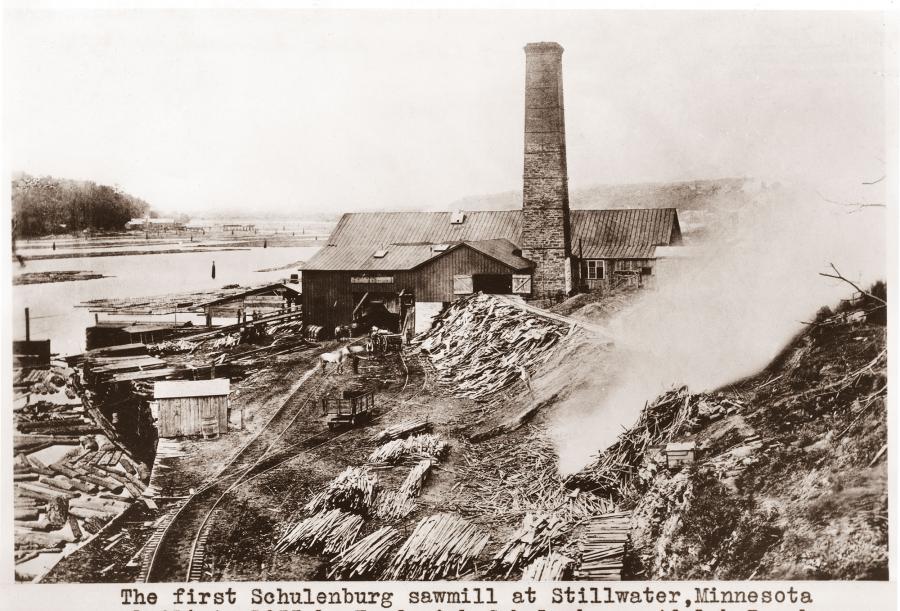
Timber industry begins in Minnesota 1839

6-11_0

More than two-thirds of Minnesota is covered with trees when Minnesota’s first commercial sawmill is constructed at Marine on St. Croix–the beginning of Minnesota’s first industry.

On the east side of the Mississippi, a vast forest of pine and other evergreens stretches to the Canadian border. Many white pine along the St. Croix River are 200 feet tall and five feet in diameter.*

Jesus, thanks for our timber resources in Minnesota. Thank you for all who have, who are at present, or who will work in our forests in the future! Will You send your blessing into every place where Your Minnesota forests have gone: furniture, homes, barns, fences, etc.? Will You bless every recipient of Minnesota wood as You chop the roots of blame, and judgment, grudge and jealousy, envy and anger?

As you said in Romans 11:16b “…if the root is holy; so are the branches.” At present, will You forgive any worship of nature itself, and the lack of acknowledgement of to the Creator of the Woods? I’m guilty Lord too: we love stuff and use people instead of loving people and using stuff! Have mercy!

*Note – PrayThroughHistory uses the timeline located for several years at the Minnesota Historical Society Web site, at this URL: mnhs.org/about/dipity_timeline.htm .  The current URL is www.dipity.com/Minnesota/History/Minnesota-History/ and only works if typed, not pasted, in browser. It is worth the effort!

Standard
19th Century, Culture, education, Faith, History, Intercession, Jesus, Minnesota, Native Americans

Lake Harriet Mission School July 19, 1836  

lac_qui_parle1

Six students attend the opening of the Lake Harriet Mission School for the Dakota, founded by the Reverend Jedediah D. Stevens. An early example of education within the boundaries of present-day Minnesota, the school was sponsored by the Presbyterian Missions Board and taught by the founder’s niece, Lucy C. Stevens, in a cabin built by Gideon H. and Samuel W. Pond.*

Good Teacher, thank you for the benefits of the Lake Harriet Mission School for the Dakota. Thank you for the heart of providing education to all! It’s so good to share what we know and have it received.

It is not easy to be the first. It takes boldness to reach out across cultural lines. On one side of this picture we have Dakota students who are reaching out to Stevens. Conversely, he is stepping out of his comfort zone to meet and teach members of an unfamiliar culture. Will You bless both sides of this exchange? Will You remember their boldness and trust to know each other? Each group is an exploratory party of sorts. May we never forget what its like to be an alien!

Lord, I also want to acknowledge our separations that may begin as academic pride. We assume our knowledge will change our ‘underprivileged’. We often fail to pass on wisdom (good judgment), and even foster an academic culture that hesitates to recognize the merits of wisdom. As moderns, we cringe at even the word ‘judgement’, although one could argue that good judgment is the root of justice?!

I feel prompted to acknowledge the potential judgments of Stevens and Williamson against the Pond brothers, and perhaps a spirit of competitiveness. Lord, will you forgive any heritage of academic  or religious pride stemming from  them forward to us if this is the case? Will you forgive the stinging pain of criticism towards or counter-judgments from the Ponds, the Dakotas, these first six students, or any other pertinent unaddressed party? Will You free the land  of Minnesota from these judgments, and bring the blessing of humility that we all have betrayed You, Your peoples, and our selves? Will You make us humble teachers and students of the “knowledge” You have revealed to us? Amen.

*The current URL is www.dipity.com/Minnesota/History/Minnesota-History/ and only works if typed, not pasted, in browser. It is worth the effort!

Standard
19th Century, Agriculture, Christian, education, farming, Fundamentalist, History, Minnesota, Native Americans, Technology

Missionaries at Lac qui Parle 1835

hane-and-herman-bigger

Presbyterian ministers Thomas Williamson and Jedediah Stevens establish a mission at Lac Qui Parle to the west. They bring a farmer along to teach the Dakota how to raise crops in the European manner.*

Lord, thanks for the benefits of European farming, and Native farming. Thank you for the benefits of this heritage: seldom have we lacked food as a state, often we have contributed food to others! Will You continue to bless the productivity  of all Minnesota farmland? Will You enhance the nutrition of our soil and food? Amen.

*Note – PrayThroughHistory uses the timeline located for several years at the Minnesota Historical Society Web site, at this URL: mnhs.org/about/dipity_timeline.htm .

Standard
19th Century, Exploration, Geology, History, Minnesota, Native Americans

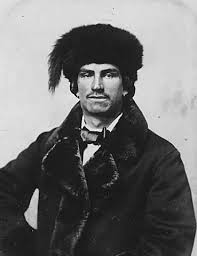
Schoolcraft discovers the source of the Mississippi River 1832

Ozawindib (“Yellow Head”) and other Ojibwa guide Henry Rowe Schoolcraft as he maps the source of the Mississippi river. He calls the lake where the great river begins “Itasca.”*

Thanks for the blessing of this event on all Minnesotans’! Thanks for men like Schoolcraft who recorded the knowledge of men like Ozawindib and the other Ojibwe guides. May there be recognition and appreciation of the importance of both kinds of men.

Thank you, Father, that Ozawindib chose to be a guide in Your image. He offered his expertise, perhaps not knowing the import of his knowledge to the outer world. He knew where the Mississippi started!?

In this day, and for future Minnesotans I ask this blessing of You great Guide of the Universe: may we offer our piece of knowledge and expertise back to You, and to others. Will You multiply it?

*Note – PrayThroughHistory uses the timeline located for several years at the Minnesota Historical Society Web site, at this URL: mnhs.org/about/dipity_timeline.htm .  The current URL is www.dipity.com/Minnesota/History/Minnesota-History/ and only works if typed, not pasted, in browser. It is worth the effort!

Ozawindib

images-5

Standard
19th Century, History, Intercession, Jesus, Minnesota

1st Post Office Established Aug 25, 1827


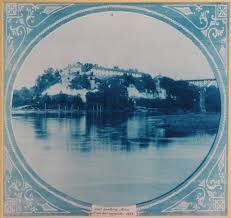
Minnesota’s first post office is established at Fort Snelling.*

Lord, thank you for establishing a post office here! Communication is a gift and blessing on us and our state! May You provide more inspiration to improve and enhance our technology of communication in the future. May You give us hearts of reconciliation that strengthen the communication of our state by Jesus’ authority!

*Note – PrayThroughHistory uses the timeline located for several years at the Minnesota Historical Society Web site, at this URL: mnhs.org/about/dipity_timeline.htm .  The current URL is www.dipity.com/Minnesota/History/Minnesota-History/ and only works if typed, not pasted, in browser. It is worth the effort!

images-4

Standard